Searching for a budget automatic espresso machine means balancing affordability with decent performance. The Breville Bambino stands out as the overall best for its consistent quality and user-friendly features. The Philips 5500 Series offers great convenience with its integrated milk system, while the De’Longhi Stilosa provides a manual option for those willing to learn. Most models in this category make tradeoffs between ease of use, build quality, and brewing versatility. Keep reading for a detailed comparison to help you find the right machine for your needs.

Get kitchen staples and gadgets delivered free with Prime
- Fast, free delivery on millions of items
- Prime Video, Amazon Music and more included
- Member-only deals all year
Complete the kit
Key Takeaways
- Top picks balance affordability with reliable espresso quality and ease of operation.
- Machines with integrated milk frothers tend to be more convenient but can increase the price.
- Manual models often offer more control but require more skill and effort to use effectively.
- Build quality varies significantly, impacting durability and long-term performance.
- Pressure gauge and steam wand features are key indicators of a machine’s versatility in this category.




| budget automatic espresso machine | Pressure | Water Tank Capacity |
|---|---|---|
| 20 Bar Compact Espresso Coffee | 20 bar | 34 oz |
| Breville Bambino Espresso Mach | — | — |
| Gevi 20 Bar Compact Espresso M | 20 bar | — |
| De’Longhi Stilosa Compact Manu | — | — |
| CASABREWS 3700 Essential Stain | 20 bar | 43.9 oz |
| Philips 5500 Series Fully Auto | — | — |
| SHARDOR 20 Bar Espresso Machin | 20 bar | 45 oz |
| AYCHIRO 20-Bar Espresso Machin | 20 bar | 37 oz |
| Fully Automatic Espresso Machi | 20 bar | 1.5 L |
| 20 Bar Espresso Machine with M | 20 bar | 45 oz |
| De’Longhi Classic Signature Es | — | — |
| Atatix Espresso Machine with M | — | — |
| Philips 2300 Series Fully Auto | — | — |
| Casabrews CM5418 Compact Espre | 20 bar | 34 oz |
| Breville BES870XL Barista Expr | — | 67 oz |
More Details on Our Top Picks
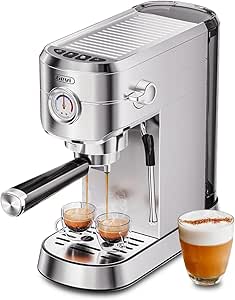
20 Bar Compact Espresso Coffee Machine with Milk Frother, Stainless Steel, 34oz Water Tank
This espresso machine stands out for its high-pressure 20 bar pump and powerful steam wand, enabling users to craft espresso with rich crema and microfoam. Unlike the Breville Bambino, which emphasizes ease of use and rapid heating, this model prioritizes power and size, making it ideal for tight spots where space is limited. However, it requires preheating and has a smaller water tank, meaning frequent refilling for regular use. The stainless steel build adds durability, but its need for preheating might slow down quick coffee sessions. This pick makes the most sense for those who want a small footprint with robust performance but are okay with a slight learning curve and refilling more often.
Pros:- High-pressure 20 bar pump delivers rich crema
- Powerful steam wand enables microfoam for lattes
- Fast heating system reduces wait time
Cons:- Requires preheating before each use
- Limited water capacity necessitates frequent refilling
Best for: Small apartment dwellers or office users needing a compact, powerful espresso machine
Not ideal for: Users seeking quick, no-fuss coffee without preheating or frequent refills
- Pressure:20 bar
- Water Tank Capacity:34 oz
- Power:1450W
- Dimensions:5.3×12.2×11.5 inches
- Material:Stainless Steel
Our verdict“This machine suits those who prioritize compact size and strong espresso power over convenience and speed.”
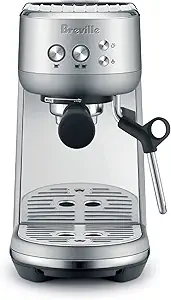
Breville Bambino Espresso Machine, Brushed Stainless Steel
The Breville Bambino makes the list for its rapid ThermoJet heating system, which heats up in seconds, making it perfect for quick mornings. Compared to the Gevi, which offers slightly more manual control, the Bambino provides an intuitive experience for novices while still satisfying more experienced users with its precise temperature control. It lacks a built-in grinder, so you’ll need pre-ground beans, but that simplifies operation for beginners. Its compact size ensures it fits in small kitchens, although its limited commercial capability means it isn’t suited for heavy daily use. This machine is ideal for those who want consistency, speed, and a user-friendly interface without sacrificing quality.
Pros:- Fast heat-up with ThermoJet system
- Easy to operate for beginners
- Compact design fits small kitchens
Cons:- No built-in grinder, requiring pre-ground beans
- Limited to home use, not suitable for commercial needs
Best for: Home users new to espresso who want quick results and simple operation
Not ideal for: Heavy users or those wanting to grind beans and make large quantities regularly
- Power:1560 Watts
- Voltage:110-120V
- Water Heating System:ThermoJet
- Portafilter Size:54mm
- Included Accessories:Filter baskets, milk jug, tamper
- Warranty:1 Year
Our verdict“Best suited for beginners who prioritize speed and simplicity in a compact home machine.”
Gevi 20 Bar Compact Espresso Machine for Home, Latte, Cappuccino Coffee Maker
The Gevi 20 Bar offers a semi-automatic approach that combines ease of use with robust extraction, making it a good middle ground between the Breville’s automation and manual options like the De’Longhi Stilosa. Its powerful 20-bar pump ensures rich espresso, while the included milk frother allows for latte art. Unlike the Casabrews, which has a larger water tank, Gevi’s more compact design suits those with limited counter space, though it requires some skill in milk frothing and shot timing. The absence of a built-in grinder means you need to prepare pre-ground beans, but its straightforward controls make it accessible for users willing to learn. This model is ideal for those seeking café-quality drinks without complicated features.
Pros:- Powerful 20-bar pump for rich espresso
- Easy to use with intuitive controls
- Includes milk frother for varied drinks
Cons:- Requires skill to perfect milk frothing
- No built-in grinder for fresh beans
Best for: Home baristas willing to learn and master milk frothing for quality espresso drinks
Not ideal for: People looking for a completely automatic machine or quick, no-fuss coffee
- Pressure:20 bar
- Material:Stainless steel
- Frother:Steam wand
- Control Type:Semi-automatic
- Temperature Control:NTC
- Warranty:12 months
Our verdict“Ideal for users ready to develop barista skills in a compact, semi-automatic format.”
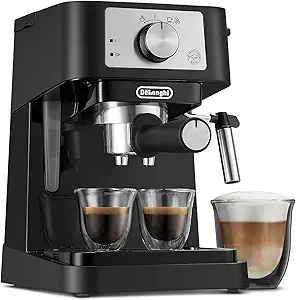
De’Longhi Stilosa Compact Manual Espresso Machine, Manual Milk Frother
The De’Longhi Stilosa earns its place for its manual operation, appealing to those who enjoy more control over their espresso process. Its stainless steel boiler and stylish design make it a durable, attractive choice for modern kitchens. Compared with the Gevi, the Stilosa offers a more authentic experience with its manual milk frothing, but this also means a steeper learning curve and more skill required. It’s limited to basic espresso and milk frothing, making it less versatile than automatic models. This machine suits users who value craftsmanship and aesthetic appeal over convenience, but beginners may find it challenging to master.
Pros:- Manual milk frother for authentic drinks
- Stylish and compact design
- Stainless steel boiler for durability
Cons:- Manual operation requires skill and practice
- Limited to espresso and basic milk frothing
Best for: Enthusiasts who appreciate manual control and classic espresso-making
Not ideal for: Casual users or those seeking quick, automatic drinks with minimal fuss
- Design:Contemporary
- Milk Frother:Manual
- Boiler Material:Stainless steel
- Includes:Portafilter with two filters
- Cup Holder:Two-level adjustable
Our verdict“Best for those who want a more traditional, hands-on espresso experience and appreciate style.”
CASABREWS 3700 Essential Stainless Steel Espresso Machine with Steam Wand
The CASABREWS 3700 earns recognition for its larger water tank—43.9 oz—making it suitable for multiple drinks without constant refilling. Its 20-bar pressure system delivers rich espresso, similar to the Gevi and others, but with a more stylish stainless steel finish that blends well in most kitchens. Unlike the compact options, this model provides more brewing capacity, ideal for families or small offices. It requires some initial setup and user guidance, especially for milk frothing, but once familiar, it offers reliable performance. If you prefer a machine with more capacity and a sleek look, this is a solid choice, though its size might be less ideal for tiny counters.
Pros:- Large 43.9 oz water tank for multiple drinks
- High-pressure 20-bar system for rich flavor
- Stainless steel design adds style and durability
Cons:- Initial setup may be complex for some users
- Size may be less suitable for very small kitchens
Best for: Home users or small offices who want larger water capacity and stylish design
Not ideal for: Those needing a portable or ultra-compact machine for limited space
- Pressure:20 bar
- Power:1350 W
- Water Tank Capacity:43.9 oz
- Material:Stainless Steel
Our verdict“A good option for those valuing capacity and aesthetics over minimal footprint.”
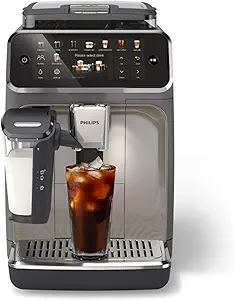
Philips 5500 Series Fully Automatic Espresso Machine with LatteGo Milk System
This Philips model stands out for its extensive customization options, offering 20 presets and four profiles, which allows users to craft a wide variety of coffee drinks tailored to personal tastes. Compared to the Philips 2300 Series, it provides a more sophisticated milk system with the LatteGo setup, making it easier to clean and produce consistent foam. While the advanced features and quick brewing are appealing, the upfront cost can be a barrier for budget-focused buyers, and the complexity may require some time to master. This machine is ideal for coffee enthusiasts who want variety and convenience at a reasonable price point.
Pros:- 20 customizable presets for a personalized coffee menu
- Fast brewing with a quick start time
- Quiet operation enhances the home coffee experience
- Easy-to-clean LatteGo milk system
Cons:- Higher initial cost compared to simpler models
- Complex feature set may require a learning curve
Best for: Coffee lovers seeking a feature-rich, customizable experience without stepping into high-end pricing.
Not ideal for: Budget-conscious users or those new to espresso who prefer simple, straightforward machines with minimal settings.
- Presets:20
- Milk System:LatteGo
- Profiles:4
- Brewing Time:3 seconds
- Noise Level:40% quieter than earlier models
Our verdict“This machine suits those who want a versatile, automatic espresso experience and are willing to invest in convenience and customization.”
SHARDOR 20 Bar Espresso Machine with Milk Frother and Touchscreen
Compared with the Philips 5500, the SHARDOR offers a more direct control experience through its touchscreen, making it easier for users to adjust settings on the fly. Its 20-bar pressure system delivers rich, barista-quality espresso, suitable for those who prioritize drink quality. However, the lack of digital profiles and the need for regular descaling might deter some users who prefer low-maintenance, all-in-one solutions. This model is better suited for home baristas who enjoy customizing every shot and don’t mind occasional upkeep.
Pros:- Powerful 20-bar pressure system for rich flavor
- Touchscreen interface simplifies operation
- Includes milk frother and adjustable temperature
- Large 45 oz water tank
Cons:- Requires regular descaling and maintenance
- Relatively large footprint for small kitchens
Best for: Users who value tactile control and precise pressure for high-quality espresso and enjoy intuitive interfaces.
Not ideal for: Beginners or those seeking a highly automated, low-fuss coffee maker with minimal adjustments.
- Wattage:1350 watts
- Voltage:120 volts
- Pressure:20 bar
- Water Tank Capacity:45 oz
- Dimensions:8.14″D x 5.12″W x 15.27″H
- Item Weight:8.5 pounds
Our verdict“Ideal for users who want advanced control and professional-level espresso in a semi-automatic package.”
AYCHIRO 20-Bar Espresso Machine with Pressure Gauge, Compact Semi-Automatic Coffee Maker with Steam Wand, 1350W
Compared with the larger SHARDOR, the AYCHIRO focuses on a sleek, stainless steel form that fits well in small spaces without sacrificing power. Its 20-bar pump and built-in steam wand enable barista-level drinks, but the absence of a digital display and more advanced features makes it less user-friendly for beginners. This machine is best for those who want a durable, high-pressure espresso maker that can sit unobtrusively on a countertop while still producing quality drinks.
Pros:- High-pressure 20-bar pump for rich espresso
- Built-in steam wand for milk frothing
- Removable water tank for easy cleaning
- Sleek stainless steel construction
Cons:- May be too complex for first-time users
- No digital controls or preset profiles
Best for: Small kitchen owners or office spaces that need a compact, powerful espresso machine with manual control.
Not ideal for: Total beginners or users desiring a fully automatic, plug-and-play coffee experience.
- Pressure:20 bar
- Power:1350W
- Water Tank Capacity:37 oz
- Material:Stainless Steel
Our verdict“This model suits those who want a space-saving, durable espresso machine capable of making quality drinks with manual finesse.”
Fully Automatic Espresso Machine with Milk Frother & Grinder
Unlike the semi-automatic options like the SHARDOR and AYCHIRO, this machine provides a one-touch experience with an integrated grinder, perfect for those who want fresh beans and minimal fuss. Its 20-bar pressure system and customizable settings make it suitable for coffee purists, but the larger footprint and complexity might test new users. It offers a level of convenience that outshines manual or semi-automatic models, though at a potentially higher price point. This pick makes the most sense for those who prioritize freshness and convenience over compact size.
Pros:- Built-in grinder with 15 adjustable settings
- One-touch operation for espresso and milk drinks
- Automatic milk frother produces creamy foam
- Self-cleaning system simplifies maintenance
Cons:- Size may require significant counter space
- Complex settings can be overwhelming for beginners
Best for: Home baristas who want a fully automatic setup with built-in grinding and milk frothing for everyday use.
Not ideal for: Budget buyers or users with limited space seeking a simple, basic espresso machine that doesn’t include a grinder.
- Grind Settings:15
- Pressure:20 bar
- Water Tank Capacity:1.5 L
- Bean Hopper Capacity:200 g
Our verdict“This machine is perfect for users who want a fully automatic, high-quality coffee experience with minimal manual effort and fresh beans.”
20 Bar Espresso Machine with Milk Frother, Cold Brew, Touch Screen
Compared to the other automatic options, this 20 Bar machine offers the added cold brew feature alongside traditional espresso, making it highly versatile. Its PID temperature control ensures stability and quality, while the touchscreen makes adjustments straightforward. However, its complexity might challenge newcomers who prefer simple, straightforward machines. It is best suited for small households or spaces where variety matters and users are comfortable with some tech learning curve.
Pros:- Delivers professional-quality espresso with rich crema
- Includes cold brew function for additional versatility
- Touch screen simplifies operation
- Compact, durable stainless steel design
Cons:- May be complex for complete beginners
- Requires regular cleaning and maintenance
Best for: Coffee enthusiasts who want both hot espresso and cold brew in one compact, easy-to-use machine.
Not ideal for: Beginners looking for a simple, single-function espresso machine that requires minimal setup and maintenance.
- Pressure:20 bar
- Power:1350W
- Water Tank Capacity:45 oz
- Features:PID control, Cold Brew, Touch Screen, Milk Frother
Our verdict“Ideal for those who value a multi-functional machine capable of providing both hot and cold coffee options with ease.”
De’Longhi Classic Signature Espresso Machine, Adjustable Milk Frother
This model stands out for its professional 15-bar Italian pump, which consistently delivers high-quality espresso comparable to commercial machines, unlike many budget options that rely on lower pressure. Its adjustable steam wand offers control over milk frothing, making it suitable for both beginners and more experienced users looking for cafe-quality drinks. Compared with the Casabrews CM5418, it provides a more refined espresso experience, but it lacks a built-in grinder, which could be a drawback for those seeking ultimate convenience. Its sleek stainless-steel design fits seamlessly into modern kitchens, though it might require some initial learning to master the presets and pressure gauge. Overall, this pick makes the most sense for users wanting a durable, versatile machine with room to improve their skills.
Pros:- Professional 15-bar Italian pump ensures high-quality extraction
- Adjustable steam wand for versatile milk frothing
- Sleek stainless-steel design complements modern kitchens
- Customizable preset recipes add convenience
Cons:- Learning curve for beginners unfamiliar with espresso machines
- No built-in grinder, requiring separate purchase
Best for: Home baristas who want a professional-grade espresso experience and are willing to learn the nuances of espresso brewing.
Not ideal for: Beginners seeking a truly plug-and-play machine or those with limited countertop space, as its controls may be intimidating at first.
- Pump Pressure:15-bar
- Temperature Control:Thermoblock technology
- Steam Wand:Adjustable 2-setting
- Design:Stainless steel
- Tray:Double height adjustable
- Visual Pressure Gauge:Yes
Our verdict“This machine suits those who value quality and control, and are ready to invest time in mastering their espresso craft.”
Atatix Espresso Machine with Milk Frother, 20 Bar Pressure Espresso Maker
Compared with the De’Longhi, the Atatix offers a higher 20-bar pressure system, which can extract more flavor and crema from your coffee beans, making it ideal for those who prioritize rich espresso nearly on par with professional machines. Its compact size and stainless steel build make it easy to fit into small kitchens or offices, and its built-in milk frother simplifies creating lattes and cappuccinos. However, the manual extraction process means you’ll need some skill to get perfect shots, unlike the more automated options. While it lacks advanced digital controls or preset recipes, its straightforward operation and dense microfoam make it a practical choice for enthusiasts willing to learn. This pick is best for users wanting a high-pressure machine that balances affordability with quality results.
Pros:- 20-bar pressure system delivers rich crema and flavor
- Compact and sturdy stainless steel construction
- Built-in milk frother for dense microfoam
- Easy to clean and maintain
Cons:- Manual extraction requires skill for best results
- Limited capacity at 2.8 pounds
- No digital presets for quick operation
Best for: Home users who want to craft rich espresso and milk drinks without a steep learning curve or high cost.
Not ideal for: Absolute beginners who prefer automatic machines or those who need a large capacity for frequent use.
- Operation Mode:Semi-Automatic
- Wattage:1350 watts
- Output Pressure:20 bar
- Coffee Input Type:Whole Bean
- Capacity:2.8 pounds
- Materials:Stainless Steel
Our verdict“This machine is perfect for enthusiasts seeking high-pressure extraction and milk frothing without overspending.”
Philips 2300 Series Fully Automatic Espresso Machine with LatteGo Milk System
This fully automatic machine stands out for its simplicity, especially with the LatteGo milk system that provides quick, mess-free frothing, making it a good choice for users who want convenience, unlike the manual-focused options like Breville. Its four presets and intuitive display allow personalization, but this automation can be overwhelming for those unfamiliar with espresso machines, requiring regular filter replacements that add ongoing maintenance. Compared to the Casabrews CM5418, it offers more drink customization and quick cleaning, but at a higher price point. It’s ideal for users who prioritize one-touch operation and consistent results, even if it means sacrificing some control and simplicity for advanced features.
Pros:- One-touch operation with customizable presets
- Fast, clean milk frothing with LatteGo system
- AquaClean filter reduces descaling needs
- Mobile app compatibility for personalized settings
Cons:- Complex for those unfamiliar with espresso machines
- Requires ongoing filter replacements
- Higher price compared to manual or semi-automatic machines
Best for: Consumers seeking a fully automatic, customizable espresso experience with minimal fuss.
Not ideal for: Budget-conscious buyers or beginners who prefer manual control and are wary of regular filter replacements.
- Presets:4
- Milk System:LatteGo
- Filter:AquaClean
- App Compatibility:HomeID app
Our verdict“This machine is best for users wanting consistent, easy-to-use automatic espresso with some degree of personalization.”
Casabrews CM5418 Compact Espresso Machine with Milk Frother
Compared with the Atatix, the Casabrews offers a slightly more compact profile with a 20-bar pressure system, making it an excellent choice for small kitchens or offices. Its powerful steam wand produces dense milk foam suitable for lattes and cappuccinos, but it requires a cooldown period after frothing before brewing, which can slow down operation. While it’s easy to refill with a removable water tank, overheating protection may cause interruptions if not managed properly. This machine balances performance with size, making it a practical choice for those who want barista-quality drinks without taking up too much space, though patience is needed during operation.
Pros:- Produces professional-quality espresso and rich milk foam
- Compact and stylish design fits limited spaces
- Removable water tank for easy refilling
- 20-bar pressure system for optimal extraction
Cons:- Requires cooling down after milk frothing, slowing workflow
- Overheating protection may interrupt use if not cooled properly
Best for: Small-space dwellers who desire professional-quality espresso and milk frothing capability.
Not ideal for: Users who need continuous operation without waiting for cooling, or who prefer fully automatic operation.
- Pressure:20 bar
- Power:1350 W
- Water Tank Capacity:34 oz
- Frothing System:Steam wand
Our verdict“This machine suits small kitchens or offices where space-saving and quality drinks matter, with some patience during operation.”
Breville BES870XL Barista Express Espresso Machine, Brushed Stainless Steel
Although it’s more complex than the other options, the Breville BES870XL offers a built-in conical burr grinder, allowing users to grind fresh beans for maximum flavor, unlike the pre-ground focused models like Philips 2300. Its precise PID temperature control and adjustable grind size and dose give serious coffee lovers a level of control that manual machines lack, but this also means a steeper learning curve. The steam wand produces excellent microfoam for latte art, yet the machine requires regular cleaning and maintenance, making it less suited for casual users. This pick makes sense for those wanting to combine grind, brew, and extraction in a single machine while being prepared for some ongoing upkeep.
Pros:- Built-in conical burr grinder for maximum freshness
- Precise PID temperature control for consistency
- Steam wand for microfoam and latte art
- Adjustable grind size and dose for personalized brewing
Cons:- Complex setup and operation for beginners
- Requires regular cleaning and maintenance
- Higher price point for a budget machine
Best for: Home baristas who want to customize every aspect of their espresso and are willing to handle maintenance.
Not ideal for: Casual users who prefer fully automatic operation or minimal involvement in the brewing process.
- Capacity:1/2 lb Bean Hopper
- Water Tank Capacity:67 oz
- Power:1600 Watts
- Included Accessories:Portafilter, Tamper, Milk Jug, Cleaning Tools
- Warranty:1 Year Limited
Our verdict“This machine is best for enthusiasts eager to fine-tune their espresso experience and handle the necessary upkeep.”

How We Picked
The selection process focused on affordability, user-friendliness, and overall value. I evaluated each machine’s brewing performance, ease of maintenance, build quality, and feature set, especially focusing on those that provide automatic or semi-automatic operation suited for home use. Durability and reliability were also vital, as low-cost machines often face issues over time. The ranking reflects a combination of performance versus cost, with special attention to how well each model balances ease of use with brewing quality for budget-conscious buyers.Factors to Consider When Choosing Budget Automatic Espresso Machine
Choosing the right budget automatic espresso machine involves more than just price. It’s important to consider how much control you want over the brewing process, how much space you have, and whether you prefer convenience or customization. Understanding these factors helps avoid common pitfalls, such as sacrificing durability for a lower price or opting for a machine that’s too complicated for your skill level.Ease of Use and Automation
Look for machines with intuitive controls, clear indicator lights, and automated features like programmable shots or automatic milk frothing. These features save time and reduce the learning curve, especially for beginners. However, more automation often means higher costs and sometimes less control over brewing variables. Decide if you prefer a plug-and-play machine or one that offers more manual adjustments for better customization.
Build Quality and Durability
In the budget segment, build quality varies widely. Machines with stainless steel components tend to last longer and resist wear better than plastic-bodied models. Check customer reviews for mentions of longevity and common issues. Investing slightly more in a well-made machine can prevent frequent repairs or replacement, which ultimately adds to value over time.
Size and Kitchen Compatibility
Many budget espresso machines are compact, but some require more space for features like larger water tanks or steam wands. Measure your available counter space and consider models that fit comfortably. Compact machines are ideal for small kitchens but may have smaller water reservoirs, requiring more frequent refills.
Performance and Coffee Quality
Pressure (measured in bars) is a key factor—aim for at least 15 bars for decent espresso. Machines with consistent pressure and temperature control produce better shots. Pay attention to features like pre-infusion and temperature stability, which improve extraction quality. Cheaper machines often struggle with temperature fluctuations, impacting flavor.
Maintenance and Ease of Cleaning
Lower-cost machines may require more frequent cleaning or have fewer features to simplify maintenance. Removable drip trays, water tanks, and easy-to-access brew heads help keep cleaning straightforward. Consider models with automatic cleaning cycles or descaling alerts to reduce ongoing effort and preserve machine longevity.
Frequently Asked Questions
Is a more expensive budget espresso machine worth it?
Generally, spending a bit more within the budget range can significantly improve durability and feature set, making your investment more worthwhile. Slightly pricier models often offer better pressure stability, easier maintenance, and more consistent results. If you plan to use your machine frequently, investing in a higher-quality option tends to pay off in long-term reliability and satisfaction.
Can I get decent espresso with a fully automatic machine on a tight budget?
Yes, many budget fully automatic machines can produce satisfying espresso, especially those with good pressure regulation and pre-infusion features. While they may lack some bells and whistles of premium models, they typically offer consistent operation and convenience. Be prepared for some compromises in customization or build quality, but overall, they can serve well for everyday use.
Are manual milk frothers good enough for a home setup?
Manual milk frothers can be effective if you’re willing to learn proper technique, but they often require more effort and skill. They tend to be less consistent than integrated steam wands, which can make milk texture more variable. For casual use, a machine with an automatic frother might save time and deliver more reliable results, especially if you’re new to espresso drinks.
What features should I prioritize if I want a machine that’s easy to clean?
Look for models with removable water reservoirs, drip trays, and brew units that can be rinsed easily. Machines with automatic cleaning cycles or descaling alerts reduce manual effort and help maintain performance over time. Simpler designs with fewer nooks and crannies also make regular cleaning less frustrating.
Is a larger water tank necessary for a good budget espresso machine?
Having a larger water tank means fewer refills, which is convenient, but it can also increase the machine’s size and cost. For most home use, a 34-oz tank strikes a good balance between capacity and compactness. If you brew multiple espresso shots daily, a bigger tank can save time, but if space is limited, a smaller tank still works well with more frequent refills.
Conclusion
For those new to espresso or looking for utmost convenience, the Philips 5500 Series offers a user-friendly experience with minimal fuss. If you want a reliable all-rounder that balances cost and performance, the Breville Bambino shines as the best overall choice. Budget-conscious buyers seeking durability and control might prefer the De’Longhi Stilosa, while beginners should consider models with automatic features for easier operation. For specialized needs, like larger capacity or specific design preferences, select accordingly. Ultimately, your choice depends on how much control you want versus how simple you need your machine to be.