
A smart thermostat for a baseboard heater can add app control and schedules, but the right choice depends on your wiring, heater voltage, and preferred smart-home platform. My best overall pick is the Mysa Smart Thermostat V2, which balances connected features with a purpose-built fit for electric baseboard heating. The meross Matter Smart Thermostat stands out for Matter-based smart-home integration, while the KING Hoot Wi-Fi models suit buyers who want programmable control from a dedicated line-voltage thermostat. The main tradeoffs are smart-home compatibility, installation requirements, and whether you need remote control or simply a reliable schedule. Read on for the full comparison and a guide to choosing a model that matches your system.

Get kitchen staples and gadgets delivered free with Prime
- Fast, free delivery on millions of items
- Prime Video, Amazon Music and more included
- Member-only deals all year
Key Takeaways
- Mysa V2 is the strongest all-around smart-control choice in this lineup, while Mysa Lite is a simpler alternative for buyers who do not need the same feature set.
- Meross Matter models stand apart for Matter integration; check the exact model and your controller setup before buying, since product names in the lineup include both Matter and Wi-Fi versions.
- KING Hoot thermostats make sense for app-connected scheduling, but the K901 and K902 variants should not be treated as interchangeable without checking wiring, pole configuration, and system requirements.
- Honeywell Home and Cadet serve a different need from app-first picks: they focus on straightforward programmable or built-in control rather than connected smart-home management.
- Voltage, wire count, and heater load matter more than brand preference; confirm those details before comparing app features or choosing among the similar KALOR TECH and meross listings.
| Mysa Smart Thermostat Lite for Electric Baseboard Heaters |  | Best Overall for Smart-Home Flexibility | Compatible heaters: Electric baseboard, fan-forced, wall, and convector heaters | Voltage: 120V, 208V, and 240V | Wiring: Single-pole and double-pole; requires four wires | VIEW ON AMAZON | See Our Full Breakdown |
| Mysa Smart Thermostat V2 for Electric Baseboard Heaters (Matte Black) |  | Best Premium Pick for Room-Level Insights | Voltage compatibility: 120–240V | Maximum load: 1,900W at 120V; 3,800W at 240V | Installation: Four-wire; requires a neutral or second live wire | VIEW ON AMAZON | See Our Full Breakdown |
| meross Matter Smart Thermostat for Electric Baseboard Heaters |  | Best for Matter-Compatible Homes | Model: MTS215 | Voltage: 120–240V | Compatible systems: Electric baseboard, convector, and fan-forced heaters | VIEW ON AMAZON | See Our Full Breakdown |
| KING K902-B Hoot Wi-Fi Line Voltage Smart Programmable Thermostat, 120/208/240V, Double-Pole, 4-Wire, Black |  | Best for Detailed Daily Programming | Model: K902-B | Voltage: 120V, 208V, and 240V | Wiring: Double-pole, four-wire | VIEW ON AMAZON | See Our Full Breakdown |
| Mysa Smart Thermostat V2 for Electric Baseboard Heaters |  | Best for Geofencing and Broad Heater Compatibility | Compatible voltage: 120–240V | Maximum load: 1,900W at 120V; 3,800W at 240V | Minimum wiring: At least four wires, including a neutral or second live wire | VIEW ON AMAZON | See Our Full Breakdown |
| Honeywell Home 5-2 Day Programmable Thermostat for Electric Heaters |  | Best for Simple Scheduled Control | Model: RLV4305A1000/E1 | Voltage: 240 V | Maximum load: 3,500 W at 240 V; 14.6 A resistive | VIEW ON AMAZON | See Our Full Breakdown |
| KALOR TECH Wi-Fi Smart Thermostat for Electric Baseboard Heaters (829F) |  | Best for Flexible Local and Voice Control | Model: 829F | Compatible systems: 120–240V electric baseboard heaters | Connectivity: 2.4 GHz Wi-Fi | VIEW ON AMAZON | See Our Full Breakdown |
| KALOR TECH Wi-Fi Smart Thermostat for Electric Baseboard Heaters |  | Best for Fahrenheit-Only Smart Control | Model: AC603H | Compatible systems: 120–240V electric baseboard heaters | Display: Fahrenheit LCD | VIEW ON AMAZON | See Our Full Breakdown |
| KING K901-W Hoot WiFi Line Voltage Smart Programmable Thermostat |  | Best for Single-Pole Smart Installations | Model: K901-W | Voltage: 120/208/240V | Installation: Single pole, 3-wire | VIEW ON AMAZON | See Our Full Breakdown |
| King Electric K902-W Hoot WiFi Line Voltage Smart Programmable Thermostat |  | Best for Double-Pole Smart Upgrades | Model: K902-W | Voltage: 120/208/240V | Wiring: Double pole, 4-wire | VIEW ON AMAZON | See Our Full Breakdown |
| meross Matter Smart Thermostat for Electric Baseboard Heaters |  | Best for Matter Smart-Home Integration | Model: MTS215 | Compatible heaters: 120–240V electric baseboard, convector, and fan-forced | Connectivity: Matter and Wi-Fi | VIEW ON AMAZON | See Our Full Breakdown |
| Cadet BTF2W Double-Pole Built-In Baseboard Heater Thermostat, 22 Amp, White | 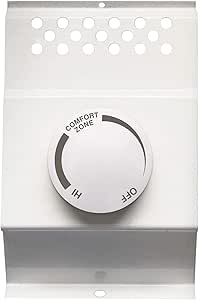 | Best Built-In Manual Replacement | Model: BTF2W | Thermostat type: Double-pole built-in baseboard heater thermostat | Control: Mechanical dial | VIEW ON AMAZON | See Our Full Breakdown |
| meross Wi-Fi Smart Thermostat for Electric Baseboard and In-Wall Heaters |  | Best for Multi-Type Electric Heating | Compatible systems: Electric baseboard, convector, fan-forced, and in-ceiling radiant | Voltage and maximum load: 120–240V; 16A | Maximum output: 1,920W at 120V; 3,840W at 240V | VIEW ON AMAZON | See Our Full Breakdown |
| baseboard heater thermostat smart control | Connectivity | Model | Voltage |
|---|---|---|---|
| Mysa Smart Thermostat Lite for | Wi-Fi and Bluetooth | — | 120V, 208V, and 240V |
| Mysa Smart Thermostat V2 for E | Wi-Fi; no hub required | — | — |
| meross Matter Smart Thermostat | Wi-Fi and Matter | MTS215 | 120–240V |
| KING K902-B Hoot Wi-Fi Line Vo | — | K902-B | 120V, 208V, and 240V |
| Mysa Smart Thermostat V2 for E | Wi-Fi and NFC | — | — |
| Honeywell Home 5-2 Day Program | — | RLV4305A1000/E1 | 240 V |
| KALOR TECH Wi-Fi Smart Thermos | 2.4 GHz Wi-Fi | 829F | — |
| KALOR TECH Wi-Fi Smart Thermos | Wi-Fi; 2.4 GHz required for setup | AC603H | — |
| KING K901-W Hoot WiFi Line Vol | Wi-Fi | K901-W | 120/208/240V |
| King Electric K902-W Hoot WiFi | Wi-Fi | K902-W | 120/208/240V |
| meross Matter Smart Thermostat | Matter and Wi-Fi | MTS215 | — |
| Cadet BTF2W Double-Pole Built- | — | BTF2W | 120V, 208V, or 240V |
| meross Wi-Fi Smart Thermostat | — | — | — |
More Details on Our Top Picks
Mysa Smart Thermostat Lite for Electric Baseboard Heaters
The Mysa Smart Thermostat Lite is my strongest all-around choice for buyers who want remote control and scheduling without committing to one smart-home platform. It supports Apple HomeKit, Alexa, and Google Home, while the app adds weekly schedules, geofencing, vacation mode, and energy reports without a hub or subscription. Compared with the KING K902-B, it offers broader voice-assistant integration and a longer stated warranty; the KING counters with a larger screen and adjustable temperature limits. The Lite’s main hurdle is installation: it needs four wires, including a neutral or second live wire, so it may not replace a basic two-wire thermostat without electrical changes. It is also limited to electric heating, not standard HVAC.
Pros:- Works with Apple HomeKit, Alexa, and Google Home
- App supports weekly schedules, remote adjustments, and energy reports
- No hub or monthly subscription is required
- Five-year manufacturer warranty
Cons:- Four-wire installation may require rewiring or an electrician
- Only controls compatible electric heating systems
Best for: Electric-heater owners who want app scheduling and the freedom to use Apple HomeKit, Alexa, or Google Home without a separate hub or subscription.
Not ideal for: Buyers with only two thermostat wires, no neutral or second live wire, or a low-voltage central HVAC system.
- Compatible heaters:Electric baseboard, fan-forced, wall, and convector heaters
- Voltage:120V, 208V, and 240V
- Wiring:Single-pole and double-pole; requires four wires
- Connectivity:Wi-Fi and Bluetooth
- Control methods:App, touch, and voice
- Smart-home platforms:Apple HomeKit, Amazon Alexa, and Google Home
- Scheduling and features:Seven-day scheduling, auto-scheduling, geofencing, vacation mode, and energy tracking
- Display and mounting:LCD; wall mount
- Warranty:Five years
Our verdict“Choose the Mysa Lite if broad smart-home support and straightforward app scheduling matter more than avoiding four-wire installation.”
Mysa Smart Thermostat V2 for Electric Baseboard Heaters (Matte Black)
This Mysa Smart Thermostat V2 in Matte Black is the more feature-rich Mysa choice for buyers who want comfort information alongside remote heating control. Its built-in humidity sensor adds context to room conditions, while per-room energy tracking can help identify which heated spaces use the most electricity. Like the Mysa Lite, it works with HomeKit, Alexa, and Google Home, and its app has no monthly subscription fee. The case for paying more attention to this model is strongest when those extra readings matter: compared with the meross Matter thermostat, it lists humidity sensing but not Matter support or open-window detection. Both still require four-wire installation, and neither works with low-voltage HVAC. This Mysa also has a specified maximum load, so buyers should check heater wattage before choosing it.
Pros:- Built-in humidity sensor adds another room-comfort reading
- Per-room energy tracking helps compare heating use
- Works with HomeKit, Alexa, and Google Home without a hub
- Five-year hardware warranty and no monthly app fee
Cons:- Requires four wires, including a neutral or second live wire
- Limited to high-voltage electric heating rather than standard HVAC
- Maximum load is specified, so heater wattage needs checking
Best for: Homeowners with compatible high-voltage electric heaters who want room-level energy data and humidity readings alongside app and voice control.
Not ideal for: Buyers with a two-wire setup, low-voltage HVAC, or a heater load above the stated 3,800W-at-240V limit.
- Voltage compatibility:120–240V
- Maximum load:1,900W at 120V; 3,800W at 240V
- Installation:Four-wire; requires a neutral or second live wire
- Connectivity:Wi-Fi; no hub required
- Voice assistants:Apple HomeKit, Amazon Alexa, and Google Home
- Sensors and energy features:Built-in humidity sensor and per-room energy tracking
- Color:Matte black
- Warranty:Five-year hardware warranty
Our verdict“Pick this Mysa V2 if humidity and room-level energy insights justify its extra feature set over the Mysa Lite.”
meross Matter Smart Thermostat for Electric Baseboard Heaters
The meross Matter Smart Thermostat earns its place for buyers building around Matter-enabled devices rather than choosing a thermostat based only on one assistant’s app. Its stated compatibility spans Alexa, Apple Home, Google Home, and SmartThings, with app and voice control, scheduling, and energy monitoring. A useful distinction from the Mysa Smart Thermostat Lite is open-window detection, which can pause heating when a window is detected as open; Mysa instead lists geofencing and vacation mode. The meross feature set is attractive, but the supplied details do not specify its wiring requirements, maximum load, or warranty, so I would verify those against the heater and installation before buying. Like the Mysa options, it is for high-voltage electric heat, not 24V HVAC or heat pumps.
Pros:- Matter support spans Alexa, Apple Home, Google Home, and SmartThings
- App and voice control with programmable scheduling
- Energy monitoring provides information about electricity consumption
- Open-window detection can pause heating
Cons:- Not compatible with 24V HVAC, heat pumps, or conventional air conditioning
- Provided product details do not state wiring requirements or maximum load
- Provided product details do not list a warranty
Best for: Smart-home owners using Matter-compatible platforms who want scheduling, electricity monitoring, and open-window detection for electric heaters.
Not ideal for: Owners of 24V HVAC, heat pumps, or conventional air conditioning, and buyers who need confirmed load or wiring limits before purchase.
- Model:MTS215
- Voltage:120–240V
- Compatible systems:Electric baseboard, convector, and fan-forced heaters
- Connectivity:Wi-Fi and Matter
- Control:App and voice
- Smart-home platforms:Alexa, Apple Home, Google Home, and SmartThings
- Features:Scheduling, energy monitoring, and open-window detection
- Mounting and material:Wall mount; ABS
- Color:Black
Our verdict“Choose meross if Matter integration and open-window detection fit your home, after confirming wiring and load compatibility.”
KING K902-B Hoot Wi-Fi Line Voltage Smart Programmable Thermostat, 120/208/240V, Double-Pole, 4-Wire, Black
The KING K902-B Hoot suits buyers who prefer setting a detailed heating routine at the thermostat itself, rather than relying mainly on smart-home integrations. Its four-inch touchscreen and four or six daily programming periods give schedules more granularity than the seven-day schedule described for the Mysa Lite. Adjustable temperature limits can also help households set a ceiling for electric-heater operation. The tradeoff is a narrower smart-control proposition: the supplied specifications list Wi-Fi and the Hoot app, but not HomeKit, Alexa, or Google Home support. By comparison, the meross Matter thermostat is a clearer fit for a home organized around multiple platforms. The KING is limited to compatible electric heaters, and the product data lists no manufacturer warranty, which makes it a less reassuring choice for buyers prioritizing long-term coverage.
Pros:- Four- or six-period daily programming supports detailed routines
- Four-inch touchscreen allows local adjustments
- Adjustable maximum temperature limits
- Supports 120V, 208V, and 240V compatible heaters
Cons:- Wi-Fi app control is listed, but major voice-assistant integrations are not
- Designed for electric heaters rather than general HVAC
- No manufacturer warranty is listed in the product data
Best for: Households with compatible electric heaters that want multiple daily schedule periods, on-unit touchscreen control, and adjustable temperature limits.
Not ideal for: Buyers seeking listed HomeKit, Alexa, or Google Home integration, standard HVAC compatibility, or a stated manufacturer warranty.
- Model:K902-B
- Voltage:120V, 208V, and 240V
- Wiring:Double-pole, four-wire
- Compatible heaters:Baseboard, fan-forced, and radiant electric heaters
- Connectivity and control:Wi-Fi; touchscreen and Hoot smartphone app
- Display:Four-inch digital screen
- Temperature range and accuracy:41–90°F; ±1°F
- Programming:Four or six periods per day
- Maximum wattage:1,920W
Our verdict“Choose the KING K902-B if local touchscreen control and several daily schedule periods matter more than broad smart-home integration.”
Mysa Smart Thermostat V2 for Electric Baseboard Heaters
This Mysa Smart Thermostat V2 is a good fit for buyers who want heating to respond to household routines as well as scheduled times. Its geofencing can tie control to location, while app and touchscreen access, energy insights, and adaptive display brightness cover everyday adjustments at home and away. The listed heater compatibility includes baseboard, convector, fan-forced, and radiant ceiling systems, giving it a broader stated range than the KING K902-B, which lists baseboard, fan-forced, and radiant heaters. It also supports Alexa, Google Assistant, and HomeKit. The main limitation is shared with the other Mysa models: installation needs at least four wires, and the thermostat is not for low-voltage or two-wire systems. Unlike the matte-black V2 listing, this product data does not mention a humidity sensor.
Pros:- Geofencing complements schedules for away-from-home control
- Works with Alexa, Google Assistant, and Apple HomeKit
- Supports baseboard, convector, fan-forced, and radiant ceiling heating
- Energy insights and adaptive display brightness are included
Cons:- Requires at least four wires, including a neutral or second live wire
- Not compatible with low-voltage or two-wire heating systems
- Maximum load may rule it out for some heater setups
Best for: Households with compatible 120–240V electric heaters that want geofencing, energy insights, and control across several heater types.
Not ideal for: Owners of two-wire or low-voltage systems, or buyers who specifically want the humidity sensor listed for the matte-black Mysa V2.
- Compatible voltage:120–240V
- Maximum load:1,900W at 120V; 3,800W at 240V
- Minimum wiring:At least four wires, including a neutral or second live wire
- Connectivity:Wi-Fi and NFC
- Smart-home compatibility:Amazon Alexa, Google Assistant, and Apple HomeKit
- Display:3.5-inch LED screen
- Controls:App, touchscreen, and remote control
- Features:Scheduling, geofencing, energy insights, adaptive display, and audible touch feedback
- Dimensions and weight:0.8 × 3.5 × 5.1 inches; 510 g
Our verdict“Choose this Mysa V2 if geofencing and broad electric-heater compatibility matter more than a listed humidity sensor.”
Honeywell Home 5-2 Day Programmable Thermostat for Electric Heaters
If smart control means setting a dependable heating routine rather than using an app, this Honeywell is the straightforward pick. Its weekday and weekend schedules each offer four daily periods, so I can set different routines for workdays and days at home. Silent TRIAC switching and temperature accuracy of ±0.27°F with baseboards and convectors make it a more focused choice for steady comfort than the Wi-Fi KALOR TECH 829F, which adds remote and voice control instead.
The tradeoff is clear: this model has no Wi-Fi, app, or voice control, and its 240V, 2-wire requirements limit compatibility. It also cannot control central heating or loads outside its specified resistive range. I’d choose it for precise, quiet scheduling at the wall, not for changing a room’s temperature while away.
Pros:- Separate weekday and weekend schedules with four periods per day
- Silent TRIAC switching and specified ±0.27°F accuracy with baseboards and convectors
- Backlit display and temporary temperature override
- Works with several types of 240V electric heaters
Cons:- No Wi-Fi, smartphone app, or voice-assistant control
- Limited to compatible resistive loads within its specified range
- Not compatible with central heating systems
Best for: Homeowners with compatible 240V electric baseboard or convector heaters who want quiet operation and different weekday and weekend schedules without app control.
Not ideal for: Buyers who need remote or voice control, have a central 24V heating system, or need a thermostat for an inductive load or a load outside its rating.
- Model:RLV4305A1000/E1
- Voltage:240 V
- Maximum load:3,500 W at 240 V; 14.6 A resistive
- Minimum load:2 A resistive
- Programming:5-2 day, four periods per day
- Connection:2-wire, non-polarized
- Display:Backlit digital
- Dimensions:1.31 × 4.75 × 4.88 in
Our verdict“Choose this Honeywell if quiet, precise scheduled control matters more than app access and your heater matches its 240V wiring and load requirements.”
KALOR TECH Wi-Fi Smart Thermostat for Electric Baseboard Heaters (829F)
The 829F is a practical fit for buyers who want more than app-only smart control. I can adjust it at the touchscreen, through the app, or by Alexa and Google Assistant, then set schedules or use freeze protection when a room needs a minimum temperature. Its support for 120–240V electric baseboard heaters gives it a broader voltage range than the 240V-only Honeywell RLV4305A1000/E1.
That flexibility depends on a compatible installation: the 829F is not for 24V central systems or single-pole setups, and setup requires 2.4 GHz Wi-Fi. Compared with KALOR TECH’s AC603H, it also offers a Fahrenheit or Celsius display rather than Fahrenheit only. I’d favor this version if display-unit choice matters, but the supplied wall plate and installation parts do not remove the need to verify wiring compatibility.
Pros:- App, touchscreen, Alexa, and Google Assistant control
- Supports 120–240V electric baseboard heaters
- Displays temperature in Fahrenheit or Celsius
- Includes a custom wall plate and installation components
Cons:- Requires 2.4 GHz Wi-Fi for installation
- Incompatible with 24V central heating and single-pole systems
- Smart features depend on app and network access
Best for: Owners of compatible 120–240V electric baseboard heaters who want app, touchscreen, and voice controls plus a choice of Fahrenheit or Celsius.
Not ideal for: People with 24V central heating, single-pole wiring, no 2.4 GHz Wi-Fi for setup, or a preference for a no-network thermostat.
- Model:829F
- Compatible systems:120–240V electric baseboard heaters
- Connectivity:2.4 GHz Wi-Fi
- Display:LCD; Fahrenheit or Celsius
- Controls:App, touch, voice, and remote
- Voice assistants:Amazon Alexa and Google Assistant
- Compatible apps:Smart Life and Tuya
- Incompatible systems:24V central heating and single-pole systems
Our verdict“Pick the 829F if your wiring is compatible and you want voice and app control with the added flexibility of a Fahrenheit-or-Celsius display.”
KALOR TECH Wi-Fi Smart Thermostat for Electric Baseboard Heaters
This KALOR TECH AC603H covers the smart-control basics for compatible electric baseboard systems: Wi-Fi app access, touch controls, Alexa and Google Assistant support, and programmable schedules. Its freeze-protection function can help maintain a minimum temperature in a room when the heat is turned down. It shares much of the 829F’s control approach, but the Fahrenheit-only LCD makes the display simpler for buyers who do not need Celsius.
The tradeoff is that this model still needs 2.4 GHz Wi-Fi for setup and excludes 24V central heating and single-pole systems. Unlike the Honeywell RLV4305A1000/E1, it offers remote and voice access, but the supplied information does not give the Honeywell’s precise temperature-accuracy figure or a load rating to compare. I’d choose the AC603H for app-enabled scheduling, while checking heater wiring before buying.
Pros:- App, touch, Alexa, and Google Assistant controls
- Programmable temperature schedules
- Freeze-protection function can help maintain a minimum temperature
- Includes a custom wall plate and installation parts
Cons:- Requires 2.4 GHz Wi-Fi for setup
- Not compatible with 24V central heating or single-pole systems
- Fahrenheit-only display offers less unit flexibility than the KALOR TECH 829F
Best for: Households with compatible 120–240V baseboard heaters that want app and voice control and use Fahrenheit for temperature settings.
Not ideal for: Buyers with 24V central heating or single-pole wiring, or those who need Celsius display options or smart control without Wi-Fi setup.
- Model:AC603H
- Compatible systems:120–240V electric baseboard heaters
- Display:Fahrenheit LCD
- Connectivity:Wi-Fi; 2.4 GHz required for setup
- Controls:Touch, app, Alexa, and Google Assistant
- Mounting:Wall mount
- Included components:Thermostat, custom wall plate, installation wires, screws, and instructions
- Color:White
Our verdict“Choose the AC603H for Fahrenheit-based app and voice scheduling if your electric baseboard wiring is compatible.”
KING K901-W Hoot WiFi Line Voltage Smart Programmable Thermostat
The K901-W earns its place by pairing Wi-Fi scheduling and app control with support for 120, 208, and 240V single-pole, 3-wire installations. That wiring fit sets it apart from the KING K902-W, which is specified for double-pole, 4-wire systems; checking this distinction can prevent choosing a smart thermostat that does not match the existing setup. It also controls baseboard, fan-forced, and radiant electric heaters, making it useful when one thermostat needs to serve more than one electric-heater type.
Its schedule can use four or six periods per day, and the 41°F–90°F range provides room for a broad range of settings. The tradeoff is that the listed ±1°F accuracy is less precise than the Honeywell’s stated ±0.27°F accuracy for baseboards and convectors. The supplied data also gives no load minimum or maximum amperage, so I’d confirm electrical capacity and wiring before purchase.
Pros:- Wi-Fi and smartphone app control
- Designed for 120/208/240V single-pole, 3-wire installations
- Compatible with baseboard, fan-forced, and radiant electric heaters
- Supports four or six programmable periods per day
Cons:- Not the specified wiring match for double-pole, 4-wire systems such as those intended for the KING K902-W
- ±1°F stated accuracy is less precise than the Honeywell’s specified baseboard accuracy
- Provided product data does not state a maximum wattage or amperage
Best for: Homeowners with a compatible 120/208/240V single-pole, 3-wire electric-heating circuit who want Wi-Fi scheduling across baseboard, fan-forced, or radiant heaters.
Not ideal for: Buyers with double-pole, 4-wire wiring, a 24V central system, or a need for a clearly stated load rating before selecting a thermostat.
- Model:K901-W
- Voltage:120/208/240V
- Installation:Single pole, 3-wire
- Connectivity:Wi-Fi
- Temperature range:41°F–90°F (5°C–32°C)
- Temperature accuracy:±1°F
- Programmable periods:Four or six per day
- Maximum wattage:3,840 watts
- Compatible heaters:Baseboard, fan-forced, and radiant electric heaters
Our verdict“Choose the K901-W when you need Wi-Fi control for a compatible single-pole, 3-wire electric-heating circuit and have confirmed the load rating.”
King Electric K902-W Hoot WiFi Line Voltage Smart Programmable Thermostat
For a compatible double-pole, 4-wire circuit, the K902-W brings Wi-Fi app control to a broad range of line-voltage electric heaters. Its large LCD touchscreen keeps local adjustment direct, while schedules with up to six periods per day let me set more changes across the day than the Honeywell’s four-period weekday and weekend program. The 120/208/240V support and compatibility with baseboard, fan-forced, and radiant heaters give it wider heater-type coverage than a thermostat designed only for baseboards.
The main limitation is also the first thing to check: it is not a general replacement for every existing thermostat, since it requires double-pole, 4-wire wiring. Compared with the K901-W, this is the better match for that wiring configuration, while the K901-W is specified for single-pole, 3-wire installations. Both list ±1°F accuracy, and neither should be chosen without confirming the circuit and heater load.
Pros:- Wi-Fi smartphone app control and a local touchscreen
- Supports up to six programmable periods per day
- Compatible with 120/208/240V baseboard, fan-forced, and radiant heaters
- Electronic temperature sensing with stated ±1°F accuracy
Cons:- Requires double-pole, 4-wire installation
- ±1°F stated accuracy is less precise than the Honeywell’s specified baseboard accuracy
- Smart features depend on Wi-Fi and app access
Best for: Owners of 120/208/240V double-pole, 4-wire electric-heating systems who want app control, touchscreen adjustment, and detailed schedules.
Not ideal for: Buyers with single-pole, 3-wire wiring, 24V central heating, or an installation whose voltage and load have not been confirmed.
- Model:K902-W
- Voltage:120/208/240V
- Wiring:Double pole, 4-wire
- Connectivity:Wi-Fi
- Maximum wattage:3,840 watts
- Temperature range:41°F–90°F (5°C–32°C)
- Temperature accuracy:±1°F
- Programming:Up to six time periods per day
- Compatible heaters:Baseboard, fan-forced, and radiant electric heaters
Our verdict“Pick the K902-W for app-enabled scheduling when your electric heater uses the required double-pole, 4-wire setup.”
meross Matter Smart Thermostat for Electric Baseboard Heaters
I’d choose this model for a high-voltage baseboard setup where smart-home flexibility matters as much as scheduling. Matter support gives it a broader platform fit than the Wi-Fi-only meross thermostat in this lineup, while app and voice controls make it easier to adjust heat away from the wall. Its energy monitoring and open-window detection also offer more feedback and automation than the manual Cadet BTF2W. The tradeoff is system fit: this thermostat is for 120–240V electric heaters, not 24V HVAC, heat pumps, or conventional air conditioning. I’d also check the existing wiring and smart-home setup before choosing it; Matter adds flexibility, but it does not make an incompatible heating system compatible.
Pros:- Matter support works with Alexa, Apple Home, Google Home, and SmartThings
- App, remote, and voice control with scheduling
- Energy monitoring helps track electricity use
- Open-window detection can pause heating when a window is open
Cons:- Limited to compatible 120–240V electric heating systems
- Not suitable for 24V HVAC, heat pumps, or conventional air conditioning
Best for: Homeowners with 120–240V electric baseboard, convector, or fan-forced heating who want Matter-based control alongside energy monitoring and schedules.
Not ideal for: Households with 24V HVAC, heat pumps, or conventional air conditioning, or buyers who want a simple mechanical control without smart-home setup.
- Model:MTS215
- Compatible heaters:120–240V electric baseboard, convector, and fan-forced
- Connectivity:Matter and Wi-Fi
- Smart-home platforms:Amazon Alexa, Apple Home, Google Home, SmartThings
- Control:App, remote, and voice
- Features:Scheduling, energy monitoring, open-window detection, lockable controls, offline control
- Display and mounting:LCD; wall mount
- Dimensions:1.7 × 2.9 × 4.6 in (D × W × H)
Our verdict“Choose this meross model for broad Matter smart-home control of compatible electric heaters, but skip it if your system uses low-voltage HVAC.”
Cadet BTF2W Double-Pole Built-In Baseboard Heater Thermostat, 22 Amp, White
The Cadet BTF2W is the practical pick when the goal is direct heater control, not smart-home automation. It fits compatible Cadet baseboard heaters in place of an end plate, avoiding a separate wall thermostat and additional wiring runs. Its dial spans 40°F to 85°F, and the positive-off position gives buyers a clear way to shut the heater down. By comparison, the meross Matter thermostat offers app control, schedules, and energy monitoring; the Cadet trades those conveniences for simpler local operation. That simplicity also narrows its audience: it is Cadet-only and has no programmable schedule or remote access. I’d pick it for a compatible heater where a straightforward built-in dial is preferable to adding smart controls.
Pros:- Installs at the compatible heater end in place of an end plate
- Does not require additional wiring runs
- Positive-off position provides a direct shutoff
- Supports 120V, 208V, and 240V circuits up to 22 amps
Cons:- Compatible only with Cadet baseboard heaters
- Mechanical dial has no scheduling or smart control
Best for: Owners of compatible Cadet electric baseboard heaters who want a direct-mounted dial, positive-off control, and no added wiring run.
Not ideal for: Buyers with non-Cadet heaters or anyone who wants app access, voice control, energy monitoring, or scheduled temperature changes.
- Model:BTF2W
- Thermostat type:Double-pole built-in baseboard heater thermostat
- Control:Mechanical dial
- Temperature range:40°F to 85°F
- Voltage:120V, 208V, or 240V
- Maximum current:22 amps
- Compatibility and mounting:Cadet baseboard heaters only; heater-end installation
- Positive off:Yes
Our verdict“Choose the BTF2W for simple built-in control on a compatible Cadet heater, not for connected or programmable heating.”
meross Wi-Fi Smart Thermostat for Electric Baseboard and In-Wall Heaters
This meross thermostat suits buyers whose heating layout extends beyond standard baseboards: it supports convector, fan-forced, and in-ceiling radiant systems as well as electric baseboard heaters. Like the Matter meross model, it provides schedules, app and voice control, energy monitoring, and open-window detection. Its stated 41°F–95°F range and 1°F accuracy add useful control detail, but it lacks the Matter connectivity listed for its sibling. Installation is another dividing line: the electrical box needs at least four wires, so I’d verify the wiring before buying. Compared with the Cadet BTF2W, this option reaches more heater types and adds remote control, but it is not a built-in replacement and requires compatible wiring.
Pros:- Supports several high-voltage electric heating types, including in-ceiling radiant
- Works with Apple Home, Alexa, Google Home, and SmartThings
- Scheduling, energy monitoring, and open-window detection support more informed control
- Power-off memory and 1°F temperature accuracy are specified
Cons:- Requires at least four wires in the electrical box
- Does not list Matter support, unlike the other meross model
- Heater is not included
Best for: Homeowners with compatible 120–240V electric baseboard, convector, fan-forced, or in-ceiling radiant heat who want schedules and app or voice control.
Not ideal for: Buyers with fewer than four wires in the electrical box, low-voltage HVAC, or a preference for Matter connectivity rather than standard Wi-Fi smart-home integration.
- Compatible systems:Electric baseboard, convector, fan-forced, and in-ceiling radiant
- Voltage and maximum load:120–240V; 16A
- Maximum output:1,920W at 120V; 3,840W at 240V
- Wiring requirement:At least 4 wires in the electrical box
- Temperature range and accuracy:41°F–95°F; 1°F accuracy
- Connectivity and platforms:Wi-Fi; Apple Home, Alexa, Google Home, SmartThings
- Control and display:App, remote, and voice; LCD
- Features:Scheduling, energy monitoring, open-window detection, power-off memory
- Mounting and material:Wall mount; ABS
Our verdict“Choose this model for Wi-Fi scheduling across multiple compatible electric heater types if your wiring meets its four-wire requirement.”

How We Picked
I ranked these thermostats around the job buyers are actually trying to solve: safely controlling electric baseboard heat while gaining the right level of automation. I weighed stated compatibility with line-voltage electric heating, support for common 120/208/240V systems where specified, smart-home and app control, scheduling, and the clarity of each model’s installation fit. A connected model earns a higher place when its smart features appear useful without obscuring the basic requirements for a compatible installation.
The order also reflects how distinct each product is within this lineup. Mysa V2 leads as the most balanced smart-control recommendation; meross Matter follows for buyers whose priority is Matter integration, and KING Hoot models offer a separate Wi-Fi programmable route. Simpler programmable and built-in thermostats rank lower for this specific smart-control query, though they can be better choices for buyers who do not need app access. Similar or duplicate listings are treated cautiously: I do not assume that a suffix, finish, or listing title proves a different feature set, so buyers should verify the exact model and electrical specifications before purchase.
Factors to Consider When Choosing Baseboard Heater Thermostat Smart Control
Choosing a thermostat for baseboard heat starts with electrical compatibility, not the app. I would work through these checks before deciding which connected features are worth paying for.
Match the thermostat to the heater circuit
Electric baseboard systems commonly use line voltage, which is different from the low-voltage wiring found in many central HVAC systems. Check the heater’s voltage, the circuit arrangement, and the thermostat’s stated ratings before ordering. A product listing may mention 120/208/240V, but that alone does not confirm compatibility with every wiring setup. Also verify the number of wires and whether your existing thermostat is single-pole or double-pole. If the labels or wiring are unclear, ask a qualified electrician rather than relying on wire color or a generic online diagram. A smart thermostat that cannot safely match the circuit is not a useful upgrade.
Decide whether you need smart control or just a schedule
Remote temperature changes, app schedules, and smart-home routines solve different problems. If you mainly want heat to follow a predictable weekday pattern, a basic programmable model may cover the need without adding an account or connected device. App control is more useful when plans change often, rooms are managed from away from home, or you want to adjust heating without walking to the wall. Matter support can help a thermostat fit into a broader smart-home setup, but it does not remove the need to check device and platform compatibility. Choose features around the way you control the room, not a checklist of capabilities you may never use.
Check load and wiring before installation
Thermostats have limits for the electrical load they can control, and a room with multiple heaters may exceed what one device supports. Add up the connected heater load using the manufacturer’s instructions and compare it with the thermostat rating. Confirm whether the installation calls for a neutral wire, a particular wire count, or a double-pole connection. Never assume two thermostats from the same brand share the same wiring requirements; model numbers and suffixes can signal meaningful differences. If you are replacing an older control, photograph and label the existing connections only after turning off the circuit and confirming it is de-energized. Get professional help when the circuit or installation is uncertain.
Consider how the control behaves when connectivity fails
Smart features depend on more than the thermostat: the home network, app, and sometimes a compatible hub or platform all play a part. Before buying, check which controls remain available from the thermostat itself if Wi-Fi or internet access is lost. A useful fallback lets someone adjust the room locally instead of leaving comfort entirely dependent on an app. Think about who else uses the room, too; a simple interface can matter more than advanced routines in a guest room or shared household. Buyers who want low-maintenance operation may prefer a dependable schedule and local control over a larger collection of connected features.
Compare similar listings by exact model number
This roundup includes repeated or closely named Mysa, meross, KALOR TECH, and KING Hoot products, so listing titles alone may not reveal the differences. Compare the exact model number, supported voltage, pole arrangement, app or Matter support, and included installation information. A finish change may be cosmetic, while a different suffix can identify a materially different configuration. Do not assume a Wi-Fi model supports Matter, or that two similarly named thermostats share the same load rating. Save the manufacturer’s specification page for the precise version you intend to order. This extra check is especially useful when retailers group several variants under one product page.
Pay for features you will actually use
Extra connected features make the most sense when they solve a recurring problem, such as controlling a room while away or coordinating heating with a smart-home routine. They add little value if the thermostat will be set once and left alone. Also account for installation: a more capable model may require different wiring or professional work, changing the overall effort of the upgrade. For a single room with a consistent routine, a basic programmable control can be a better fit than an app-first device. For several rooms or changing schedules, remote access and easier adjustments may justify choosing a connected thermostat. Match the feature set to the room and household rather than buying for an imagined future setup.
Frequently Asked Questions
Can I replace my existing baseboard thermostat with any smart thermostat?
No. Baseboard thermostats often control line-voltage circuits, while many general smart thermostats are designed for low-voltage central heating and cooling systems. Check the heater voltage, thermostat rating, wire arrangement, and load before choosing a replacement. The product must be explicitly suitable for your type of electric heat and circuit. If you cannot identify those details confidently, have an electrician inspect the installation before you buy.
Is a Matter thermostat a better choice than a Wi-Fi-only model?
It depends on how you run your smart home. Matter can make it easier to connect compatible devices across supported platforms, but both the thermostat and your controller must support the setup you plan to use. A Wi-Fi-only thermostat may be simpler if you are happy using its own app and do not need cross-platform routines. Check the exact product version because similar listings can describe different connectivity options. Choose Matter for the ecosystem flexibility you will use, not just because the standard appears in the product title.
Should I choose a single-pole or double-pole thermostat?
The right configuration depends on the existing circuit and the thermostat’s installation requirements, not simply on personal preference. Double-pole controls can disconnect both sides of a line-voltage circuit, while the behavior and wiring of single-pole models differ. Check the manufacturer’s instructions and the existing thermostat’s wiring before selecting a replacement. A model’s voltage rating does not by itself establish that its pole arrangement matches your system. If you are unsure, get an electrician to identify the circuit and confirm the correct type.
Do I need one smart thermostat for every baseboard heater?
That depends on how the heaters are wired and how you want to control each room. A thermostat typically controls a specific circuit or group of heaters within its load rating; it is not automatically a whole-home controller. Separate room controls allow different schedules and temperatures, but each device must be compatible with its circuit and total load. Do not combine heaters on one thermostat unless the manufacturer’s limits and wiring instructions allow it. For multi-room installations, plan the zones and control locations before ordering devices.
Is a programmable thermostat enough if I do not need phone control?
Often, yes. If your heating routine is predictable and you do not need remote changes or smart-home integrations, a programmable thermostat can provide scheduled temperature control with fewer connected features. Options such as the Honeywell Home programmable model or a built-in Cadet control represent a different approach from the app-focused Mysa, meross, and KING Hoot picks. Confirm that the specific model fits your circuit and offers the scheduling you need. A simpler control is a sensible choice when convenience from an app would rarely affect how you use the room.
Conclusion
For most buyers seeking connected baseboard heat, I would start with the Mysa Smart Thermostat V2 as the best overall balance. The meross Matter Smart Thermostat is my pick for buyers prioritizing Matter-based integration, while the KING Hoot Wi-Fi models suit people who want app-connected programmable control and have verified the exact model’s electrical fit. For a simpler entry into scheduled control, the Honeywell Home programmable thermostat is the better beginner-oriented direction; buyers who do not need smart features can look at the Cadet built-in thermostat. I would choose Mysa Lite when a more pared-back Mysa option fits the plan, and treat the KALOR TECH listings as candidates only after confirming their exact specifications. Above all, match voltage, pole configuration, wiring, and load before choosing by app features.
Fall Picks

eufy Security Essential 7-Piece Alarm System
As an affiliate, we earn on qualifying purchases.