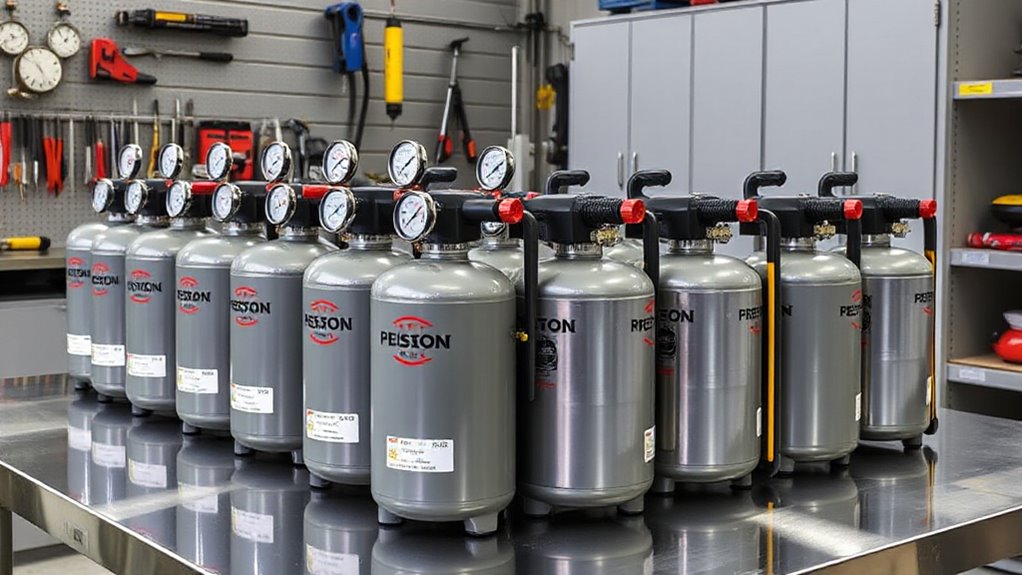

The best air compressors depend on whether you need a quick tire top-up, a portable tank for home projects, or steady air for a workshop. I rank the Metabo HPT 6-Gallon 200 PSI pancake compressor as the best overall for its higher pressure and practical portable-tank format. The VEVOR 13-Gallon stands out for quieter stationary use, while the DEWALT 20V MAX tire inflator is a more convenient choice for roadside inflation. The main tradeoffs are tank capacity versus portability, and sustained tool use versus compact, tire-focused convenience. Read on for the full breakdown and help matching an air compressor to your work.

Get kitchen staples and gadgets delivered free with Prime
- Fast, free delivery on millions of items
- Prime Video, Amazon Music and more included
- Member-only deals all year
Key Takeaways
- The Metabo HPT combines a portable six-gallon tank with a stated 200 PSI maximum, giving it a different pressure ceiling from the other pancake compressors in this roundup.
- The VEVOR 13-gallon compressor is the standout for buyers prioritizing quieter operation; its listed 66 dB rating comes with a larger footprint than compact pancake models.
- The Klutch 29-gallon and 20-gallon compressors are better aligned with shop use than tire inflators, but their tanks and 120V power requirements reduce portability.
- Cordless and dual-power inflators solve a narrower problem than tank compressors: convenient tire inflation, not running air tools for extended periods.
- Six-gallon pancake compressors occupy the middle ground for home tasks, while two-gallon models favor easier carrying over stored-air capacity.
| AstroAI L7 Cordless Tire Inflator, 150 PSI |  | Best Compact Cordless Inflator | Maximum pressure: 150 PSI | Pressure range: 3–150 PSI | Battery capacity: 4,000 mAh | VIEW ON AMAZON | See Our Full Breakdown |
| CRAFTSMAN Dual Power Tire Inflator with Digital Gauge & Auto Shut-Off |  | Best for Home-and-Car Flexibility | Power sources: 12V DC car plug and 120V AC home outlet | Listed maximum pressure: 125 PSI | Claimed maximum pressure: 150 PSI | VIEW ON AMAZON | See Our Full Breakdown |
| RyanTek 15-Gallon Oil-Free Air Compressor, 2 HP |  | Best Quieter Mid-Size Workshop Compressor | Tank capacity: 15 gallons | Motor power: 2 HP | Airflow: 4.5 CFM at 90 PSI | VIEW ON AMAZON | See Our Full Breakdown |
| Klutch 20-Gallon Portable Air Compressor, 2 HP, 120V |  | Best for Larger Tank Capacity | Tank capacity: 20 gallons | Motor power: 2 HP | Maximum pressure: 175 PSI | VIEW ON AMAZON | See Our Full Breakdown |
| ECOMAX 6-Gallon 150 PSI Oil-Free Pancake Air Compressor with 10-Piece Accessory Kit |  | Best Accessory Bundle for DIY Tasks | Tank capacity: 6 gallons | Maximum pressure: 150 PSI | Motor power: 1.5 HP | VIEW ON AMAZON | See Our Full Breakdown |
| CRAFTSMAN 2-Gallon Portable Air Compressor with 10-Piece Accessory Kit |  | Best Compact Compressor with Accessories | Tank capacity: 2 gallons | Maximum pressure: 125 PSI | Motor power: 1/3 HP | VIEW ON AMAZON | See Our Full Breakdown |
| Craftsman 6-Gallon 150 PSI Oil-Free Pancake Air Compressor |  | Best Value for General Home Projects | Tank capacity: 6 gallons | Maximum pressure: 150 PSI | Airflow: 2.6 SCFM at 90 PSI | VIEW ON AMAZON | See Our Full Breakdown |
| ETENWOLF Vortex S6 Portable Tire Inflator |  | Best Cordless Inflator for Larger Tires | Maximum pressure: 160 PSI | Inflation rate: 1.5 CFM at 0 PSI | Battery capacity: 19,200 mAh | VIEW ON AMAZON | See Our Full Breakdown |
| OlarHike Portable Tire Inflator with Rechargeable Battery and 12V DC Power |  | Best Lightweight Emergency Inflator | Power source: Rechargeable battery or 12V DC | Battery capacity: Three 2000 mAh batteries | Maximum compatible tire pressure: 51 PSI | VIEW ON AMAZON | See Our Full Breakdown |
| Metabo HPT 6-Gallon Portable Pancake Air Compressor, 200 PSI, EC914S |  | Best for Running Multiple Nailers | Model: EC914S | Tank capacity: 6 gallons | Maximum pressure: 200 PSI | VIEW ON AMAZON | See Our Full Breakdown |
| VEVOR 6.3 Gallon 2 HP Air Compressor, Max 116 PSI, Oil-Free Compressor Tank |  | Best Compact Workshop Compressor | Tank capacity: 6.3 gallons (24 L) | Motor power: 2 HP (1450 W) | Airflow: 3.35 CFM at 90 PSI | VIEW ON AMAZON | See Our Full Breakdown |
| Klutch 29-Gallon Air Compressor, 2.5 HP, 120V, 175 PSI |  | Best for Extended Shop Use | Tank capacity: 29 gallons | Motor power: 2.5 HP | Airflow: 5.1 CFM at 90 PSI | VIEW ON AMAZON | See Our Full Breakdown |
| DEWALT 20V MAX Portable Tire Inflator (DCC020IB) |  | Best Portable Tire Inflator | Power sources: 20V MAX battery, 12V DC, or 110V AC | Maximum pressure: 80 PSI | Battery type: Lithium-ion | VIEW ON AMAZON | See Our Full Breakdown |
| VEVOR 13-Gallon Oil-Free Air Compressor, 2HP, 125 PSI Max Pressure, 66dB Quiet Operation |  | Best Quiet Mid-Size Compressor | Tank capacity: 13 gallons | Motor power: 2 HP | Airflow: 4.6 SCFM at 90 PSI | VIEW ON AMAZON | See Our Full Breakdown |
| air compressor | Maximum pressure | Weight | Noise level | Tank capacity |
|---|---|---|---|---|
| AstroAI L7 Cordless Tire Infla | 150 PSI | 15.36 ounces | — | — |
| CRAFTSMAN Dual Power Tire Infl | — | — | 68 dB | — |
| RyanTek 15-Gallon Oil-Free Air | 125 PSI | 68.3 pounds | 66 dB at 4 m | 15 gallons |
| Klutch 20-Gallon Portable Air | 175 PSI | — | 80 dB | 20 gallons |
| ECOMAX 6-Gallon 150 PSI Oil-Fr | 150 PSI | — | — | 6 gallons |
| CRAFTSMAN 2-Gallon Portable Ai | 125 PSI | 19 lb | 78 dB | 2 gallons |
| Craftsman 6-Gallon 150 PSI Oil | 150 PSI | 30.8 lb | 82 dB | 6 gallons |
| ETENWOLF Vortex S6 Portable Ti | 160 PSI | — | — | — |
| OlarHike Portable Tire Inflato | — | 1.2 lb | — | — |
| Metabo HPT 6-Gallon Portable P | 200 PSI | Approximately 42 lb | 73 dB | 6 gallons |
| VEVOR 6.3 Gallon 2 HP Air Comp | 116 PSI (8 bar) | 43 lb | About 70 dB | 6.3 gallons (24 L) |
| Klutch 29-Gallon Air Compresso | 175 PSI | 127 lb | 81 dB | 29 gallons |
| DEWALT 20V MAX Portable Tire I | 80 PSI | 6.4 lb | — | — |
| VEVOR 13-Gallon Oil-Free Air C | 125 PSI | 71 lb | 66 dB | 13 gallons |
More Details on Our Top Picks
AstroAI L7 Cordless Tire Inflator, 150 PSI
I’d choose the AstroAI L7 when portability matters more than the sustained output of a tank compressor. At just over 15 ounces, it can live in a car or gear bag, and its preset modes and automatic shutoff simplify topping up tires without a separate gauge-and-stop routine. The stated battery capacity covers up to eight tires raised from 30 to 36 PSI, which suits routine maintenance better than repeated, large-volume inflation. Unlike the CRAFTSMAN Dual Power Tire Inflator, it runs cordless, but that convenience depends on keeping its battery charged rather than plugging into a vehicle or home outlet. It is limited to tires under 25 inches and needs a 10-minute rest after 15 minutes of continuous use, so I wouldn’t choose it for truck tires or prolonged work.
Pros:- Cordless design weighs just 15.36 ounces and is easy to store
- Preset modes and automatic shutoff simplify routine inflation
- Stated battery capacity handles up to eight tires from 30 to 36 PSI per charge
- Flashlight and USB power output add roadside and outdoor utility
Cons:- Not suitable for tires larger than 25 inches, including heavy-duty truck tires
- Requires a 10-minute rest after 15 minutes of continuous use
- Battery-powered operation requires charging ahead of use
Best for: Drivers, cyclists, and e-bike owners who want a lightweight inflator for occasional tire top-ups and roadside emergencies.
Not ideal for: Heavy-duty truck owners or anyone inflating several large tires back-to-back; the size limit and required rest period restrict that work.
- Maximum pressure:150 PSI
- Pressure range:3–150 PSI
- Battery capacity:4,000 mAh
- Weight:15.36 ounces
- Inflation modes:Car, motorcycle, bicycle, ball, and custom
- Pressure units:PSI, Bar, kPa, kg/cm²
- Continuous use limit:15 minutes, followed by a 10-minute rest
- Additional features:Automatic shutoff, digital display, flashlight with SOS and strobe, USB-C and USB input/output
Our verdict“Choose the AstroAI L7 for compact, cordless tire top-ups, but pick a plug-in inflator or tank compressor for larger tires and extended work.”
CRAFTSMAN Dual Power Tire Inflator with Digital Gauge & Auto Shut-Off
The CRAFTSMAN Dual Power Tire Inflator suits buyers who want one compact unit that can run from a car’s 12V outlet or a 120V home outlet. That two-source flexibility makes it less dependent on a charged battery than the AstroAI L7, while its LCD gauge and automatic shutoff help control routine tire inflation. The built-in light is useful when checking a tire after dark, and adapters broaden its use to bikes and inflatables. There is a meaningful spec conflict: the description claims 150 PSI, but the listed maximum is 125 PSI, so I’d treat 125 PSI as the more reliable figure unless confirmed otherwise. Its 29-inch hose may also limit reach, and this is a tire inflator rather than a substitute for a tank compressor used with pneumatic tools.
Pros:- Runs from either a 12V car outlet or a 120V home outlet
- LCD gauge and automatic shutoff support controlled tire inflation
- Built-in LED light helps with low-light roadside use
- Portable design and adapters suit tires, bikes, and inflatables
Cons:- Listed maximum of 125 PSI conflicts with the 150-PSI claim in the description
- 29-inch hose can limit access around a vehicle
- Not a tank compressor for sustained pneumatic-tool use
Best for: Drivers who want a small inflator for home and roadside tire maintenance without relying on a rechargeable battery.
Not ideal for: Buyers who need a verified 150-PSI rating, a long-reach hose, or sustained air for pneumatic tools.
- Power sources:12V DC car plug and 120V AC home outlet
- Listed maximum pressure:125 PSI
- Claimed maximum pressure:150 PSI
- Noise level:68 dB
- Hose length:29 inches
- Capacity:0.5 gallons
- Features:LCD display, automatic shutoff, LED light, AC/DC adaptable
- Dimensions:15.16 × 6.1 × 11.42 inches
Our verdict“Choose this CRAFTSMAN for plug-in flexibility at home and in the car, provided its listed 125-PSI limit suits your needs.”
RyanTek 15-Gallon Oil-Free Air Compressor, 2 HP
The RyanTek 15-gallon compressor offers a useful middle ground for buyers who need more than a portable pancake unit but don’t want to move up to the Klutch 20-Gallon Portable Air Compressor. Its stated 4.5 CFM at 90 PSI and twin-cylinder, oil-free pump suit tasks such as nailing, drilling, spraying, and tire inflation, while the vertical tank takes up less floor area than a wider setup. At a stated 66 dB, it is the quieter workshop choice against the Klutch’s 80 dB rating, though noise figures can depend on measurement conditions. The tradeoffs are a 68.3-pound body and a corded 110V supply: wheels help with repositioning, but this is not a grab-and-go compressor. I’d also confirm that its airflow matches any tool’s requirements before buying.
Pros:- 15-gallon tank and 4.5 CFM at 90 PSI support a range of workshop tasks
- Oil-free twin-cylinder pump avoids routine oil changes
- Stated 66 dB operation is quieter than the Klutch 20-gallon model’s listed 80 dB
- Vertical tank, wheels, and handle aid storage and repositioning
Cons:- 68.3-pound weight makes lifting and transport difficult
- Requires a corded 110V power source
- Airflow may not meet the needs of tools with higher continuous CFM demands
Best for: Home workshop owners who need a wheeled tank compressor for intermittent pneumatic-tool work and value a quieter stated operating level.
Not ideal for: Anyone needing a lightweight, cordless unit or sustained airflow beyond the stated 4.5 CFM at 90 PSI.
- Tank capacity:15 gallons
- Motor power:2 HP
- Airflow:4.5 CFM at 90 PSI
- Maximum pressure:125 PSI
- Pump type:Oil-free, twin-cylinder
- Power:110V corded electric
- Noise level:66 dB at 4 m
- Weight:68.3 pounds
Our verdict“Pick the RyanTek for a quieter, space-conscious workshop setup, but choose a larger-capacity compressor if your tools need more sustained airflow.”
Klutch 20-Gallon Portable Air Compressor, 2 HP, 120V
For buyers who want a larger air reserve, the Klutch 20-gallon compressor offers five gallons more tank capacity than the RyanTek 15-Gallon. Its 175-PSI maximum and listed 4.2 SCFM at 90 PSI suit intermittent nailing and spraying, while the oil-free pump avoids routine lubrication. The extra capacity comes with a clear penalty: at 90 pounds, it is much heavier than the RyanTek, even with wheels and an ergonomic handle. Its 80 dB noise rating also makes it the louder choice beside the RyanTek’s stated 66 dB, so I’d plan on a suitable workspace rather than treating it as a quiet household unit. Thermal overload protection and vibration-reducing foot stabilizers add practical safeguards, but the airflow figure—not tank size alone—should guide tool compatibility.
Pros:- 20-gallon tank provides more stored air than the RyanTek 15-gallon model
- Oil-free pump reduces routine maintenance
- Wheels and ergonomic handle help reposition the 90-pound unit
- Thermal overload protection and vibration-reducing foot stabilizers add practical safeguards
Cons:- At 90 pounds, it is heavy to load or carry
- Listed 80 dB noise level is higher than the RyanTek’s stated 66 dB
- 4.2 SCFM at 90 PSI may limit use with high-demand air tools
Best for: DIYers and small-shop owners who want a larger tank for intermittent nailing or spraying and can leave the compressor near a 120V outlet.
Not ideal for: Buyers who need a quiet compressor, frequent lifting, or tool airflow beyond the stated 4.2 SCFM at 90 PSI.
- Tank capacity:20 gallons
- Motor power:2 HP
- Maximum pressure:175 PSI
- Airflow:4.2 SCFM at 90 PSI; maximum 5.2 CFM
- Pump type:Oil-free
- Power:120V corded electric; 14 A maximum current
- Noise level:80 dB
- Weight and dimensions:90 pounds; 19.1 × 17.5 × 41.5 inches
Our verdict“Choose the Klutch if a larger tank matters more than low noise and easy lifting, while checking your tools’ airflow needs before purchase.”
ECOMAX 6-Gallon 150 PSI Oil-Free Pancake Air Compressor with 10-Piece Accessory Kit
The ECOMAX 6-gallon pancake compressor is the most ready-to-use option here for buyers who want a hose and basic inflation and blow-cleaning accessories included. Its 25-foot hose offers more reach than the CRAFTSMAN dual-power inflator’s 29-inch hose, and the tank makes it a different class of machine for intermittent air-tool tasks. The oil-free pump and flip-up handle keep routine upkeep and short moves manageable. But I would not treat the accessory bundle as proof of strong tool performance: the listed airflow, 3 cubic inches per minute at 90 PSI, is unusually low for a compressor and may be a unit error. The 75 dB rating and 34-pound weight also make it less convenient to run or carry than a small tire inflator. Verify airflow with the seller before matching it to tools.
Pros:- Six-gallon tank and 150-PSI maximum suit a range of intermittent tasks
- Includes a 25-foot hose and accessories for inflation and blow cleaning
- Oil-free pump reduces routine maintenance
- Flip-up handle, dual gauges, and quick couplers support setup and repositioning
Cons:- Listed airflow of 3 cubic inches per minute at 90 PSI may be inaccurate and needs verification
- At 34.17 pounds, it is heavier than a portable tire inflator
- 75 dB noise level may be disruptive in quiet indoor spaces
Best for: DIY users who want a compact tank compressor with a long hose and assorted fittings for basic inflation and blow-cleaning jobs.
Not ideal for: Buyers who need confirmed high airflow for pneumatic tools, quiet operation, or a cordless tire inflator.
- Tank capacity:6 gallons
- Maximum pressure:150 PSI
- Motor power:1.5 HP
- Listed airflow:3 cubic inches per minute at 90 PSI
- Pump type:Oil-free
- Power:120V corded electric
- Hose:25 feet long; 0.25-inch diameter
- Weight and dimensions:34.17 pounds; 16.54 × 15.94 × 19.49 inches
- Included accessories:Air hose, thread seal tape, ball foot air chuck, two auto plugs, auto coupler, tire pressure gauge, nozzle, blow gun, and sleeve
Our verdict“Choose the ECOMAX for a bundled hose-and-accessory setup, but confirm its airflow rating before relying on it for pneumatic tools.”
CRAFTSMAN 2-Gallon Portable Air Compressor with 10-Piece Accessory Kit
The 2-gallon tank and 19-pound weight make this CRAFTSMAN easier to carry and store than the 6-gallon pancake compressors in this roundup. Its included 10-piece kit gives tire inflation and basic workshop jobs a ready-to-use setup, while the oil-free pump keeps routine maintenance simple. The tradeoff is limited air reserve: it can handle short inflation jobs and intermittent tool use, but it is a weaker fit for sustained work than the Craftsman 6-Gallon or the higher-output Metabo HPT EC914S. At 78 dB, it is still loud enough to be bothersome in a small indoor space. I’d choose it for portability and included accessories, not for powering air-hungry tools over long stretches.
Pros:- Lightweight 19-pound build with a reinforced handle
- 10-piece accessory kit supports common inflation and blow-off jobs
- Oil-free pump reduces routine maintenance
- 125 PSI maximum pressure suits many basic home and automotive tasks
Cons:- Small tank limits runtime for sustained tool use
- 78 dB operating noise can be intrusive indoors
- Included accessories are less suited to professional-grade work
Best for: DIYers who need a lightweight, easy-to-store compressor for tire inflation, quick repairs, and occasional workshop tasks.
Not ideal for: Users running pneumatic tools continuously or needing more air reserve; the 2-gallon tank will require frequent recovery compared with the 6-gallon models.
- Tank capacity:2 gallons
- Maximum pressure:125 PSI
- Motor power:1/3 HP
- Power:120V corded electric
- Pump:Oil-free
- Weight:19 lb
- Noise level:78 dB
- Included accessories:10-piece kit with hose, gauge, chucks, fittings, nozzle, and blow gun
Our verdict“Choose this CRAFTSMAN if easy carrying and a useful starter kit matter more than extended runtime.”
Craftsman 6-Gallon 150 PSI Oil-Free Pancake Air Compressor
This Craftsman pairs a 6-gallon tank with 2.6 SCFM at 90 PSI, giving home users more working reserve than the 2-gallon CRAFTSMAN while remaining more manageable than the heavier Metabo HPT EC914S. The dual quick couplers are useful when two compatible tools need to stay connected, and the oil-free design avoids oil changes. Its 150 PSI maximum pressure is ample for common nailing, inflation, and workshop jobs, though the airflow is below the Metabo’s 4 CFM at 90 PSI—a difference that matters when several tools draw air or work runs continuously. At 30.8 pounds, it is portable but not effortless to carry up stairs, and its 82 dB noise level makes indoor use less comfortable.
Pros:- 6-gallon tank provides more reserve than compact 2-gallon models
- 2.6 SCFM at 90 PSI supports common home pneumatic tools
- Dual quick couplers allow two tool connections
- Oil-free pump and carry handle suit occasional mobile use
Cons:- 82 dB noise level can be disruptive in enclosed work areas
- 30.8-pound weight may be awkward for frequent stair or jobsite carrying
- Airflow is lower than the Metabo HPT EC914S for more demanding tool use
Best for: Home DIYers and woodworkers who want a portable 6-gallon compressor for intermittent nailing, tire inflation, and general repairs.
Not ideal for: Users who need quieter indoor operation or high airflow for multiple demanding tools; it is louder and delivers less airflow than the Metabo HPT EC914S.
- Tank capacity:6 gallons
- Maximum pressure:150 PSI
- Airflow:2.6 SCFM at 90 PSI
- Motor power:1 HP
- Power:120V corded electric
- Couplers:Dual quick couplers
- Weight:30.8 lb
- Noise level:82 dB
- Warranty:1-year limited warranty
Our verdict“Pick this Craftsman for everyday home projects when a 6-gallon tank and dual couplers matter more than maximum airflow or quiet operation.”
ETENWOLF Vortex S6 Portable Tire Inflator
The Vortex S6 is a cordless tire inflator, not a tank-style shop compressor, so its strength is roadside and vehicle tire service rather than powering pneumatic tools. Its 19,200 mAh battery, stated 100% duty cycle, and 1.5 CFM inflation rate make it better suited to repeated inflation than the smaller OlarHike Portable Tire Inflator, which is aimed at ordinary car tires and has a 51 PSI compatibility limit. Seven presets and auto-stop help reduce pressure-setting guesswork, while USB-C charging adds utility between trips. The distinction is that the Vortex is bulkier than a basic travel inflator and still cannot replace a 6-gallon compressor such as the Craftsman for nailers or other air tools. I’d choose it for mobile tire care, especially with larger vehicle tires.
Pros:- 19,200 mAh battery supports multiple inflation tasks per charge
- 100% duty cycle is designed for continuous inflation without scheduled cooling breaks
- Seven preset modes and auto-stop support controlled pressure setting
- USB-C 45W charging port can also power other devices
Cons:- Bulkier and heavier than a basic compact tire inflator
- Does not provide the tank capacity or tool connections of a shop compressor
- Not suitable for inflating stand-up paddleboards
Best for: Pickup and truck owners who want a rechargeable inflator for repeated tire top-offs without relying on a wall outlet.
Not ideal for: Woodworkers or mechanics seeking an air source for pneumatic tools, or buyers who need an inflator specifically suited to SUPs.
- Maximum pressure:160 PSI
- Inflation rate:1.5 CFM at 0 PSI
- Battery capacity:19,200 mAh
- Charging port:USB-C, 45W
- Duty cycle:100%
- Gauge accuracy:±1 PSI
- Preset modes:7
- Lighting:1000-lumen LED
Our verdict“Choose the Vortex S6 for cordless, repeated vehicle-tire inflation, not for workshop air tools.”
OlarHike Portable Tire Inflator with Rechargeable Battery and 12V DC Power
At 1.2 pounds and about 6.5 inches long, the OlarHike is the easiest option here to stash in a car for routine tire-pressure corrections. It can run from its built-in battery or a 12V car outlet, giving it a useful backup when the battery is low. The automatic shut-off and four preset modes simplify topping up a typical car tire; the product data specifies a 195/65 R15 tire going from 30 to 35 PSI in 55 seconds. That small-car focus separates it from the ETENWOLF Vortex S6, which has a much larger battery and is positioned for heavier vehicle tires. OlarHike’s 51 PSI compatibility limit rules it out for heavy-duty pickups and RVs, and it is an inflator rather than a compressor for air tools.
Pros:- Compact 1.2-pound design fits easily in a vehicle
- Can operate from rechargeable batteries or a 12V car outlet
- Auto shut-off and four presets simplify pressure setting
- Includes adapters, storage bag, flashlight, and USB output
Cons:- Not suitable for heavy-duty pickup trucks or RVs
- Compatible car and pickup tires are limited to 51 PSI
- Does not replace a tank compressor for pneumatic tools
Best for: Drivers of standard passenger cars who want a compact emergency inflator with both battery and 12V power options.
Not ideal for: RV owners, heavy-duty pickup drivers, and workshop users; its 51 PSI tire limit and inflator format do not fit those needs.
- Power source:Rechargeable battery or 12V DC
- Battery capacity:Three 2000 mAh batteries
- Maximum compatible tire pressure:51 PSI
- Inflation example:195/65 R15 tire from 30 to 35 PSI in 55 seconds
- Weight:1.2 lb
- Dimensions:6.5 × 2.76 × 2.17 in
- Pressure units:PSI, BAR, KPA, and KG/CM²
- Features:Auto shut-off, dual LED display, USB output, flashlight, and four presets
Our verdict“Keep the OlarHike in a passenger car for occasional tire top-offs if compact storage matters more than heavy-vehicle capacity.”
Metabo HPT 6-Gallon Portable Pancake Air Compressor, 200 PSI, EC914S
The Metabo HPT EC914S earns its place through 4 CFM at 90 PSI and a 200 PSI maximum, giving it more airflow capacity than the Craftsman 6-Gallon’s 2.6 SCFM at 90 PSI. That makes the Metabo the stronger choice for running multiple nailers or keeping pace with more demanding pneumatic work. Its 6-gallon tank keeps the pancake format familiar, but the 42-pound weight is a noticeable step up from the 30.8-pound Craftsman, so frequent transport is less convenient. The higher pressure does not turn it into a large-capacity shop compressor: tank volume remains limited, and it needs a 120V outlet. Its stated 73 dB noise level is lower than the Craftsman’s 82 dB, though buyers should still expect compressor noise.
Pros:- 4 CFM at 90 PSI delivers more airflow than the Craftsman 6-Gallon
- 200 PSI maximum pressure offers greater pressure headroom
- Designed to run multiple nailers
- 73 dB stated noise level is lower than the Craftsman 6-Gallon’s 82 dB
Cons:- About 42 pounds is heavy for frequent carrying
- Corded electric operation requires access to a 120V outlet
- 6-gallon tank limits stored air for extended, high-demand tasks
Best for: Framers, trim carpenters, and serious DIYers who need a portable 6-gallon compressor with enough airflow for multiple nailers.
Not ideal for: People prioritizing light carrying, cordless use, or long-duration high-airflow work; it weighs about 42 pounds and still has a 6-gallon tank.
- Model:EC914S
- Tank capacity:6 gallons
- Maximum pressure:200 PSI
- Airflow:4 CFM at 90 PSI
- Maximum power:1.3 HP
- Power:120V corded electric
- Weight:Approximately 42 lb
- Noise level:73 dB
- Warranty:1 year
Our verdict“Choose the Metabo HPT if airflow for multiple nailers matters more than carrying weight or larger tank capacity.”
VEVOR 6.3 Gallon 2 HP Air Compressor, Max 116 PSI, Oil-Free Compressor Tank
The VEVOR 6.3-gallon makes sense for a garage where a tank compressor needs to handle more than tire inflation but cannot take over the floor. Its 3.35 CFM at 90 PSI supports tasks such as nailing, intermittent impact-wrench use, and spray work, while the oil-free motor avoids routine oil changes. At about 70 dB, it is quieter than the Klutch 29-Gallon, though not silent enough to disappear in a small room.
The tradeoff is capacity: its 6.3-gallon tank and airflow are a step below the Klutch’s 29-gallon tank and 5.1 CFM, so extended tool use may require more pauses for recovery. At 43 pounds, it is also portable only by workshop-compressor standards. I’d choose it for varied, intermittent jobs rather than sustained high-demand air use.
Pros:- 3.35 CFM at 90 PSI suits a range of intermittent pneumatic tasks
- Oil-free motor avoids routine oil changes
- Dual silencers keep listed noise to about 70 dB
- 116 PSI maximum pressure provides headroom for common shop tools
Cons:- The 6.3-gallon tank recovers less air for sustained work than the Klutch 29-Gallon
- At 43 pounds, it is cumbersome to carry frequently
- About 70 dB can still be noticeable in a small enclosed workspace
Best for: Home garage owners who need an oil-free compressor for intermittent nailing, tire inflation, and light spray or impact-tool work.
Not ideal for: Users running air tools continuously or needing a compressor that is easy to carry between job sites; its modest tank and 43-pound weight are limiting.
- Tank capacity:6.3 gallons (24 L)
- Motor power:2 HP (1450 W)
- Airflow:3.35 CFM at 90 PSI
- Maximum pressure:116 PSI (8 bar)
- Noise level:About 70 dB
- Power:120 V AC, corded electric
- Weight:43 lb
- Dimensions:25.2 × 13 × 28.7 in
Our verdict“Choose this VEVOR for varied, intermittent garage tasks when quieter operation and a smaller footprint matter more than long runtime.”
Klutch 29-Gallon Air Compressor, 2.5 HP, 120V, 175 PSI
Among these tank compressors, the Klutch 29-Gallon is the stronger fit for a shop that needs a larger reserve of air. Its 5.1 CFM at 90 PSI and 29-gallon tank offer more support for longer tool sessions than the VEVOR 6.3-gallon model, whose smaller tank is better matched to intermittent tasks. The oil-free pump reduces routine maintenance, and a brass quick-connect coupler makes hose changes straightforward.
That extra capacity comes with a substantial footprint and 127-pound weight. Flat-free tires help move it around a level workspace, but they do not make lifting it easy. Its listed 81 dB noise level is also considerably louder than the VEVOR 13-Gallon’s 66 dB, making the Klutch a less appealing choice for noise-sensitive indoor use. I’d favor it when reserve capacity matters more than quiet operation or easy storage.
Pros:- 29-gallon tank provides a larger air reserve than the smaller VEVOR 6.3-Gallon
- 5.1 CFM at 90 PSI supports more demanding tool sessions
- Oil-free pump avoids regular oil changes
- Flat-free tires and quick-connect coupler aid workshop mobility and hose changes
Cons:- At 127 pounds, it is difficult to lift or carry
- The 81 dB noise level can be intrusive in enclosed spaces
- Its tall, large tank takes more storage space than compact compressors
Best for: Garage and workshop users who run air tools, nailers, or painting equipment for longer sessions and can leave a wheeled compressor in place.
Not ideal for: Apartment users, noise-sensitive home workshops, or anyone who must regularly lift a compressor into a vehicle; it is heavy and listed at 81 dB.
- Tank capacity:29 gallons
- Motor power:2.5 HP
- Airflow:5.1 CFM at 90 PSI
- Maximum pressure:175 PSI
- Pump type:Oil-free
- Noise level:81 dB
- Power:120 V, corded electric
- Weight:127 lb
- Dimensions:23.2 × 21.1 × 45.3 in
Our verdict“Pick the Klutch when extended air-tool use and a large tank matter more than low noise, compact storage, or easy lifting.”
DEWALT 20V MAX Portable Tire Inflator (DCC020IB)
The DEWALT DCC020IB serves a different purpose from tank compressors: it is a compact inflator for tires and inflatables, not a substitute for the VEVOR 6.3-gallon when running pneumatic tools. Its standout advantage is three power options—20V MAX battery, 12V DC, or 110V AC—so it can work at home or alongside a vehicle, depending on the available power source. The digital gauge and automatic shutoff help limit guesswork when setting tire pressure.
High-volume inflation and deflation modes broaden its use to larger inflatables, while the LED light and onboard accessory storage are handy extras in a car kit. The main catch is that the battery, charger, and AC adapter are sold separately, so buyers may need to provide compatible power gear. Its 80 PSI maximum also makes it a tire inflator, not a match for the higher-pressure Klutch 29-Gallon air compressor.
Pros:- Runs on a 20V MAX battery, 12V DC, or 110V AC power
- Automatic shutoff and digital gauge simplify pressure setting
- High-volume modes inflate and deflate larger inflatables
- Compact 6.4-pound design includes an LED light and accessory storage
Cons:- Battery, charger, and AC power adapter are sold separately
- 80 PSI maximum pressure and inflator design do not suit air-tool use
- Its role is narrower than a tank compressor such as the VEVOR 6.3-Gallon
Best for: Drivers and DEWALT 20V MAX tool owners who want a portable inflator for tires and recreational inflatables, with multiple ways to power it.
Not ideal for: Buyers who need a compressor for nail guns, impact wrenches, or other pneumatic tools, or who expect a battery, charger, or AC adapter in the box.
- Power sources:20V MAX battery, 12V DC, or 110V AC
- Maximum pressure:80 PSI
- Battery type:Lithium-ion
- Weight:6.4 lb
- Dimensions:12.97 × 10.22 × 5.59 in
- Included components:12V DC power cord, high-pressure tapered nozzle, inflation needle, and Presta valve adapter
- Warranty:3 years
Our verdict“Choose the DEWALT for portable tire and inflatable care, not for powering workshop air tools.”
VEVOR 13-Gallon Oil-Free Air Compressor, 2HP, 125 PSI Max Pressure, 66dB Quiet Operation
The VEVOR 13-Gallon balances useful workshop capacity with a comparatively low listed noise level. Its 4.6 SCFM at 90 PSI and 13-gallon tank provide a bigger air reserve than the VEVOR 6.3-gallon, while its 66 dB rating is below the Klutch 29-Gallon’s 81 dB. The product description says the tank fills in under three minutes, which can help limit waiting between tasks; its oil-free design also sidesteps routine oil changes.
This is a better fit for a home workshop than a compressor that needs to be carried from job to job. At 71 pounds, wheels help with rolling but do not make it light to lift, and its 125 PSI maximum is lower than the Klutch’s 175 PSI. The included plastic air filters may also be less durable than metal alternatives. I’d choose it for quieter general-purpose work, not maximum pressure or frequent transport.
Pros:- 66 dB listed noise level is lower than the Klutch 29-Gallon’s 81 dB
- 13-gallon tank and 4.6 SCFM at 90 PSI suit a range of home workshop tasks
- Oil-free pump avoids regular oil changes
- Rubber wheels and foot pads support movement and stable placement
Cons:- At 71 pounds, it is difficult to lift despite its wheels
- 125 PSI maximum is below the Klutch 29-Gallon’s 175 PSI
- Included plastic air filters may be less durable than metal alternatives
Best for: Home workshop owners who want a larger tank and useful tool airflow while keeping compressor noise lower than the Klutch 29-Gallon.
Not ideal for: Mobile contractors who need frequent lifting, or users whose tools demand pressure beyond 125 PSI; its 71-pound weight and pressure limit may be restrictive.
- Tank capacity:13 gallons
- Motor power:2 HP
- Airflow:4.6 SCFM at 90 PSI
- Maximum pressure:125 PSI
- Noise level:66 dB
- Power:120 V, corded electric
- Pump type:Oil-free
- Weight:71 lb
- Dimensions:17.5 × 16.5 × 33.3 in
Our verdict“Choose this VEVOR for a quieter home-shop compressor with more tank capacity than a compact model, provided you do not need high pressure or easy lifting.”

How We Picked
I compared these 14 options by matching their stated design and specifications to the jobs buyers are likely to have: roadside tire inflation, occasional home projects, and more sustained garage or shop use. The main criteria were air delivery format, tank size, pressure rating, power source, portability, and noise. A high maximum PSI alone does not establish how long a compressor can run a tool; airflow and duty cycle also matter, and those figures are not consistently provided across this lineup.
The ranking favors versatility for the top position, then gives higher placement to models with a clearer advantage for a particular buyer, such as quiet operation, tank capacity, or battery-powered convenience. I separate dedicated tire inflators from tank compressors because they serve different purposes. Accessory kits and compact designs can make a model easier to start with, but they do not replace adequate airflow for demanding tools; each entry also carries a tradeoff that may make another pick a better fit.
Factors to Consider When Choosing Air Compressors
Before choosing among these air compressors, start with the job rather than the largest number on the label. A tire inflator, pancake compressor, and large-tank shop unit can all move air, but they are not interchangeable. These factors help narrow the field without paying for capacity or features you will not use.
Match the compressor to the tool’s airflow demand
Air tools draw air at a rate usually expressed as CFM at a given pressure, while a compressor’s maximum PSI describes pressure rather than how much air it can sustain. Check the tool’s stated CFM requirement and compare it with the compressor’s delivered airflow at the matching PSI. If the compressor’s output falls short, the tank may provide a brief burst before the motor has to catch up. That can be acceptable for intermittent tasks such as stapling, but it can frustrate users running a sander or other continuous-demand tool. A common mistake is choosing by PSI alone, particularly when two compressors have similar pressure ratings but different airflow. If published CFM information is missing, treat the model as a less certain match for air-hungry tools.
Choose tank size for work rhythm, not as a substitute for airflow
A larger tank stores more compressed air, which can reduce how often the motor cycles during brief bursts and provide a buffer for tasks with uneven demand. It does not make an undersized pump deliver air continuously at a higher rate. Compact two- and six-gallon models are easier to store and carry, while 15- to 29-gallon tanks suit users willing to trade space and weight for more stored air. Think about how long each task runs and how often you can pause for recovery. If you mostly inflate tires, a dedicated inflator may be easier to manage than a tank compressor. For repeated tool use, prioritize pump output and duty-cycle information alongside tank capacity.
Decide whether you need a tank compressor or a tire inflator
Battery-powered and vehicle-powered inflators are built around tire pressure and portability, not a broad range of workshop tools. They can be a sensible choice for emergency top-ups or routine vehicle maintenance when you do not need a hose-fed air supply. Tank compressors offer more flexibility for compatible pneumatic tools, but require space, setup, and access to the specified power source. Do not assume that a high-pressure tire inflator can replace a compressor simply because both list PSI. Check the intended use, hose and connection type, and whether the unit’s power source suits where you plan to work. Buyers who need both roadside inflation and shop capability may be better served by separate devices than by expecting one compact unit to do both.
Check power needs and outlet compatibility
Most tank models in this lineup are designed for 120V power, but a standard outlet does not automatically mean every circuit or extension cord is suitable. Follow the manufacturer’s electrical guidance, especially for startup draw and cord length. A cordless inflator avoids reliance on a wall outlet during use, while dual-power models add flexibility at the cost of managing another power option. Larger compressors can be harder to place near a suitable outlet because of their size and operating needs. Before buying, map the compressor’s intended location and the work area rather than assuming an extension cord will solve access. This step can prevent a portable-looking unit from becoming awkward to use in practice.
Treat noise, maintenance, and location as part of the purchase
Noise matters when a compressor will run in a garage attached to a home, shared workspace, or area with neighbors nearby. A quieter rating can make a larger unit more tolerable, but it does not remove the need for ventilation or a stable, suitable operating surface. Oil-free designs reduce oil-related maintenance, though they still need care such as draining moisture from the tank when the manufacturer directs. Tank moisture can contribute to corrosion and can affect tools or finishes if it enters the air line. Check how accessible the drain, controls, and fittings are before placing a compressor under a bench or in a crowded corner. A model that is simpler to maintain may serve better than a more powerful unit that is difficult to reach.
Pay for capability you can verify
It can make sense to pay more for a larger tank, a quieter operating profile, or battery flexibility when those features solve a real limitation in your workspace. They are less useful if the compressor lacks the airflow your tools require or if its size makes storage difficult. Look for clear specifications on delivered CFM at a stated pressure, duty cycle, electrical draw, and included fittings; maximum PSI alone leaves important questions unanswered. Accessory kits may help a beginner get started, but check whether the included attachments match your intended job and connection standards. Also compare the compressor’s expected task frequency with its recovery behavior, not just its headline capacity. When key performance data is unavailable, choose conservatively and avoid buying on a single prominent spec.
Frequently Asked Questions
Can a cordless tire inflator replace a tank air compressor?
Not for most air-tool work. Cordless inflators in this roundup are designed for tire inflation and portability, while tank compressors supply air through a hose for compatible pneumatic tools. A high PSI rating on an inflator does not tell you that it can deliver the sustained airflow those tools need. Choose an inflator if tires are your main task and easy storage matters most. If you plan to run tools, compare CFM and duty-cycle information from tank compressors instead.
Is a six-gallon pancake compressor enough for a home garage?
It can suit intermittent jobs such as occasional inflation and some short bursts with compatible tools, provided the compressor’s airflow meets the tool’s requirements. Tank size alone cannot confirm that fit, so check CFM at the working pressure before buying. Pancake designs are easier to store and move than the larger Klutch tanks, but they have less stored air for repeated or longer tasks. For continuous-demand tools, pauses for recovery may interrupt work. If your garage jobs vary, airflow and duty-cycle data should guide the decision more than the six-gallon label.
Does a 200 PSI compressor run tools better than a 150 PSI model?
Not automatically. PSI indicates the pressure a compressor can reach, while tools also require a particular airflow, usually listed as CFM at a specified pressure. The Metabo HPT’s stated 200 PSI rating gives it a higher pressure ceiling than the 150 PSI pancake options, but that alone does not prove it will run every tool longer or faster. Check the tool manual for its pressure and airflow requirements, then compare them with the compressor’s delivered specifications. If those airflow figures are unavailable, treat the pressure number as only one part of the decision.
Should I choose a larger tank or a quieter compressor for a home workshop?
Choose based on the constraint that most affects your work. A larger tank can provide more stored air for intermittent use, but it occupies more space and does not replace adequate pump output. A quieter model such as the VEVOR 13-gallon may be a better fit where operating noise is a concern, though it still needs room and suitable ventilation. If you run tools for long stretches, airflow and duty cycle matter more than either tank size or noise alone. Consider where the unit will sit, how often it will run, and what interruptions you can tolerate.
What should I verify before using an air compressor with a pneumatic tool?
Check the tool’s required CFM and PSI, then confirm that the compressor can deliver the needed airflow at that pressure. Verify that the hose, coupler, and fittings are compatible, since mismatched connections can prevent a tool from working properly. Follow the compressor’s electrical instructions and the tool’s operating guidance, including any limits on continuous use. For jobs sensitive to moisture or debris, use the air treatment the tool manufacturer recommends and drain the tank as directed. If performance specifications are incomplete, do not assume a larger tank or higher PSI will make up the difference.
Conclusion
For the broadest mix of portable tank capability and pressure headroom, I recommend the Metabo HPT 6-Gallon 200 PSI as best overall, with the caveat that buyers should verify airflow for their tools. The ECOMAX 6-Gallon is my best-value style pick for shoppers who want a pancake format and included accessories, while the VEVOR 13-Gallon is the premium choice for buyers who prioritize a quieter, larger-tank setup. Beginners who mainly need a simple home compressor can start with a six-gallon pancake model; those focused on tires should choose the CRAFTSMAN dual-power inflator or DEWALT 20V MAX inflator instead. For more stored air in a garage, consider the Klutch 20- or 29-gallon models, and for easier carrying choose a compact inflator or the two-gallon CRAFTSMAN. The right choice comes down to task demand, workspace, and whether portability or sustained air supply matters more.
Halloween Picks

Spirit Halloween 54-Inch Sitting Scarecrow Animatronic

11.2-Foot Halloween Inflatable Pumpkin with LED Lights

10-Foot Halloween Inflatable Double-Headed Dragon Archway
As an affiliate, we earn on qualifying purchases.