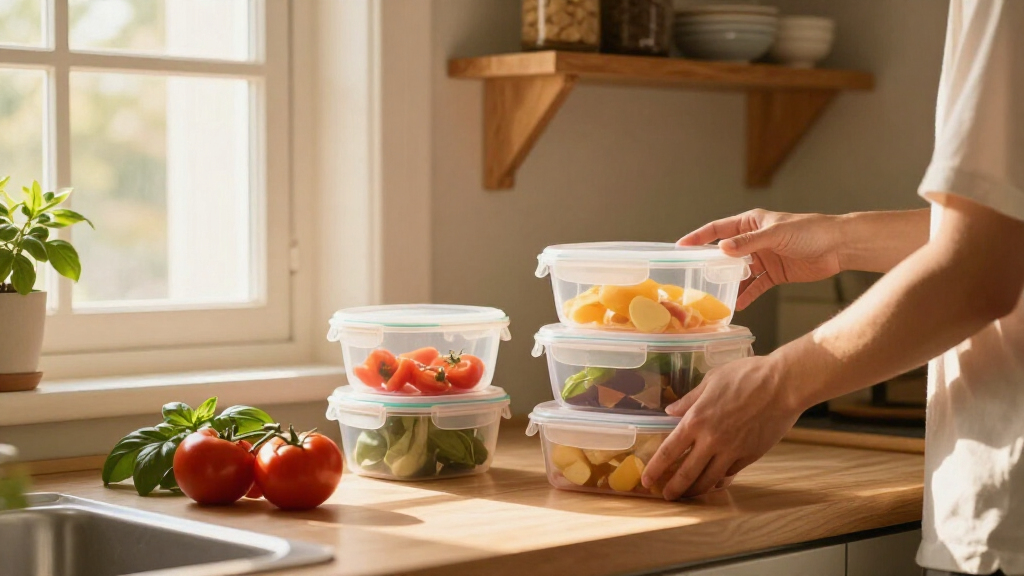

The best food storage containers for school need to survive a backpack, open easily in small hands, and keep a sandwich separate from a yogurt cup — all without leaking. After comparing nine popular options, the Canfanni 5 Pack Bento Snack Containers earn my top spot for their balanced four-compartment layout, true leak resistance, and affordable per-unit price. The Gencywe 3 Pack Stainless Steel Snack Containers stand out as the most durable, plastic-free option for parents worried about drops and stains, while the JSCARES 40-Piece Set wins on sheer volume for families packing multiple lunches daily. The main tradeoff in this category is between leakproof security and easy-open lids — kids often can’t open the tightest seals — and between divided bento designs and simpler single-compartment boxes that hold more food. Keep reading for the full breakdown of which container fits which lunch-packing style.

Get kitchen staples and gadgets delivered free with Prime
- Fast, free delivery on millions of items
- Prime Video, Amazon Music and more included
- Member-only deals all year
Key Takeaways
- The Canfanni 4-compartment bento won best overall because it balances leak resistance with a lid most elementary-aged kids can open without help — the rarest combination in this lineup.
- Bulk sets like the JSCARES 40-pack and 16-piece meal prep kit cost far less per container but sacrifice compartment separation, making them better for snacks and leftovers than structured lunches.
- Stainless steel (Gencywe) resists stains and odors from tomato sauce and years of dishwasher cycles, but holds less food per container and costs roughly double the plastic picks.
- Compartment count matters more than it seems: 3-compartment models (Buluker, TOUWMX) suit picky eaters who hate food touching, while 4-compartment models add a dedicated snack slot.
- Rubbermaid‘s Pack & Go set is the only pick with a trusted brand-name warranty behind it, but its two-size system is built more for adult meal prep than small kids’ portions.



| food storage containers for school | Material | Dishwasher Safe | Number of Containers | Freezer Safe |
|---|---|---|---|---|
| Canfanni 5 Pack Bento Snack Co | BPA-free polypropylene | Yes | 5 | Yes |
| JSCARES 40 pcs Food Storage Co | BPA-free, food-grade plastic | Yes | 20 | Yes |
| Caperci Bento Lunch Box Contai | Wheat straw & reclaimed PP | Yes | 4 | Yes |
| Buluker 4 Pack Bento Lunch Box | Polypropylene and wheat fiber | Yes | 4 | Yes |
| 12 Sets Reusable Snack Contain | BPA-free plastic | Not specified | — | — |
| 16PCS Food Storage Containers | Food-grade PP | — | — | — |
| Gencywe® 3 Pack Stainless Stee | 18/8 stainless steel | Yes | 3 | Yes |
| TOUWMX Bento Box for Kids | Wheat straw and food grade PP | — | 4 | — |
| Rubbermaid Pack & Go Set | Plastic | Yes | — | Yes |
More Details on Our Top Picks
Canfanni 5 Pack Bento Snack Containers, 4-Compartment BPA-free Plastic Food Storage Containers
Canfanni’s five-pack of four-compartment bento boxes earns the top spot because it balances price, quantity, and kid-friendly design better than anything else here. The four-compartment layout is the sweet spot for school lunches: one section for a sandwich, three for fruits, crackers, and treats, without the overflow issues of bigger adult-style boxes. Compared with the Buluker 3-compartment set, you get one extra divider per box and a fifth container in the pack, which matters when lunches are packed Sunday night for the whole week. The lids are genuinely easy for small hands to open — a real problem with the JSCARES set’s stiff locking tabs. The tradeoff is portion size: at roughly half a cup per compartment, appetite-heavy tweens will outgrow these quickly, and the lids must come off before microwaving.
Pros:- Four compartments separate foods without extra baggies
- Five containers cover a full school week
- Easy-open lids that kids can manage independently
- Dishwasher, microwave, and freezer safe
Cons:- Compartments run small at about half a cup each
- Lids must stay open when reheating
- Not leakproof between compartments
Best for: Parents packing weekday lunches for elementary-aged kids who want a full week of containers in one purchase
Not ideal for: Families with teenagers or big appetites — the half-cup compartments won’t hold a satisfying meal
- Number of Containers:5
- Compartments per Container:4
- Material:BPA-free polypropylene
- Capacity per Compartment:Approx. 1/2 cup
- Microwave Safe:Yes (lid open)
- Dishwasher Safe:Yes
- Freezer Safe:Yes
Our verdict“This pick makes the most sense for elementary-school lunches where variety, quantity, and easy-open lids matter more than raw capacity.”
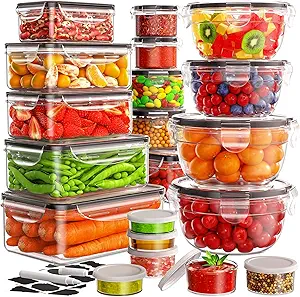
JSCARES 40 pcs Food Storage Containers with Lids, Airtight, Leakproof, Reusable Plastic
Where the Canfanni bento set gives you five divided boxes, JSCARES takes the opposite approach: twenty containers in assorted shapes and sizes, from eight-ounce sauce cups up to 51-ounce rectangles. That variety is the whole point. Instead of one box per lunch, you build lunches from components — a round tub of pasta, a sauce cup of ranch, a rectangle of cut fruit. The airtight, leakproof seals outclass every bento option in this roundup for wet foods, which matters if soup or yogurt is on the menu. The catches: the locking lids are genuinely hard for younger kids to pry open, and the lids can’t go in the microwave. If your child is under seven or has weak grip strength, the Canfanni or Gencywe stainless cups will serve you better.
Pros:- Twenty containers spanning 8 to 51 ounces covers every lunch scenario
- Genuinely leakproof seals safe for yogurt and soup
- Includes labels and pen for date-and-name organization
- Cheapest per-container cost in this lineup
Cons:- Lids are not microwave-safe
- Locking tabs are difficult for small hands to open
- No built-in compartments — you assemble lunches from multiple pieces
Best for: Meal-prep families who pack lunches in components and want enough containers to rotate all week without washing daily
Not ideal for: Young kids packing their own lunches — the locking lids demand more hand strength than little fingers have
- Number of Containers:20
- Number of Lids:20
- Material:BPA-free, food-grade plastic
- Sizes:8 OZ to 51 OZ
- Shapes:Rectangles, round, sauce cups
- Microwave Safe:Yes (without lids)
- Dishwasher Safe:Yes
- Freezer Safe:Yes
Our verdict“Buy this if you prep lunches in batches and need leakproof versatility; skip it if your child opens their own containers.”
Caperci Bento Lunch Box Containers for Adults & Kids
Caperci stands apart on materials: a wheat straw and reclaimed polypropylene blend that displaces virgin plastic without giving up durability or dishwasher convenience. For households trying to cut single-use waste, this four-pack makes a visible statement the purely plastic Buluker and Canfanni sets can’t. The included sauce containers are the practical differentiator — dips and dressings stay separate from the main three compartments, solving the soggy-crackers problem that plagues simpler bentos. It also works for parents and kids alike, since the sizing doesn’t skew child-small like the Canfanni’s half-cup sections. Against that flexibility, note two real annoyances: the lids hold up best with hand washing, adding a nightly chore, and the boxes eat more backpack space than slimmer competitors.
Pros:- Wheat straw and reclaimed plastic reduce virgin material use
- Sauce containers keep dips separate from dry foods
- Three compartments sized for both kids and adults
- Dishwasher, microwave, and freezer safe body
Cons:- Lids last longer with hand washing
- Bulkier footprint than competing bento boxes
- Fewer containers per set than similarly priced rivals
Best for: Eco-conscious families who want sustainable materials and need containers that work for both parent and kid lunches
Not ideal for: Slim backpacks or small tote bags — these boxes are bulkier than the flat Buluker stackers
- Material:Wheat straw & reclaimed PP
- Number of Containers:4
- Compartments:3 per box
- Includes:2 sauce containers
- Dishwasher Safe:Yes
- Microwave Safe:Yes
- Freezer Safe:Yes
Our verdict“This option stands out for sustainability-minded buyers who still want everyday convenience, as long as they don’t mind hand-washing lids.”
Buluker 4 Pack Bento Lunch Box Set, 3-Compartment Food Storage Containers
The Buluker set wins on portability. These are the flattest, lightest boxes in this batch, sliding into a backpack without the bulge the Caperci boxes create, and the stackable design keeps a cabinet shelf tidy when four empties come home Friday. The three-compartment layout supports straightforward portion control — a main plus two sides — which is less fussy than Canfanni’s four sections for kids who don’t like their food heavily divided. Materials are a polypropylene and wheat fiber blend, and the wide temperature range of -4°F to 248°F means you can freeze Sunday’s lunches and reheat them straight from thaw. Tradeoffs are real though: lids off before microwaving, a single light color that shows tomato sauce stains, and no leakproofing between compartments.
Pros:- Slim profile fits where other bento boxes won’t
- Wide -4°F to 248°F range handles freezer-to-microwave routines
- Lightweight wheat fiber blend is easy for kids to carry
- Stackable empties save cabinet space
Cons:- Lids must be removed before microwaving
- Light color stains easily with sauces
- No leakproofing between compartments
Best for: Students with tight backpacks or lockers who need a flat, lightweight box for simple main-plus-sides lunches
Not ideal for: Anyone packing saucy or wet foods — the compartments don’t seal against each other, so liquids migrate
- Number of Containers:4
- Compartments per Box:3
- Material:Polypropylene and wheat fiber
- Temperature Range:-4°F to 248°F (-20°C to 120°C)
- Microwave Safe:Yes (lid removed)
- Dishwasher Safe:Yes
- Freezer Safe:Yes
Our verdict“This model is better suited to simple, dry lunches in cramped bags than to anything wet, saucy, or elaborate.”
12 Sets Reusable Snack Containers with Double Compartments, Leak-Proof BPA-Free Food Storage Boxes
Twelve containers in one purchase is the headline here, and that volume changes how you use them. Rather than replacing a bento like the Canfanni or Buluker sets, these double-compartment boxes slot in alongside one — crackers on one side, hummus on the other — to round out a lunch. The claimed leak-proof design is what makes dips and cut fruit viable in a backpack, though sealing consistency varies unit to unit, so a trial run over the sink is smart before trusting one with yogurt. Compared with the Gencywe stainless steel snack cups, you get four times the quantity for less money, but far less certainty: dishwasher safety and microwave compatibility aren’t documented, which limits reheating and cleanup options. Treat these as disposable-adjacent workhorses rather than lifetime gear.
Pros:- Twelve sets cover multiple kids or a full week without washing
- Double compartments separate wet and dry snacks
- Leak-proof build suits dips, fruit, and sauces
- Stackable shape keeps drawers and cabinets orderly
Cons:- Dishwasher and microwave safety not specified
- Seal quality varies between units
- Too small to serve as a standalone lunch container
Best for: Families building multi-container lunches who need a deep bench of small leak-proof snack boxes for the whole week
Not ideal for: Anyone who reheats food or relies on the dishwasher — care instructions are undocumented
- Number of Sets:12
- Compartments:Double
- Material:BPA-free plastic
- Leak-Proof:Yes
- Dishwasher Safe:Not specified
- Microwave Safe:Not specified
- Best Use:Snacks, condiments, meal prep
Our verdict“A budget-friendly supplement to a main bento box — buy these for snack duty, not as your primary lunch container.”
16PCS Food Storage Containers with Lids, Meal Prep Kids Lunch Containers
Most school-week problems come down to volume and variety, and this 16-piece set answers both with four container sizes ranging from 2.5 oz to 20 oz. That spread is what separates it from single-capacity options like the Gencywe 8 oz stainless set, which handles snacks well but can’t hold a full sandwich-and-sides lunch. The color-coded lids are a quiet advantage during chaotic mornings — kids can grab the right container without help, and parents can sort the fridge at a glance. The tradeoff is maintenance: lids last longer when hand-washed and removed before dishwashing, and microwave reheating is capped at three minutes. Compared with the JSCARES 40-piece set, you get fewer pieces but more size flexibility, which matters more than raw quantity for packing balanced meals.
Pros:- Four sizes cover everything from dips to full meals
- Leak-proof, airtight, and stackable for tidy fridge storage
- BPA-free and safe across freezer, microwave, and dishwasher
- Color-coded lids speed up identification for kids and parents
Cons:- Lids should be removed before dishwashing and hand-washed for longevity
- Not rated for microwave reheating beyond three minutes
Best for: Families packing multiple portion sizes daily who want a full week of containers without constant washing
Not ideal for: Anyone wanting zero-maintenance cleanup — the hand-wash recommendation and microwave time limit add daily friction
- Material:Food-grade PP
- Sizes:20oz, 10oz, 5oz, 2.5oz
- Number of pieces:16
- Color options:Four colors
- Temperature resistance:-4°F to 248°F (-20°C to 120°C)
- Care:Dishwasher safe; hand wash lids recommended
Our verdict“This set makes the most sense for households that pack several different portion sizes each week and want the flexibility single-size sets can’t provide.”
Gencywe® 3 Pack Stainless Steel Snack Containers for Kids, 8 oz
When plastic containers start coming home cracked, 18/8 stainless steel is the answer, and this three-pack is built to survive backpacks, drops, and years of abuse. The easy-open silicone lids are the standout for younger kids — a real difference from the Rubbermaid Pack & Go, whose latched lids some users find hard to open, and from the tighter seals on the 16-piece meal prep set. Being oven-safe is unusual in this category and opens up reheating options plastic can’t match. The limitation is obvious: 8 oz per container means snacks, condiments, and fruit, not sandwiches or full lunches. The silicone lids also wear faster than rigid plastic, so expect to treat them as replaceable parts rather than lifetime components.
Pros:- Stainless steel body won’t crack, stain, or absorb odors
- Easy-open silicone lids manageable by small hands
- Leak-proof enough for liquids and condiments
- Dishwasher, freezer, and oven safe for flexible use
Cons:- 8 oz capacity limits these to snack duty
- Silicone lids degrade over time with daily use
Best for: Parents of preschool and elementary kids who need indestructible, easy-open containers for snacks and dips
Not ideal for: Anyone packing full meals — 8 oz won’t hold a sandwich, so this works only as a supplement to a lunch box
- Capacity:8 oz per container
- Material:18/8 stainless steel
- Lid Material:Silicone
- Number of Containers:3
- Dishwasher Safe:Yes
- Freezer Safe:Yes
- Oven Safe:Yes
Our verdict“This pick suits families prioritizing durability and kid-friendly access for snacks, provided a separate container handles the main lunch.”
TOUWMX Bento Box for Kids, 4 Pack, 3 Compartments Reusable Lunch Containers
For under the cost of most single lunch boxes, this four-pack delivers compartmentalized meals for the whole school week without a single dish midweek. The wheat straw construction feels sturdier and less plasticky than comparable options like the Buluker 3-compartment set, while the bright four-color lineup appeals to kids who claim a favorite. Three compartments keep foods separated, which is the whole point of a bento — but note the honest limitation: the lids are not leakproof for liquids, so yogurt or soup needs a different container, such as the Gencywe stainless set. Lids also hold up best with hand washing, since heat can warp them over time. This option stands out as the low-cost entry point for families testing whether bento-style packing fits their routine.
Pros:- Four containers cover a school week of lunches
- Wheat straw material is durable and BPA-free
- Compartment layout keeps foods from touching
- Microwave, freezer, and dishwasher safe
Cons:- Lids are not leakproof for liquids
- Hand washing lids is needed to prevent warping
Best for: Budget-conscious families wanting a full week of compartmented lunches cheaply, without committing to premium brands
Not ideal for: Anyone packing soups, sauces, or runny foods — the lids only resist casual leaks, not liquids
- Material:Wheat straw and food grade PP
- Number of Containers:4
- Color Options:Pink, beige, blue, green
- Dimensions:6.1 x 6.1 x 2.2 inches
- Temperature Tolerance:-4°F to 248°F (-20°C to 120°C)
- Leak Resistance:Leakproof design, not for liquids
Our verdict“This model is the sensible choice for families wanting cheap, colorful, compartmented lunches — as long as wet foods stay out of it.”
Rubbermaid Pack & Go Set, 2x 350 mL and 2x 820 mL Divided Meal Prep Containers
Rubbermaid’s reputation for dependable sealing carries into this split-capacity set, and the latched secure-seal lids genuinely outclass the snap-on lids of the TOUWMX bento boxes when it comes to keeping food fresh overnight. The two-size pairing — 350 mL for snacks, 820 mL for mains — mirrors the portion logic of the 16-piece meal prep set but with a brand backing it and a divided layout that supports pre-planned meals rather than loose storage. The tradeoffs are familiar for plastic: containers stain and hold odors after repeated tomato-based or fragrant meals, and the firm latches that prevent leaks can be genuinely tricky for small hands or anyone with grip issues. This set makes the most sense for parents doing Sunday meal prep rather than kids opening containers themselves at lunch.
Pros:- Latched secure-seal lids prevent leaks and lock in freshness
- Two capacity sizes match snack and main-dish portions
- Divided compartments keep meal components organized
- Dishwasher- and freezer-safe for easy prep cycles
Cons:- Plastic body stains and retains odors over time
- Lids can be difficult to open for some users
Best for: Parents who prep lunches in advance and want a reliable brand-name seal that keeps food fresh for days
Not ideal for: Young kids opening their own lunch — the tight latches that prevent leaks can frustrate small hands
- Containers Included:Two 350 mL and two 820 mL containers
- Material:Plastic
- Lid Type:Secure Seal with latches
- Dishwasher Safe:Yes
- Freezer Safe:Yes
- Divided Compartments:Yes
Our verdict“This set fits advance-meal-prep families who value a proven seal over kid-friendly ease of opening.”
How We Picked
I evaluated each set through the specific demands of school lunches rather than general food storage. The criteria that mattered most: leak resistance under backpack conditions (not just upright on a counter), whether a child can open and close the lid independently, portion sizes matched to kids’ appetites, and how each container holds up to daily dishwasher cycles and backpack abuse. I also weighed cost per container, because school lunch containers get lost — constantly — and replacing a $12 bento box hurts more than replacing a $1 snack cup.
The ranking reflects real tradeoffs rather than a single score. Sets that solved the leak-proof-versus-easy-open tension ranked higher, which is why the Canfanni leads despite the Gencywe being more durable. Bulk sets ranked in the middle because their value is undeniable but their usability for structured school lunches is weaker. Products that excelled in exactly one dimension — like the Gencywe for plastic-free durability — earned category-specific roles instead of overall rankings, so the list helps you match a container to your situation rather than pretending one option fits every family.
| food storage containers for school | Microwave Safe | Dishwasher Safe |
|---|---|---|
| Canfanni 5 Pack Bento Snack Co | Yes (lid open) | Yes |
| JSCARES 40 pcs Food Storage Co | Yes (without lids) | Yes |
| Caperci Bento Lunch Box Contai | Yes | Yes |
| Buluker 4 Pack Bento Lunch Box | Yes (lid removed) | Yes |
| 12 Sets Reusable Snack Contain | Not specified | Not specified |
| 16PCS Food Storage Containers | — | — |
| Gencywe® 3 Pack Stainless Stee | — | Yes |
| TOUWMX Bento Box for Kids | — | — |
| Rubbermaid Pack & Go Set | — | Yes |
Factors to Consider When Choosing Food Storage Containers For School
Before choosing a set, it helps to understand what actually separates a container that lasts the school year from one that’s cracked by October. These are the factors that shaped my rankings — and the mistakes I see parents make most often.Leakproof Versus Easy-Open: The Core Tradeoff
The tightest seals leak the least, but a container your child can’t open turns into a lunch they didn’t eat. Teachers and lunch aides rarely have time to open two dozen containers, so independent openability should be a non-negotiable requirement for kids under eight. Silicone-gasket lids like the Gencywe’s seal well but require more grip strength, while flex-lid bento designs like the Canfanni trade a little leak protection for kid-friendly closure. A useful rule: test any new container with water and a shake before packing something wet like applesauce. If it leaks on your counter, it will definitely leak in a backpack laid sideways under three textbooks.
How Many Compartments Do You Actually Need?
Compartment count should match how your child eats, not how Instagram-worthy the lunch looks. Three compartments cover the classic protein-cracker-fruit formula, which is why the Buluker and TOUWMX sets work for so many families. A fourth compartment earns its space only if you pack a dip, dressing, or daily snack separately — otherwise you’re just shrinking the main food slot and paying for complexity. Parents of food-touching-phobic kids should prioritize full-depth dividers over shallow ridges, because shallow walls let fruit juice migrate into the sandwich zone. Also note that divided containers are harder to clean by hand; if you don’t run a dishwasher nightly, fewer compartments means fewer crumb-catching corners.
Plastic Versus Stainless Steel: The Real Differences
BPA-free plastic is affordable, lightweight, and microwave-safe — three things stainless steel is not. But plastic absorbs red sauce stains, retains odors, and develops hairline cracks that harbor bacteria after a year of abuse. Stainless steel like the Gencywe containers survives multiple school years, never stains, and avoids any plastic-contact concerns, though you’ll pay more upfront and lose microwave reheating entirely. A practical middle path many families use: stainless for cold snacks and fruit, plastic bento boxes for the main lunch that might get reheated. Also check whether plastic lids are dishwasher-top-rack rated only — bottom-rack heat warps lids and destroys the seal, which is the hidden cause of most sudden leaking.
Buy for the Loss Rate, Not the Lifetime
School lunch containers are consumables, not heirlooms. Between cafeteria trash cans, lost lids, and the one that never comes home, expect to replace 20-40% of your set each school year. This is why cost per container matters more than cost per set: a 40-piece set at under a dollar per unit absorbs losses painlessly, while losing one expensive bento box stings. Bulk sets also let you keep identical backups, which means a forgotten container in a locker doesn’t derail the next morning. The mistake to avoid is buying a single premium container for a kid younger than ten — the math rarely works out.
Size, Stackability, and Backpack Fit
Check the container’s footprint against your child’s actual lunch bag before buying, because many bento boxes are sized for adult meal prep totes and won’t fit standard kids’ insulated bags. Flat, stackable designs like the Rubbermaid Pack & Go save cabinet space and let you pre-pack several days of lunches at once. Depth matters too: shallow containers prevent crushing a sandwich but limit you to one flat layer of food. If your child carries a water bottle, a lunch bag, and a folder, a rounded or bulky container eats the remaining space fast — measure first, because return policies on used food containers are often restrictive.
Cleaning Reality Check
Every parent underestimates cleaning until week three, when hand-washing six containers nightly gets old. Look for dishwasher-safe ratings on both the base and the lid, and read the fine print — some lids must be hand-washed to protect their seals. Gasketed lids, while great for leaks, trap food particles in the silicone ring and need periodic deep cleaning with a brush. Divided containers multiply the scrubbing surface by the number of compartments, which is genuinely a factor if you hand-wash. The simplest maintenance hack: choose sets with interchangeable lids, so a lost or cracked lid doesn’t orphan the base — a design detail the JSCARES bulk set handles better than any single-mold bento box.
Frequently Asked Questions
Are bento boxes with compartments actually leakproof between sections?
Most are not, and this is the most common misconception in the category. Compartment dividers in plastic bento boxes are usually single-mold ridges, so liquid from fruit or yogurt can seep across sections even when the outer lid seals well. The lid keeps food inside the container; it does not keep wet food inside its compartment. If your child’s lunch includes anything liquid, pack it in a separate small container with its own gasket lid — the Gencywe 8 oz cups work well for this — rather than trusting a divider wall. Fully sealed individual compartments exist in higher-end adult meal prep boxes, but they’re rare and expensive at kids’ price points. Test yours at home with water before trusting it with applesauce.
How many containers do I need for one school-aged child?
A minimum of four to five containers per child is realistic, and here’s the math: one in use, one in the dishwasher, one drying or lost in a backpack, and backups for the morning someone forgets to run the dishwasher. This is why multi-packs dominate my rankings — the Canfanni’s five-count and the JSCARES bulk set are sized for real weekly chaos, not ideal conditions. If you meal-prep lunches on Sunday for the whole week, you’ll want five to seven per child plus a few small snack cups. Families with two or more kids should favor the bulk sets outright, because per-container cost drops sharply and interchangeable lids across a big set prevent the orphaned-base problem. Buying one premium container per child almost always leads to a mid-week emergency purchase you’ll overpay for.
Is stainless steel worth the extra cost over BPA-free plastic for kids?
It depends on what you pack and how long you want them to last. Stainless steel like the Gencywe containers will not stain, warp, absorb odors, or crack — meaning a single set can outlast several years of school, which closes the price gap with plastic over time. The tradeoffs are real though: steel can’t go in the microwave, holds less food for the same footprint, and gets dents instead of cracks when dropped. If your child’s lunches are mostly cold — fruit, crackers, cheese, cold cuts — steel makes strong sense. If you or the school reheat lunches, plastic bento boxes are simply more practical. Many families land on a hybrid: steel snack cups for fruit and a plastic bento for the main lunch, which gets the durability benefit where it counts without losing microwave convenience.
What age can kids open leakproof containers by themselves?
As a rough guide, most children can manage flexible snap-on plastic lids by age four or five, while gasketed or clip-lock lids often require six to eight years of grip strength development. This matters more than parents expect, because lunch periods are short and staff can’t always help every child. If you’re buying for a preschooler or kindergartner, choose containers with flexible lids and practice opening them at home before the first day — a child who has opened the container twenty times at school-ready confidence. Gasketed lids can sometimes be loosened slightly by design, but don’t count on it. The Canfanni and TOUWMX flex lids rank well here; the tradeoff is that they’re less reliable with very wet foods, which is exactly the compromise this decision requires.
Can these containers go in the dishwasher and microwave safely?
Nearly all the plastic options in this roundup are marked dishwasher-safe, but placement matters: bases usually tolerate the bottom rack while lids should ride the top rack, because high heat warps lids and permanently ruins the seal that prevents leaks. Microwave safety is more divided — the Buluker and TOUWMX boxes are explicitly microwave-safe, while others require the lid to be removed or avoid microwaving entirely, so check each label before reheating. Stainless steel, including the Gencywe set, must never go in a microwave. One habit worth adopting: vent or remove lids when reheating and never microwave gasketed seals, since trapped steam both splatters food and degrades the silicone over months of use. If daily reheating is part of your routine, treat microwave-safe labeling as a purchasing requirement, not a bonus.
Conclusion
Matching the right container to your family comes down to three questions: how wet is the food, how old is the child, and how many lunches do you pack weekly? For most families, the Canfanni 5 Pack Bento Snack Containers are the best overall choice — they hit the sweet spot of leak resistance, kid-friendly lids, four-compartment flexibility, and a price that absorbs inevitable losses. If budget drives your decision, the JSCARES 40-Piece Set is the best value, delivering under-a-dollar-per-container convenience with labels included, ideal for big families and snack-heavy lunch routines.
For parents who want the most durable, plastic-free option and don’t need microwave reheating, the Gencywe Stainless Steel Snack Containers are the premium pick that will outlast multiple school years. Beginners just building a lunch-packing system should start with the Buluker 4-Pack 3-Compartment Set — simple, affordable, and forgiving while you figure out portions and preferences. Finally, for specific needs: pick the 12-Set Double-Compartment Snack Containers for fruit-and-cracker snackers, and the Rubbermaid Pack & Go if your middle-schooler or teenager wants portion-controlled meal-prep sizing with a brand-name warranty. Whatever you choose, buy at least one more container than you think you need — the lost-lid gods always collect.
Evergreen bestsellers Picks
bestsellers
As an affiliate, we earn on qualifying purchases.