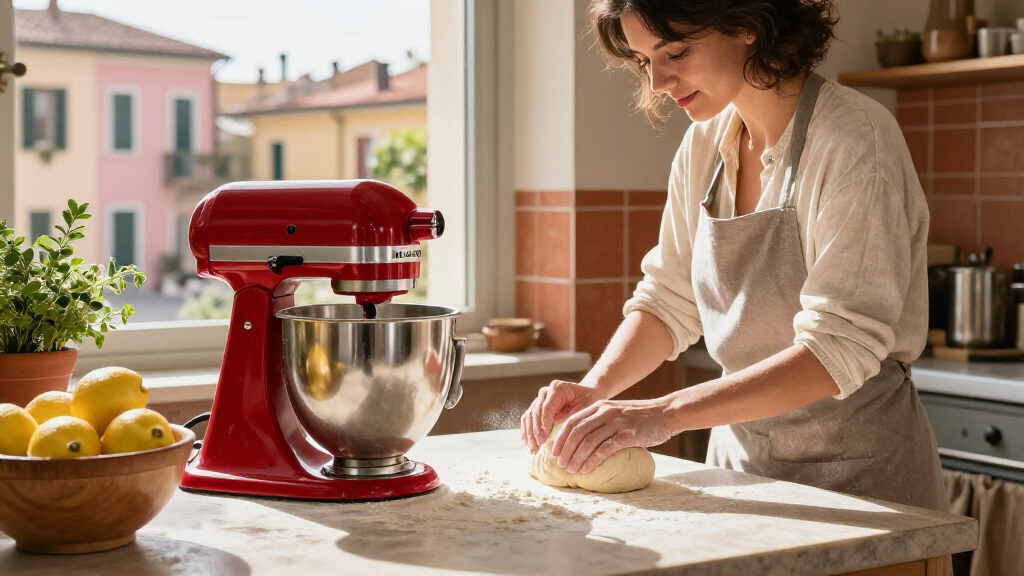

The best KitchenAid mixer for most home bakers is the Artisan 5-Quart Tilt-Head with Flex Edge Beater: its mid-size capacity and bowl-scraping beater make it a versatile everyday choice. For frequent large batches, the 7-Quart Bowl-Lift offers more room, while the Artisan Mini suits smaller kitchens and lighter workloads. The main tradeoffs are capacity versus counter space, tilt-head convenience versus bowl-lift stability, and basic equipment versus included accessories. I compare all seven models by those practical differences, along with their likely fit for different baking routines. Read on for the full breakdown and a guide to choosing the right KitchenAid mixer for your kitchen.

Get kitchen staples and gadgets delivered free with Prime
- Fast, free delivery on millions of items
- Prime Video, Amazon Music and more included
- Member-only deals all year
Complete the kit


Key Takeaways
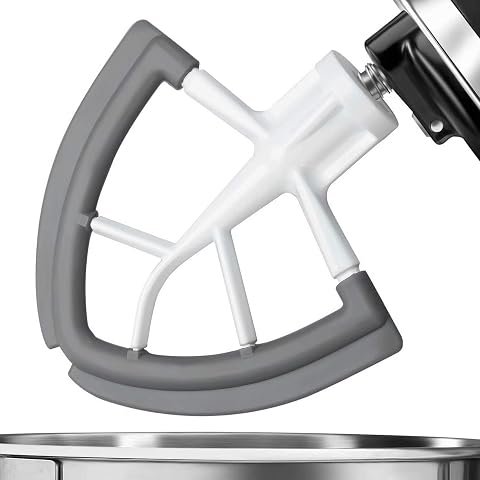
The Artisan 5-Quart with Flex Edge Beater is the most balanced pick for routine baking because it combines a useful household capacity with a beater designed to reduce manual bowl scraping.
The 7-Quart Bowl-Lift makes more sense for repeated large batches than the 5.5-quart model, but its larger footprint is a real kitchen-planning tradeoff.
The 4.5-Quart Classic is the straightforward value choice for occasional baking, while its smaller capacity leaves less room for scaling recipes.
The 8-Quart Commercial is aimed at demanding, frequent mixing rather than casual use; its size and commercial orientation can be more than a household needs.
The Artisan Mini solves a space and batch-size problem, not a high-volume one, so its compact build is most useful when the kitchen and recipes are both small.


| KitchenAid mixer | Capacity | Speeds | Included accessories | Power |
|---|---|---|---|---|
| KitchenAid Artisan 5-Quart Til | 5 quarts | 10 | Flex edge beater, coated flat beater, coated dough hook, 6-wire whip, pouring shield | 325 watts |
| KitchenAid Artisan 5-Quart Til | 5 quarts | 10 | Coated flat beater, coated dough hook, 6-wire whip, pouring shield | 325 watts |
| KitchenAid Classic Series 4.5- | 4.5 quarts | 10 | Stainless steel bowl, coated flat beater, coated dough hook, 6-wire whip | 275 watts |
| KitchenAid 5.5-Quart Bowl-Lift | 5.5 quarts | 11, including half-speed folding | Coated flat beater, coated dough hook, six-wire whip | 500 watts |
| KitchenAid 7-Quart Bowl-Lift S | 7 quarts | 11, including gentle half speed | Double flex edge beater, coated flat beater, coated dough hook, 11-wire whip, pouring shield | 500 watts |
| KitchenAid KSM8990CU 8-Quart C | 8 quarts | 10 | Stainless steel flat beater, spiral dough hook, and 11-wire elliptical whip | 500 watts, 120 volts |
| KitchenAid Artisan Mini 3.5-Qu | 3.5 quarts | 10 | Flex Edge Beater, coated dough hook, and 6-wire whip | — |
More Details on Our Top Picks
KitchenAid Artisan 5-Quart Tilt-Head Stand Mixer with Flex Edge Beater
I’d make this the most versatile choice for typical home baking: its 5-quart bowl and 10 speeds cover everyday mixing, whipping, and kneading without the footprint and bowl-lift setup of the 7-Quart model. The included flex edge beater scrapes the bowl as it mixes, which can reduce pauses to scrape ingredients by hand. Its tilt head also gives direct bowl access, a more convenient arrangement for adding ingredients than the bowl-lift design on the 5.5- and 7-quart mixers. The tradeoff is that it is still a 22.8-pound appliance, and its power hub expands what it can do only if you buy attachments separately. Choose the Classic if you want a simpler, smaller-capacity setup; choose the 7-Quart for frequent large batches.
Pros:- Flex edge beater scrapes ingredients from the bowl during mixing.
- 5-quart capacity and 10 speeds suit a broad range of everyday recipes.
- Tilt-head design makes it easy to reach the bowl and change attachments.
- Power hub supports optional KitchenAid attachments for other food-preparation tasks.
Cons:- At 22.8 pounds, it is heavy to move or store between uses.
- Power hub attachments are sold separately.
- The 5-quart capacity is less suited to large batches than the 7-Quart bowl-lift model.
Best for: Home bakers who want a versatile mixer for regular cakes, cookies, frosting, and occasional dough, with easier bowl access and a beater that scrapes as it mixes.
Not ideal for: Bakers who routinely make large batches or dense doughs, since the 7-Quart bowl-lift model offers more capacity; skip it too if you need a lightweight mixer you can store after each use.
- Model:KSM150FECU
- Capacity:5 quarts
- Speeds:10
- Power:325 watts
- Dimensions:14.1 × 8.7 × 13.9 inches
- Weight:22.8 pounds
- Bowl:Stainless steel, with handle
- Included accessories:Flex edge beater, coated flat beater, coated dough hook, 6-wire whip, pouring shield
Our verdict“Choose this Artisan if you want a capable everyday mixer with helpful bowl-scraping action and prefer a tilt head over the larger bowl-lift models.”
KitchenAid Artisan 5-Quart Tilt-Head Stand Mixer, Milkshake
This Artisan has the familiar 5-quart capacity, 10 speeds, and tilt-head access, making it a practical fit for the same everyday baking jobs as the Flex Edge version. Its clearest distinction in this lineup is its Milkshake finish, paired with durable metal construction and a stainless steel bowl. It includes the core flat beater, dough hook, wire whip, and pouring shield, but not the flex edge beater included with the other 5-quart Artisan here. That means more manual bowl scraping during some recipes. Compared with the Classic 4.5-Quart, this model offers a little more bowl capacity; compared with the 7-Quart, it takes up less vertical space but gives up room for large batches. The power hub is another expansion path, though attachments are separate.
Pros:- 5-quart stainless steel bowl handles common home-baking batches.
- 10 speeds cover mixing, kneading, and whipping.
- Tilt-head design gives convenient access to the bowl.
- Includes a pouring shield and three core mixing attachments.
Cons:- Does not include the flex edge beater supplied with the other 5-quart Artisan.
- Optional power hub attachments are sold separately.
- Its capacity is smaller than the 5.5- and 7-quart bowl-lift options.
Best for: Bakers who want a 5-quart tilt-head mixer in the Milkshake finish for regular household recipes and are comfortable scraping the bowl by hand.
Not ideal for: Buyers who prioritize bowl-scraping convenience should choose the Artisan with Flex Edge Beater; frequent large-batch bakers are better matched to the 7-Quart bowl-lift model.
- Model:KSM150PSMH
- Capacity:5 quarts
- Speeds:10
- Power:325 watts
- Dimensions:14.1 × 8.7 × 13.9 inches
- Weight:22 pounds
- Bowl:Stainless steel
- Included accessories:Coated flat beater, coated dough hook, 6-wire whip, pouring shield
Our verdict“Pick this Artisan for its Milkshake finish and everyday tilt-head usability, but choose the Flex Edge version if less manual bowl scraping matters more.”
KitchenAid Classic Series 4.5-Quart Tilt-Head Stand Mixer, Onyx Black
The Classic is the lineup’s more restrained choice: it keeps the metal construction, tilt-head access, and 10 speeds of the Artisan models, but has a 4.5-quart bowl and 275-watt rating. That smaller capacity makes it a sensible match for routine household recipes, though it leaves less room than either 5-quart Artisan when scaling up a batch. It includes a flat beater, dough hook, and wire whip, but no pouring shield or flex edge beater. Compared with the Milkshake Artisan, you give up half a quart of capacity; compared with the 5.5-Quart bowl-lift mixer, you get easier tilt-head bowl access but less room and fewer speeds. Its power hub supports optional KitchenAid attachments, sold separately.
Pros:- Durable metal construction with a stainless steel bowl.
- Tilt-head design makes the bowl and attachments accessible.
- 10 speeds support mixing, kneading, and whipping.
- Compatible with optional KitchenAid power hub attachments.
Cons:- 4.5-quart capacity is smaller than the Artisan 5-quart models.
- No pouring shield or flex edge beater is included.
- Optional power hub attachments are sold separately.
Best for: Home cooks who make standard-size batches and want a durable, no-frills tilt-head mixer with a stainless steel bowl and core attachments.
Not ideal for: Bakers who often double recipes, want a pouring shield or flex edge beater included, or need the larger capacity and gentle folding speed of the 5.5-Quart model.
- Model:K45SS
- Capacity:4.5 quarts
- Speeds:10
- Power:275 watts
- Dimensions:14.1 × 8.7 × 13.9 inches
- Weight:22 pounds
- Construction:Metal
- Included accessories:Stainless steel bowl, coated flat beater, coated dough hook, 6-wire whip
Our verdict“Choose the Classic for standard-size baking and simple tilt-head operation, but step up to an Artisan if you want more bowl capacity or extra included accessories.”
KitchenAid 5.5-Quart Bowl-Lift Stand Mixer, Porcelain White
With a 5.5-quart bowl, 11 speeds, and a dedicated half-speed folding setting, this mixer gives careful bakers more control than the tilt-head Artisans. The folding speed is useful for gently combining delicate ingredients, while the three-point bowl lock holds the bowl in place during mixing. Its 500-watt rating and bowl-lift arrangement also mark it as a more substantial setup than the 4.5-quart Classic. The tradeoff is the larger frame: at 16.5 inches tall, it may need more clearance than a tilt-head mixer, whose head can be raised for access. It includes the core beater, hook, and whip, but not the flex edge beater provided with the 5-quart Artisan or the broader accessory set of the 7-Quart model.
Pros:- 5.5-quart bowl offers more room than the 4.5- and 5-quart tilt-head models.
- 11 speeds include a gentle half speed for folding.
- Three-point bowl lock supports stability during mixing.
- 500-watt power rating exceeds the listed wattage of the Classic and Artisan models.
Cons:- Bowl-lift design can require more clearance than a tilt-head mixer.
- At 16.5 inches tall, it may not fit beneath some cabinets.
- Power hub attachments are sold separately, and the included set lacks a flex edge beater.
Best for: Frequent home bakers who make larger batches than a 4.5- or 5-quart tilt-head comfortably accommodates and want a gentle speed for folding delicate mixtures.
Not ideal for: Small-kitchen owners with limited overhead clearance or buyers who prefer the simpler bowl access of a tilt-head; choose the 7-Quart if you need substantially more batch capacity.
- Model:KSM55SXXX
- Capacity:5.5 quarts
- Speeds:11, including half-speed folding
- Power:500 watts
- Dimensions:14.63 × 11.31 × 16.5 inches
- Bowl:Stainless steel
- Bowl locking:3-point locking bowl
- Included accessories:Coated flat beater, coated dough hook, six-wire whip
Our verdict“Choose this bowl-lift model if you need more capacity and controlled folding than the tilt-head mixers provide, and have room for its taller frame.”
KitchenAid 7-Quart Bowl-Lift Stand Mixer with Accessories
This is the capacity leader in this group: its 7-quart bowl is better suited to large batches than the 5.5-quart bowl-lift or either 5-quart Artisan. The 11 speeds include a gentle half speed for folding, and the three-point bowl lock is designed to keep the bowl secured when mixing dense ingredients. Its included double flex edge beater scrapes the bowl as it mixes, adding a convenience the 5.5-Quart model lacks. The accessory set is also more extensive, with a flat beater, dough hook, wire whip, and pouring shield. In return, this is a heavier, taller machine at 28 pounds and 16.5 inches high; it is less convenient to move or fit under low cabinets than the tilt-head Artisan models. Other hub attachments are sold separately.
Pros:- 7-quart capacity accommodates larger batches than the other listed mixers.
- 11 speeds include a gentle half speed for folding.
- Double flex edge beater scrapes the bowl during mixing.
- Includes a flat beater, dough hook, 11-wire whip, and pouring shield.
Cons:- At 28 pounds, it is heavier than the tilt-head models listed here.
- Its 16.5-inch height and bowl-lift design can limit placement under cabinets.
- Additional power hub attachments are sold separately.
Best for: Frequent batch bakers, large households, or anyone who regularly mixes substantial quantities and wants included bowl-scraping action.
Not ideal for: Occasional bakers with limited counter or cabinet clearance, or buyers who value a lighter machine and easier bowl access over maximum capacity.
- Model:KSM70SKXXCU
- Capacity:7 quarts
- Speeds:11, including gentle half speed
- Power:500 watts
- Dimensions:14.63 × 11.31 × 16.5 inches
- Weight:28 pounds
- Bowl:Stainless steel
- Included accessories:Double flex edge beater, coated flat beater, coated dough hook, 11-wire whip, pouring shield
Our verdict“Choose the 7-Quart if large batches and a bowl-scraping beater justify its heavier, taller bowl-lift design.”
KitchenAid KSM8990CU 8-Quart Commercial Bowl-Lift Stand Mixer, 10-Speed, Contour Silver
The 8-quart capacity and NSF certification make this the lineup’s strongest fit for frequent, high-volume mixing. Its high-efficiency DC motor is designed for longer mixing sessions with less heat buildup, which can help when dough or batter is prepared in repeated or larger batches. Compared with the KitchenAid 7-Quart Bowl-Lift Stand Mixer, it offers a larger bowl and a commercial-use certification, but takes up more room and weighs 25 pounds. The bowl-lift design provides a stable setup, while speed-control protection helps reduce accidental activation during cleaning. This is more mixer than most occasional home bakers need; the 5.5-quart bowl-lift model is a more manageable match for routine household batches.
Pros:- 8-quart bowl accommodates small or large batches
- High-efficiency DC motor is designed for longer mixing with less heat buildup
- Bowl-lift mechanism supports stable mixing and beater-to-bowl contact
- Speed-control protection helps reduce accidental activation during cleaning
Cons:- 25-pound weight makes it less convenient to move or store
- Its commercial capacity can be excessive for everyday small-batch baking
- Requires a 120-volt power supply
Best for: Small food businesses, community kitchens, and serious bakers who regularly mix large batches or run longer mixing sessions.
Not ideal for: Occasional home bakers with limited counter or storage space, or anyone who usually makes small batches and does not need commercial certification.
- Capacity:8 quarts
- Speeds:10
- Motor:1.3 HP; delivers 0.44 HP to the bowl
- Power:500 watts, 120 volts
- Dimensions:14.63 × 13.31 × 16.44 inches (D × W × H)
- Weight:25 pounds
- Included accessories:Stainless steel flat beater, spiral dough hook, and 11-wire elliptical whip
- Certification and warranty:NSF certified for commercial use; 2-year limited commercial replacement warranty
Our verdict“Choose this commercial-certified model for frequent large batches and longer mixing sessions; for typical household baking, I’d favor the more compact 5.5-quart bowl-lift option.”
KitchenAid Artisan Mini 3.5-Quart Tilt-Head Stand Mixer, Candy Apple Red
For kitchens where a full-size mixer would be awkward to keep out, the 3.5-quart Artisan Mini offers a smaller footprint and a lighter body than the KitchenAid Classic. Its tilt-head design makes it easier to reach the bowl when adding ingredients, and the 10 speeds cover everyday jobs from stirring to whipping. The included Flex Edge Beater, coated dough hook, and 6-wire whip give it useful versatility without needing to buy those tools separately. Its capacity can handle up to five dozen cookies per batch with the flat beater, but it is still aimed at smaller household batches. Compared with the 5-quart Artisan models, the Mini saves space and is easier to move; the tradeoff is less room for large recipes or frequent batch baking.
Pros:- Compact size takes up less counter space than the full-size Artisan models
- Lighter than the KitchenAid Classic, making it easier to move
- Tilt-head design improves access to the bowl
- Includes a Flex Edge Beater, coated dough hook, and 6-wire whip
Cons:- 3.5-quart capacity limits batch size compared with the 5-quart Artisan models
- Less suited to frequent large-batch baking or mixing
Best for: Apartment cooks, occasional bakers, and smaller households who want a stand mixer that is easier to fit on the counter or move into storage.
Not ideal for: Families who regularly bake large batches, make large quantities of dough, or want the extra capacity of a 5-quart Artisan or bowl-lift mixer.
- Capacity:3.5 quarts
- Speeds:10
- Design:Tilt-head
- Construction:Metal
- Bowl:Stainless steel; dishwasher-safe
- Included accessories:Flex Edge Beater, coated dough hook, and 6-wire whip
- Batch capacity example:Up to 5 dozen cookies per batch using the flat beater
- Color:Candy Apple Red
Our verdict“Pick the Artisan Mini if counter space and easy storage matter more than full-size capacity.”
How We Picked
I compared these KitchenAid mixers by the decisions that affect daily use: capacity, bowl access, stability, included tools, and footprint. I also considered how each configuration fits common workloads, from occasional cookies to repeated large batches, and whether its distinctive feature—such as the Flex Edge Beater or a commercial bowl-lift design—addresses a real need. The ranking favors versatility for typical home baking, then gives specialized models credit when their capacity or compactness clearly suits a particular buyer.
That logic puts the Artisan 5-Quart with Flex Edge Beater first as the most balanced household option, rather than ranking solely by maximum capacity. The Classic ranks as a simpler entry point, while larger bowl-lift models rise for substantial workloads but fall for buyers with limited space or modest mixing needs. The Mini and commercial model serve opposite ends of the scale, so neither is a universal upgrade; I rank them by how well their specific format matches the right buyer.
| KitchenAid mixer | Model | Bowl |
|---|---|---|
| KitchenAid Artisan 5-Quart Til | KSM150FECU | Stainless steel, with handle |
| KitchenAid Artisan 5-Quart Til | KSM150PSMH | Stainless steel |
| KitchenAid Classic Series 4.5- | K45SS | — |
| KitchenAid 5.5-Quart Bowl-Lift | KSM55SXXX | Stainless steel |
| KitchenAid 7-Quart Bowl-Lift S | KSM70SKXXCU | Stainless steel |
| KitchenAid KSM8990CU 8-Quart C | — | — |
| KitchenAid Artisan Mini 3.5-Qu | — | Stainless steel; dishwasher-safe |
Factors to Consider When Choosing Best KitchenAid Mixers
Before choosing a KitchenAid mixer, match the machine to your usual batch size and kitchen routine, not an occasional ambitious recipe. Capacity, bowl design, and footprint shape everyday convenience just as much as motor or accessory claims. These factors can help you decide whether paying for a larger or more specialized model will make a practical difference.
Choose Capacity Around Your Regular Batches
Think about the recipes you make most often, then size the bowl for those—not for the biggest batch you might make once a year. A bowl that is too small can make mixing crowded and messy, while an oversized machine takes up space even when you are mixing a modest amount. Leave headroom for ingredients to move; a listed capacity does not mean every recipe will mix well right up to the rim. If you regularly double recipes or bake for groups, a larger bowl-lift model may be useful. For smaller households and occasional baking, a compact or standard-capacity mixer can be easier to store and use. A common mistake is buying extra capacity without checking whether the machine fits the counter or cabinet where it will live.
Tilt-Head or Bowl-Lift: Pick the Workflow You Prefer
A tilt-head mixer makes it easy to reach the bowl and change attachments, which can suit frequent, varied home baking. A bowl-lift design holds the bowl in place with supports and a lifting mechanism, a format that pairs well with larger bowls and heavier workloads. Neither style is automatically better: ease of access may matter more than a sturdier setup if you make small batches, while stability and capacity may matter more during repeated heavy mixing. Check the space above the mixer before choosing a tilt-head, since the head needs room to lift. Also think about how often you add ingredients mid-recipe or scrape the sides. Choosing by appearance alone can leave you with a mixer that feels awkward in your kitchen.
Treat Attachments as a Workload Match
Included tools can save time, but only if they address jobs you actually do. A Flex Edge Beater is useful when you want less hand-scraping during certain mixing tasks, while other attachments may better suit a particular dough or batter routine. Look at what is included with the exact model and package, rather than assuming every KitchenAid mixer comes with the same accessories. Consider how much storage space the extra tools need and whether you will use them often enough to keep them accessible. Add-ons should not distract from the basics: bowl capacity, machine fit, and your common recipes. If you rarely bake beyond simple batters, a standard setup may be more sensible than choosing a model for accessories you will seldom use.
Account for Counter Space and Storage
A stand mixer is easier to use when it has a practical home, so measure the counter area and any cabinet clearance before ordering. Larger bowl-lift machines can be harder to move and store than smaller tilt-head models, making permanent counter placement more likely. A compact mixer can be a strong choice for apartments or kitchens where workspace is shared, but its smaller bowl may restrict batch size. Measure overhead clearance as well as width and depth, especially if you plan to keep the mixer under cabinets. Consider the space needed to lift the head or raise the bowl and remove the bowl comfortably. Do not judge fit from the machine’s footprint alone; the space needed to operate it matters too.
Pay More Only for a Clear Use Case
A larger or commercial-oriented mixer can be worthwhile when your workload is frequent, demanding, or consistently high-volume. For occasional cakes, cookies, or small dough batches, extra capacity may add bulk without changing the result you need. Compare the added capability with practical costs in space, handling, and the number of accessories you will genuinely use. Buyers sometimes assume a more powerful-looking or larger model will improve every recipe, but small batches can be a poor match for an oversized bowl. If you are new to stand mixers, a familiar household format may be easier to learn than a specialized machine. Choose a premium configuration for a repeated task, not simply because it sits higher in a product lineup.
Check Care and Replacement Needs
Before deciding, check care instructions for the bowl and each included attachment; cleaning routines can differ across pieces. Tools that are simple to remove and clean are more likely to be used regularly, especially after sticky batters or doughs. Think about where attachments will dry and how you will store them, since loose accessories can clutter a small kitchen. Confirm that the bowl and tools supplied with the specific model suit your recipes, rather than relying on assumptions based on another KitchenAid package. If you expect to use the mixer often, straightforward cleanup can matter more over time than a feature used only occasionally. This small check can prevent a convenient-looking purchase from becoming an inconvenient daily appliance.
Frequently Asked Questions
Which KitchenAid mixer is the best choice for most home bakers?
I would start with the Artisan 5-Quart Tilt-Head with Flex Edge Beater for a mix of everyday recipes and a practical household capacity. The beater can reduce the need to stop and scrape the bowl for some mixing tasks, which is useful when baking regularly. If you rarely bake or want a simpler setup, the 4.5-quart Classic may be enough. If you routinely make large batches, the 7-quart bowl-lift is a better capacity match. The best fit depends on your normal batch size and available space, not on one model being right for everyone.
Is a bowl-lift KitchenAid mixer better than a tilt-head model?
A bowl-lift model is not automatically better; it suits a different workflow. Its supported bowl and larger-capacity options can appeal to buyers who mix substantial batches often. Tilt-head models make bowl access and attachment changes more straightforward for many everyday tasks. Think about how much you bake, how often you need to reach into the bowl, and whether overhead clearance is limited. If you are choosing between them, prioritize the style you will find easier to operate rather than treating one design as an upgrade for every kitchen.
Should I choose the 7-quart or 8-quart KitchenAid mixer?
Start with how often you need the extra capacity and whether your recipes actually benefit from it. The 7-quart bowl-lift is a household-oriented step up for larger batches, while the 8-quart commercial model is aimed at more demanding, frequent mixing. The commercial model may be excessive for occasional family baking, especially if its larger format takes up space you cannot spare. Compare the specific accessories and care details for each package as well as the bowl size. If you rarely fill a large bowl, the 5- or 5.5-quart options may be a more comfortable fit.
Is the Artisan Mini enough for making bread dough?
The Artisan Mini is best approached as a compact mixer for smaller batches, not a substitute for a large-capacity machine. Whether it suits bread dough depends on the recipe size and the mixer’s stated guidance for that workload. Do not assume a smaller bowl can handle a full-size recipe simply because the ingredients fit inside. Check the manufacturer’s instructions for dough quantities and attachment use before mixing. If you often make multiple loaves or heavy dough batches, a larger bowl-lift model is a more suitable direction.
What should I check before buying a KitchenAid mixer online?
Verify the exact model name and what the package includes, since similar mixer names can refer to different bowls or accessory sets. Measure the intended counter or storage space, including overhead room for operating the mixer. Check the bowl size against your regular recipes, and read care instructions for both the bowl and attachments. If a particular feature such as a Flex Edge Beater matters to you, confirm it is included with that specific listing. These checks help prevent a mismatch between the product configuration you expect and the one you receive.
Conclusion
For most households, I recommend the Artisan 5-Quart with Flex Edge Beater as the best overall because it balances everyday capacity with a useful mixing convenience. The 4.5-Quart Classic is my best value and a sensible starting point for beginners who want a straightforward mixer without moving to a larger format. For a premium, high-volume household setup, choose the 7-Quart Bowl-Lift; the 8-Quart Commercial makes more sense for frequent, demanding workloads than casual baking. The Artisan Mini is my pick for small kitchens and modest batches, while the 5.5-quart bowl-lift suits buyers who want a bowl-lift design without stepping up to the largest capacity. Match your choice to your typical recipes, available space, and preferred bowl access, and you can narrow the lineup without paying for size or features you will not use.