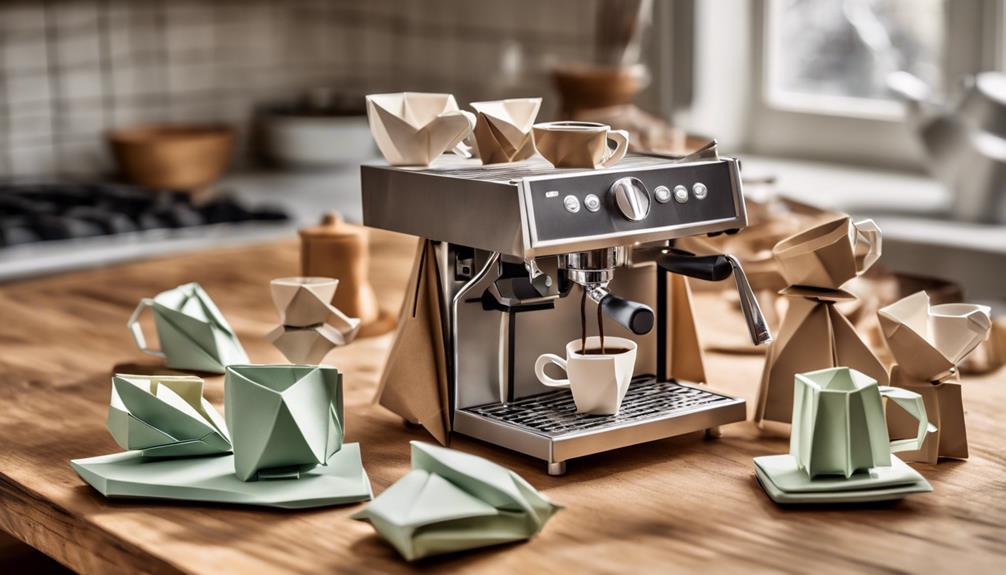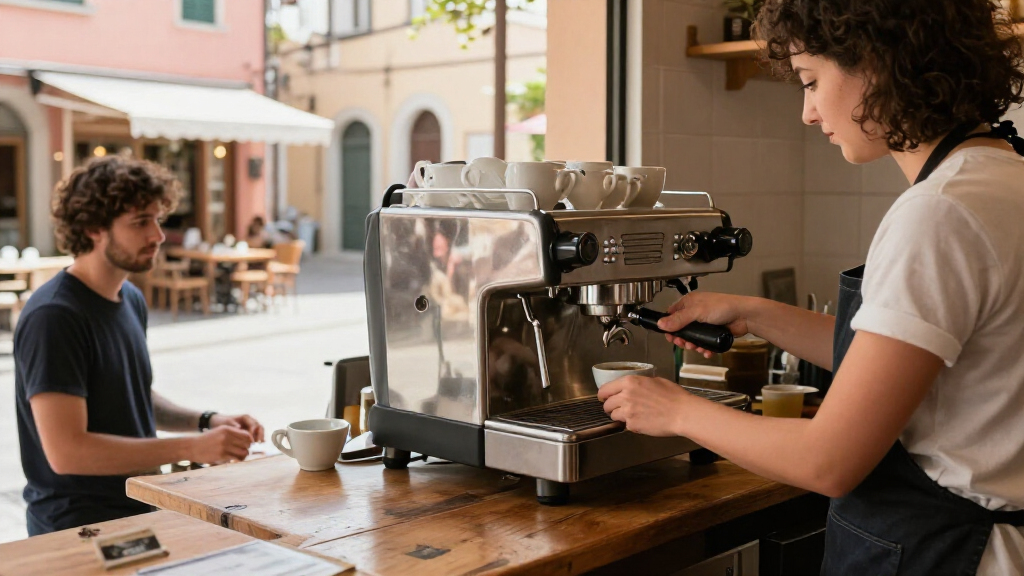
Italian espresso makers range from classic stovetop moka pots to electric machines that grind beans and steam milk. My best overall pick is the Breville Barista Express, which pairs an integrated grinder with hands-on espresso controls; the Bialetti Moka Express is a simpler choice for traditional stovetop coffee, while the De’Longhi La Specialista Arte Evo suits buyers who want a more guided machine setup. The main tradeoffs are convenience versus control, compact simplicity versus milk-drink capability, and the number of cups you need to make at once. Read on for a comparison of all 15 picks, including their drawbacks and best-fit buyers.

Get kitchen staples and gadgets delivered free with Prime
- Fast, free delivery on millions of items
- Prime Video, Amazon Music and more included
- Member-only deals all year
Complete the kit


Key Takeaways
- The lineup splits into two different brewing styles: moka pots make concentrated stovetop coffee, while the Breville, De’Longhi, and CASABREWS machines are built for espresso-machine workflows with pump-driven brewing.
- The Barista Express stands out as the most balanced machine pick because its built-in grinder reduces the need for separate gear, while the Barista Pro is the more speed-oriented alternative.
- Bialetti’s Moka Express sizes change how much coffee you can make, not the brewing style: the 1-, 3-, and 6-cup versions suit different serving needs but all require a stovetop and attention while brewing.
- Stovetop compatibility is a deciding detail: the aluminum Moka Express is not the natural choice for induction, while the stainless-steel Bialetti Venus is the lineup’s clear induction-friendly moka option.
- Electric and budget alternatives trade some simplicity or established design for convenience: the IMUSA removes the stovetop requirement, while the Primula, Mongdio, GROSCHE, and Bellemain pots offer different sizes, materials, or styling.



| Italian espresso maker | Material | Dimensions | Weight | Capacity |
|---|---|---|---|---|
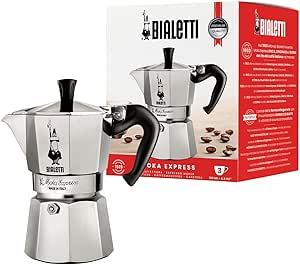
| Bialetti Moka Express: Iconic | Aluminum | 2 × 5 × 5 inches | 0.32 kg | 2 fluid ounces (1 cup) |
| Bialetti Moka Express: Iconic | Aluminum | 5 × 4 × 6.7 inches | 0.4 kg | 130 ml (3 espresso shots) |
| Bialetti Moka Express 6-Cup St | Aluminum | 3 × 3 × 3 inches (as listed) | 1 kg | 6 cups (6 oz) |
| Breville BES878BSS Barista Pro | Stainless steel | — | — | — |
| Breville BES870XL Barista Expr | Stainless steel | 13.8 × 12.5 × 15.9 inches | 22.1 pounds | — |
| De’Longhi La Specialista Arte | — | 14.4 in D × 11.2 in W × 15.9 in H | 25.8 lb | — |
| Primula Classic Stovetop Espre | Aluminum | 4.06 in D × 6.34 in W × 7.48 in H | 22.68 g | 6 cups |
| Mongdio Stovetop Espresso Make | Food-grade aluminum | 4.72 in D × 4.72 in W × 7.48 in H | 1.26 lb | 10 oz; listed as 6 espresso cups |
| Bialetti Venus Induction Stove | Stainless steel | 3.75 in D × 4.75 in W × 6.75 in H | 7.68 oz | 5.7 oz; listed as 4 cups |
| Primula Classic Stovetop Espre | Cast aluminum | 4.5 in D × 6.2 in W × 9.4 in H | 12.8 oz | 9 cups |
| Primula Classic Moka Pot Stove | Aluminum | 4.06 x 6.34 x 7.49 inches | 0.62 kg | 6 cups |
| IMUSA 6 or 3 Cup Electric Espr | Cast aluminum | 7.1 x 4.72 x 9.3 inches | 2.8 pounds | 3 or 6 cups |
| GROSCHE Milano 6-Cup Moka Pot | Aluminum | 4 x 3.9 x 7.8 inches | 611 g | 6 cups (9.3 oz) |
| Bellemain Stovetop Espresso Ma | Aluminum | 4.25 x 6 x 8 inches | — | 6 cups |
| CASABREWS 3700 Essential Stain | Brushed stainless steel | — | — | — |
More Details on Our Top Picks
Bialetti Moka Express: Iconic Stovetop Espresso Maker, 1 Cup, Aluminum, Silver
For a single serving with minimal storage demands, I’d choose this 1-cup Moka Express over the 3-cup and 6-cup versions. Its 2-fluid-ounce capacity suits a small, concentrated coffee rather than a full mug, and its manual stovetop design keeps the brewing setup simple for home or travel. The aluminum body is lightweight, while the stainless steel safety valve adds a practical safeguard during brewing. Like the larger Moka Express models, it needs attention on the stove and makes coffee rather than espresso from a pump-driven machine; the Breville Barista Pro is the better fit for buyers who want an integrated grinder, temperature control, and milk steaming. The tradeoff here is clear: little counter or bag space, but only one small serving per brew.
Pros:- Compact, lightweight aluminum body is easy to store and carry
- Simple manual brewing needs no grinder or electrical outlet
- Suitable for gas and electric cooktops; induction use is possible with an adapter
- Rinses clean without detergent
Cons:- Makes only one small serving per brew
- Requires stove monitoring and careful handling around hot parts
- Does not provide automatic brewing, integrated grinding, or milk steaming
Best for: Solo coffee drinkers, campers, and people with very limited kitchen or storage space who want a small stovetop brew.
Not ideal for: Households serving several people at once or buyers seeking pump-driven espresso, automated brewing, or steamed milk.
- Capacity:2 fluid ounces (1 cup)
- Material:Aluminum
- Color:Silver
- Operation:Manual
- Pressure:1.5 bar
- Dimensions:2 × 5 × 5 inches
- Weight:0.32 kg
- Cooktop compatibility:Gas and electric; induction with an adapter
Our verdict“Choose this Moka Express if portability and a single small stovetop serving matter more than capacity or automation.”
Bialetti Moka Express: Iconic Stovetop Espresso Maker, 3-Cup, Aluminum, Silver
I’d place the 3-cup Moka Express between the single-serving Bialetti and the larger 6-cup model for buyers who want a little more coffee without committing to a group-size pot. Its 130 ml capacity is listed as three espresso shots, making it a practical match for one generous coffee or a few smaller servings. The lightweight aluminum construction and manual operation keep it suitable for home, camping, or travel, while the safety valve is a useful built-in feature. Compared with the 1-cup model, it reduces the need for repeated brewing; compared with the Breville Barista Express, it skips the grinder, controls, and milk wand. That simplicity also means more hands-on brewing, no dishwasher cleaning, and a serving size that may still fall short when several people want coffee together.
Pros:- 130 ml capacity can serve several small espresso-style portions
- Compact, lightweight form works for travel and camping
- Manual construction avoids the need for an electrical connection
- Disassembles for straightforward cleaning
Cons:- Requires monitoring during stovetop brewing
- Not dishwasher safe
- Capacity remains limited for serving a group
Best for: One or two people who want a portable stovetop brewer with more capacity than a single-serving pot.
Not ideal for: Larger households, hands-off brewing, or anyone who wants integrated grinding and milk-based drinks from one machine.
- Capacity:130 ml (3 espresso shots)
- Material:Aluminum
- Color:Silver
- Dimensions:5 × 4 × 6.7 inches
- Weight:0.4 kg
- Operation:Manual
- Stove compatibility:Gas, electric, and induction
Our verdict“Pick the 3-cup Moka Express for portable everyday brewing when the 1-cup model is too small but a 6-cup pot is more than you need.”
Bialetti Moka Express 6-Cup Stovetop Espresso Maker
Among the three Bialetti Moka Express sizes here, I’d choose the 6-cup model when one brewing cycle needs to serve more than a single drinker. It retains the recognizable manual aluminum stovetop format, but its larger stated capacity makes it a more sensible shared brewer than the 1-cup and 3-cup versions. There is no integrated grinder, electronic temperature setting, or milk wand, so it is a simpler choice than either Breville machine and depends on the user to manage the heat. That tradeoff suits buyers who want moka-style coffee without a countertop appliance, but it is not a high-volume solution for a large group, and the listed dimensions are unusually small for a 6-cup pot, so I would verify the product’s actual size before planning a tight storage fit. It also requires hand cleaning.
Pros:- Larger stated capacity than the 1-cup and 3-cup Moka Express models
- Aluminum stovetop construction keeps the brewing process direct and manual
- Works on gas and electric stoves, with an adapter for induction
- Simple rinsing makes routine cleanup straightforward
Cons:- Requires monitoring and handling a hot stovetop pot
- Not dishwasher safe
- The provided dimensions may be inconsistent with the stated capacity, so size should be checked
Best for: Moka-pot fans who regularly brew several small servings for a household or a couple of guests.
Not ideal for: Buyers who need unattended brewing, dishwasher cleanup, large-group volume, or true pump-driven espresso with milk steaming.
- Capacity:6 cups (6 oz)
- Material:Aluminum
- Color:Silver
- Dimensions:3 × 3 × 3 inches (as listed)
- Weight:1 kg
- Operation:Manual
- Compatible stovetops:Gas and electric; induction with an adapter
Our verdict“Choose this 6-cup Bialetti for shared moka-style servings, but check its dimensions and skip it if you need automated espresso or milk drinks.”
Breville BES878BSS Barista Pro Espresso Machine, Brushed Stainless Steel
For buyers who want café-style drinks at home rather than moka-pot coffee, I’d rank the Barista Pro as the most capable all-in-one option in this group. Its integrated conical burr grinder, PID temperature control, and steam wand bring grinding, extraction, and milk texturing into one machine; the ThermoJet system is specified to heat up in three seconds, reducing the wait before a shot. Compared with the Bialetti Moka Express models, this is a much more involved countertop setup, but it offers finer control and the ability to make lattes and cappuccinos. The LCD provides feedback during grinding and extraction, though it does not remove the learning curve of manual espresso. Buyers should also expect regular cleaning and whole-bean handling. This is the pick for hands-on home baristas, not for someone seeking a compact, rinse-and-store brewer.
Pros:- Integrated precision burr grinder with dose control simplifies the path from beans to espresso
- PID temperature regulation supports more consistent extraction
- ThermoJet heating system is specified for a 3-second heat-up
- Steam wand can texture milk for cappuccinos and lattes
Cons:- Manual grinding, dosing, and extraction take practice
- Requires regular cleaning and maintenance of the grinder and machine
- Larger and heavier than the stovetop Bialetti options
Best for: Home espresso enthusiasts who want an integrated grinder, temperature regulation, and a steam wand in one countertop machine.
Not ideal for: Travelers, small kitchens, or buyers who prefer a low-maintenance stovetop brewer without grinder and milk-system upkeep.
- Operation:Manual
- Grinder:Integrated precision conical burr grinder
- Heating system:ThermoJet; 3-second heat-up
- Temperature control:PID, ±2°C
- Bean hopper capacity:1/2 lb
- Water tank capacity:67 oz (2 liters)
- Power:1680 watts
- Dimensions and weight:13 × 14 × 16 inches; 19.5 lb
- Material:Stainless steel
Our verdict“Choose the Barista Pro if you want a fast-heating, grinder-equipped machine for hands-on espresso and milk drinks at home.”
Breville BES870XL Barista Express Espresso Machine, Brushed Stainless Steel
The Barista Express is a strong fit for buyers who want a hands-on espresso routine with an integrated grinder, temperature control, and milk steaming, but do not need the Barista Pro’s specified three-second heat-up. Like the Pro, it combines a conical burr grinder and steam wand in a single stainless-steel appliance, allowing one setup to cover espresso, lattes, and cappuccinos. Compared with the Bialetti Moka Express, it takes more counter space and asks the owner to learn dosing and extraction; in return, it offers machine-made espresso and microfoam rather than stovetop moka coffee. The 1/2 lb bean hopper and 67 oz water tank suit regular home use, though the 22.1-pound weight makes it less convenient to move than the lighter Barista Pro listed here. Choose it for a capable manual setup, not effortless operation.
Pros:- Built-in conical burr grinder supports fresh grinding in the same machine
- Temperature control helps support consistent extraction
- Steam wand allows milk texturing for lattes and cappuccinos
- 67 oz water tank and 1/2 lb hopper suit repeated home brewing
Cons:- Manual preparation involves a learning curve
- At 22.1 pounds, it is heavy to move or store
- Requires regular cleaning and grinder maintenance
Best for: New home baristas who want a grinder-equipped manual machine and plan to practice espresso and milk-drink preparation.
Not ideal for: People short on counter space, buyers who need a lightweight or portable brewer, or anyone seeking quick, low-effort stovetop coffee.
- Operation:Manual
- Grinder:Built-in conical burr grinder
- Bean hopper capacity:1/2 lb
- Water tank capacity:67 oz
- Power:1600 watts
- Voltage:120 volts
- Dimensions:13.8 × 12.5 × 15.9 inches
- Weight:22.1 pounds
- Material:Stainless steel
Our verdict“Choose the Barista Express if you want to learn manual espresso and milk steaming with an integrated grinder, and have room for a substantial countertop machine.”
De’Longhi La Specialista Arte Evo Espresso Machine with Coffee Grinder
Among these Italian espresso makers, the La Specialista Arte Evo is the pick for buyers who want hands-on espresso without buying a separate grinder. Its built-in conical burr grinder offers 15 settings, while the steam wand supports milk texture for cappuccinos and latte art. The four presets and cold extraction technology also make it more versatile than the Primula stovetop models, which focus on brewed coffee and require a separate way to heat milk.
The tradeoff is a larger, more involved countertop setup: at 25.8 pounds, it is far less portable than any moka pot here, and semi-automatic brewing takes practice. Choose it for control and drink variety; skip it if you want the compact simplicity of a manual stovetop maker.
Pros:- Built-in conical burr grinder with 15 settings lets you grind for each brew without a separate appliance.
- Steam wand can create microfoam for milk-based drinks.
- Cold extraction technology adds a cold-brew option beyond standard espresso drinks.
- Four presets offer more drink variety than the manual moka pots in this roundup.
Cons:- Its 25.8-pound body and relatively large footprint make it a poor fit for small or crowded counters.
- Semi-automatic operation and grinder adjustments require more practice than a stovetop maker.
- It depends on household power and is not a portable option for camping or travel.
Best for: Home baristas who want an integrated grinder, espresso preparation, milk steaming, and cold coffee options in one countertop machine.
Not ideal for: Buyers with limited counter space or anyone who wants quick, low-effort stovetop coffee without learning semi-automatic controls.
- Operation mode:Semi-automatic
- Built-in grinder:Yes; conical burr grinder with 15 grind settings
- Pressure:15 bar
- Water tank capacity:56 fl oz
- Number of presets:4
- Wattage and voltage:1600 W; 120 V
- Dimensions:14.4 in D × 11.2 in W × 15.9 in H
- Weight:25.8 lb
Our verdict“Choose the La Specialista Arte Evo if you want a versatile, grinder-equipped home espresso station and are willing to trade simplicity and portability for control.”
Primula Classic Stovetop Espresso and Coffee Maker, 6 Cups, Silver
The Primula Classic 6-Cup is a straightforward choice for buyers who want stovetop Italian-style coffee without an electric machine or built-in grinder. Its aluminum body heats on gas, electric, and ceramic stovetops, and the manual brewing process keeps the setup simpler than the De’Longhi La Specialista Arte Evo. It also makes a practical middle ground in this lineup: more capacity than the Bialetti Venus 4-cup model, but not as tall or generous as Primula’s 9-cup version.
That capacity is still measured in small demitasse servings, not full mugs, so it may take multiple brews to serve a group. It also cannot steam milk or brew without a stovetop, and getting repeatable results takes some attention to heat and timing. Pick it for uncomplicated, portable moka brewing; skip it if you need automated espresso or a larger batch.
Pros:- Six-cup capacity offers more small servings than the Bialetti Venus 4-cup model.
- Cast aluminum construction distributes heat across the brewing chamber.
- Works on gas, electric, and ceramic stovetops.
- Manual design needs no electrical outlet and is suitable for travel.
Cons:- Six demitasse servings are smaller than six standard cups of coffee.
- Manual heat and timing require attention for consistent brewing.
- It cannot heat itself, steam milk, or brew without a compatible stovetop.
Best for: Coffee drinkers who want a portable, manual moka pot for a few small servings on a gas, electric, or ceramic stovetop.
Not ideal for: Buyers who need induction compatibility, one-touch brewing, steamed milk, or enough coffee for a larger group in one batch.
- Capacity:6 cups
- Material:Aluminum
- Operation mode:Manual
- Compatible stovetops:Gas, electric, and ceramic
- Dimensions:4.06 in D × 6.34 in W × 7.48 in H
- Weight:22.68 g
- Filter size:#6
Our verdict“Pick this Primula if you want a no-frills, six-serving moka pot for everyday stovetop brewing rather than an automated espresso machine.”
Mongdio Stovetop Espresso Maker Moka Pot, 6 Espresso Cups, 10 oz – Black
The Mongdio 6-cup moka pot suits buyers who want a compact manual alternative to the larger Primula Classic 9-Cup. Its listed 10-ounce capacity and 7.48-inch height keep the format modest, while the aluminum body, safety valve, and heat-resistant handle cover the basics for stovetop brewing. Like the Primula 6-Cup, it makes coffee without electrical power, but the black finish gives it a more contemporary look than the silver Primula.
This is still moka coffee, not pump-driven espresso, and the manual method calls for stovetop heat and some attention. It is also not dishwasher safe, so cleanup means hand washing. The product data does not specify compatible hob types, making it less clearly suited to buyers with specialized cooktops than the induction-capable Bialetti Venus. Choose it for simple, compact brewing if your stovetop is compatible.
Pros:- Six-cup format is more compact than the Primula Classic 9-Cup.
- Food-grade aluminum body supports traditional moka-pot brewing.
- Safety valve and heat-resistant handle are practical features for stovetop use.
- Manual design does not require electricity.
Cons:- Not dishwasher safe, so cleaning requires hand washing.
- Stovetop-only operation offers no built-in heating or automated brewing.
- The provided product data does not identify compatible hob types, limiting confidence for specialized cooktops.
Best for: Buyers seeking a compact, six-serving aluminum moka pot for manual brewing at home, with a black finish and a safety valve.
Not ideal for: Induction-cooktop owners who need explicit compatibility, dishwasher-dependent households, or anyone seeking electric or pump-driven espresso.
- Capacity:10 oz; listed as 6 espresso cups
- Material:Food-grade aluminum
- Operation mode:Manual
- Safety feature:Safety valve
- Handle:Heat-resistant
- Dimensions:4.72 in D × 4.72 in W × 7.48 in H
- Weight:1.26 lb
- Color:Black
Our verdict“Choose the Mongdio for compact, manual moka brewing if your stovetop is compatible and you are comfortable washing it by hand.”
Bialetti Venus Induction Stovetop Coffee Maker, 4 Cups, Stainless Steel, Silver
The Bialetti Venus stands apart from the aluminum moka pots in this roundup because its stainless steel construction and listed induction compatibility make it the clearest choice for induction-cooktop owners. It also works on gas, and its 5.7-ounce capacity suits a smaller household better than the Primula Classic 6-Cup or 9-Cup models. The compact body is easy to fit in a cupboard, and manual operation keeps the brewing process free of electrical components.
The main compromise is capacity: its four small servings are a poor match for group brewing, and the brewer needs attention to avoid overboiling. Its stainless steel build is a practical differentiator, but it is not an automatic espresso machine and cannot steam milk like the De’Longhi La Specialista Arte Evo. Choose it for induction-ready stovetop coffee; skip it if you want larger batches or push-button convenience.
Pros:- Listed as compatible with induction and gas hobs, unlike the aluminum stovetop models in this selection.
- Stainless steel construction offers a distinct alternative to aluminum moka pots.
- Compact dimensions suit smaller kitchens and storage spaces.
- Manual design requires no electrical power.
Cons:- Four small servings and 5.7-ounce capacity are limiting for groups.
- Manual brewing requires attention to prevent overboiling.
- It does not provide automated espresso preparation or milk steaming.
Best for: Induction-cooktop owners who want a compact stainless steel moka pot for a few small servings.
Not ideal for: Households that routinely brew for groups or buyers who want automated brewing, integrated grinding, or milk steaming.
- Capacity:5.7 oz; listed as 4 cups
- Material:Stainless steel
- Compatible hobs:Gas and induction
- Operation mode:Manual
- Dimensions:3.75 in D × 4.75 in W × 6.75 in H
- Weight:7.68 oz
- Warranty:1 year
- Model number:0007254/CN
Our verdict“Choose the Bialetti Venus if induction compatibility and stainless steel matter more to you than batch size or automation.”
Primula Classic Stovetop Espresso and Coffee Maker, Moka Pot for Italian and Cuban Café Brewing, Greca Coffee Maker, Cafeteras, 9 Espresso Cups, Silver
When batch size matters more than compact storage, the Primula Classic 9-Cup offers the largest stated capacity among these manual moka pots. Its cast aluminum body and safety-release valve support familiar stovetop brewing, while compatibility with gas, electric, ceramic, and propane makes it more versatile for travel and camping than an electric countertop machine. Compared with the Primula 6-Cup, it can serve more small portions in one brew; compared with the induction-ready Bialetti Venus, it trades stainless steel and induction use for greater capacity.
Its nine servings are demitasse-sized, not full mugs, so the number can overstate how much coffee a group actually gets. The 9.4-inch height also takes more storage space than the smaller moka pots. It remains entirely manual and stovetop-dependent, so it is not a fit for buyers wanting automated espresso or milk steaming.
Pros:- Nine-cup capacity exceeds the Primula 6-Cup and Bialetti Venus 4-cup models.
- Works with gas, electric, ceramic, and propane stovetops.
- Cast aluminum body and safety-release valve support practical stovetop use.
- Manual construction can suit camping and travel where an outlet is unavailable.
Cons:- Nine servings are small espresso-style portions, not nine full cups of coffee.
- The 9.4-inch height takes more storage space than smaller moka pots.
- Manual, stovetop-only brewing requires attention and does not steam milk.
Best for: Households, campers, and travelers who want to brew several small servings at once on gas, electric, ceramic, or propane heat.
Not ideal for: Induction-cooktop owners, small-kitchen buyers, or anyone expecting nine full mugs or electric, automated brewing.
- Capacity:9 cups
- Material:Cast aluminum
- Compatible stovetops:Gas, electric, ceramic, and propane
- Operation mode:Manual
- Input type:Ground coffee
- Dimensions:4.5 in D × 6.2 in W × 9.4 in H
- Weight:12.8 oz
- Color:Silver
Our verdict“Choose this Primula if you want the largest listed moka-pot batch here and have a compatible stovetop, but not if you need full-size mugs or induction use.”
Primula Classic Moka Pot Stovetop Espresso and Coffee Maker, 6-Cup, Blue
The Primula Classic is a straightforward choice for buyers who want six small servings of moka-style coffee without an electric machine or extra controls. Its cast-aluminum body heats on gas, electric, and ceramic stovetops, while the stay-cool handle and drip-free spout make serving less fussy. Compared with the IMUSA electric maker, it needs a stovetop and attention during brewing, but it avoids dependence on the listed 230-volt supply. Its compact size and simple disassembly also suit a cupboard, office kitchen, or camping kit with a compatible burner. The tradeoff is the familiar moka-pot learning curve: heat and timing affect the result, and the six-cup capacity means it is better for a few people than a crowd.
Pros:- Works on gas, electric, and ceramic stovetops.
- Cast aluminum supports quick, even heating.
- Stay-cool handle and drip-free spout help with serving.
- Disassembles for straightforward cleaning.
Cons:- Requires stovetop heat and monitoring rather than automatic brewing.
- Six-cup capacity may fall short for groups.
- Brewing results can take practice to dial in.
Best for: Buyers who want an affordable-feeling, compact six-cup moka pot for home or office use and have a compatible stovetop.
Not ideal for: People who want push-button electric brewing, induction compatibility, or enough coffee for a large gathering.
- Capacity:6 cups
- Material:Aluminum
- Compatible stovetops:Gas, electric, ceramic
- Dimensions:4.06 x 6.34 x 7.49 inches
- Weight:0.62 kg
- Included components:Stovetop espresso maker
- Warranty:1 year
Our verdict“Choose the Primula Classic if you want a simple, portable stovetop moka pot and do not need electric operation or a larger batch.”
IMUSA 6 or 3 Cup Electric Espresso Maker with Cool-touch Handle, Black
The IMUSA electric espresso maker suits buyers who want moka-style coffee without placing a pot on a burner. Its detachable base and one-touch operation make it easier to set up at a desk or in a kitchen without a free stovetop, and the choice of three or six cups gives it more serving flexibility than the fixed-capacity GROSCHE Milano. Cast aluminum retains the familiar moka-pot brewing style, while the cool-touch handle helps during pouring. The main limitation is electrical compatibility: the supplied specifications list 230 volts, so buyers should check their local supply before choosing it. It is still manual in operation and offers only two batch sizes, so it is not a hands-off espresso machine or a solution for a large group.
Pros:- Brews either three or six cups.
- Detachable base allows counter placement away from a burner.
- Cool-touch handle supports safer pouring.
- Cast-aluminum brewing base keeps a traditional moka-style approach.
Cons:- Listed 230-volt operation may not match local electrical systems.
- Two batch sizes do not suit every serving need.
- Manual operation still calls for some attention and learning.
Best for: Home or office users with compatible 230-volt power who want a moka-style brewer that does not occupy a stovetop.
Not ideal for: Buyers in regions without compatible 230-volt power, or anyone seeking a large-capacity, fully automatic espresso machine.
- Capacity:3 or 6 cups
- Wattage:230 watts
- Voltage:230 volts
- Operation mode:Manual
- Material:Cast aluminum
- Dimensions:7.1 x 4.72 x 9.3 inches
- Weight:2.8 pounds
Our verdict“Pick the IMUSA if your power supply is compatible and you value electric convenience over the simplicity of a stovetop pot.”
GROSCHE Milano 6-Cup Moka Pot
The GROSCHE Milano is the most camping-oriented pick among these six-cup stovetop pots: it is a manual, compact aluminum brewer with a soft-touch handle, burn guard, and safety valve. It works on gas and electric stovetops, making it a practical companion for a campsite with a suitable burner as well as a home kitchen. Unlike the IMUSA electric maker, it needs no electrical connection, but that also means you must manage the heat yourself. Its stated capacity of 9.3 ounces helps set expectations: “six cups” means small moka servings, not six full mugs. The main upkeep compromise is hand washing only, and the listed compatibility does not include induction, so this is a focused choice rather than the most versatile pot in the group.
Pros:- Portable form suits home use and camping.
- Compatible with gas and electric stovetops.
- Soft-touch handle and burn guard support safer handling.
- Includes an Italian safety valve and reusable permanent filter.
Cons:- Not listed as compatible with induction stovetops.
- Hand-wash-only care adds cleanup work.
- 9.3-ounce total capacity yields small servings.
Best for: Campers and home brewers who want a compact, burner-powered moka pot with added handling protections.
Not ideal for: Induction-stove owners or buyers who need dishwasher-safe cleanup and larger mug-sized servings.
- Capacity:6 cups (9.3 oz)
- Material:Aluminum
- Compatible stovetops:Gas, electric
- Operation:Manual
- Filter:Reusable, permanent
- Dimensions:4 x 3.9 x 7.8 inches
- Weight:611 g
- Care:Hand wash only; not dishwasher safe
Our verdict“Choose the GROSCHE Milano for burner-based brewing at home or outdoors if hand washing and small servings are acceptable.”
Bellemain Stovetop Espresso Maker, 6-Cup Silver
The Bellemain keeps the moka-pot proposition simple: a silver aluminum body, reusable filter, and six-cup capacity for stovetop coffee at home or while camping. Its stay-cool handles and safety valve add practical protections without shifting toward the electric convenience of the IMUSA. The minimalist design may appeal to buyers who want a conventional pot rather than an appliance with a separate base or extra controls. It is also listed with a 1000-watt rating, but the stated operation is manual and the product is a stovetop brewer, so that figure should not be mistaken for standalone electric brewing. As with the Primula, the six-cup format means small demitasse servings, and aluminum needs attentive cleaning to limit staining.
Pros:- Minimal silver aluminum design suits a traditional moka-pot setup.
- Brews up to six demitasse servings.
- Stay-cool handles and a safety valve support safer use.
- Reusable filter avoids disposable paper filters.
Cons:- Requires manual stovetop heating and monitoring.
- Six-cup capacity is limited for larger groups.
- Aluminum may stain if not cleaned carefully.
Best for: Buyers who prefer a basic silver aluminum moka pot for stovetop use, occasional camping, and small servings.
Not ideal for: People who need electric brewing, induction compatibility, dishwasher-safe care, or capacity for a crowd.
- Material:Aluminum
- Color:Silver
- Capacity:6 cups
- Wattage:1000 watts
- Operation mode:Manual
- Coffee input type:Ground coffee
- Filter type:Reusable
- Dimensions:4.25 x 6 x 8 inches
Our verdict“Pick the Bellemain if a traditional, minimalist six-cup stovetop pot matters more than electric features or low-maintenance cleaning.”
CASABREWS 3700 Essential Stainless Steel Espresso Machine with Steam Wand
The CASABREWS 3700 is a different kind of Italian-style coffee option from the moka pots in this roundup: its semi-automatic format uses a portafilter and includes a steam wand for milk foam. That makes it the pick for buyers who want cappuccinos or latte-style drinks, while the Primula Classic and other stovetop brewers are simpler choices for concentrated coffee without milk-steaming equipment. A 43.9-ounce removable tank reduces how often you need to refill during home or office use, and the included one- and two-cup filters offer some flexibility. The tradeoff is more setup and hands-on brewing than a moka pot, plus the lack of a pressure gauge leaves no built-in readout for extraction pressure. Its 20-bar pressure claim does not make operation automatic.
Pros:- Steam wand expands the menu to milk-foamed drinks.
- Removable 43.9-ounce water tank reduces refill frequency.
- Includes one-cup and two-cup stainless-steel filters.
- Brushed stainless-steel construction gives it a distinct appliance-style setup.
Cons:- Requires more setup and hands-on operation than stovetop moka pots.
- No built-in pressure gauge to monitor extraction.
- 120-volt specification limits use to compatible electrical supplies.
Best for: Home coffee drinkers who want a semi-automatic machine with a steam wand for milk-based drinks and have 120-volt power.
Not ideal for: Buyers seeking a compact, low-effort moka pot or those who want a pressure gauge and more direct extraction feedback.
- Pressure:20 bar
- Wattage:1350 watts
- Voltage:120 volts
- Operation mode:Semi-automatic
- Water tank capacity:43.9 oz
- Material:Brushed stainless steel
- Filter types:One-cup and two-cup stainless steel
- Portafilter style:Double shot
Our verdict“Choose the CASABREWS 3700 if you want milk-drink capability and accept a more involved machine instead of a simple moka pot.”
How We Picked
I ranked these Italian espresso makers by how well each fits its intended brewing style, not by treating moka pots and espresso machines as interchangeable. The main criteria were brewing capability, ease of use, capacity, material and stove compatibility, milk-drink support, maintenance demands, and how much extra equipment a buyer may need. I also weighed whether a product’s design solves a real buyer problem, such as making coffee for a group, working on induction, or reducing grinder setup.
The ranking gives the strongest positions to versatile choices with a clear use case and manageable compromises. The Barista Express leads among full espresso machines for combining grinding and brewing in one unit; classic Bialetti options rank highly for dependable stovetop simplicity, with size and stove fit separating them. Other moka pots and compact machines remain useful alternatives, but their placement reflects narrower advantages, less flexibility, or a need for buyers to verify capacity and compatibility before choosing.
| Italian espresso maker | Material | Operation mode |
|---|---|---|
| Bialetti Moka Express: Iconic | Aluminum | — |
| Bialetti Moka Express: Iconic | Aluminum | — |
| Bialetti Moka Express 6-Cup St | Aluminum | — |
| Breville BES878BSS Barista Pro | Stainless steel | — |
| Breville BES870XL Barista Expr | Stainless steel | — |
| De’Longhi La Specialista Arte | — | Semi-automatic |
| Primula Classic Stovetop Espre | Aluminum | Manual |
| Mongdio Stovetop Espresso Make | Food-grade aluminum | Manual |
| Bialetti Venus Induction Stove | Stainless steel | Manual |
| Primula Classic Stovetop Espre | Cast aluminum | Manual |
| Primula Classic Moka Pot Stove | Aluminum | — |
| IMUSA 6 or 3 Cup Electric Espr | Cast aluminum | Manual |
| GROSCHE Milano 6-Cup Moka Pot | Aluminum | — |
| Bellemain Stovetop Espresso Ma | Aluminum | Manual |
| CASABREWS 3700 Essential Stain | Brushed stainless steel | Semi-automatic |
Factors to Consider When Choosing Italian Espresso Makers
Before choosing, decide what you mean by Italian espresso: moka-pot coffee and machine-made espresso are different drinks with different equipment needs. These practical checks can help you avoid buying a maker that fits the label but not your kitchen, routine, or preferred cup.
Choose the Brewing Style Before the Brand
A moka pot brews concentrated coffee by passing hot water through grounds under steam pressure, while an espresso machine uses a pump to brew espresso. The drinks can both serve as strong bases for milk or diluted coffee, but they are not identical in texture or extraction. Decide whether you value a compact ritual and stovetop brewing or want espresso-machine controls and a steam wand. A common mistake is buying a moka pot expecting café-style espresso without adjusting expectations. Machine buyers should also account for the grinder, tamping, and cleanup involved in the process. Pay more for a machine only if those extra controls and capabilities matter to your daily routine.
Match Capacity to Your Actual Serving Habit
Moka-pot cup counts refer to small servings, not standard mugs, so a listed six-cup pot will not necessarily fill six large cups of coffee. Think about whether you usually brew for yourself, make two drinks in succession, or serve a group. A larger pot can be useful for multiple servings, but it may be awkward if you usually want just one small portion. For moka brewing, follow the maker’s fill guidance rather than assuming you can brew a partial batch for a single serving. Espresso machines sidestep moka-pot batch sizing but still need time and effort for each drink. Choose capacity around your regular routine instead of buying the largest option by default.
Check Stove and Counter Compatibility
Stovetop moka pots depend on a heat source that suits their base material; aluminum models generally do not work directly on induction, while stainless-steel options are more suitable. Check your cooktop type and the manufacturer’s compatibility details before ordering. An adapter can help in some kitchens, but it adds another object to store and use. Electric brewers can remove the stovetop requirement, though they need a suitable outlet and counter space. Espresso machines bring a larger footprint and may need room for accessories and cleaning. Measure the space and verify the power or cooktop requirements before deciding.
Plan for the Grinder and Learning Curve
Freshly ground coffee can improve results, but an espresso machine’s grinder setting, dose, and tamp all affect the cup. An integrated grinder cuts down on separate equipment and counter clutter, yet it does not make espresso fully automatic. Buyers seeking a low-effort start may prefer moka brewing or a machine with more guided operation. If you choose a machine without a grinder, include a suitable grinder in your setup plan rather than relying on pre-ground coffee for every shot. Moka pots are simpler, though grind size and heat control still matter. Spend on integrated features when they remove friction you would otherwise face regularly.
Account for Milk Drinks and Cleanup
If cappuccinos and lattes are part of your routine, a steam wand gives an espresso machine a major advantage over a basic moka pot. A moka pot can make strong coffee for milk, but it does not froth milk on its own. Steam wands also add practice and cleaning: milk residue needs prompt attention, and the machine has more parts than a simple pot. Moka makers have fewer components, yet their seals, filters, and brewing chambers still need regular care. A compact setup may suit black-coffee drinkers better than a feature-rich machine. Choose based on the drinks you make most, not an occasional recipe you might try.
Treat Materials and Design as Practical Choices
Aluminum moka pots are associated with classic designs, while stainless steel can be a better fit for induction cooktops and buyers seeking a different material. Colored finishes may help a pot suit a kitchen, but they do not change its brewing method. Check the maker’s cleaning instructions instead of assuming every pot is dishwasher-safe or suited to abrasive cleaning. For machines, stainless-steel exteriors can look durable, but the internal components and maintenance routine matter just as much. Consider replacement parts such as gaskets and filters, since wear items affect how long a moka pot remains useful. Choose a material and finish for compatibility, care, and preference rather than appearance alone.
Frequently Asked Questions
Does a moka pot make espresso?
A moka pot makes concentrated coffee, but it does not brew espresso in the same way as a pump-driven machine. Its pressure and brewing method produce a different drink, often suited to drinking on its own or mixing with milk. If you specifically want espresso shots with machine-style extraction, choose an espresso machine such as one of the Breville, De’Longhi, or CASABREWS models in this roundup. If you want a compact stovetop routine, a moka pot may be the better fit. The distinction matters most when a recipe calls for espresso or you expect café-style crema.
Which moka pot size should I buy for one or two people?
Choose based on how many small moka servings you normally brew, not the number of full-size mugs you want to fill. The Bialetti Moka Express comes in 1-, 3-, and 6-cup versions, giving solo drinkers and shared households different batch sizes. A larger pot may be convenient when making several drinks, but it can be less suited to a single small serving. Moka pots generally work best when their basket and chamber are filled according to the maker’s directions. If you regularly need different batch sizes, consider whether an espresso machine offers more practical flexibility.
Can I use an aluminum moka pot on an induction cooktop?
Most aluminum moka pots, including the classic Moka Express style, do not work directly on induction because induction requires compatible magnetic cookware. The Bialetti Venus in this lineup uses stainless steel and is the more suitable choice for induction use. Check the specific model’s instructions, since material and base design determine compatibility. An induction adapter may be an option for some pots, but it adds a separate step and may affect convenience. Verify this before buying rather than relying on the product’s Italian styling or brand name.
Should I choose a moka pot or an espresso machine for lattes?
If you make lattes often and want to steam milk at home, an espresso machine with a steam wand is the more direct choice. The Breville and De’Longhi options also provide machine-based espresso workflows, while the CASABREWS includes a steam wand in a more essential setup. A moka pot can provide strong coffee for a milk drink, but you will need a separate way to heat and froth milk. That may be enough for occasional use, especially if you value a smaller, simpler brewer. For frequent milk drinks, include the machine’s learning and cleaning demands in your decision.
Is an integrated grinder worth choosing over a separate grinder?
An integrated grinder can save counter space and make a combined brewing setup easier to assemble, which is why the Barista Express and De’Longhi La Specialista Arte Evo may appeal to buyers starting from scratch. A separate grinder gives you more freedom to replace or upgrade that part without changing the machine. Either approach still requires attention to grind size and dose if you want consistent espresso. Buyers who value simplicity and a single appliance may prefer integration; buyers who want modular equipment may prefer separate pieces. A moka-pot owner does not need an espresso grinder setup to use the brewer, though suitable coffee grind still affects results.
Conclusion
For the best all-around machine setup, I recommend the Breville Barista Express, while the Bialetti Moka Express is my pick for classic stovetop brewing and the best value-minded route into moka coffee. Buyers seeking a more premium, guided machine experience should compare the De’Longhi La Specialista Arte Evo with the Breville options; beginners who want a straightforward stovetop routine can start with a Bialetti Moka Express sized to their household. For induction kitchens, the Bialetti Venus is the specific moka-pot choice, and for milk drinks without a separate frother, look to a machine with a steam wand. Match the brewer to your cooktop, drink preferences, and appetite for hands-on preparation, and the right choice among these 15 becomes much clearer.
Fall Picks
fall essentials
As an affiliate, we earn on qualifying purchases.