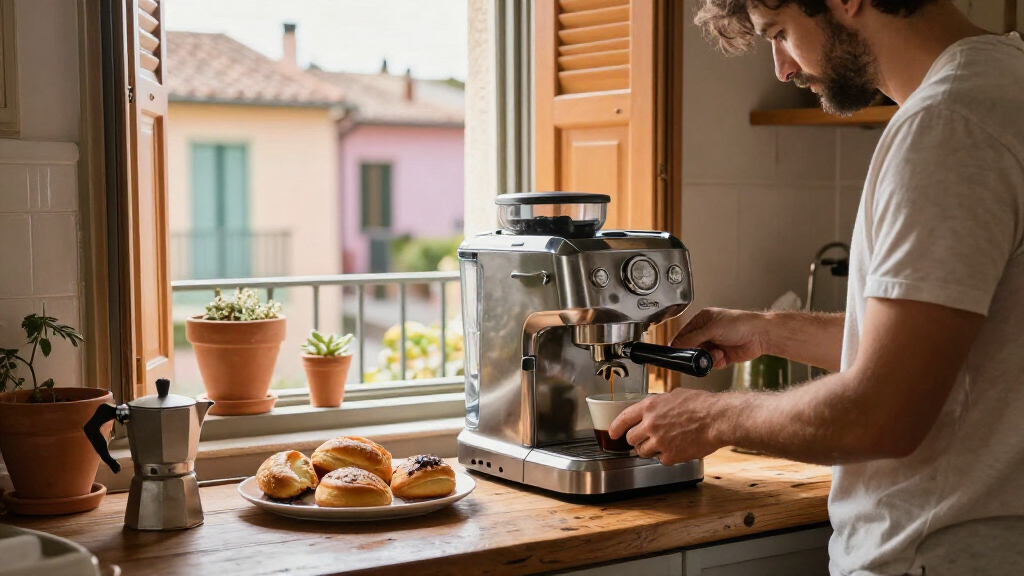
For an Italian espresso machine at home, I’d choose the De’Longhi La Specialista Touch as the best overall for its built-in grinder and guided controls. The Breville Bambino suits buyers who want a compact machine without an integrated grinder, while the Bialetti Moka Express offers a simple stovetop route to strong coffee. The main tradeoff is between convenience and control: all-in-one machines save counter space and simplify setup, while separate or manual options ask more of you but give you a different brewing routine. Stovetop makers are smaller still, though they do not brew espresso at pump-machine pressure. Read on for how all 14 picks compare and which one fits your kitchen and coffee habits.

Get kitchen staples and gadgets delivered free with Prime
- Fast, free delivery on millions of items
- Prime Video, Amazon Music and more included
- Member-only deals all year
Complete the kit


Key Takeaways
- The La Specialista Touch leads for one-machine convenience: its built-in grinder and guided workflow make it a stronger all-rounder than the more hands-on Gaggia Classic Evo Pro.
- Built-in grinders are a real dividing line: the Breville Barista Express models and De’Longhi La Specialista machines reduce the need for separate equipment, while the Bambino and classic De’Longhi models leave grinding to you.
- The Bambino is the compact pump-machine choice: it takes less counter space than grinder-equipped machines, but requires a separate grinder for freshly ground beans.
- Stovetop brewers trade espresso-style pressure for simplicity: the Bialetti Moka Express and Primula Classic need no pump or steam wand, but produce a different style of strong coffee.
- Similar-looking entry machines differ in workflow: the CHULUX, Gevi, and CASABREWS compact models are straightforward options, while the De’Longhi and Breville picks offer more involved controls or integrated tools.
| CHULUX 20-Bar Stainless Steel Espresso Machine with Milk Frother |  | Best for Compact Counter Space | Model: C5010 | Machine type: Semi-automatic espresso machine | Pump pressure: 20 bar | VIEW LATEST PRICE | See Our Full Breakdown |
| CASABREWS 3700 Essential Stainless Steel Espresso Machine with Steam Wand |  | Best for Straightforward Daily Milk Drinks | Operation mode: Semi-automatic | Pump pressure: 20 bar | Power: 1350 watts | VIEW LATEST PRICE | See Our Full Breakdown |
| De’Longhi Classic Matte Black Espresso Machine with Milk Frother |  | Best for Beginners | Machine type: Espresso machine | Pressure: 9 bar | Power: 1350 watts | VIEW LATEST PRICE | See Our Full Breakdown |
| De’Longhi La Specialista Touch Semi-Automatic Espresso Machine with Grinder |  | Best Premium All-in-One | Machine type: Semi-automatic espresso machine | Display: 3.5-inch high-resolution touchscreen | Preset drink recipes: 10 | VIEW LATEST PRICE | See Our Full Breakdown |
| Gevi 20-Bar Compact Espresso Machine with Milk Frother | 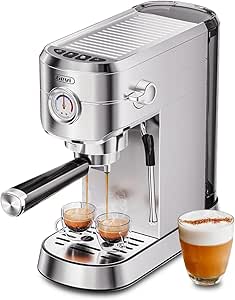 | Best for Pressure and Hot-Water Versatility | Model: ECMG0 | Operation mode: Semi-automatic | Pump pressure: 20 bar | VIEW LATEST PRICE | See Our Full Breakdown |
| Primula Classic 6-Cup Stovetop Espresso Maker |  | Best for Stovetop Simplicity | Type: Moka pot | Capacity: 6 cups | Material: Cast aluminum | VIEW LATEST PRICE | See Our Full Breakdown |
| De’Longhi Classic Signature Espresso Machine with Adjustable Milk Frother |  | Best for Preset Convenience | Coffee maker type: Espresso machine | Pump pressure: 15 bar | Power: 1350 watts | VIEW LATEST PRICE | See Our Full Breakdown |
| Breville Barista Express Espresso Machine with Built-In Grinder, Brushed Stainless Steel |  | Best for Hands-On Bean-to-Cup Brewing | Model: BES870XL | Type: Manual espresso machine | Grinder: Integrated precision conical burr grinder | VIEW LATEST PRICE | See Our Full Breakdown |
| CASABREWS CM5418 Compact Espresso Machine with Milk Frothing Wand |  | Best Compact Budget-Style Workflow | Type: Semi-automatic espresso machine | Pump pressure: 20 bar | Power: 1350 W | VIEW LATEST PRICE | See Our Full Breakdown |
| Breville Bambino Espresso Machine, Brushed Stainless Steel |  | Best Compact Fast-Heating Machine | Type: Semi-automatic espresso machine | Heating system: ThermoJet | Heat-up time: 3 seconds | VIEW LATEST PRICE | See Our Full Breakdown |
| Breville Barista Express Espresso Machine with Grinder, Black Truffle |  | Best All-in-One Home Barista Pick | Machine type: Semi-automatic espresso machine | Grinder: Integrated conical burr grinder | Bean hopper capacity: 1/2 lb | VIEW LATEST PRICE | See Our Full Breakdown |
| De’Longhi La Specialista Arte Evo Espresso Machine with Grinder |  | Best for Cold-Brew Variety | Machine type: Semi-automatic espresso machine | Grinder: Built-in conical burr grinder, 15 settings | Beverage presets: Espresso, Americano, cold brew, and hot water | VIEW LATEST PRICE | See Our Full Breakdown |
| Gaggia Classic Evo Pro Espresso Machine – Brushed Stainless Steel | 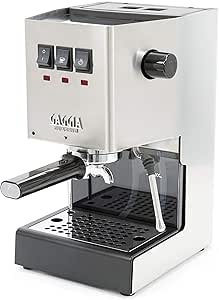 | Best Italian Prosumer-Style Pick | Housing material: Solid steel | Country of origin: Italy | Extraction pressure: 9 bar | VIEW LATEST PRICE | See Our Full Breakdown |
| Bialetti Moka Express Stovetop Espresso Maker, 6 Cups, Silver |  | Best Compact Italian Stovetop Pick | Model: Moka Express, model 06800 | Capacity: 6 espresso cups (listed as 3 liters) | Material: Aluminum | VIEW LATEST PRICE | See Our Full Breakdown |
| Italian espresso machines for home | Power | Dimensions | Weight | Water tank capacity |
|---|---|---|---|---|
| CHULUX 20-Bar Stainless Steel | 1350 watts | 11.7 × 5.5 × 12.5 inches | 7.8 pounds | 40 fluid ounces |
| CASABREWS 3700 Essential Stain | 1350 watts | — | — | 43.9 fluid ounces |
| De’Longhi Classic Matte Black | 1350 watts | 11.22 × 13.98 × 15.94 inches | 9.3 pounds | — |
| De’Longhi La Specialista Touch | — | — | — | — |
| Gevi 20-Bar Compact Espresso M | 1350 watts | 12.3 × 5.5 × 12 inches | 8.6 pounds | 1 liter (34 ounces) |
| Primula Classic 6-Cup Stovetop | — | 4.06 × 6.34 × 7.48 in | — | — |
| De’Longhi Classic Signature Es | 1350 watts | — | — | — |
| Breville Barista Express Espre | 1600 watts | 13.8 × 12.5 × 15.9 in | 22.1 lb | 67 oz |
| CASABREWS CM5418 Compact Espre | 1350 W | — | — | 34 oz, removable |
| Breville Bambino Espresso Mach | 1560 watts | 13.7 × 6.3 × 12 in | 10.9 pounds | — |
| Breville Barista Express Espre | 1600 watts | 13.8 x 12.5 x 15.9 in | 22.1 lb | 67 fl oz |
| De’Longhi La Specialista Arte | — | 14.4 x 11.2 x 15.9 in (D x W x H) | 25.8 lb | 56 fl oz |
| Gaggia Classic Evo Pro Espress | 1200 watts | 8 x 9.5 x 14.2 in (D x W x H) | — | — |
| Bialetti Moka Express Stovetop | — | — | 1 kg | — |
More Details on Our Top Picks
CHULUX 20-Bar Stainless Steel Espresso Machine with Milk Frother
The CHULUX C5010 is a practical fit for a narrow counter: at 5.5 inches wide, it takes up less space than the CASABREWS 3700, while still offering a steam wand for milk drinks. Its pressure gauge, pre-infusion, and PID temperature control give you more brewing feedback and temperature management than a bare-bones entry-level machine. The 40-ounce tank also means fewer refills than the smaller footprint might suggest. The tradeoff is hands-on operation: you need to supply ground coffee, prepare the portafilter, and manage the brew yourself. Compared with the De’Longhi Classic, the CHULUX offers more listed brewing controls, but the De’Longhi’s single- and double-shot presets may suit buyers who prefer a simpler routine. Choose this one when counter width and control matter more than push-button convenience.
Pros:- Narrow 5.5-inch width fits tight counter spaces.
- PID temperature control and pre-infusion add brewing control.
- Pressure gauge offers feedback while extracting.
- 40-ounce water tank limits refill frequency for its size.
Cons:- Ground coffee and manual portafilter preparation are required.
- The semi-automatic workflow takes more effort than the De’Longhi Classic’s preset-based operation.
Best for: Apartment dwellers or home-office users with narrow counters who want manual espresso preparation and a steam wand.
Not ideal for: Buyers seeking a bean-to-cup setup, automatic milk preparation, or a machine that handles most brewing steps for them.
- Model:C5010
- Machine type:Semi-automatic espresso machine
- Pump pressure:20 bar
- Power:1350 watts
- Water tank capacity:40 fluid ounces
- Dimensions:11.7 × 5.5 × 12.5 inches
- Weight:7.8 pounds
- Features:PID temperature control, pre-infusion, pressure gauge, and automatic shut-off
Our verdict“Choose the CHULUX if you want a slim machine with useful brewing controls and are comfortable handling ground coffee and manual preparation.”
CASABREWS 3700 Essential Stainless Steel Espresso Machine with Steam Wand
The CASABREWS 3700 Essential keeps its appeal simple: a 20-bar pump, a steam wand, and separate one- and two-cup filters cover the basics for making espresso drinks at home or in an office. Its 43.9-ounce removable tank is the largest stated capacity among these five options, which can mean fewer trips to the sink than with the Gevi or CHULUX. The removable drip tray also makes routine cleanup less awkward. Compared with the CHULUX, though, the CASABREWS lists fewer brewing aids: there is no specified PID control, pre-infusion, or pressure gauge. That makes it a more straightforward pick, not the stronger choice for someone who wants to monitor extraction. It still requires ground coffee and manual brewing, and the provided information omits dimensions, so check your available counter space before choosing it.
Pros:- 43.9-ounce removable water tank has the largest stated capacity in this group.
- Removable drip tray simplifies cleanup.
- Includes separate one-cup and two-cup stainless steel filters.
- Steam wand supports cappuccinos, lattes, and milk texturing.
Cons:- No pressure gauge, pre-infusion, or PID control is listed, unlike the CHULUX.
- Requires ground coffee and manual preparation.
- Product data does not provide dimensions for checking counter fit.
Best for: Households or small offices that make one or two milk-based drinks at a time and value a removable tank and simple controls.
Not ideal for: Buyers who want extraction feedback or detailed temperature controls, or need verified dimensions before committing to a tight counter space.
- Operation mode:Semi-automatic
- Pump pressure:20 bar
- Power:1350 watts
- Voltage:120 volts
- Water tank capacity:43.9 fluid ounces
- Coffee input:Ground coffee
- Filters:Stainless steel one-cup and two-cup filters
- Controls:Buttons
Our verdict“Pick the CASABREWS 3700 if easy refilling and basic milk-drink capability matter more to you than added brewing controls.”
De’Longhi Classic Matte Black Espresso Machine with Milk Frother
The De’Longhi Classic Matte Black is the most approachable choice here for someone who wants repeatable espresso portions without giving up a steam wand. Its customizable single- and double-shot presets reduce the need to manage each shot entirely by feel, while Thermoblock heating is designed to provide fast, stable temperature control. The adjustable-height drip tray is a practical touch when switching between a short espresso cup and a taller drink glass. Unlike the CHULUX and Gevi, it is listed as fully automatic and uses 9-bar extraction, rather than emphasizing a 20-bar pump and extra manual feedback. That simpler approach suits routine home brewing, but it offers less listed control for users who want to monitor pressure or tune pre-infusion. It still takes ground coffee, and the tank capacity is not specified, making this a weaker fit for buyers comparing refill intervals.
Pros:- Customizable single- and double-shot presets support repeatable portions.
- Thermoblock technology provides fast, stable temperature control.
- Adjustable steam wand handles milk and milk alternatives.
- Adjustable-height drip tray accommodates different cup sizes.
Cons:- Requires ground coffee rather than grinding beans in the machine.
- No tank capacity is provided in the product data.
- Offers fewer listed extraction controls than the CHULUX and Gevi.
Best for: New espresso makers who want programmable single and double shots, stable heating, and a steam wand without moving to a grinder-equipped machine.
Not ideal for: Hands-on hobbyists who want a pressure gauge and pre-infusion controls, or high-volume households that need a known large tank capacity.
- Machine type:Espresso machine
- Pressure:9 bar
- Power:1350 watts
- Voltage:120 volts
- Operation mode:Fully automatic
- Dimensions:11.22 × 13.98 × 15.94 inches
- Weight:9.3 pounds
- Special features:Customizable single- and double-shot presets, Thermoblock heating, adjustable steam wand, and auto shut-off
Our verdict“Choose the De’Longhi Classic if you are new to home espresso and prefer shot presets over extra manual brewing feedback.”
De’Longhi La Specialista Touch Semi-Automatic Espresso Machine with Grinder
The La Specialista Touch is the most capable all-in-one option in this group for buyers who want whole-bean coffee and guided adjustments without assembling a separate grinder-and-machine setup. Its Italian-made conical burr grinder has 15 settings, and the 3.5-inch touchscreen guides preparation across 10 customizable recipes. Saved bean profiles and adjustable milk settings make it easier to return to preferred drinks after experimenting. Compared with the CHULUX and Gevi, this De’Longhi brings grinding and a more guided interface into the machine, but it also asks for more learning and hands-on work than the preset-focused De’Longhi Classic. Its semi-automatic design still requires preparation at the portafilter, so the touchscreen does not turn it into a one-touch coffee system. Cold brew in under five minutes adds range, though buyers wanting only straightforward espresso may not use much of its extra flexibility.
Pros:- Built-in Italian-made conical burr grinder offers 15 grind settings.
- Touchscreen guidance and 10 customizable recipes support experimentation.
- Saved profiles and adjustable milk settings help repeat preferred drinks.
- Can prepare cold brew in under five minutes.
Cons:- The many settings create a steeper learning process than the De’Longhi Classic.
- Semi-automatic brewing still requires hands-on preparation.
- Its broad feature set may be unnecessary for buyers who mainly make basic espresso.
Best for: Home coffee enthusiasts who want an integrated grinder, guided recipe adjustments, saved bean settings, and both espresso and cold-brew options.
Not ideal for: Buyers who want a compact, low-effort machine for basic espresso or do not want to learn a more involved semi-automatic workflow.
- Machine type:Semi-automatic espresso machine
- Display:3.5-inch high-resolution touchscreen
- Preset drink recipes:10
- Grinder:Italian-made conical burr grinder
- Grind settings:15
- Saved bean profiles:6
- Milk settings:5 froth levels and 4 temperature settings
- Cold brew time:Under 5 minutes
Our verdict“Choose the La Specialista Touch if you want a guided, grinder-equipped setup and will use its recipe and drink customization.”
Gevi 20-Bar Compact Espresso Machine with Milk Frother
The Gevi ECMG0 gives manual espresso makers a useful mix of extraction feedback and drink flexibility in a narrow body. Its pre-infusion, NTC temperature control, and built-in pressure gauge help you follow the brewing process rather than relying only on preset shots; the hot-water function also supports Americanos without requiring a separate kettle for that step. Compared with the CHULUX, the Gevi adds hot water and includes cleaning accessories, while both share a 5.5-inch width and a 20-bar pump. The tradeoff is a smaller 34-ounce tank than the CHULUX’s 40 ounces or the CASABREWS 3700’s 43.9 ounces. Like those machines, it uses ground coffee and requires manual preparation, so its controls suit buyers willing to take an active role, not anyone expecting automatic bean-to-cup convenience.
Pros:- Pre-infusion, NTC temperature control, and pressure gauge provide brewing feedback.
- Hot-water function adds convenience for Americanos.
- 5.5-inch width suits narrow counters.
- Includes single- and double-cup filters plus a cleaning pin.
Cons:- 34-ounce tank is smaller than the CASABREWS 3700 and CHULUX tanks.
- Ground coffee and manual preparation are required.
- Semi-automatic operation takes more effort than the preset-based De’Longhi Classic.
Best for: Manual espresso drinkers in compact kitchens who also make Americanos and want a pressure gauge, pre-infusion, and hot-water dispensing.
Not ideal for: Frequent multi-drink households that prioritize a larger tank, or buyers looking for automatic grinding and minimal preparation.
- Model:ECMG0
- Operation mode:Semi-automatic
- Pump pressure:20 bar
- Power:1350 watts
- Water tank capacity:1 liter (34 ounces)
- Dimensions:12.3 × 5.5 × 12 inches
- Weight:8.6 pounds
- Coffee input:Ground coffee
Our verdict“Pick the Gevi if you want a compact manual machine with extraction feedback and hot water, and can accept more frequent refilling than the larger-tank alternatives.”
Primula Classic 6-Cup Stovetop Espresso Maker
The Primula Classic is the least complicated way in this group to make concentrated coffee: fill it with ground coffee and water, then let a stovetop provide the heat. Its six-cup capacity suits households making several small demitasse servings at once, while the aluminum body and compatibility with gas, electric, and ceramic stovetops make it easy to move between kitchens or take camping. Unlike the Breville Bambino, it needs no powered machine or steam wand, but it also cannot make espresso with the same pump-driven process or froth milk. Its practical tradeoff is hands-on cleanup: the reusable filter and pot need rinsing and drying after brewing. Choose it for simple, portable moka-style coffee, not for one-touch operation or café-style milk drinks.
Pros:- Brews up to six demitasse servings in one batch.
- Works on gas, electric, and ceramic stovetops.
- Portable manual design suits camping and kitchens without an espresso machine.
- Safety-release valve and heat-resistant handle and knob support stovetop use.
Cons:- Requires a stovetop and ground coffee rather than offering powered, push-button brewing.
- Does not include a milk frother or steam wand.
- Reusable parts need rinsing and drying after each use.
Best for: Coffee drinkers who want several small stovetop servings, have ground coffee on hand, and value portability over automated brewing.
Not ideal for: Buyers seeking pump-brewed espresso, milk frothing, or a quick cleanup routine; this moka pot requires a stovetop and washing after use.
- Type:Moka pot
- Capacity:6 cups
- Material:Cast aluminum
- Operation:Manual
- Compatible stovetops:Electric, ceramic, and gas
- Filter:Reusable
- Dimensions:4.06 × 6.34 × 7.48 in
Our verdict“Choose the Primula if you want portable, multi-serving moka-style coffee and are willing to trade pump brewing and milk drinks for stovetop simplicity.”
De’Longhi Classic Signature Espresso Machine with Adjustable Milk Frother
The De’Longhi Classic Signature suits people who want espresso-machine convenience without moving up to a grinder-equipped setup. Its single- and double-shot presets simplify repeat brewing, while Thermoblock temperature control and a real-time pressure gauge give more feedback than a basic button-only machine. The adjustable, dual-mode frother also lets buyers make milk drinks with dairy or plant-based alternatives. Compared with the hands-on Breville Barista Express, this De’Longhi asks less of the user during dosing and shot selection, but it does not include an integrated grinder. The removable tank and double-height drip tray add everyday flexibility; the tradeoff is that buyers still need to supply ground coffee and take responsibility for milk texturing. It is a compact convenience pick, not a full bean-to-cup workstation.
Pros:- One-touch single and double espresso presets simplify routine brewing.
- Thermoblock temperature control supports consistent brewing temperature.
- Adjustable dual-mode frother accommodates dairy and plant-based milk.
- Removable water tank and double-height drip tray add practical flexibility.
Cons:- Ground coffee is required; there is no built-in grinder.
- Preset operation offers less hands-on control than the Breville Barista Express.
- Milk drinks still require frothing and cleanup after brewing.
Best for: Home users who want preset single or double shots, a removable tank, and a frother for both dairy and plant-based milk.
Not ideal for: Buyers who want fresh grinding built into the machine or full control over manual espresso preparation; this model uses ground coffee and preset shot options.
- Coffee maker type:Espresso machine
- Pump pressure:15 bar
- Power:1350 watts
- Voltage:120 volts
- Operation mode:Fully automatic
- Coffee input:Ground coffee
- Frother:Adjustable dual-mode
- Water tank:Removable
Our verdict“Pick the De’Longhi Classic Signature if you want preset shots and adjustable milk frothing without the workflow or footprint of an integrated-grinder machine.”
Breville Barista Express Espresso Machine with Built-In Grinder, Brushed Stainless Steel
The Breville Barista Express is the most complete hands-on coffee station in this set: its integrated conical burr grinder sends freshly ground coffee directly into the portafilter, and dose control, PID temperature regulation, and low-pressure pre-infusion support a more deliberate brewing routine. A steam wand gives aspiring latte makers room to practice milk texture, while the included tools reduce the need to assemble a starter kit separately. Compared with the De’Longhi Classic Signature, the Breville offers a grinder and more manual involvement rather than preset-led convenience. That flexibility takes time: users must dose, tamp, pull shots, and texture milk themselves. At 22.1 pounds and nearly 16 inches tall, it also claims more counter space than the compact Breville Bambino. This is a strong fit for people who want to learn the full workflow, not those seeking a minimal morning routine.
Pros:- Integrated conical burr grinder grinds beans directly into the portafilter.
- PID temperature control and low-pressure pre-infusion support controlled extraction.
- Steam wand allows users to texture milk for lattes and cappuccinos.
- Includes portafilter, filter baskets, tamper, milk jug, and cleaning tools.
Cons:- Manual preparation and milk texturing require practice and time.
- At 22.1 pounds, it is heavier than the Breville Bambino and less convenient to move.
- Its footprint and height take substantial counter space.
Best for: Espresso enthusiasts who want freshly ground beans, control over preparation, and a steam wand for practicing milk drinks.
Not ideal for: Small-kitchen owners or anyone wanting quick, low-effort drinks; the machine is substantial and requires manual dosing, tamping, and milk texturing.
- Model:BES870XL
- Type:Manual espresso machine
- Grinder:Integrated precision conical burr grinder
- Bean hopper capacity:1/2 lb
- Water tank capacity:67 oz
- Power:1600 watts
- Dimensions:13.8 × 12.5 × 15.9 in
- Weight:22.1 lb
Our verdict“Choose the Barista Express if you want an integrated grinder and an involved espresso routine, and have room for a larger machine.”
CASABREWS CM5418 Compact Espresso Machine with Milk Frothing Wand
The CASABREWS CM5418 brings the core semi-automatic routine—single or double shots plus a steam wand—into a brushed stainless-steel body with a removable 34-ounce tank. Its pressure gauge gives users a visible cue while they adjust their shot, a useful distinction from the faster, more controlled temperature-focused setup of the Breville Bambino. The gauge does not remove the need to learn grind size, coffee dose, and tamping, though; those adjustments may be needed to improve extraction. There is another workflow compromise: after frothing milk, the machine needs to cool before brewing, which can slow down a milk drink made in sequence. Compared with the Primula Classic, this is the more versatile choice for espresso-style shots and milk drinks, but it needs power, counter space, and more technique.
Pros:- Makes single or double shots with included one-cup and two-cup filters.
- Steam wand supports milk frothing for lattes and cappuccinos.
- Pressure gauge gives visual feedback during extraction.
- Compact design and removable 34-ounce water tank suit smaller kitchens.
Cons:- Needs to cool after milk frothing before brewing, interrupting drink preparation.
- Shot quality may require adjustments to grind size, coffee amount, and tamping.
- Unlike the Breville Bambino, it does not list a rapid-heating system or PID temperature control.
Best for: New espresso-machine owners who want a compact powered machine, a visible pressure gauge, and the option to make milk drinks.
Not ideal for: People who want to brew and steam back-to-back without waiting, or who prefer a highly guided machine that needs little dialing-in.
- Type:Semi-automatic espresso machine
- Pump pressure:20 bar
- Power:1350 W
- Water tank capacity:34 oz, removable
- Material and finish:Brushed stainless steel
- Milk frother:Steam wand
- Included filters:One-cup and two-cup
- Included accessories:Portafilter, tamper with spoon, instruction manual
Our verdict“Pick the CM5418 if you want a compact semi-automatic machine with a pressure gauge and can accept a learning curve and cooling pauses.”
Breville Bambino Espresso Machine, Brushed Stainless Steel
The Breville Bambino makes the most sense for buyers who want a compact espresso machine that is ready quickly without giving up key brewing controls. Its ThermoJet system heats to extraction temperature in three seconds, while PID temperature control and low-pressure pre-infusion support a more measured shot than the basic workflow of the CASABREWS CM5418. The steam wand adds the option to make microfoam, and the 6.3-inch width is easier to fit into a crowded kitchen than the larger Barista Express. That smaller footprint comes with a clear limitation: there is no built-in grinder, so users must have ground coffee or a separate grinder. It is also semi-automatic, which means dosing, tamping, and milk texturing remain hands-on tasks. Choose it for speed and space efficiency, not an all-in-one setup.
Pros:- ThermoJet reaches extraction temperature in three seconds.
- Compact 6.3-inch width fits narrower counter spaces than the Barista Express.
- PID temperature control and low-pressure pre-infusion support controlled brewing.
- Steam wand and included milk jug support home microfoam preparation.
Cons:- Requires ground coffee or a separate grinder.
- Semi-automatic brewing involves hands-on dosing, tamping, and shot preparation.
- Its compact format does not provide the Barista Express’s integrated grinder.
Best for: Apartment dwellers and time-conscious home baristas who want quick heat-up, compact width, and control over espresso and milk preparation.
Not ideal for: Buyers who want a built-in grinder or push-button preparation from beans to finished milk drinks; the Bambino requires separate grinding and manual steps.
- Type:Semi-automatic espresso machine
- Heating system:ThermoJet
- Heat-up time:3 seconds
- Power:1560 watts
- Water capacity:47 fluid ounces
- Dimensions:13.7 × 6.3 × 12 in
- Weight:10.9 pounds
- Portafilter:54 mm
Our verdict“Choose the Bambino if fast heat-up and a narrow footprint matter more than having a grinder built into the machine.”
Breville Barista Express Espresso Machine with Grinder, Black Truffle
The Barista Express is a strong fit for home espresso drinkers who want a grinder and manual brewing in one machine. Its integrated conical burr grinder doses into the portafilter, reducing the need for extra counter space and separate equipment. PID temperature control and low-pressure pre-infusion support more controlled extraction, while the steam wand gives milk-drink makers room to practice microfoam. Compared with the Gaggia Classic Evo Pro, it is easier to set up as a single-machine station, but the Gaggia offers a 58 mm portafilter and Italian-made steel construction for buyers who already own a grinder. The tradeoff here is hands-on work: dosing, tamping, milk texturing, and routine cleaning all take practice. Its 67 fl oz tank helps limit refills, though the machine still takes up substantial counter space.
Pros:- Integrated conical burr grinder doses fresh coffee directly into the portafilter.
- PID temperature control and low-pressure pre-infusion support controlled extraction.
- Steam wand can produce microfoam for milk drinks and latte art.
- Includes portafilter, filter baskets, milk jug, and cleaning accessories.
Cons:- Manual milk texturing takes practice, especially for consistent microfoam.
- Regular cleaning and maintenance add work to the daily routine.
- Its 13.8 x 12.5 x 15.9 in footprint may be large for smaller kitchens.
Best for: Home espresso learners who want a built-in grinder, adjustable extraction, and a steam wand without assembling a separate grinder-and-machine setup.
Not ideal for: Buyers seeking push-button drinks, low-maintenance operation, or a compact machine for a narrow counter.
- Machine type:Semi-automatic espresso machine
- Grinder:Integrated conical burr grinder
- Bean hopper capacity:1/2 lb
- Water tank capacity:67 fl oz
- Power:1600 watts
- Voltage:120 volts
- Dimensions:13.8 x 12.5 x 15.9 in
- Weight:22.1 lb
- Warranty:1-year limited
Our verdict“Choose the Barista Express if you want an integrated grinder and hands-on control in one home espresso station.”
De’Longhi La Specialista Arte Evo Espresso Machine with Grinder
The La Specialista Arte Evo suits households that want espresso alongside a quick cold coffee option. Its built-in burr grinder has 15 settings, and cold extraction technology is specified to make cold brew in under five minutes; four presets also cover espresso, Americano, and hot water. That range makes it more versatile for mixed preferences than the Gaggia Classic Evo Pro, which focuses on traditional espresso and requires a separate grinder. The Arte Evo still asks you to prepare and tamp coffee, so its presets do not make it a hands-off machine. Its steam wand supports milk drinks, but buyers looking for simpler operation may prefer a less involved model. At 25.8 lb, it is also a heavy appliance to reposition, and the 56 fl oz tank is smaller than the Breville Barista Express’s 67 fl oz reservoir.
Pros:- Built-in conical burr grinder offers 15 settings for fresh-ground coffee.
- Cold extraction technology makes cold brew in under five minutes.
- Four presets include espresso, Americano, cold brew, and hot water.
- Steam wand and included barista accessories support manual milk preparation.
Cons:- Semi-automatic preparation requires hands-on dosing, tamping, and brewing.
- At 25.8 lb, it is cumbersome to move or store between uses.
- Its 56 fl oz water tank is smaller than the Barista Express tank.
Best for: Households that make espresso and milk drinks but also want a dedicated cold-brew option from the same counter appliance.
Not ideal for: People who want fully automatic coffee preparation, frequently move their machine, or need the larger tank capacity offered by the Breville Barista Express.
- Machine type:Semi-automatic espresso machine
- Grinder:Built-in conical burr grinder, 15 settings
- Beverage presets:Espresso, Americano, cold brew, and hot water
- Cold brew time:Under 5 minutes
- Pump pressure:15 bar
- Temperature settings:3
- Water tank capacity:56 fl oz
- Dimensions:14.4 x 11.2 x 15.9 in (D x W x H)
- Weight:25.8 lb
Our verdict“Pick the Arte Evo if cold brew and varied preset drinks matter as much as traditional home espresso.”
Gaggia Classic Evo Pro Espresso Machine – Brushed Stainless Steel
The Gaggia Classic Evo Pro is for buyers who value a traditional espresso setup and are willing to supply their own grinder. Its 58 mm portafilter, 9-bar extraction pressure, and three-way solenoid valve give it a more prosumer-style foundation than the grinder-integrated Breville Barista Express. That design can appeal to someone building a separate grinder-and-machine workflow, while the Breville is the more convenient single-box choice. The Gaggia’s brushed steel housing is made in Italy, and its commercial-style steam wand supports microfoam for milk drinks. It also accepts ground coffee and pods with the specified basket options. The tradeoffs are clear: there is no built-in grinder, the compact width does not eliminate the need for room around the machine, and its 20-pound weight makes frequent moving inconvenient.
Pros:- 58 mm portafilter and 9-bar extraction pressure suit a traditional espresso workflow.
- Three-way solenoid valve supports the machine’s prosumer-style design.
- Commercial-style steam wand can create microfoam for milk drinks.
- Brushed stainless steel construction is made in Italy.
Cons:- No built-in grinder, so a separate grinder is needed for fresh-ground espresso.
- Manual preparation is less convenient than the grinder-integrated Breville Barista Express.
- Its 20-pound weight makes it less practical to move around the kitchen.
Best for: Espresso hobbyists who already own a capable grinder and want an Italian-made machine with a 58 mm portafilter and manual control.
Not ideal for: Beginners seeking an all-in-one grinder setup, or buyers who want minimal preparation and maintenance.
- Housing material:Solid steel
- Country of origin:Italy
- Extraction pressure:9 bar
- Portafilter size:58 mm
- Water capacity:2.1 liters
- Power:1200 watts
- Voltage:120 V
- Dimensions:8 x 9.5 x 14.2 in (D x W x H)
- Coffee input:Ground coffee or pod
Our verdict“Choose the Gaggia if you want an Italian-made, prosumer-style espresso machine and already have a grinder.”
Bialetti Moka Express Stovetop Espresso Maker, 6 Cups, Silver
The Bialetti Moka Express is the simplest and most compact route to Italian-style stovetop coffee in this group. Unlike the electric Breville Barista Express, it needs no grinder, pump, or steam wand: add ground coffee and water, then brew it on the stove. Its reusable filter and aluminum body keep the setup straightforward, while the patented safety valve is a useful part of its stovetop design. This is not a substitute for a semi-automatic espresso machine, though; it does not provide the same equipment or workflow for dialing in espresso and texturing milk. Its six-cup capacity may suit serving several small portions, but the listed capacity description should be checked against your preferred serving size. Cleaning is also specific: rinse with water and avoid detergent and the dishwasher. Induction users need an adapter plate.
Pros:- Classic Italian-made stovetop design uses a simple ground-coffee workflow.
- Reusable filter avoids disposable filter replacements.
- Patented safety valve is built into the stovetop brewer.
- Compatible with gas and electric stovetops.
Cons:- Induction stovetops require a separate adapter plate.
- Not dishwasher safe; detergent is not recommended for cleaning.
- Does not offer the grinder, pump, or milk-steaming features of the Breville Barista Express.
Best for: Buyers who want a compact, Italian-made stovetop coffee maker for ground coffee and do not need a steam wand or electric espresso setup.
Not ideal for: People seeking espresso-machine controls, built-in grinding, milk frothing, or direct induction compatibility without an adapter.
- Model:Moka Express, model 06800
- Capacity:6 espresso cups (listed as 3 liters)
- Material:Aluminum
- Coffee input:Ground coffee
- Filter:Reusable
- Power source:Stovetop
- Stovetop compatibility:Gas and electric; induction with adapter plate
- Weight:1 kg
- Warranty:1 year manufacturer
Our verdict“Choose the Moka Express for compact stovetop coffee and simple Italian design, not for machine-made espresso or milk drinks.”
How We Picked
I compared the 14 machines by the decisions that matter in a home kitchen: brewing format, grinder setup, milk-steaming capability, control, counter footprint, and the amount of cleaning and practice each asks from its owner. I also separated pump-driven espresso machines from stovetop makers rather than treating them as interchangeable; the latter can make concentrated coffee, but use a different brewing method.
The ranking favors machines that balance useful capability with an approachable daily workflow. That puts the La Specialista Touch first for buyers seeking an integrated setup, while the Bambino ranks higher for compactness and the Gaggia Classic Evo Pro for hands-on control. Simpler pump machines and stovetop brewers remain worthwhile for narrower needs, but rank lower as all-purpose espresso setups because they offer fewer built-in tools or a different style of coffee.
Factors to Consider When Choosing Italian Espresso Machines For Home
Before choosing a machine, decide what you want your morning routine to involve. The biggest differences are not just brand or appearance: they include how you grind, how much control you want, whether milk drinks are part of the plan, and what kind of coffee the machine actually brews.
Decide Whether You Want Pump Espresso or Stovetop Coffee
Stovetop makers such as the Bialetti Moka Express and Primula Classic heat water in a lower chamber and push it through coffee using steam pressure. Their coffee is concentrated and useful for milk drinks or smaller servings, but it is not the same as espresso from a pump machine. A pump machine is the better fit if you want a conventional espresso workflow and a steam wand for milk. A moka pot makes more sense if low counter use and simple construction matter more than espresso-style pressure. A common buying mistake is choosing by the word “espresso” in a listing without checking the brewing method. Pick the format first, then compare models within that format.
Choose a Grinder Setup Before Comparing Controls
Freshly ground coffee can affect the cup as much as the machine, so decide whether you want a grinder built in or separate. Models such as the Barista Express and La Specialista lines combine grinding and brewing in one footprint, which reduces the number of separate purchases and steps. A machine without a grinder, such as the Bambino, can be a sensible choice when you already own one or want to select it independently. Separate equipment also gives you more flexibility if you upgrade one part later. Avoid buying an integrated grinder just to save space if you do not want to adjust grind settings or clean another component. Think about storage and counter layout alongside the machine’s listed footprint.
Match the Learning Curve to Your Daily Routine
Semi-automatic machines ask you to manage some combination of grinding, dosing, tamping, and shot timing. That involvement can be rewarding if you want to learn how small adjustments affect a cup, but it may feel like extra work before a busy morning. Guided controls can make an integrated setup easier to approach, while a simpler machine may reduce the number of choices without controlling every step. Consider who will use the machine and whether they are willing to follow a repeatable routine. A feature-rich machine is not automatically the easiest one if its settings go unused. Choose for the habits you expect to keep, not an imagined coffee hobby.
Treat Milk Steaming as a Separate Skill
A steam wand adds flexibility for cappuccinos and lattes, but it also adds a task: steaming milk and cleaning the wand promptly after use. If you mostly drink straight espresso or black coffee, a milk system may take up space without adding much value. Buyers who make several milk drinks should check the wand’s adjustability and leave room to work with a pitcher. A model’s inclusion of a wand does not mean it automates milk preparation. New users may prefer to practice with small amounts of milk before expecting consistent foam. If milk drinks are occasional, a straightforward wand can be more useful than paying for controls you rarely need.
Plan for Cleaning, Water, and Counter Space
Daily upkeep is part of owning an espresso machine, not an occasional chore. Pump machines need routine attention to the portafilter, drip tray, and steam wand, while integrated grinders add grounds cleanup. Stovetop makers avoid an electrical setup and steam wand, though their chambers still need rinsing and careful handling. Measure the intended spot, including the clearance needed to fill a water tank or lift a lid; a machine that fits under a cabinet may still be awkward to use there. Water hardness and the maker’s care instructions also influence long-term maintenance. A compact machine can be a better fit than a more capable one if it makes the routine easier to sustain.
Pay for Tools You Will Use, Not Just More Features
Extra controls and integrated components are most valuable when they replace equipment or steps you would otherwise need. A built-in grinder can simplify a first setup, while a more manual machine makes better sense for someone who already owns a grinder and wants more direct involvement. If you are new to espresso, focus on a manageable workflow before chasing advanced customization. If you make coffee for more than one person, consider whether repeated drinks and milk preparation fit the machine’s pace. For occasional strong coffee, a stovetop brewer may meet the need without a pump-machine routine. Let your actual drink choices and kitchen constraints set the feature list.
Frequently Asked Questions
Can a moka pot replace a pump espresso machine?
It can replace a pump machine if your goal is concentrated coffee for sipping or mixing with milk, but it does not make espresso in the same way. The Bialetti Moka Express and Primula Classic use stovetop heat and pressure rather than an espresso machine’s pump. They also lack a steam wand, so you would need another method to heat and texture milk. Choose a moka pot for a compact, uncomplicated brewing ritual rather than for espresso-machine features. If you specifically want pump-brewed espresso and wand-steamed milk, choose a pump model instead.
Should I buy a machine with a built-in grinder or a separate grinder?
A built-in grinder suits buyers who want a more consolidated setup and fewer separate pieces of equipment. It can make the Barista Express or La Specialista models convenient starting points, though grinding remains a hands-on step. A separate grinder is a better fit if you already own one, want to choose it independently, or prefer to replace the machine and grinder on different schedules. Keep counter space in mind: two separate appliances may occupy more room than an integrated setup. The right choice depends on your workflow, not on the assumption that one arrangement always makes better coffee.
Is the Breville Bambino a good choice if I am new to espresso?
The Bambino can suit a new user who values a compact pump machine and is comfortable choosing or already owning a grinder. It keeps the machine itself separate from grinding, so your setup requires another piece of equipment for fresh beans. That separation can simplify later upgrades, but it also means more decisions before the first shot. If you want the grinder included from the start, compare it with the Barista Express or a La Specialista model. If compactness is your main constraint, the Bambino’s simpler arrangement may be a better match.
Do I need a steam wand if I mostly drink espresso?
No. A steam wand matters most if you regularly make cappuccinos, lattes, or other drinks with textured milk. For straight espresso, it can add cleaning and counter-space demands without improving the part of the routine you use most. A moka pot is another option for strong coffee, but it is not a pump espresso machine and cannot steam milk. If your preferences change, a pump machine with a wand gives you more drink flexibility. Base the choice on the drinks you make regularly rather than occasional possibilities.
Which type is easiest to maintain in a small kitchen?
A stovetop brewer has no pump, electrical controls, or steam wand, which makes it a compact choice for kitchens with little counter space. It still needs its brewing chambers rinsed and stored dry according to its care instructions. Among pump machines, a compact model without an integrated grinder may keep the machine footprint smaller, but a separate grinder takes up space elsewhere. Integrated machines consolidate equipment but add grinder cleanup. Measure the full working area, including room to fill water and handle accessories, before deciding.
Conclusion
For the best overall, I’d choose the De’Longhi La Specialista Touch for its integrated grinder and guided workflow. The best value in this lineup is the De’Longhi Classic Matte Black for buyers who want a pump machine and milk frother without moving to a grinder-equipped setup; pair it with a grinder if you want to use fresh beans. For a best premium, hands-on option, the Gaggia Classic Evo Pro suits buyers who want a more involved espresso routine, while the Breville Barista Express makes more sense if you want grinding and brewing together. The Breville Bambino is my beginner-friendly compact pick for someone willing to choose a grinder separately. For the smallest, simplest specific need—strong stovetop coffee without a pump or steam wand—I’d pick the Bialetti Moka Express. Choose by the routine you want to repeat, not by the longest feature list.