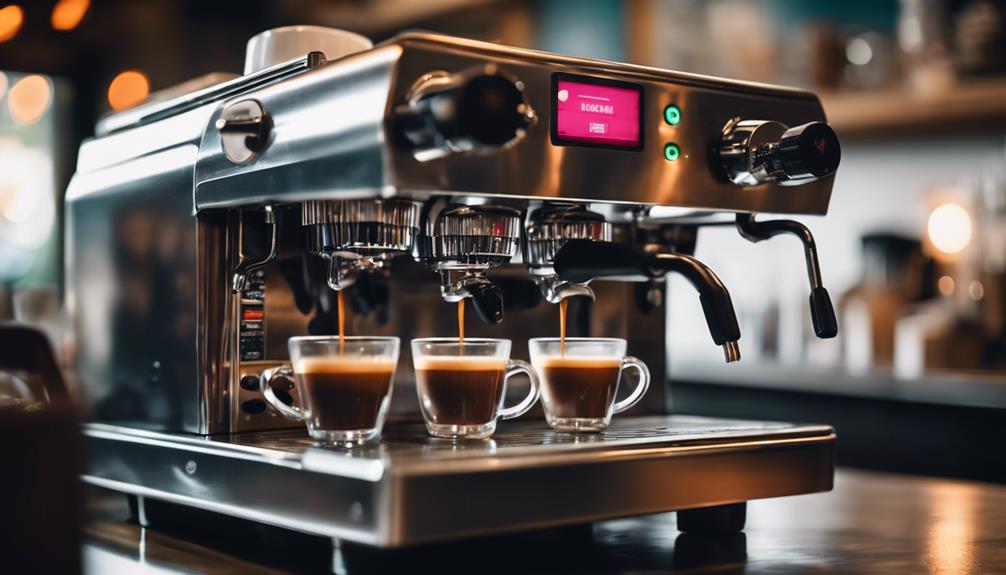
For most home espresso setups, I’d start with the Breville Smart Grinder Pro: its broad grind adjustment and dose controls make it the most versatile pick in this lineup. The SHARDOR Conical Burr with Precision Timer is a practical alternative for people who want timed dosing, while the AAOBOSI with Anti-Static Design stands out for buyers who value tidier grounds handling. The main tradeoffs are adjustment precision, ease of dialing in espresso, counter space, and whether you also want to grind for other brew methods. A high number of settings alone does not guarantee fine, repeatable espresso adjustments. Read on for how the ten options compare and which one best fits your home routine.

Get kitchen staples and gadgets delivered free with Prime
- Fast, free delivery on millions of items
- Prime Video, Amazon Music and more included
- Member-only deals all year
Key Takeaways
- The Breville Smart Grinder Pro leads on versatility: its adjustment and dosing controls make it the strongest all-around choice here, though buyers focused only on espresso may prefer a simpler setup.
- Setting counts do not tell the whole story: the AMZCHEF lists 48 settings, yet practical espresso use depends on how controllably those settings let you dial in a shot.
- Anti-static design targets a specific daily annoyance: the AAOBOSI is the clearest fit for reducing scattered grounds, a different priority from the Breville’s broader control approach.
- Several grinders are positioned as multi-purpose options: the OXO, Aromaster, and other models with broad adjustment ranges may suit households switching between coffee styles, but espresso-focused buyers should prioritize fine adjustment behavior.
- Simple setting ranges suit simpler routines: the SHARDOR 16-setting and Cuisinart 18-setting models offer fewer adjustment points than several rivals, which can mean less flexibility when dialing in espresso.
| SHARDOR Conical Burr Espresso Coffee Grinder with Precision Timer |  | Best for Fine-Tuned Timed Dosing | Burr type: 40 mm stainless steel conical burr | Grind settings: 51 | Timer: Up to 60 seconds; adjustable in 0.1-second increments | VIEW LATEST PRICE | See Our Full Breakdown |
| AMZCHEF Burr Coffee Grinder with 48 Settings, Metallic Silver |  | Best for a Larger Bean Hopper | Burr type: 40 mm stainless steel conical burrs | Grind settings: 48 | Bean hopper capacity: 10.6 ounces | VIEW LATEST PRICE | See Our Full Breakdown |
| SHARDOR Electric Burr Coffee Grinder with 16 Grind Settings |  | Best Simple Grinder for Occasional Espresso | Burr type: Metallic flat burr | Grind settings: 16 | Cup settings: 2 to 14 cups | VIEW LATEST PRICE | See Our Full Breakdown |
| AAOBOSI Espresso Coffee Grinder with Anti-Static Design and 45 Grind Settings |  | Best Compact Touchscreen Pick | Model: CG223A | Burr type: 40 mm stainless steel conical burr | Grind settings: 45 | VIEW LATEST PRICE | See Our Full Breakdown |
| Breville Smart Grinder Pro Conical Burr Coffee Grinder, Brushed Stainless Steel |  | Best Overall for Feature-Rich Home Espresso | Model: BCG820BSS | Grinder type: Conical burr | Grind settings: 60 | VIEW LATEST PRICE | See Our Full Breakdown |
| Aromaster Burr Coffee Grinder with 45 Grind Settings |  | Best for Multi-Brew Households | Model: CG223 | Grind settings: 45 | Grinding system: Conical burr | VIEW LATEST PRICE | See Our Full Breakdown |
| OXO Brew Conical Burr Electric Coffee Grinder, 12 oz, Silver |  | Best for Simple Everyday Operation | Burr type: Stainless steel conical | Grind settings: 15 settings with 43 micro-adjustments | Hopper capacity: 12 oz (0.34 kg) | VIEW LATEST PRICE | See Our Full Breakdown |
| Cuisinart Supreme Grind Electric Burr Coffee Grinder, 18 Settings |  | Best for Larger Ground-Coffee Batches | Model: DBM-8P1 | Burr type: Stainless steel flat burrs | Grind settings: 18 | VIEW LATEST PRICE | See Our Full Breakdown |
| Ollygrin Electric Conical Burr Coffee Grinder with 30 Grind Settings, Silver and Black |  | Best for Adjustable Batch Grinding | Model: BG702S-PG | Burr type: 40 mm stainless steel conical burrs | Grind settings: 30 | VIEW LATEST PRICE | See Our Full Breakdown |
| Gevi Burr Coffee Grinder with 35 Settings, Black |  | Best for 51 mm Portafilter Dosing | Model: CGA0-BK0A1 | Grind settings: 35 | Bean hopper capacity: 240 g (8.5 oz) | VIEW LATEST PRICE | See Our Full Breakdown |
| espresso grinders for home | Grind settings | Dimensions | Burr type | Model |
|---|---|---|---|---|
| SHARDOR Conical Burr Espresso | 51 | 7.4 x 4.9 x 13.5 inches | 40 mm stainless steel conical burr | — |
| AMZCHEF Burr Coffee Grinder wi | 48 | 7.4 x 5.1 x 13.4 inches | 40 mm stainless steel conical burrs | — |
| SHARDOR Electric Burr Coffee G | 16 | 7.48 x 5.16 x 9.76 inches | Metallic flat burr | — |
| AAOBOSI Espresso Coffee Grinde | 45 | 7.28 x 4.72 x 14.17 inches | 40 mm stainless steel conical burr | CG223A |
| Breville Smart Grinder Pro Con | 60 | — | — | BCG820BSS |
| Aromaster Burr Coffee Grinder | 45 | 9 × 6 × 13 in | — | CG223 |
| OXO Brew Conical Burr Electric | 15 settings with 43 micro-adjustments | 7.5 × 5.3 × 12.9 in | Stainless steel conical | — |
| Cuisinart Supreme Grind Electr | 18 | — | Stainless steel flat burrs | DBM-8P1 |
| Ollygrin Electric Conical Burr | 30 | 5.4 × 7 × 12 in | 40 mm stainless steel conical burrs | BG702S-PG |
| Gevi Burr Coffee Grinder with | 35 | 7.8 × 4.72 × 11.85 in | — | CGA0-BK0A1 |
More Details on Our Top Picks
SHARDOR Conical Burr Espresso Coffee Grinder with Precision Timer
The SHARDOR CG018B suits home espresso drinkers who want to adjust grind time in small steps without moving to a more elaborate control setup. Its 0.1-second timer increments offer finer timing adjustments than the Breville Smart Grinder Pro’s 0.2-second increments, while the 51 settings cover espresso through French press. The included portafilter cradle also keeps the workflow focused on espresso rather than requiring a separate grounds container.
Its smaller 1.4-ounce capacity is a real limitation: it favors grinding for individual sessions over keeping a larger amount of beans ready, unlike the Breville’s 18-ounce hopper. Anti-static technology and the included cleaner help with mess, but the product information does not give a maintenance schedule. I’d pick this for flexible, hands-on home use, not for high-volume brewing or minimal-interaction dosing.
Pros:- Timer adjusts in 0.1-second increments for fine control over grinding duration.
- 51 grind settings span espresso through French press.
- Portafilter cradle supports direct grinding into a portafilter.
- Anti-static design and included residual grounds cleaner help manage grounds mess.
Cons:- The 1.4-ounce capacity is small for repeated or multi-person brewing.
- Product information does not specify a cleaning or maintenance schedule.
Best for: Home espresso drinkers who want fine timer adjustments and a dedicated portafilter workflow, with occasional use of other brew methods.
Not ideal for: Households that grind for several people at once or want a large bean hopper; its listed capacity is only 1.4 ounces.
- Burr type:40 mm stainless steel conical burr
- Grind settings:51
- Timer:Up to 60 seconds; adjustable in 0.1-second increments
- Cup selection:1 to 12 cups
- Capacity:1.4 ounces
- Wattage:165 watts
- Dimensions:7.4 x 4.9 x 13.5 inches
- Included components:Cleaning brush, residual grounds cleaner, dosing ring, portafilter cradle
Our verdict“Choose the SHARDOR CG018B if fine timer adjustments and direct portafilter grinding matter more than hopper capacity.”
AMZCHEF Burr Coffee Grinder with 48 Settings, Metallic Silver
The AMZCHEF is a good fit for homes that want an espresso-capable grinder but also switch among drip, pour-over, French press, and cold brew. Its 10.6-ounce hopper holds far more beans than the SHARDOR CG018B’s 1.4-ounce capacity, so it suits shared kitchens better than a small, session-focused grinder. A touchscreen sets cup quantity and grind time, and the tinted hopper’s trap door helps limit spills when it is removed.
The tradeoff is less precise timer adjustment: its 0.5-second steps are coarser than the Breville Smart Grinder Pro’s 0.2-second increments and the SHARDOR’s 0.1-second increments. It also offers 48 settings, fewer than either of those models. I’d choose it for flexible household use and a larger hopper, but not for someone whose priority is making very small espresso dose adjustments.
Pros:- 10.6-ounce hopper holds more beans than the SHARDOR CG018B’s listed 1.4-ounce capacity.
- 48 settings accommodate espresso, drip, pour-over, French press, and cold brew.
- Touchscreen offers cup quantity and grind-time controls.
- Removable tinted hopper has a trap door to help prevent spills.
Cons:- Timer adjusts in 0.5-second steps, less finely than the Breville and SHARDOR options.
- Its 48 settings are fewer than the Breville Smart Grinder Pro’s 60.
Best for: Households that prepare espresso alongside other brew styles and prefer a larger hopper with touchscreen portion controls.
Not ideal for: Espresso drinkers who prioritize fine-grained timer adjustments or want the broadest setting range in this lineup.
- Burr type:40 mm stainless steel conical burrs
- Grind settings:48
- Bean hopper capacity:10.6 ounces
- Grind time:Up to 40 seconds; adjustable in 0.5-second increments
- Cup settings:2 to 12 cups
- Wattage:150 watts
- Dimensions:7.4 x 5.1 x 13.4 inches
- Portafilter fit:51–54 mm and 58 mm
Our verdict“Choose the AMZCHEF if a larger hopper and multi-method flexibility matter more than fine timer increments.”
SHARDOR Electric Burr Coffee Grinder with 16 Grind Settings
The SHARDOR CG835B is the straightforward option here: it has 16 grind settings, an automatic timer for 2 to 14 cups, and a removable grounds chamber. That simpler control range may appeal to someone who makes espresso at home but also wants a basic grinder for larger batches of other coffee. Its dual safety interlock requires the hopper and chamber to be locked, adding a practical safeguard that the product descriptions for the more feature-rich Breville Smart Grinder Pro and AMZCHEF do not specify.
For espresso-focused dialing in, though, 16 settings are a clear constraint beside the Breville’s 60 or the SHARDOR CG018B’s 51. The flat burr design also differs from the conical burrs on those models, and the listing does not provide a portafilter cradle. I’d treat this as a simple, lighter-duty choice rather than a precision espresso grinder.
Pros:- Automatic timer selects 2 to 14 cups and shuts off when grinding finishes.
- Dual safety interlock requires the hopper and chamber to be locked.
- Removable grounds chamber has an anti-spill lid.
- At 2.6 pounds, it is lighter than the other listed grinders in this batch.
Cons:- 16 settings provide less grind adjustment than the other featured models.
- The product information does not list a portafilter cradle for direct espresso dosing.
Best for: Beginners who want a compact, simple electric grinder for occasional espresso and larger-batch coffee without many controls.
Not ideal for: Espresso hobbyists who regularly adjust grind size or want direct portafilter grinding; its 16 settings offer less adjustment range.
- Burr type:Metallic flat burr
- Grind settings:16
- Cup settings:2 to 14 cups
- Capacity:8.5 ounces
- Power:150 watts
- Weight:2.6 pounds
- Dimensions:7.48 x 5.16 x 9.76 inches
- Warranty:Two years
Our verdict“Choose the SHARDOR CG835B for simple, occasional home grinding, but pick a higher-setting model for regular espresso dialing in.”
AAOBOSI Espresso Coffee Grinder with Anti-Static Design and 45 Grind Settings
The AAOBOSI CG223A is the narrowest listed grinder in this batch at 4.72 inches wide, making it a practical choice for a crowded counter. Its 45 settings and 40 mm conical burr target the same broad home-brewing range as the SHARDOR CG018B, while the LED touchscreen adds cup and time controls for portioning. An anti-static outlet is intended to reduce scattered grounds, a useful feature when the grinder sits near other appliances.
Compared with the Breville Smart Grinder Pro, the AAOBOSI has fewer settings and a shorter maximum grinding time; it also does not list a hopper capacity or timer increment. Its listed portafilter holder fits 51/53 mm sizes, while the AMZCHEF lists fit for both those sizes and 58 mm. I’d favor it for compact-counter convenience, but not if portafilter compatibility or detailed dose programming is a deciding factor.
Pros:- Compact 4.72-inch width fits tighter counter spaces than the other listed models.
- 45 settings cover espresso through French press.
- LED touchscreen provides cup and time controls.
- Anti-static outlet helps reduce scattered grounds.
Cons:- Listed portafilter holder fit is limited to 51/53 mm, unlike the AMZCHEF’s stated 58 mm compatibility.
- Maximum grinding time is 40 seconds, and timer increment details are not provided.
- Product data does not specify bean hopper capacity.
Best for: Home espresso drinkers with limited counter width who want touchscreen cup and time controls.
Not ideal for: Owners of 58 mm portafilters or buyers who need a clearly specified hopper capacity and fine timer increments.
- Model:CG223A
- Burr type:40 mm stainless steel conical burr
- Grind settings:45
- Controls:LED touch screen with cup and time settings
- Maximum grinding time:40 seconds
- Portafilter holder:51/53 mm
- Wattage:200 watts
- Dimensions:7.28 x 4.72 x 14.17 inches
Our verdict“Choose the AAOBOSI if counter width and touchscreen controls lead your decision, provided its listed portafilter fit works for your setup.”
Breville Smart Grinder Pro Conical Burr Coffee Grinder, Brushed Stainless Steel
The Breville Smart Grinder Pro earns the lead for home espresso because it combines the broadest listed adjustment range here with clear, programmable dosing controls. Its 60 grind settings give more room to adjust than the SHARDOR CG018B’s 51 or the AMZCHEF’s 48, while the 0.2-second timer increments make repeatable grind-time changes more controlled than the AMZCHEF’s 0.5-second steps. The LCD shows grind setting, time, and selected shots or cups, reducing guesswork at the counter.
It can grind into a portafilter or container and includes cradles for 50–54 mm and 58 mm portafilters, giving it broader stated fit than the AAOBOSI. Its 18-ounce hopper is also the largest specified in this batch. The tradeoff is a more elaborate setup than the basic SHARDOR CG835B, and the supplied warranty information conflicts on duration. I’d make it the default pick for buyers who want a capable all-round home grinder.
Pros:- 60 grind settings provide the broadest adjustment range among these five models.
- 0.2-second timer increments support more controlled dosing than the AMZCHEF’s 0.5-second steps.
- LCD displays grind setting, time, and selected shots or cups.
- 18-ounce hopper and two portafilter cradles support varied home workflows.
Cons:- More controls and programming may be unnecessary for buyers who want a simple grinder.
- Product information conflicts on warranty duration, listing both one and two years.
Best for: Home espresso drinkers who want many grind adjustments, programmable timing, a large hopper, and compatibility with common portafilter sizes.
Not ideal for: Buyers seeking a basic, minimal-control grinder or those who need a single clearly stated warranty duration before choosing.
- Model:BCG820BSS
- Grinder type:Conical burr
- Grind settings:60
- Timer adjustment:0.2-second increments
- Bean hopper capacity:18 ounces
- Power:165 watts
- Voltage:110–120 V
- Included portafilter cradles:Small 50–54 mm and large 58 mm
- Material:Brushed stainless steel
Our verdict“Choose the Breville Smart Grinder Pro for the broadest combination of grind adjustment, timed dosing, hopper capacity, and portafilter fit in this group.”
Aromaster Burr Coffee Grinder with 45 Grind Settings
For a home that switches between espresso and coarser brewing methods, the Aromaster’s 45 settings offer more adjustment points than the Cuisinart Supreme Grind’s 18. Its conical burrs and adjustable 5–40-second timer give you control over grind range and run time, while anti-static technology is intended to keep grounds from scattering around the counter. The removable upper burr and included brush also make routine cleaning more manageable.
The tradeoff is that a wide setting range does not by itself establish how well a grinder handles espresso, and the listed details do not give a bean-hopper capacity. The timer also stops at 40 seconds, which may constrain longer batches. I’d choose it for varied brew routines, but buyers focused on portafilter workflow may prefer the Gevi, which includes a 51 mm portafilter cradle.
Pros:- 45 grind settings offer a broad range for different brewing methods.
- Adjustable timer provides control over grinding duration.
- Anti-static feature is designed to reduce scattered grounds.
- Removable upper burr and included brush support easier cleaning.
Cons:- Maximum timer duration is 40 seconds.
- Bean-hopper capacity is not specified in the provided product details.
Best for: Households that regularly alternate between espresso, French press, and other brew methods and want a broad range of grind adjustments.
Not ideal for: Buyers who need a stated bean capacity, longer timed grinding, or a portafilter cradle for a specific espresso setup.
- Model:CG223
- Grind settings:45
- Grinding system:Conical burr
- Timer:5–40 seconds
- Material:Stainless steel
- Dimensions:9 × 6 × 13 in
- Features:Anti-static, removable upper burr, quiet operation
- Included component:Cleaning brush
Our verdict“Choose the Aromaster if your household uses several brewing methods and values extensive grind adjustment over a stated capacity or dedicated portafilter support.”
OXO Brew Conical Burr Electric Coffee Grinder, 12 oz, Silver
The OXO is the straightforward choice here for people who want repeatable daily grinding without managing a timer. Its one-touch operation remembers the last setting, so you can return to a familiar grind with less adjustment each morning. Although it has 15 main settings—fewer than the Aromaster’s 45—its 43 micro-adjustments add finer tuning between those settings. Stainless steel conical burrs and a 12-ounce hopper suit routine use across espresso, French press, and cold brew.
That convenience comes with limits for an espresso-first setup: the listed details do not include a portafilter cradle, and the broad brew-method range does not specify espresso-focused dosing. The hopper is also smaller than a large-batch user may want, and this model requires 120-volt power. I’d favor it over the Cuisinart for saved-setting convenience, but not for a large grounds chamber or a dedicated espresso workflow.
Pros:- One-touch operation remembers the last grind setting.
- 43 micro-adjustments add control beyond its 15 main settings.
- 12-ounce removable hopper supports routine home use.
- UV-blocking hopper tint helps limit sunlight exposure to beans.
Cons:- No portafilter cradle is listed for direct espresso dosing.
- The 12-ounce hopper may not suit frequent large-batch grinding.
- Requires a 120-volt electrical supply.
Best for: Home brewers who want an easy daily grinder with saved settings and enough hopper capacity for regular household use.
Not ideal for: Espresso users seeking a portafilter cradle or buyers who need larger batch capacity or a power supply other than 120 V.
- Burr type:Stainless steel conical
- Grind settings:15 settings with 43 micro-adjustments
- Hopper capacity:12 oz (0.34 kg)
- Operation:One-touch; remembers last setting
- Power:100 W
- Voltage:120 V
- Dimensions:7.5 × 5.3 × 12.9 in
- Warranty:Two years
Our verdict“Pick the OXO for convenient, repeatable everyday grinding, but choose a grinder with portafilter support if espresso dosing is your main priority.”
Cuisinart Supreme Grind Electric Burr Coffee Grinder, 18 Settings
The Cuisinart’s standout home-use advantage is its grounds chamber sized for up to 32 cups, paired with a cup selector for grinding from 4 to 18 cups. That makes it a better fit for preparing coffee ahead or serving a group than the OXO, whose 12-ounce hopper is designed around storing beans rather than collecting a large ground batch. Removable parts, automatic shutoff, and a safety interlock also make the basic routine relatively simple.
For espresso, though, the 18 grind settings offer less adjustment than the Aromaster’s 45 or the Gevi’s 35, and the product details do not mention a portafilter cradle. Its chamber can also be oversized for someone grinding one or two servings at a time. I’d put this on the list for high-volume household brewing, not for espresso enthusiasts who want a more direct portafilter workflow or finer adjustment.
Pros:- Grind chamber holds grounds for up to 32 cups.
- Cup selector supports batches from 4 to 18 cups.
- Removable hopper and chamber simplify emptying and cleaning.
- Automatic shutoff and safety interlock support convenient operation.
Cons:- 18 settings provide fewer adjustment points than the Aromaster or Gevi.
- Large grounds-chamber capacity may be excessive for small daily batches.
- No portafilter cradle is listed.
Best for: Households that often prepare several servings at once and want a removable, high-capacity grounds chamber.
Not ideal for: Espresso-focused buyers who want finer grind adjustment or direct portafilter support, and single-cup brewers unlikely to use the large chamber.
- Model:DBM-8P1
- Burr type:Stainless steel flat burrs
- Grind settings:18
- Bean hopper capacity:8 oz
- Grind chamber capacity:Up to 32 cups
- Cup selector:4–18 cups
- Motor power:500 W
- Safety feature:Safety interlock
- Warranty:Limited 18-month warranty
Our verdict“Choose the Cuisinart for preparing larger amounts of ground coffee, not for a compact, espresso-centered workflow.”
Ollygrin Electric Conical Burr Coffee Grinder with 30 Grind Settings, Silver and Black
The Ollygrin combines 30 grind settings with a 2–12-cup selector, giving home users a practical middle ground between basic adjustment and batch control. Its 10-ounce hopper is larger than the Gevi’s 8.5-ounce hopper, while the slow-grinding motor is designed to limit friction heat. A removable hopper, lift-off upper burr, grounds container, and included brush also give it a more serviceable setup than the Cuisinart for routine cleaning.
The main caution for an espresso buyer is power compatibility: the listed voltage is 220 V, which may not match the electrical system in your home. Unlike the Gevi, the product details do not list a portafilter cradle, so it may be less convenient for direct dosing. Its 10-ounce capacity can also mean refills when grinding larger batches. This suits multi-method brewing if the voltage fits, but I’d check that before choosing it.
Pros:- 30 grind settings cover a range of brewing methods.
- 2–12-cup selector gives control over batch size.
- Slow-grinding motor is designed to reduce friction heat.
- Removable parts and included brush support cleaning.
Cons:- Listed 220 V voltage may not suit all home electrical systems.
- 10-ounce hopper may require refilling for larger batches.
- No portafilter cradle is listed.
Best for: Home brewers who want adjustable batch sizes, a removable setup for cleaning, and a grinder for multiple brewing methods.
Not ideal for: Buyers whose home electrical system does not support 220 V or espresso users who want a listed portafilter cradle.
- Model:BG702S-PG
- Burr type:40 mm stainless steel conical burrs
- Grind settings:30
- Hopper capacity:10 oz
- Cup settings:2–12 cups
- Wattage:150 W
- Voltage:220 V
- Dimensions:5.4 × 7 × 12 in
- Safety features:Friction clutch and overheating protection
Our verdict“Choose the Ollygrin for adjustable multi-cup grinding only if its 220 V power requirement fits your home and you do not need a portafilter cradle.”
Gevi Burr Coffee Grinder with 35 Settings, Black
Among these five grinders, the Gevi makes the clearest case for a home espresso station: it includes a 51 mm portafilter cradle, so grinding can feed into a compatible portafilter rather than only a grounds container. Its 35 settings also give it more adjustment points than the OXO’s 15 main settings, while the low-speed, anti-static burr is designed to reduce heat and mess. For households that also brew drip coffee or French press, the 1–14 cup selector adds flexibility.
The portafilter fit is a firm limitation, not a minor detail: Gevi lists compatibility with 51 mm portafilters only, so owners of 58 mm equipment should skip it. Its 130 g grounds container may also need frequent emptying for larger batches. Compared with the Aromaster, which offers 45 settings but no listed cradle, the Gevi is the more direct espresso-workflow pick when your portafilter size matches.
Pros:- Includes a cradle for 51 mm portafilters.
- 35 grind settings support adjustment across brewing methods.
- Low-speed, anti-static design is intended to limit heat and scattered grounds.
- 1–14 cup selection supports different batch sizes.
Cons:- Not compatible with 58 mm portafilters.
- 130 g grounds-container capacity may require frequent emptying for larger batches.
Best for: Home espresso makers with a 51 mm portafilter who want a dedicated cradle and adjustable grinding for other brew methods.
Not ideal for: Owners of 58 mm portafilters or households that need a larger grounds container for frequent batch grinding.
- Model:CGA0-BK0A1
- Grind settings:35
- Bean hopper capacity:240 g (8.5 oz)
- Grounds container capacity:130 g
- Cup selection:1–14 cups
- Portafilter compatibility:51 mm
- Wattage:200 W
- Voltage:120 V
- Dimensions:7.8 × 4.72 × 11.85 in
Our verdict“Pick the Gevi for a home espresso setup with a 51 mm portafilter; pass if your equipment uses a 58 mm basket.”
How We Picked
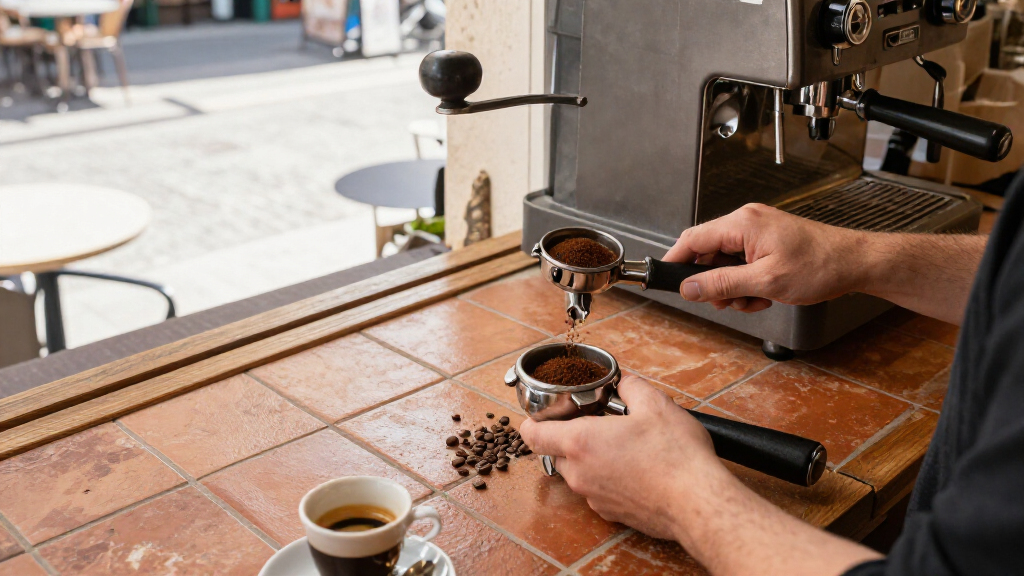
I compared these grinders through the needs of a home espresso drinker: whether the adjustment range appears suited to espresso, how easily a buyer can manage doses and repeat a setting, and whether the design addresses everyday concerns such as mess, capacity, and counter footprint. I also weighed versatility for households that brew more than espresso, along with the upkeep implied by the grinder’s design. A large setting count was treated as a useful clue, not proof of finer control or better espresso.
The Breville Smart Grinder Pro ranks first for its combination of adjustment and dosing features. The SHARDOR timed model and AAOBOSI anti-static model follow as alternatives with distinct practical strengths. Other picks rank according to how well their stated features fit espresso alongside their likely compromises: narrower adjustment choices, a more general-purpose orientation, or fewer espresso-specific controls. Product names and listed features are not a substitute for checking compatibility and grind behavior with a particular machine and coffee.
| espresso grinders for home | Model |
|---|---|
| SHARDOR Conical Burr Espresso | — |
| AMZCHEF Burr Coffee Grinder wi | — |
| SHARDOR Electric Burr Coffee G | — |
| AAOBOSI Espresso Coffee Grinde | CG223A |
| Breville Smart Grinder Pro Con | BCG820BSS |
| Aromaster Burr Coffee Grinder | CG223 |
| OXO Brew Conical Burr Electric | — |
| Cuisinart Supreme Grind Electr | DBM-8P1 |
| Ollygrin Electric Conical Burr | BG702S-PG |
| Gevi Burr Coffee Grinder with | CGA0-BK0A1 |
Factors to Consider When Choosing Espresso Grinders For Home
Choosing among home espresso grinders takes more than comparing setting counts. I’d match the grinder to your espresso machine, how often you change beans, and how much adjustment and cleanup you’re willing to handle.
Check whether the grinder can dial in your machine
Espresso often needs small grind changes, so the useful question is not simply how many settings a grinder lists, but how much control you get in the range your machine needs. A grinder with many broad steps can still make dialing in awkward if one setting runs too fast and the next runs too slowly. If your machine uses pressurized baskets, you may have more leeway than with a traditional unpressurized basket. Check the grinder’s stated espresso suitability and look for clear information about adjustment behavior rather than relying on a number alone. When the available details are limited, plan for more trial and adjustment than the setting count might suggest.
Decide whether you need one grinder for several brew styles
A household that switches between espresso, pour-over, and French press needs more range than someone who makes espresso every morning. Multi-purpose grinders can save counter space, but changing settings repeatedly can interrupt a dialed-in espresso routine. Fine coffee particles may also remain in the grinder after a setting change, affecting the next dose. If you rarely change brew methods, prioritize repeatability in the espresso range over maximum range. If you do switch often, consider whether you are comfortable tracking settings and purging a small amount of coffee after adjustments.
Choose a dosing routine you will actually use
Timed dosing can make a morning routine simpler, but a timer measures operating time rather than the exact amount of coffee in every dose. Bean type, grind setting, and how full the hopper is can affect how much grounds come out. If you need a precise dose for each shot, weighing beans or grounds may offer better control than relying on a timer alone. A hopper-based workflow is convenient for repeated drinks, while single-dose use can make it easier to switch beans and limit stale coffee. Match the grinder’s controls to your habits instead of assuming one dosing style is universally better.
Treat cleanup and static as daily-use factors
Scattered grounds can make a small kitchen counter feel untidy, especially when grinding directly into a portafilter. Anti-static features may help with that problem, but they do not remove the need to brush out retained grounds or clean the burr area. Before buying, check how the grounds are collected and whether the parts that need routine attention are accessible. A grinder that is easy to wipe down and maintain can be more pleasant to live with than one whose extra settings rarely get used. Also leave enough space to remove the hopper or access the burrs if cleaning requires it.
Match capacity and footprint to your household
A large hopper can be convenient when several people make coffee, but beans left exposed for long periods may be less suited to someone who grinds only a shot or two each day. A compact grinder may fit a small counter better, though a smaller body can mean less capacity or a less convenient workflow. Think about where the grinder will sit, how often you refill it, and whether you prefer to store beans separately. Do not choose capacity based only on the number of cups you make; freshness and how often you change beans matter too. Measure your available space, including room to open lids and remove parts.
Pay for controls you can put to use
More adjustment steps, timers, and programmable controls can be useful when they solve a real problem in your routine. They add less value if you use one bean and one recipe most days, or if the espresso machine itself limits the control you have over extraction. New espresso drinkers may benefit more from a clear workflow and manageable adjustments than from a long feature list. Buyers who change beans frequently may appreciate repeatable settings and easy dose changes. Before choosing a feature-rich model, name the task it will make easier; if there is no clear answer, a simpler grinder may be a better fit.
Frequently Asked Questions
Can any grinder listed here make espresso for my machine?
Not automatically: espresso performance depends on the grinder’s adjustment range and on your machine and basket. Pressurized baskets are generally more forgiving, while unpressurized baskets tend to demand more precise control. A stated number of settings does not confirm that the grinder can make the fine, repeatable changes your setup needs. Check the manufacturer’s espresso guidance and confirm the grinder is compatible with your portafilter workflow. If that information is unclear, favor a model with more explicit espresso-oriented controls rather than relying on the product name.
Is a grinder with 48 settings better for espresso than one with 30?
Not by setting count alone. The spacing between adjustments matters: many settings can cover a broad range without providing useful small changes where espresso needs them. A grinder with fewer but better-placed steps may be easier to dial in than one with more widely distributed options. Compare how the manufacturer describes espresso adjustment, and look for information about repeatability as well as range. If those details are unavailable, treat the count as a starting point, not a performance ranking.
Should I choose a timed grinder or weigh every dose?
A timer is convenient when you make similar drinks with the same beans and settings, but it does not directly measure coffee weight. Changes in beans, grind size, or hopper fill can alter the amount dispensed during the same run time. Weighing beans before grinding gives you more control over the dose and can help when dialing in a new coffee. Some home users choose a timed routine for speed and use a scale while adjusting recipes. Pick the approach that fits your tolerance for extra steps and your need for repeatability.
Do I need a dedicated espresso grinder if I also make filter coffee?
Not necessarily, but changing grind settings between brew methods can make your routine slower and may leave old grounds in the grinder. A multi-purpose model is a sensible fit if you switch methods occasionally and are willing to record settings and clear retained coffee after changes. If espresso is your daily priority and you rarely make other styles, favor reliable control in the espresso range over a very broad range. A second grinder can make sense for frequent switching, though it takes more counter space and maintenance. Your brewing frequency matters more than the number of methods you own.
How much should I prioritize anti-static features and easy cleaning?
Prioritize them if scattered grounds or frequent upkeep would make you avoid using the grinder. Anti-static design can help keep grounds contained, but it does not replace routine cleaning or guarantee a completely mess-free dose. Check whether the grounds container or portafilter area is easy to reach and whether the burrs can be accessed for maintenance. Espresso users should also account for retained grounds, since old coffee can affect a fresh dose. If your counter is easy to wipe and you clean regularly, adjustment control may matter more than anti-static features.
Conclusion
Best overall: I’d choose the Breville Smart Grinder Pro for its mix of adjustment and dosing controls. Best for a timed routine: the SHARDOR Conical Burr with Precision Timer suits buyers who value hands-off dosing, while the AAOBOSI is the specific pick for people who want an anti-static design. For a value-minded choice, compare the simpler SHARDOR 16-setting and Cuisinart 18-setting models against your espresso machine’s needs rather than assuming fewer settings are enough. Beginners should favor a clear, manageable workflow and confirm basket compatibility before buying; buyers seeking broader brewing flexibility can look at the Breville or other models with wider stated ranges. My final choice would depend on whether espresso control, convenience, tidier handling, or multi-method use matters most in your kitchen.