AIThis post was created with the assistance of artificial intelligence (AI).
TL;DR
Focaccia genovese, called fugassa in Liguria, is a relatively thin yeast-leavened bread with a tender crumb, lightly crisp surface, deep dimples, and generous olive-oil brine. You can reproduce its Genoese character at home by using soft dough, stretching it in an oiled metal pan, pressing firm dimples, and baking it quickly at 450°F until golden.
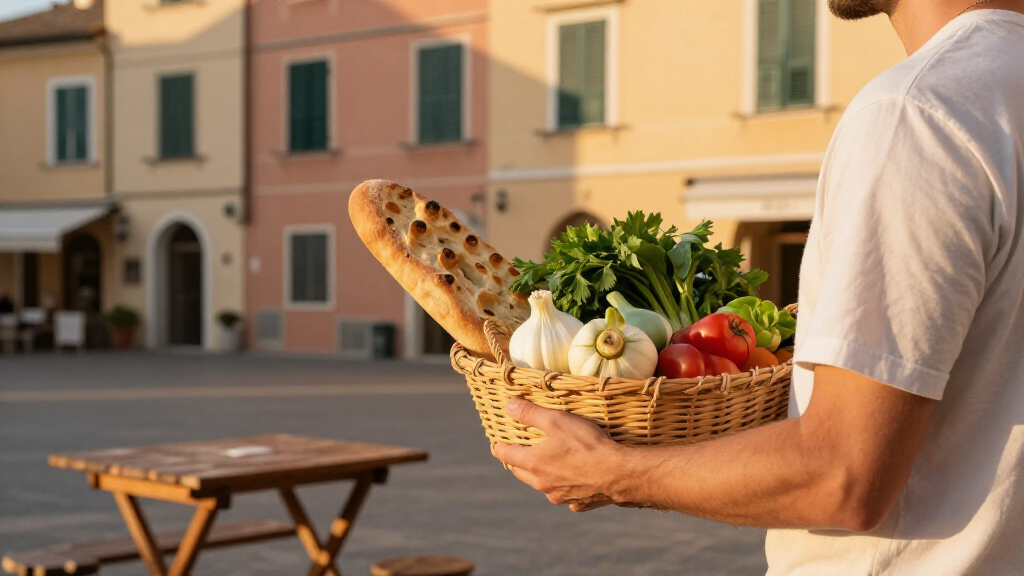
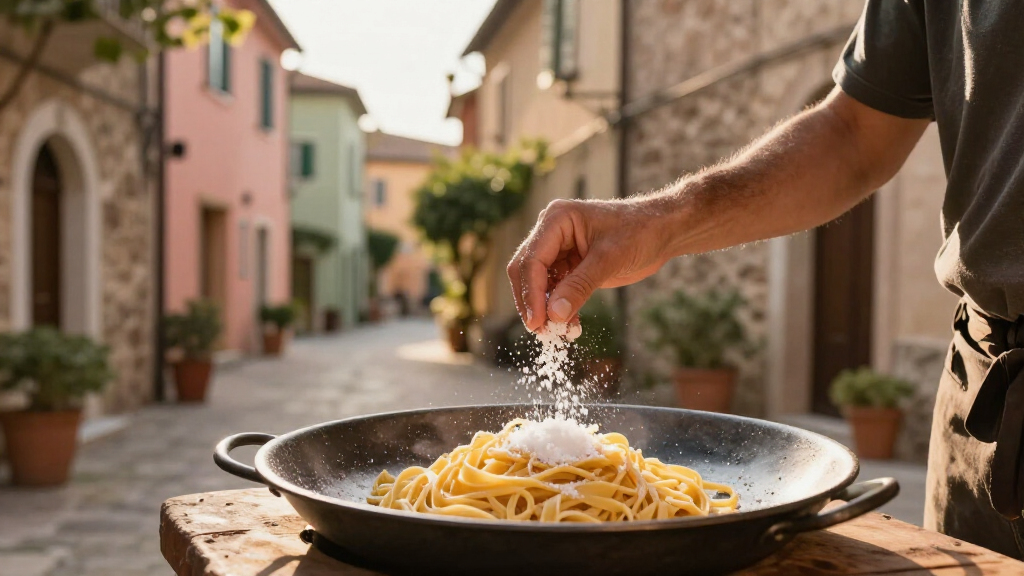
Genoese focaccia can appear at breakfast beside a cappuccino, its salty, oil-slick surface meeting sweet milk foam before most visitors have considered lunch. In Genoa, this bread is not treated as a blank canvas for towering toppings. It is an everyday food, sold by weight and folded into strips that leave your fingertips shining.
You are about to learn why brine, deep dimples, moderate thickness, and extra-virgin olive oil matter more than rosemary sprigs or an enormous open crumb. You will also get a practical home method built around 500 grams of flour, a hot metal pan, and enough resting time for the dough to become soft without turning cakey.
The goal is not to imitate every Genoese bakery, since respected bakers guard their formulas and vary their fermentation schedules. The goal is to recognize focaccia genovese by its defining qualities and bake something that behaves like the real bread: lightly crisp at the edges, supple through the center, and dotted with salty pools that taste of the Ligurian coast.
At a glance
Focaccia Genovese: Liguria’s Olive-Oil Bread
Key insight
The dimples in focaccia genovese are functional reservoirs: they hold salty water-and-oil brine while limiting balloon-like expansion, creating moist pockets beside crisp, almost fried ridges [1].
Key takeaways
1
Spread 500 grams of flour across a 13-by-18-inch metal pan to favor the moderately thin profile associated with focaccia genovese.
2
Press deep fingertip dimples and fill them with a water, salt, and extra-virgin olive oil emulsion; plain oil alone will not create the same moist, salty pocke…
3
Bake at 450°F in a thoroughly preheated oven so the oil-rich surface browns instead of remaining pale and greasy.
4
Treat focaccia di Recco col formaggio IGP as a separate Ligurian specialty: it uses two unleavened sheets around fresh cheese rather than dimpled yeast dough.
5
Freeze cooled portions and reheat them at 375°F for 8 to 12 minutes; refrigeration makes plain bread stale faster.
Step by step
1
A Reliable Home Method for Thin, Golden Focaccia
You can bake Genoese-style focaccia at home with a rimmed metal pan, a soft dough, two patient rises, and an oven heated to 450°F .
Focaccia Genovese: The Dimpled, Olive-Oil-Soaked Bread of Liguria
Liguria Field Guide · Genoa’s Everyday Bread
Focaccia Genovese: The Dimpled, Olive-Oil-Soaked Bread of Liguria
Fugassa is a relatively thin, yeast-leavened bread with a tender crumb, lightly crisp surface, deep fingertip wells, and generous olive-oil brine. Its identity comes from the tension between moist, salty dimples and golden, almost fried ridges—not towering toppings or an enormous open crumb.
Flour base500 gEnough dough for a moderately thin sheet.
Water325 gA soft, workable dough at 65% hydration.
Instant yeast5 gLift without forcing a towering crumb.
Fine salt10 gInside the dough, with more in the brine.
Anatomy of fugassa
Four forces shape every bite
Focaccia Genovese is built as a coordinated system. Dough, fermentation, olive oil, and brine each change the texture as well as the flavor. Remove one, and the characteristic contrast begins to disappear.
Structure01
Soft wheat dough
Moderate hydration makes the dough supple enough to stretch across the pan while maintaining a relatively low profile and flexible center.
Time02
Patient fermentation
Multiple rests develop aroma and small-to-medium irregular holes without turning the loaf into a tall, webbed, modern focaccia.
Richness03
Extra-virgin olive oil
Oil tenderizes the dough, lubricates the metal pan, perfumes the surface, and creates amber edges that seem almost fried.
Moisture04
Salty brine
Water keeps the surface flexible while salt and oil pool inside the depressions. Plain oil cannot create the same moist pockets.
Geometry05
Deep dimples
Firm fingertip wells hold the emulsion and keep the dough from swelling like an undimpled flatbread.
Heat06
Rapid browning
A thoroughly preheated oven colors the oil-rich surface quickly while the interior remains soft, elastic, and tender.
Working formula
A thin, golden home build
This practical baseline spreads 500 grams of flour across a rimmed metal pan. The ratios favor Genoese-style surface area and tenderness rather than dramatic height.
Core dough
Ingredient map
500 gBread or all-purpose flour
325 gLukewarm water
5 gInstant yeast
10 gFine salt
25 gExtra-virgin olive oil in the dough
Texture priorities
What the method emphasizes
Moderate hydration65%
Seasoned surfaceHigh
Edge crispnessPronounced
Interior tendernessFlexible
Know the family
Similar names, different breads
Thickness, leavening, filling, oil, and surface shape reveal the distinction. Focaccia di Recco col formaggio IGP is a separate protected Ligurian specialty—not a cheese-filled version of dimpled Genoese focaccia.
Style
Dough and shape
Defining finish
First impression
✓Focaccia Genovese
Yeast-leavened and moderately thin
Deep dimples with oil-and-salt brine
Tender center, crisp ridges, salty pockets
~Focaccia di Recco col formaggio IGP
Two paper-thin, unleavened sheets
Fresh soft cheese sealed inside
Molten cheese and delicate pastry-like layers
~Tall modern focaccia
Wet, highly aerated, and often several inches high
Herbs, vegetables, or decorative patterns
Large holes and a fluffy crumb
~Pizza
Usually stretched thin with a defined rim
Sauce, cheese, or regional toppings
The topping and baked crust structure
Traceability chain
How dimples become flavor
The signature surface is a sequence of physical effects. Each action prepares the next, converting simple ingredients into alternating zones of moisture, seasoning, and crispness.
☝️Firm pressureFingertips form deep wells across the relaxed dough.
💧Brine captureWater, salt, and oil settle inside each depression.
Stretch rather than aggressively roll. Keep the surface lubricated during proofing, press decisively, and give the metal pan and oven enough heat to brown the underside.
01
Mix
Combine flour, lukewarm water, and yeast. Add fine salt and olive oil.
02
Knead
Work for 6–8 minutes, until smooth, soft, and elastic rather than stiff.
03
Ferment
Allow the dough to rise patiently so aroma develops without excessive airiness.
04
Stretch
Ease the dough into a generously oiled 13-by-18-inch rimmed metal pan.
05
Relax
Let it rest and rise again, keeping the exposed surface lightly coated with oil.
06
Dimple
Press fingertips firmly across the entire sheet to create pronounced reservoirs.
07
Brine
Apply a water, salt, and extra-virgin olive-oil emulsion; let it settle briefly.
08
Bake
Bake quickly until glossy gold with amber edges and a lightly crisp underside.
450°F
Preheat thoroughly before the pan enters.
Hot metal encourages rapid browning so the oil-rich surface becomes golden instead of pale and greasy.
Metal pan 13 × 18 inches
Quality control
The true-slice test
A strong Genoese-style slice bends before it breaks. Its top is glossy, its underside carries amber pan-fried patches, and its dimples deliver concentrated flashes of salt and fruitiness.
Sensory checklist
What excellent looks like
✓Glossy golden-to-amber top with clearly defined dimples
✓Crisp edges and a lightly crisp, oil-kissed underside
✓Soft, flexible interior with small-to-medium irregular holes
✓Distinct salty, oily pockets rather than uniform seasoning
✓Clear wheat, fermentation, and fresh olive-oil aromas
✓Richness without heaviness, sogginess, or cakey height
Target profile
Balanced, not maximal
DryOil-soaked
Generous oil should remain fragrant and rich without making the crumb heavy.
Flat crackerTall loaf
The Genoese profile stays relatively thin so seasoned surface dominates.
SoftHard crunch
Look for lightly crisp ridges surrounding a supple, bendable center.
PlainSalty
The brine should create vivid pockets, not an aggressively salty whole loaf.
ServeFresh and foldedCut into strips and try the oily side toward the tongue for salt and fruitiness first.
FreezeCool portions firstFreeze individual pieces once fully cooled to preserve texture better than refrigeration.
Reheat375°F · 8–12 minWarm directly until the edges revive and the center becomes supple again.
What You Should Taste in a True Genoese Slice
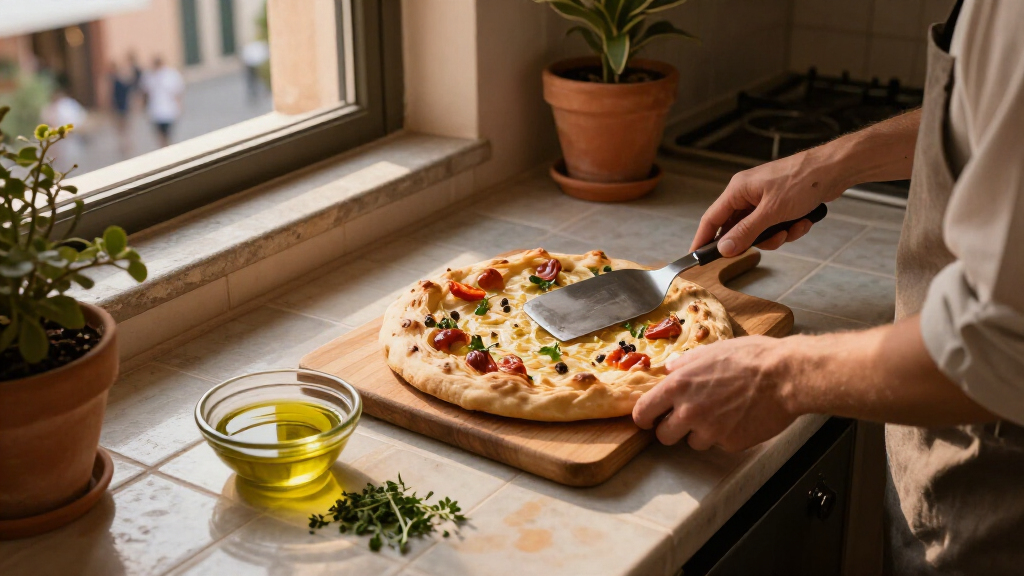
Focaccia Genovese is Genoa’s characteristic flatbread, known locally as fugassa, meaning focaccia in the Ligurian language. Its defining qualities are a thin, tender crumb, a lightly crisp golden surface, deep fingerprints, and an abundant coating of extra-virgin olive oil and salty brine. It is richer and flatter than many modern focaccias [1].
A good piece bends before it breaks. The underside carries small amber patches where oil has fried the dough against the pan, while the interior remains soft and elastic rather than dry or cottony. Bite through a dimple and you meet a concentrated flash of salt and olive oil, much like finding a warm tide pool between sun-baked rocks.
Thickness matters because it controls that contrast. A tall loaf with giant air tunnels may be beautiful, but too much height shifts attention toward the crumb and away from the seasoned surface. In a Genoese bakery, a strip roughly suited to folding and eating from your hand makes more sense than a towering square that needs a bread knife.
Freshness also changes the experience. At 8:00 a.m. near Genoa’s old port, you might receive a warm strip wrapped in paper and eat it with the oily side against your tongue. That small local habit delivers the salt and fruitiness first, which explains why regulars often flip their focaccia before taking a bite.
How to Tell Genoese Focaccia From Recco, Pizza, and Tall Bakery Loaves
Focaccia Genovese is a yeast-leavened, dimpled bread, while focaccia di Recco, pizza, and tall modern focaccia use different structures and priorities. The quickest clues are thickness, leavening, filling, oil, and surface shape. Similar family names do not make these foods interchangeable, especially within Liguria.
Style
Dough and shape
Defining finish
What you notice first
Focaccia genovese
Yeast-leavened and moderately thin
Deep dimples with oil-and-salt brine
Tender center, crisp ridges, salty pockets
Focaccia di Recco col formaggio IGP
Two paper-thin, unleavened sheets
Filled with fresh soft cheese
Molten cheese and delicate pastry-like layers
Tall modern focaccia
Wet, highly aerated, and often several inches high
May carry vegetables, herbs, or decorative patterns
Large holes and a fluffy crumb
Pizza
Usually stretched thinner with a defined rim
Sauce, cheese, or regional toppings
The topping and baked crust structure
According to the European Union’s geographical indication register, Focaccia di Recco col formaggio IGP has protected status tied to its production area and method [2]. Imagine ordering it in Recco expecting dimpled bread: the server brings a blistered round with creamy cheese trapped between two translucent sheets. It is Ligurian, but it is not a filled version of Genoese focaccia.
The distinction from pizza can blur at the edges because both belong to Italy’s broad family of baked doughs. Still, olive oil shapes focaccia from within and above, while pizza usually builds flavor through its exposed toppings. If tomato sauce dominates the first bite, you have moved away from plain fugassa, even when the dough tastes excellent.
The Four Ingredients That Create Those Salty, Crisp Dimples
Focaccia Genovese gets its character from four working parts: soft wheat dough, active fermentation, plentiful extra-virgin olive oil, and a water-and-salt brine. Each part changes the bread’s texture, not just its flavor. Remove the brine or cut the oil sharply, and the signature contrast disappears.
Flour and water: A moderately hydrated dough stays supple enough to stretch while holding a relatively low profile.
Yeast and time: Fermentation builds aroma and small-to-medium irregular holes without forcing a giant, webbed crumb.
Extra-virgin olive oil: Oil tenderizes the dough, lubricates the pan, and creates crisp edges that seem almost fried.
Salty brine: Water keeps the surface flexible while salt and oil collect inside each depression.
For instance, pour plain oil over undimpled dough and much of it runs toward the pan’s edges. Press firm fingertip wells first, then add the emulsion, and the surface becomes a map of tiny reservoirs. During baking, high ridges brown quickly while the low points remain moist, giving one bite two textures.
A fresh, balanced oil works better than an old bottle that smells waxy or stale. Ligurian extra-virgin olive oils are often delicate, fruity, and less peppery than robust oils from parts of Tuscany or Puglia, although you do not need a Ligurian bottle to succeed. Choose an oil you enjoy tasting from a spoon because its aroma will remain front and center.
Some bakeries add malt extract, sugar, or honey to help fermentation and browning. Those additions can help a cool home oven, but they are supporting players. If your surface stays pale, hotter metal and a longer preheat usually offer a better fix than turning the bread noticeably sweet.
A Reliable Home Method for Thin, Golden Focaccia
You can bake Genoese-style focaccia at home with a rimmed metal pan, a soft dough, two patient rises, and an oven heated to 450°F. This formula uses a 13-by-18-inch pan, which spreads the dough thin enough to favor golden surface area while preserving a tender center.
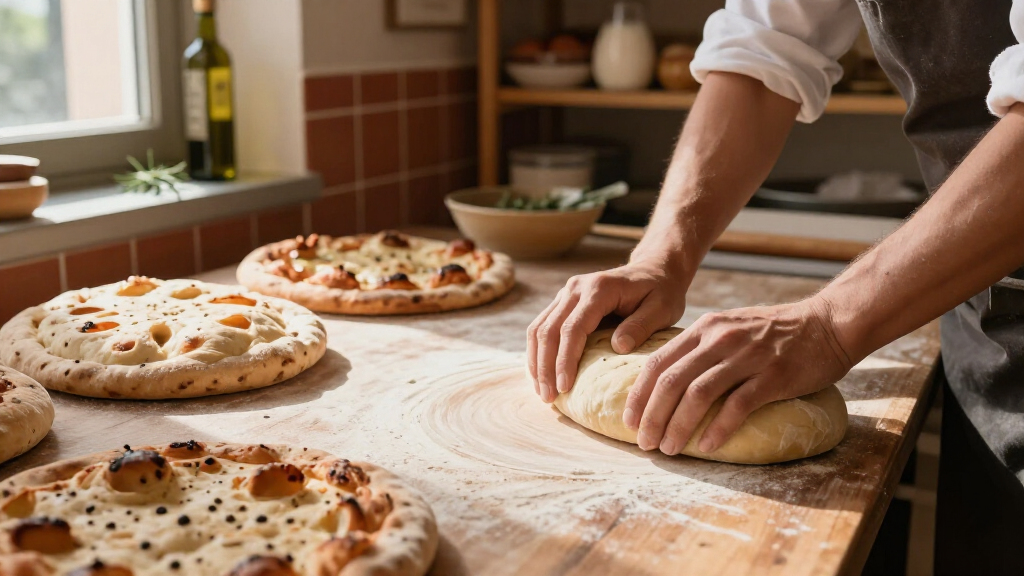
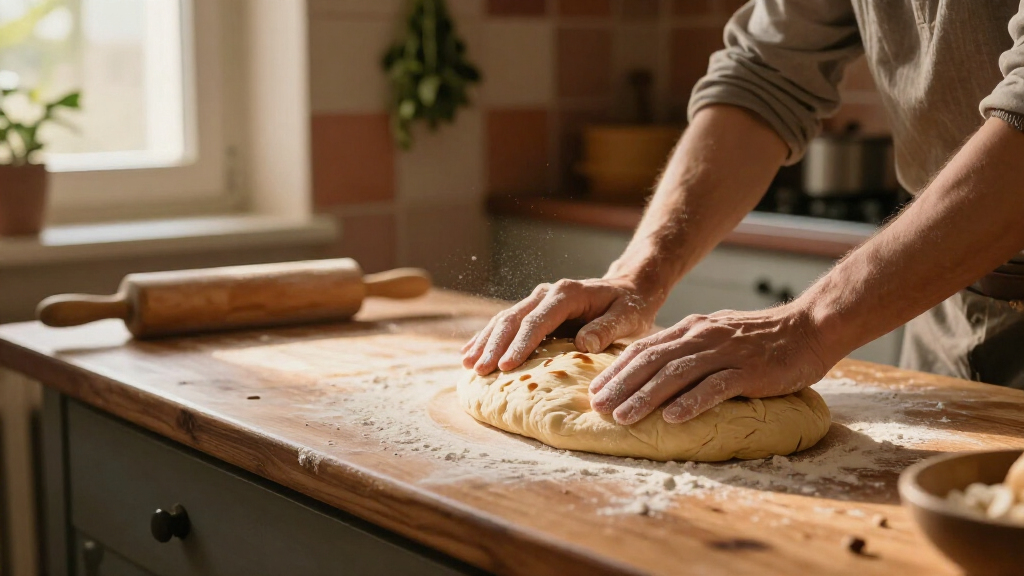
Mix the dough. Combine 500 grams bread or all-purpose flour, 325 grams lukewarm water, and 5 grams instant yeast. Add 10 grams fine salt and 25 grams extra-virgin olive oil, then knead for 6 to 8 minutes until smooth, soft, and slightly tacky.
Give it the first rise. Cover the bowl and leave it at room temperature for 60 to 90 minutes, until the dough looks puffy and has grown by roughly half. A cool kitchen may need closer to 2 hours.
Oil and fill the pan. Spread about 30 grams of oil across the metal, including the corners. Set the dough in the center, wait 10 minutes, then stretch it gently toward the edges. If it snaps back like a rubber band, wait another 10 minutes before continuing.
Proof again. Cover the pan without pressing on the dough and let it rise for 45 to 60 minutes. The surface should look relaxed and softly inflated, not fragile or swollen like a balloon.
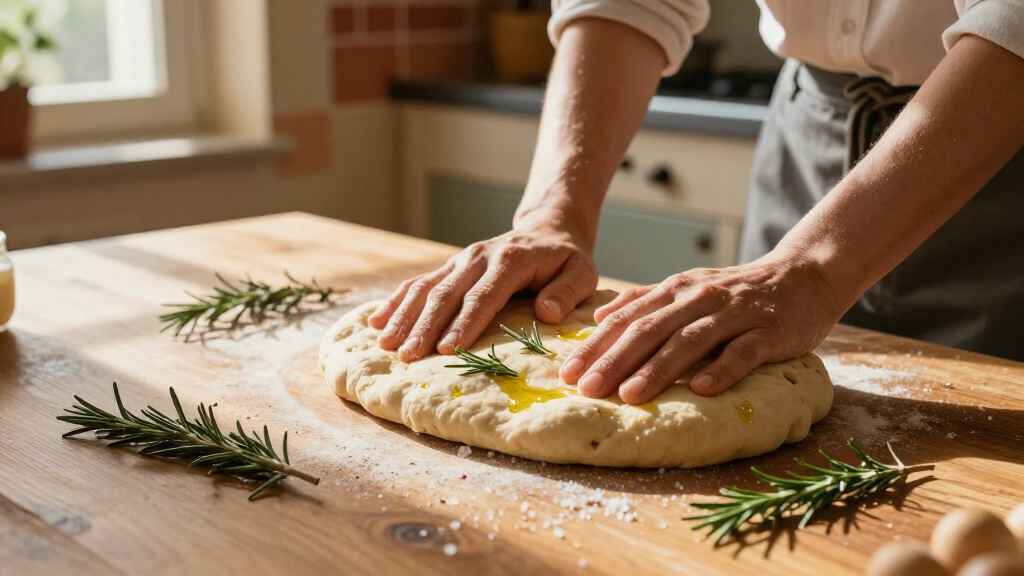
Make the brine and dimples. Whisk 60 grams water with 5 grams fine salt and 35 grams oil. Press your fingertips firmly across the dough, reaching close to the pan without tearing it, then pour the emulsion evenly over the surface.
Bake it hot. Rest the dressed dough for 15 minutes. Bake at 450°F for 16 to 22 minutes, rotating once if your oven browns unevenly, until the top turns deep gold and the edges release cleanly.
Let steam escape. Cool in the pan for 5 minutes, move the bread to a rack, and wait another 10 minutes before cutting. Brush with a little more oil if you want a glossy bakery finish.
The dough should feel sticky enough to make you reach for flour, but resist that reflex. Extra flour can turn a flexible crumb into a dense one. Wet or oil your fingertips instead, much as a baker in Genoa works quickly across a tray without burying the surface under a dusty coating.
Food-safety note: Do not taste raw dough because uncooked flour can carry harmful microbes. Use oven mitts around the oil-hot pan, and bake until the center reaches about 200°F to 205°F. This recipe contains wheat and gluten; check your yeast and other packaged ingredients if cross-contact is a concern.
Fix Pale, Dense, or Greasy Focaccia Before Your Next Bake
Most focaccia problems come from temperature, fermentation, handling, or ingredient balance. Pale bread usually needs more heat, dense bread needs better fermentation or gentler handling, and a greasy underside needs stronger baking. The useful move is to match the symptom to one likely cause rather than changing the whole recipe.
If your focaccia resembles a compact cracker under a soft top, check the yeast and rising time. In a 65°F kitchen, a one-hour rise may be far too short, while the same dough can move quickly at 78°F. Let the dough’s puffiness guide you, and wait until it expands by about half before stretching it into the pan.
Shallow dents vanish as dough expands. Press straight down with spread fingertips until you nearly feel the metal, creating deep dimples rather than decorative taps. This works well except when the dough is badly overproofed; a fragile surface that collapses under a light touch has risen too long and may need immediate baking.
Pale, oily focaccia often comes from a cool oven or a glass baking dish. Preheat for at least 30 minutes and use conductive metal, which browns the underside more like a bakery deck. If the top remains blond while the bottom finishes, move the pan to an upper rack for the final 2 or 3 minutes.
Wet vegetables create another trap. A thick layer of raw tomatoes releases water like a rain cloud over the crust, softening the ridges before they can brown. Keep plain focaccia plain while learning the method; once you can produce crisp amber edges, add restrained toppings with moisture already blotted away.
How Genoa Turns One Flatbread Into Breakfast, Aperitivo, and Lunch
Focaccia Genovese belongs throughout the day, not only beside a dinner plate. Genoese residents eat it at breakfast, as a midmorning snack, with an aperitivo, or alongside a meal. Its portable shape, rich oil, and savory crust made practical sense in a maritime city filled with workers, travelers, and sailors [1].
The most surprising ritual comes early. Order a cappuccino and a strip of fugassa, then dip one corner briefly into the foam. The combination sounds odd until sweet milk softens the salty crust and coffee’s roasted bitterness meets fruity olive oil, much like salted caramel works because opposing flavors sharpen each other.
Later, serve narrow strips with an adults-only glass of Pigato or Vermentino from Liguria. The wines’ citrus and herbal notes suit the oil without burying it; pour modestly and drink responsibly. For a nonalcoholic aperitivo, sparkling water with a twist of lemon keeps the same clean, bright contrast.
Focaccia also makes a sturdy sandwich, although heavy fillings can hide its character. Try thin slices of ripe tomato and fresh mozzarella, then pat both dry before filling the bread. For a more Ligurian direction, use a light smear of basil pesto, remembering that traditional pesto commonly contains milk, pine nuts, and garlic as well as basil and oil.
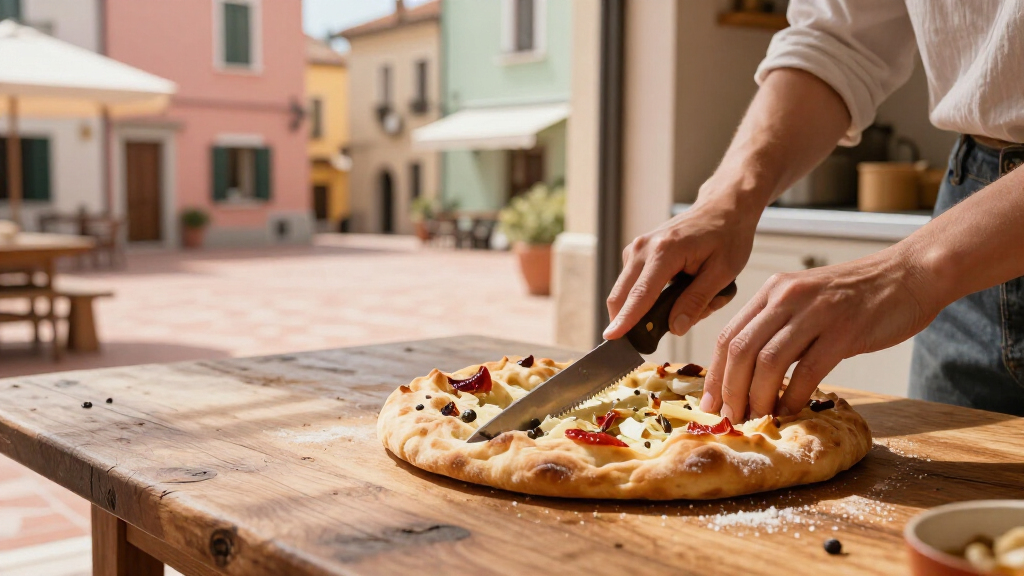
The classic plain version still sets the benchmark. Rosemary, sage, olives, and thin onions all have legitimate places in regional baking, but they are choices rather than proof of authenticity. In Genoa, oil, brine, and fresh dough can carry the entire performance without a vegetable garden arranged on top.
Keep the Crust Crisp When You Save Focaccia for Tomorrow
Focaccia Genovese tastes best on the day it is baked, but airtight storage and dry oven heat can recover much of its texture. Keep it at room temperature for short storage, freeze portions for longer keeping, and avoid relying on the refrigerator. Cold refrigeration speeds bread staling even though it delays mold.
Once the bread has cooled fully, wrap it tightly or place it in an airtight container. At normal room temperature, eat it within one to two days; discard it if you see mold or detect an unusual fermented or rancid smell. Do not seal warm focaccia, since trapped steam turns the crisp base soft and can create surface condensation.
For longer storage, cut the slab into serving pieces and freeze them in a single layer before packing them together. Reheat a frozen piece at 375°F for 8 to 12 minutes, or until the center is hot and the edges crackle again. A tiny mist of water helps a dry slice, but too much recreates the soggy topping problem.
A microwave offers speed, not crust. Thirty seconds may make yesterday’s piece flexible, yet the surface soon turns chewy. A hot oven or toaster oven restores the bread more convincingly, like waking the oil and wheat aromas after a quiet night. If your focaccia carries cheese, meat, or other perishable fillings, refrigerate it within 2 hours and reheat the filling to 165°F.
Frequently Asked Questions
Is authentic focaccia genovese supposed to be thick?
No, authentic focaccia genovese is generally moderately thin rather than tall and cake-like. It should have a soft, flexible center, but the oil-rich surface and crisp edges carry as much importance as the crumb.
Why do you pour brine over focaccia dough?
Brine seasons and moistens the surface while collecting inside the dimples. The mixture of water, salt, and olive oil creates tender depressions and crisp high points, giving the bread its signature texture in a single bite.
Does focaccia genovese need rosemary or other toppings?
Plain focaccia genovese needs only olive oil, brine, and salt on its surface. Rosemary, onions, sage, and olives are valid variations, but heavy or wet toppings can hide the olive oil and keep the crust from browning.
Can you make focaccia genovese with sourdough?
Yes, sourdough can produce excellent focaccia, although it is not required for authenticity. Commercial yeast, brewer’s yeast, preferments, and natural starters all work; fermentation time and gentle handling matter more than choosing one leavening system.
Why did my homemade focaccia turn out dense?
Dense focaccia usually points to insufficient rising, inactive yeast, excess flour, or aggressive handling. Give the dough more time in a cool kitchen, keep it slightly tacky, and stretch rather than roll it so you preserve the gas created during fermentation.
What olive oil works best for focaccia genovese?
Use a fresh, balanced extra-virgin olive oil that tastes pleasant on its own. A delicate Ligurian oil gives a regionally fitting fruity character, but a mild oil from another region works well if it is not stale, harsh, or excessively bitter.
Why do people in Genoa dip focaccia in cappuccino?
Dipping focaccia in cappuccino is a familiar Genoese breakfast custom. Sweet milk foam softens the salty, oily crust, while coffee bitterness sharpens the bread’s wheat and olive flavors; a brief dip keeps the strip from becoming soggy.
Conclusion
Let oil, brine, dimples, and controlled thickness lead your next focaccia. Skip the crowded toppings for one bake and watch what happens when a simple dough gets enough time, firm fingertip pressure, and real oven heat. You should hear a faint crackle at the edge while the center bends softly in your hand.
Eat the first strip warm, perhaps with the glossy side against your tongue as Genoese regulars do. If the bite gives you golden ridges, salty pockets, tender wheat, and fragrant olive oil, you have captured the point of fugassa: a humble port-city bread that turns four basic ingredients into something worth crossing Genoa before breakfast to find.
Navigating the rewarding process of crafting chocolate from scratch, unlocking the secrets of transforming cocoa beans into a delectable homemade treat.
Discover the secret to crafting a smooth, low-acid cold brew coffee at home with this easy-to-follow recipe that delivers a refreshing alternative to traditional hot-brewed coffee.