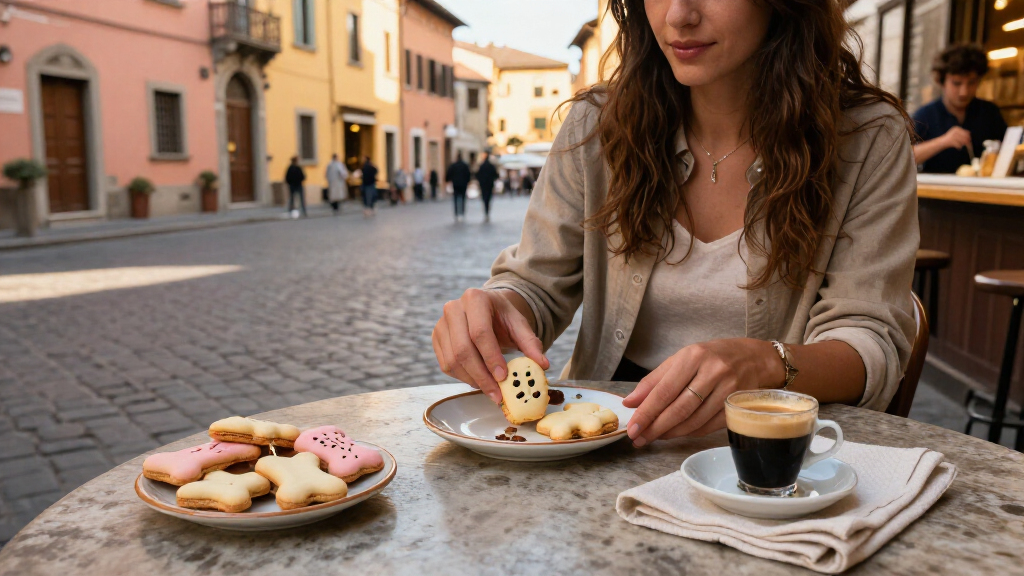

TL;DR

Get kitchen staples and gadgets delivered free with Prime
- Fast, free delivery on millions of items
- Prime Video, Amazon Music and more included
- Member-only deals all year
Fave dei morti (“beans of the dead”) are often almond cookies, while ossa di morto (“bones of the dead”) are a varied family of biscuits that may be hard, spiced, or bone-shaped. Italians eat them in some regions around All Saints’ Day on November 1 and All Souls’ Day on November 2, but recipes and customs differ by town and family.
In early November, an Italian bakery counter can hold two sweets with names that sound like they belong in a cemetery: fave dei morti, or “beans of the dead,” and ossa di morto, or “bones of the dead.” Yet these are cookies for sharing, often alongside a family visit, a church service, or a quiet memory at home.
This guide explains how the two sweets differ, why they appear around November 1 and 2, and why no single recipe speaks for all of Italy. You’ll get practical pointers for choosing a regional recipe and baking a batch at home, plus the context that keeps these evocative cookies connected to remembrance rather than Halloween shorthand.
Think of the names as small windows into local customs: they reveal a little, but each town’s kitchen tells the rest. A Rome almond cookie and a Sicilian spiced biscuit may share the calendar, yet taste and feel like different stories.
Fave dei morti usually contains almonds rather than fava beans, despite its name.
Ossa di morto is a broad regional name; Sicilian versions are associated with hard, spiced biscuits.
The cookies are tied to All Saints’ Day on November 1 and All Souls’ Day on November 2, though not every Italian family eats them.
Choose a recipe tied to a town or region instead of treating either sweet as a single national formula.
Check recipes and labels for nuts, wheat, eggs, and dairy, and store cookies according to the recipe’s guidance.
A seasonal guide · Italy · November 1–2
Fave dei Morti & Ossa di Morto
Italy’s cookies for the Day of the Dead carry evocative names and deeply local recipes. One is often almond-rich; the other is a varied family of biscuits. Both belong to a season of remembrance, sharing, and regional baking.
Two names, two different cookie stories
Think of these as separate early-November sweets—not two names for one standard Italian cookie. Their shared calendar connects them; their ingredients and textures can be quite different.
Shopping tip
Ask the baker where the recipe comes from and what texture to expect. The name alone cannot tell you what is in the cookie.
A calendar of remembrance
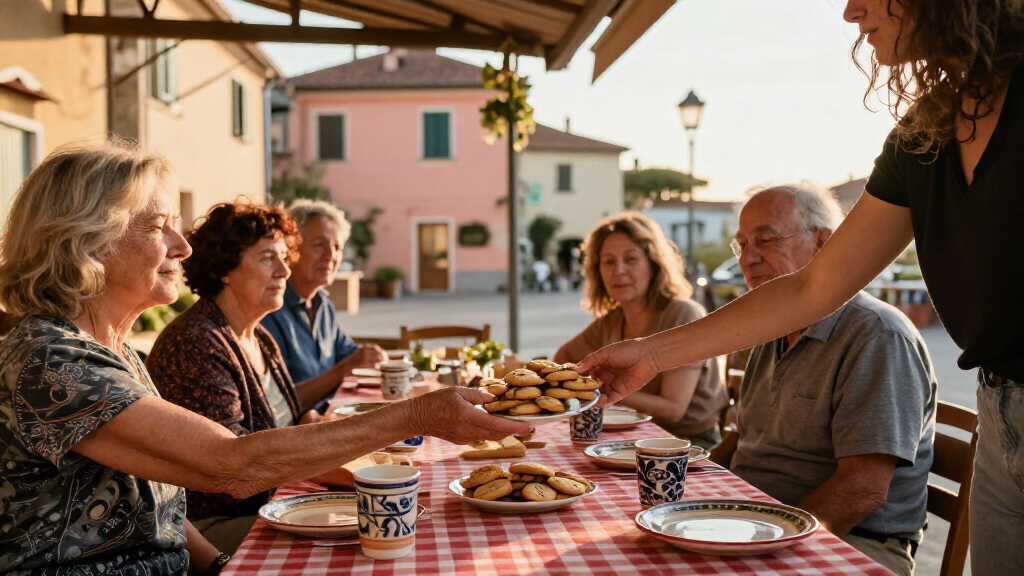
These sweets are associated in some places with the observances at the start of November. Families may visit cemeteries, attend church services, or remember relatives at home.
Ognissanti
All Saints’ Day · November 1
Commemorazione dei defunti
All Souls’ Day · November 2
What the names can—and can’t—tell you
Bean and bone imagery makes remembrance visible, but it does not establish one simple, proven origin story.
A symbolic echo
The name is commonly linked to ancient Mediterranean associations between beans and the dead. That context may help explain the name, but it does not prove today’s almond cookie descends unchanged from an ancient recipe.
An image, not a guarantee
A biscuit may resemble a bone, or the inherited name may remain even when its shape is irregular. The name points toward a tradition; it does not promise a particular appearance.
Several layers
Christian observances, older symbolism, local customs, and everyday seasonal baking have overlapped. Treat popular origin tales with care: explanations often belong to a specific place.
One season, many kitchens
Fave dei morti are associated with parts of central and northern Italy, including Rome and Trieste. In Sicily, ossa di morto is associated with hard, spiced biscuits. These are useful regional starting points—not nationwide rules.
Choose a regional recipe and bake at home
Start with a recipe tied to a specific place. That gives you a clearer idea of its ingredients and the texture you are aiming for.
Pick the style
For an almond-forward cookie, look for a recipe associated with Rome or Trieste. For a hard, spiced biscuit, seek out a Sicilian ossa di morto.
Read the ingredient list
Check for almonds or other nuts, wheat, eggs, and dairy before shopping or serving. Ingredients vary from recipe to recipe.
Set texture expectations
Almond cookies may be tender, chewy, or lightly crisp. Hard spiced biscuits bake up firmer; follow the chosen recipe for timing and storage.
Keep the place in the story
Share which regional version you made. A named recipe keeps the cookie connected to local custom and its early-November setting.
From local custom to shared remembrance
Let the local recipe lead.
Fave dei morti are often almond cookies, despite the bean name. Ossa di morto covers a varied family of biscuits, including Sicily’s hard, spiced versions. Both connect with early-November remembrance in some communities, but no single recipe or custom speaks for all of Italy.
How to Tell Fave dei Morti Apart from Ossa di Morto
Fave dei morti and ossa di morto are distinct early-November sweets, not two names for a standard Italian cookie. Fave dei morti is commonly almond-based; ossa di morto is a broader family of biscuits whose name evokes bones. This difference matters when you shop or bake: a name alone does not guarantee a particular texture, ingredient list, or shape.
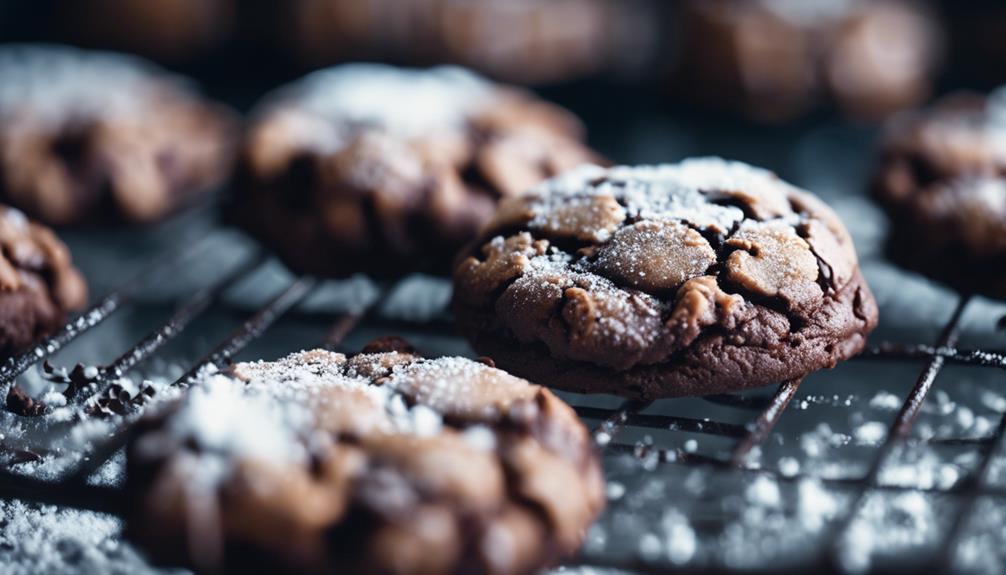
A typical fave dei morti is small and oval or flattened, like an almond-colored pebble. Ground almonds, sugar, and egg often form its base, while flour, butter, or lemon zest may vary by recipe. The result can be tender and chewy or crisp at the edge. Despite fave meaning “beans,” fava beans usually do not appear in the dough. The name may prompt curiosity about the cookie’s symbolism, but it is not a reliable recipe description.
Ossa di morto translates as “bones of the dead,” yet the biscuit need not resemble a neat bone. Some versions are hard and dry; others include spices, nuts, honey, or egg whites, and some have a firm exterior with a chewier center. In Sicily, the name is associated with hard, spiced biscuits sold around early-November observances. That regional association gives you a useful starting point, not a rule for every version found under the same name.
If both are on a bakery counter, expect a contrast: an almond bite may be relatively delicate, while a spiced biscuit can be crisp and assertive. Ask where the baker’s recipe comes from and what texture to expect. The answer helps you choose what you’ll enjoy, while also showing how one remembrance season can hold different local food traditions.
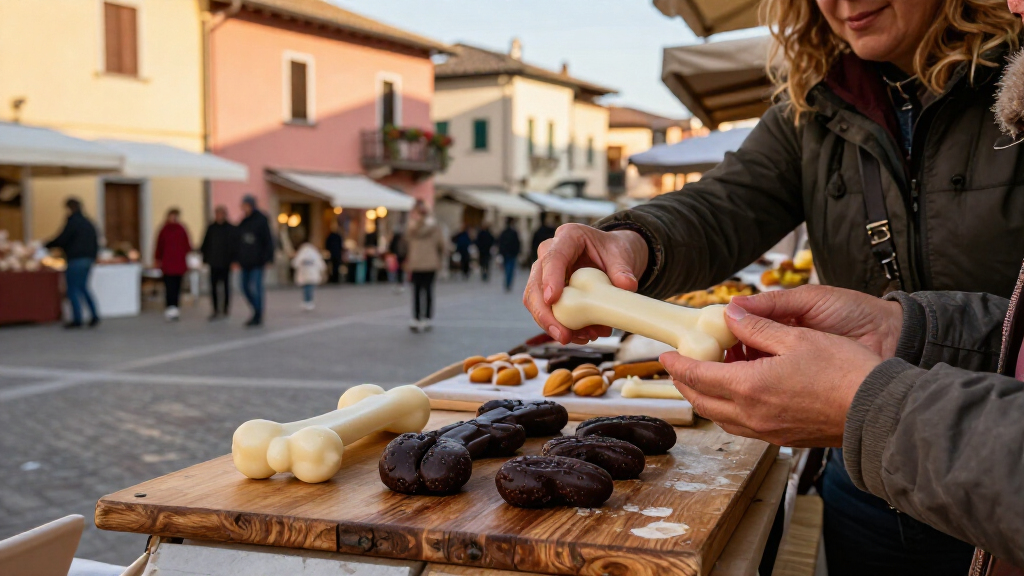
Products Worth Considering

Shark Navigator Robot Vacuum with 30-Day Self-Empty Base, White (AV2110S)

Levoit Vital 200S-P Smart Air Purifier for Large Rooms

Dyson V8 Cordless Vacuum
As an affiliate, we earn on qualifying purchases.
Why Italy Eats These Cookies on November 1 and 2
These cookies appear in some places around All Saints’ Day and All Souls’ Day, known in Italian as Ognissanti (November 1) and Commemorazione dei defunti (November 2). For some families, the dates include cemetery visits, church services, and time set aside to remember relatives who have died. Seasonal sweets can become part of that rhythm: something familiar to share after a visit or bring home to the table.
Imagine returning from a cemetery visit to find almond cookies beside the coffee. Their role is modest, but that can be precisely what makes them meaningful: a shared taste can connect an annual observance with a household’s ordinary life. In another town, a family might buy a hard spiced biscuit, or no special cookie at all. The dates explain the seasonal setting; they do not establish a single ritual practiced throughout Italy.
This distinction matters for travelers and home bakers. A bakery may sell a particular sweet for only a short autumn window, while another town may favor a different local pastry. Pan dei morti (“bread of the dead”), fave dolci (“sweet beans”), and other seasonal foods also appear in local traditions. Asking a baker what people in that town actually buy is more useful than assuming a guide’s list covers every community.
Because the dates fall near Halloween, these cookies can be described too quickly as Italian Halloween treats. That shortcut obscures the observances that give them their context. You can still enjoy them in a seasonal gathering, but naming the local recipe and its early-November association preserves the connection to remembrance rather than turning the food into generic spooky decoration.
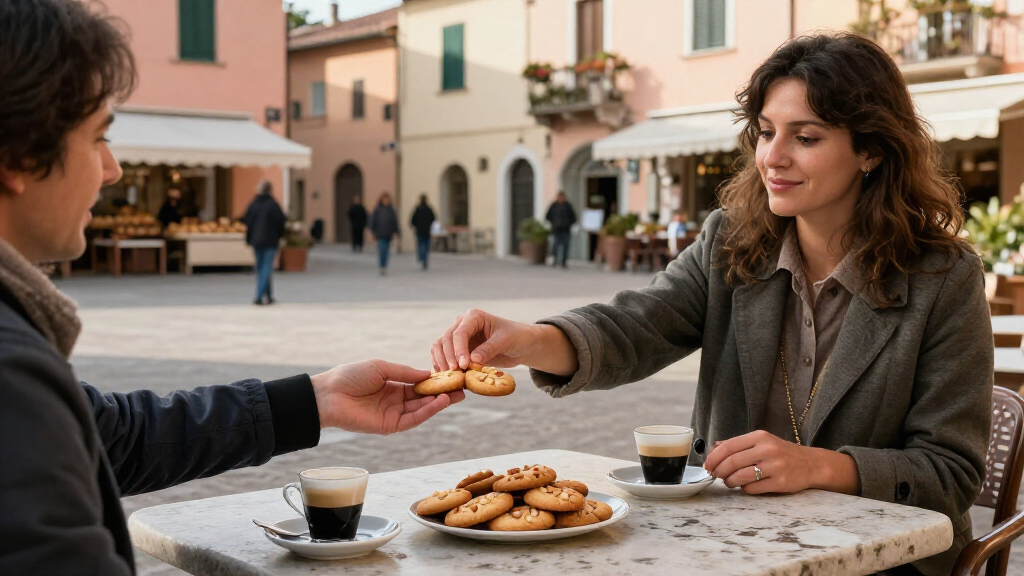
What the Bean and Bone Names Can—and Can’t—Tell You
The names make remembrance visible, but they do not prove one simple origin story. “Beans of the dead” and “bones of the dead” connect food and form with ideas about death. Their meanings have accumulated across older customs, Christian observances, and local baking traditions. Treating those layers as one documented origin would make the story sound more certain than the evidence allows.
The bean connection is often linked to ancient Mediterranean associations between beans and the dead. That context can help explain why a bean name might endure even when a modern cookie contains almonds. It does not show that today’s almond cookies descend unchanged from an ancient recipe. A present-day baker in Rome may use ground almonds, sugar, and egg; the symbolic association and the particular confection are different parts of the story.
The bone name offers a more direct image, but even here the name and the shape do not always match. A biscuit may resemble a bone, or the inherited name may carry the association when the shape is irregular. In Sicily, a hard, spiced version can bring a sharp snap and warm aroma. Elsewhere, an ossa di morto may look and taste different. The name gives a clue to the tradition, not a guarantee of what is on the plate.
Popular food histories often turn uncertain folklore into a tidy origin tale. A more careful reading leaves room for local interpretation: the symbolism can matter to a community even when its exact beginnings are unclear. If you visit a bakery, asking what the name means to the baker or town can lead to a more grounded answer than assuming every Italian family tells the same story.
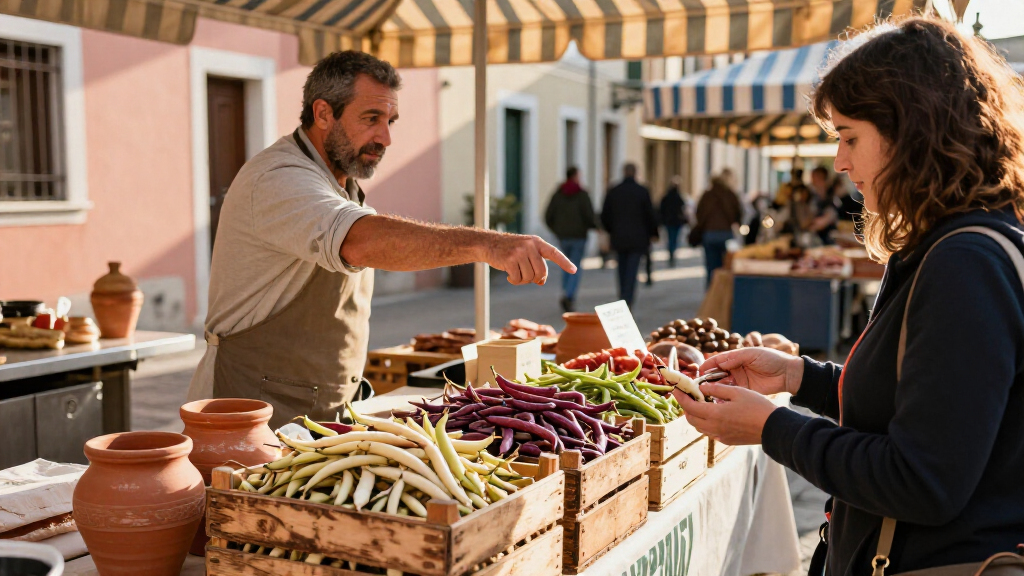
How to Choose a Regional Recipe and Bake at Home
Start with a recipe tied to a specific place, because neither cookie has one standard Italian formula. Choose fave dei morti for a small almond-rich sweet, or seek an ossa di morto recipe from a named region if you want a crisp, spiced biscuit. A regional recipe helps set realistic expectations: it tells you which ingredients and texture belong to the version you are making.
- Pick the regional style. For an almond-forward cookie, look for a recipe associated with Rome or Trieste. For a hard, spiced ossa di morto, look for a Sicilian version. This choice shapes the experience: the cookies may share a season, but they offer different flavors and textures.
- Read the ingredient list before shopping. Fave dei morti often uses ground almonds, sugar, and egg; ossa di morto may use flour, sugar, egg whites, spices, nuts, or honey. Recipes vary, so checking the list prevents surprises and helps you choose a version that suits your pantry and guests.
- Follow the texture cues. A soft, chewy fave dei morti should not be judged by the snap of a dry biscuit. Let cookies cool as directed; crisp varieties can firm further as they cool. Texture is part of the recipe’s identity, so avoid adjusting baking time based on what a different regional style looks or feels like.
- Store and serve with care. Keep fully cooled cookies in a clean, dry, airtight container, following the recipe’s storage advice. If a recipe uses perishable fillings or toppings, refrigerate those as directed. Dry biscuits and softer cookies may keep their best texture differently, so the recipe’s guidance matters as much as the container.
For a November coffee gathering, you might make a small batch of almond cookies and serve them beside a regional hard biscuit. The pairing lets guests compare two local expressions of the season. It also makes the limits of a generic label tangible: a shared calendar does not mean a shared recipe.
Check allergens before serving: almonds and other nuts are common in these sweets, and some versions contain wheat, eggs, or dairy. Read every ingredient label, especially if you adapt a recipe or buy packaged cookies. For a food-safety baseline, keep hands and surfaces clean, use fresh eggs, and bake according to a tested recipe’s directions; these cookies are not a substitute for safe handling of any perishable filling.
Where to Look for Them—and What Else You May Find
You’re most likely to find these sweets around the start of November in regions and bakeries with a local tradition for them. Fave dei morti are especially associated with parts of central and northern Italy, including Rome and Trieste. Ossa di morto appears in several regions, with Sicilian versions known for hard, spiced biscuits. These associations can help you decide where to ask, though they cannot promise that a specific shop will carry a particular cookie.
Availability is local and can change from one neighborhood, year, and bakery to the next. One Rome shop might display pale almond ovals; a family elsewhere may bake a different seasonal pastry or skip the custom altogether. This variation is useful to keep in mind when planning a visit: a missing cookie does not mean the town has no November food traditions.
If you’re visiting in autumn, ask a baker what they make for Ognissanti and Commemorazione dei defunti. The question invites a local answer, which may include a pastry you would not find in a general guide. You can ask whether the shop’s version includes nuts or spices and whether it is meant to be hard or tender—practical details that also help explain what makes that version distinctive.
Modern pastry displays may present old names with polished decoration or adjusted ingredients. Those choices show how a particular shop serves its customers; they do not establish a single national revival or standard recipe. Treat the counter as a snapshot of local baking. A small assortment is a practical way to compare textures, and asking about each item helps you connect the taste to its place.
How to Share the Cookies Without Flattening the Tradition
Share these cookies as regional seasonal foods, not as universal Italian customs. Some Italian families eat fave dei morti or ossa di morto in early November; others choose different sweets, and many do not make a special cookie at all. That variety matters because it shows how remembrance is shaped by households and places rather than a single national menu.
If you’re hosting, offer guests a little context before setting out a plate. You might say that fave dei morti often means almond cookies, while ossa di morto can refer to several kinds of biscuit, and then name the town or recipe you followed. A small card can explain “beans of the dead” and “bones of the dead” without turning family remembrance into a spooky costume theme. Specificity helps guests understand what they are eating without claiming more than the recipe can support.
Serve the cookies after a November meal with coffee or tea, and invite someone to share a memory if the gathering suits that tone. The cookie can be a quiet prompt, like a photograph brought to the table, rather than the center of a staged celebration. You could also make a sweet associated with a place you have visited and tell the story of the bakery or market where you found it.
Keep the details honest: say “this Sicilian-style biscuit” or “a Rome-associated almond cookie,” rather than claiming one recipe represents the whole country. If you’re serving people with allergies, identify nuts, wheat, eggs, and dairy clearly. Careful naming makes the food more welcoming while giving its regional history room to remain varied.
Frequently Asked Questions
Are fave dei morti made with fava beans?
Usually, no. Many recipes use ground almonds, sugar, and egg instead. The name means “beans of the dead” and is generally explained through symbolic and historical associations; it does not reliably describe the ingredients.
Are fave dei morti and ossa di morto the same cookie?
No. Fave dei morti are often almond cookies, while ossa di morto refers to varied biscuits associated with bones and early-November remembrance. Their ingredients, shapes, and textures depend on the regional recipe, so the names are a starting point rather than a complete description.
When are these cookies eaten?
Typically around November 1 and 2, All Saints’ Day and All Souls’ Day. Some bakeries may sell seasonal sweets for a longer stretch of autumn, depending on the town, and not every family marks the dates with these cookies.
Do all Italian families eat them?
No. These are regional and family customs, not universal national foods. A household may eat another seasonal pastry, such as pan dei morti, or mark the dates without a particular sweet. That variation is part of how local food traditions work.
Are ossa di morto always shaped like bones?
No. Some versions are bone-like, while others are irregular or simply traditional hard biscuits. The name can carry the symbolism even when the shape is not literal, and the details depend on the local recipe.
Can I make these cookies at home?
Yes. Choose a recipe tied to a place, such as a Rome-associated almond style or a Sicilian spiced biscuit, because ingredients and textures vary. Checking the recipe first helps you choose the flavor and texture you want. Check for nuts, wheat, eggs, and dairy, and follow the recipe’s storage instructions.
They are associated with early-November remembrance observances, which fall near Halloween, but they are not simply Italian Halloween cookies. Their context is All Saints’ and All Souls’ traditions, local baking, and remembering the dead; calling them Halloween cookies alone loses that local context.
Conclusion
Choose a place before you choose a recipe. A Rome- or Trieste-associated almond cookie and a Sicilian spiced biscuit can both belong to early November while telling different local stories. The distinction matters in the kitchen as much as in the history: a recipe’s place helps explain its ingredients, texture, and role in the season.
Make a small batch, name its place, and share it with someone whose story you want to remember. Let the last crumb be a quiet reminder that food can carry memory without needing one perfect origin tale.