Lasagne alla Bolognese is a traditional Emilia-Romagna dish built from thin spinach pasta, slow-cooked meat ragù, pourable béchamel, and Parmigiano Reggiano. Make the ragù one or two days ahead, assemble five to seven restrained layers, bake until bubbling and browned, then rest the pan for 15 to 30 minutes before serving.
Sunday lunch in Emilia can take longer to prepare than to eat, yet that is part of its charm. A pan of lasagne alla Bolognese carries the scent of browned beef, warm nutmeg, butter, and aged cheese through the house before anyone lifts a fork. By noon, its bronzed corners crackle while the center settles into soft, distinct layers.
This dish is not simply pasta buried under a red meat sauce. The traditional structure combines thin green pasta sheets, a restrained and deeply meaty ragù, silky béchamel, and finely grated Parmigiano Reggiano. You will learn how each part works, how to schedule the job without sacrificing your Saturday, and how to avoid a watery pan that slides apart on the plate.
Lasagne traditionally appears as a primo, or first substantial course, after antipasti and before meat at a long family meal. In many homes today, it is a centerpiece and needs little more than a bitter-leaf salad afterward. Its importance lies in the ritual: rolling pasta, simmering ragù, and gathering generations around the table while the kitchen smells dark, sweet, and savory.
At a glance
Lasagne alla Bolognese for Sunday Lunch in Emilia
Key insight
The classic Bologna version has four defining parts: green spinach pasta, ragù alla Bolognese, béchamel, and Parmigiano Reggiano; ricotta and mozzarella belong to other regional lasagne traditions.
Key takeaways
1
Build the dish around four regional elements: thin spinach pasta, meat-forward ragù, pourable béchamel, and Parmigiano Reggiano DOP.
2
Cook the ragù for at least two hours and preferably make it one or two days before Sunday lunch.
3
Squeeze cooked spinach very dry and roll the pasta thin enough that several layers stay tender rather than doughy.
4
Assemble five to seven restrained layers, bake the center to 165°F or 74°C, and rest the pan for 15 to 30 minutes.
5
Prevent watery lasagne by controlling moisture in the spinach, ragù, béchamel, and blanched pasta rather than trying to fix the dish at the end.
Step by step
1
Roll Green Pasta Thin Enough to Melt Into the Layers
Lasagne alla Bolognese becomes delicate when its spinach pasta is rolled exceptionally thin , commonly to one of the final settings on a ho…
2
Assemble Five to Seven Layers That Hold Their Shape
Sunday lunch in Emilia works best when you build five to seven thin, even pasta layers instead of a few overloaded ones.
Sunday Lunch in Emilia: Lasagne alla Bolognese from Scratch
Sunday Table · Emilia-Romagna
Lasagne alla Bolognese from Scratch
Thin spinach pasta, deeply browned meat ragù, pourable béchamel, and Parmigiano Reggiano become one tender structure. The preparation is patient; the pleasure is immediate.
Advance work1–2 daysMake the ragù ahead for easier timing and deeper flavor.
Assembly5–7Restrained layers hold their shape better than overloaded ones.
Bake target165°FThe center should be hot, bubbling, and fully set.
Essential rest15–30mA short pause turns bubbling layers into clean slices.
An Emilia identity
Four parts, one balanced structure
Traditional Bologna-style lasagne divides the work among four elements. Pasta brings delicacy, ragù supplies savory depth, béchamel carries moisture, and Parmigiano Reggiano seasons and browns.
Foundation
Green pasta
Egg dough colored with cooked spinach, squeezed exceptionally dry and rolled nearly translucent.
A smooth, pourable sauce of butter, flour, milk, salt, and warm nutmeg.
Silky cohesionSeasoning
Parmigiano Reggiano
Finely grated aged cheese scattered lightly between layers and generously over the top.
Savory crust
Flavor architecture
Make the ragù taste of meat, not tomato
A successful ragù is rich and cohesive, yet never soupy. Proper browning must remain legible after the sauce meets pasta, milk, and cheese.
01
Render and soften
Render pancetta until glossy, then cook onion, carrot, and celery gently without scorching.
02
Brown in batches
Give coarse ground beef room to meet hot metal. Crowding traps steam and prevents roasted flavor.
03
Reduce before simmering
Let the wine lose its raw aroma, then add restrained tomato and enough broth for a slow cook.
04
Finish cohesive
Simmer quietly until the sauce mounds softly on a spoon. Milk may round the flavor, but cannot replace browning.
Where depth develops
A conceptual flavor curve: time concentrates the meat and integrates the sauce.
Soffritto softened15 min
Beef deeply browned30–40 min
Sauce integrated2 hours
Full concentration3 hours
Texture test: the finished ragù should mound softly, spread easily, and leave no watery pool around the spoon.
A calmer weekend
The from-scratch workflow
Treat the dish as a sequence rather than one marathon session. Advance preparation protects Sunday morning and gives the ragù time to improve.
1
Cook the ragù
Prepare it one or two days ahead, cool promptly, and refrigerate.
2
Make green dough
Dry the spinach thoroughly, knead the dough, and let it rest.
3
Prepare béchamel
Keep it smooth and pourable so the pasta can absorb moisture.
4
Roll and layer
Cut thin sheets, blanch if needed, dry, and build evenly.
5
Bake and rest
Brown the top, verify the center, then wait before slicing.
Saturday
Morning: shop for eggs, flour, spinach, meat, dairy, vegetables, and aged cheese.
Afternoon: brown and simmer the ragù for two to three hours.
Evening: cool in shallow containers and refrigerate within two hours.
Sunday
Morning: make pasta dough and allow it to rest.
Late morning: cook béchamel, roll sheets, and assemble.
Before lunch: bake, rest for 15 to 30 minutes, then serve.
Regional compass
Canonical structure vs. common detours
Family variations are natural, but the defining Bologna pattern remains clear. Ricotta and mozzarella belong to other regional lasagne traditions.
Component
Bologna-style choice
Status
Common wrong turn
Likely result
Pasta
Very thin spinach egg sheets
✓ Defining
Thick or wet green dough
Doughy, slippery layers
Ragù
Meat-forward, slowly simmered
✓ Defining
Tomato-heavy jarred sauce
Loose texture and sharp acidity
White sauce
Pourable nutmeg béchamel
✓ Defining
Stiff paste or excessive quantity
Dry edges or heavy center
Cheese
Parmigiano Reggiano DOP
✓ Defining
Shelf-stable grated “Parmesan”
Muted flavor and weak crust
Ricotta
Not characteristic here
✗ Other tradition
Thick ricotta layers
A heavier, different regional style
Milk in ragù
Optional family variation
~ Flexible
Treating it as a substitute for time
Creaminess without enough depth
Assembly logic
Thin repetition creates a slice that stands
Lasagne succeeds through several restrained layers, not a few oversized deposits of filling. Each pass should be complete but light.
07Parmigiano + béchamelBrowned crown
06Pasta · ragù · béchamelThin pass
05Pasta · ragù · ParmigianoSeasoned
04Pasta · ragù · béchamelEven spread
03Pasta · ragù · ParmigianoLight scatter
02Pasta · ragù · béchamelNo pooling
01Light sauce coatingDish base
Five to seven layers is the practical sweet spot
Spread every element to the corners. The sauces should moisten the pasta without flooding it, while finely grated Parmigiano supplies seasoning rather than a thick cheese layer.
Fresh sheets may be briefly blanched, cooled, and dried on cloths. Exceptionally thin sheets can sometimes go in raw when both sauces remain fluid enough to finish the cooking.
WarmingSet centerBubbling
Target center: 165°F / 74°C
Moisture control
Prevent a watery pan before it enters the oven
A stable slice is the result of four small controls. Once excess water reaches the assembled dish, extra baking usually damages the edges before it repairs the center.
Spinach
Cool it, squeeze it forcefully, then chop it finely before mixing the dough.
Ragù
Reduce until cohesive and spoonable, with enough moisture to spread but none pooling.
Béchamel
Keep it pourable rather than watery or stiff; the pasta will absorb part of it while baking.
Pasta sheets
After blanching, drain completely and lay the sheets flat on clean cloths to dry.
15–30Minutes of rest
The final ingredient is patience
Resting lets steam subside, sauces settle, and pasta regain structure. The bronzed corners remain crisp while the center becomes soft, distinct, and clean enough to lift onto the plate.
The Four Parts That Give You a True Bologna-Style Lasagne
Lasagne alla Bolognese gets its regional identity from four connected elements: spinach-colored egg pasta, ragù alla Bolognese, béchamel, and Parmigiano Reggiano. Each layer stays thin, allowing the pasta and sauces to become one tender structure without turning into a heavy stack of cheese, tomato, and dough.
The classic Bologna version has four components for a reason. The green sheets bring a mild vegetal note and a striking color; the ragù supplies concentrated meat flavor; béchamel carries moisture; and Parmigiano Reggiano contributes salt, nuttiness, and a brittle browned crust. Remove one piece and the balance shifts, much like taking a supporting beam from a small portico.
The deeper principle is division of labor. No single component is meant to provide all the moisture, richness, seasoning, or texture. This restraint lets you taste transitions within each bite: tender pasta first, then meat, milk, and aged cheese. Loading the pan with extra mozzarella or a wetter tomato sauce may make it more immediately lush, but it also collapses those distinctions and produces a heavier, less stable slice.
Component
Bologna-style role
Common wrong turn
Green pasta
Creates delicate, distinct layers
Leaving wet spinach in the dough
Ragù
Provides slow-cooked meat flavor
Using a tomato-heavy sauce
Béchamel
Adds moisture and gentle richness
Cooking it into a stiff paste
Parmigiano Reggiano
Seasons layers and browns the top
Replacing it with shelf-stable powder
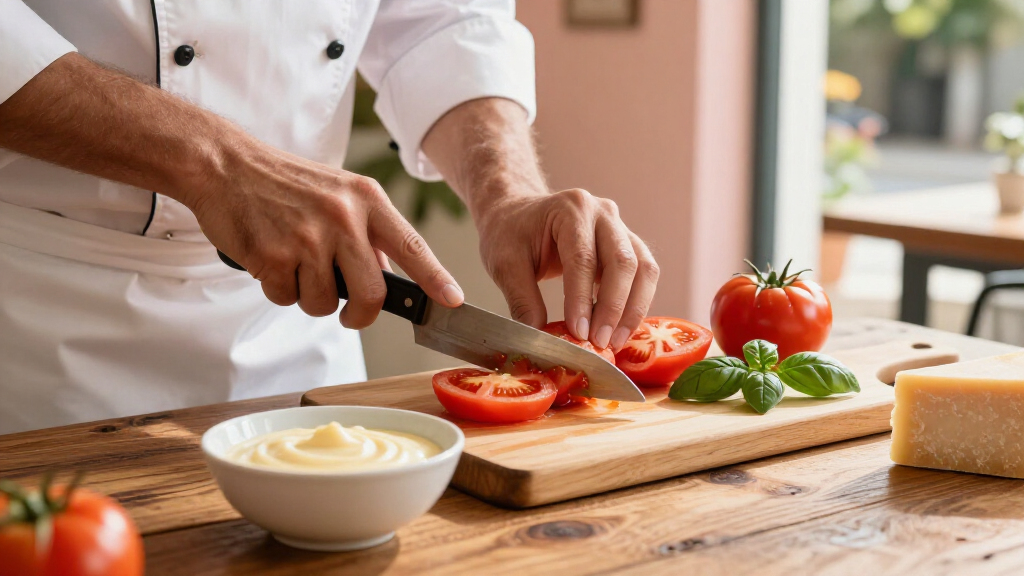
Suppose you are shopping in Bologna before a Sunday meal. Your basket would hold eggs, flour, spinach, pancetta, beef, milk, butter, vegetables, and a wedge bearing the dotted Parmigiano Reggiano DOP rind. You would not need tubs of ricotta, bags of mozzarella, dried oregano, or a garlic-laden jarred sauce; those ingredients tell other Italian stories.
Authenticity allows family variation. One household may use more tomato, another may add milk to the ragù, and another may roll six sheets instead of seven. The Italian Academy of Cuisine has registered a reference formula for ragù alla Bolognese with the Bologna Chamber of Commerce, but that recipe acts as a regional compass rather than a command for every family kitchen [1].
Lasagne alla Bolognese needs a ragù that is rich, cohesive, and only gently tomato-colored. Begin with pancetta and finely chopped onion, carrot, and celery, brown coarse ground beef properly, evaporate the wine, then cook everything at a quiet simmer for at least two hours.
The opening minutes shape the finished sauce. Render the pancetta until its fat turns glossy, then soften the soffritto, the finely chopped vegetable base, without scorching it. When the onion smells sweet and the carrot gives the pan a muted orange glow, move the vegetables aside or remove them briefly so the beef can meet hot metal.
Imagine dropping a kilogram of cold beef into a narrow saucepan. The temperature falls, gray liquid collects, and the meat steams in a sharp silence. Brown in two or three batches instead, leaving space between the pieces; you gain copper-colored edges, a nutty aroma, and the savory depth that a quick tomato sauce can never supply.
This browning matters especially in lasagne because the ragù will later be diluted by béchamel, pasta, and cheese. A sauce that tastes merely pleasant on its own can disappear once layered. Properly browned meat creates concentrated roasted flavors that remain legible in the finished dish, while excessive tomato contributes water and acidity that can dominate the dairy and loosen the slice.
Add dry wine and let its raw alcoholic smell disappear before the tomato and broth enter. For adults who serve the same wine at lunch, pour modestly and drink responsibly; cooking reduces alcohol but does not always remove every trace. Milk may join during cooking or near the end, softening acidity and giving the sauce a rounder finish, though some Emilia households omit it.
The choice of when to add milk changes the result subtly. Added earlier, it cooks into the meat and encourages a mellow, integrated sauce; added near the end, it gives a more noticeable creamy softness. Omitting it produces a firmer, more savory profile. None of these approaches compensates for rushed browning or aggressive boiling, which are more consequential than the timing of the milk.
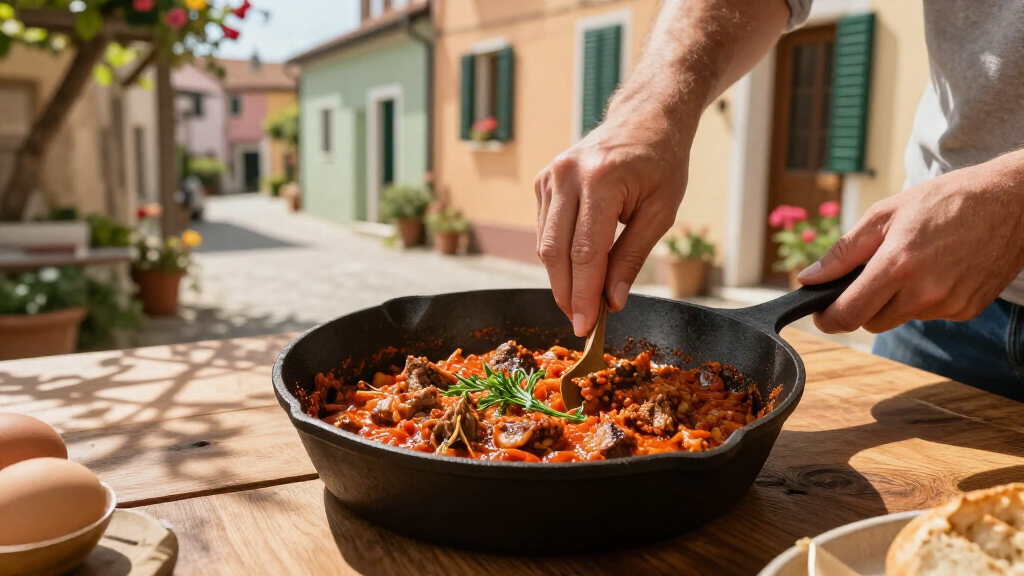
Keep the simmer low for two to three hours, adding a little broth whenever the pan looks dry. The ragù should mound softly on a spoon rather than run like soup, but it still needs enough moisture to help cook the pasta. Cool it promptly in shallow containers and refrigerate within two hours; use it within three to four days or freeze it for a later Sunday.
Tomato supports the meat in ragù alla Bolognese; it does not drown it. If the sauce tastes like marinara with beef stirred through it, keep that batch for another dinner and adjust the next one with less tomato and more patient browning.
Roll Green Pasta Thin Enough to Melt Into the Layers
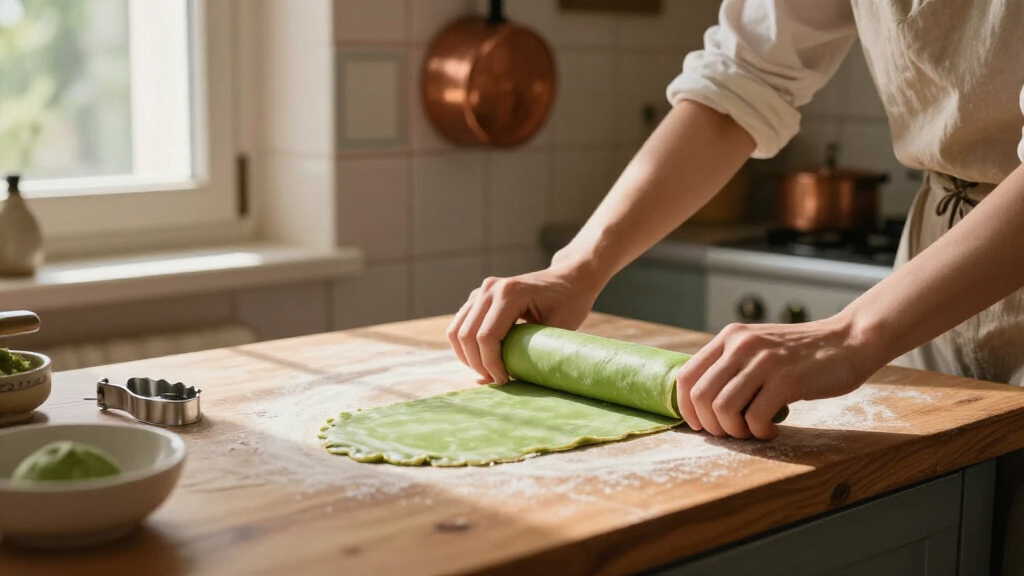
Lasagne alla Bolognese becomes delicate when its spinach pasta is rolled exceptionally thin, commonly to one of the final settings on a home pasta machine. Cook the spinach, squeeze out every possible drop, weigh your ingredients, knead until elastic, and rest the covered dough before rolling.
Spinach moisture causes more trouble than almost any other pasta variable. After cooking and cooling the leaves, gather them in a clean towel and twist hard until no green water drips out. A loose handful can release several tablespoons of water, forcing you to add extra flour and leaving the finished sheets thick and stubborn.
For a useful starting batch, combine roughly 300 grams of Italian 00 flour with eggs and about 60 to 75 grams of thoroughly squeezed spinach, adjusting for egg size and humidity. The dough should feel firm but pliable, like cool modeling clay. Knead for about 10 minutes, cover it, and let it rest for at least 30 minutes so the flour hydrates and the gluten relaxes.
Those adjustments are more useful than treating the quantities as an inflexible formula. Adding flour until a wet dough stops sticking solves the immediate handling problem but changes the ratio of flour to egg, producing sheets that need more moisture and time to become tender. A slightly tacky dough can improve during resting; a dry, over-floured dough rarely becomes more supple.
Divide the dough into manageable pieces and keep unused portions covered.
Flatten and roll each piece through the widest machine setting several times.
Reduce the setting gradually, passing the sheet through once or twice at each stage.
Cut sheets to fit your baking dish, leaving little waste.
Blanch briefly if needed, cool in clean water, and dry flat on cloths.
At a kitchen table in Modena, you might be able to see the shadow of your hand through a finished sheet. That is the right neighborhood. Thick pasta eats like stacked dumplings, while a thin sheet takes the sauce and the oven’s heat, becoming tender without vanishing.
Thinness also determines how many layers the dish can support. Five thick sheets create a pasta-dominant block, whereas six or seven fine sheets divide the fillings into smaller intervals and make the lasagne feel lighter even though the total quantity is similar. The tradeoff is fragility: very thin sheets demand gentle handling and adequately fluid sauce.
Blanching depends on thickness and moisture. Give thicker sheets 20 to 30 seconds in salted boiling water, cool them, and lay them separately on clean towels. Very thin sheets can go straight into sufficiently fluid sauces, but blanching offers a safer, more predictable result when you are making the dish for guests.
Make Béchamel That Spreads Without Tearing Your Pasta
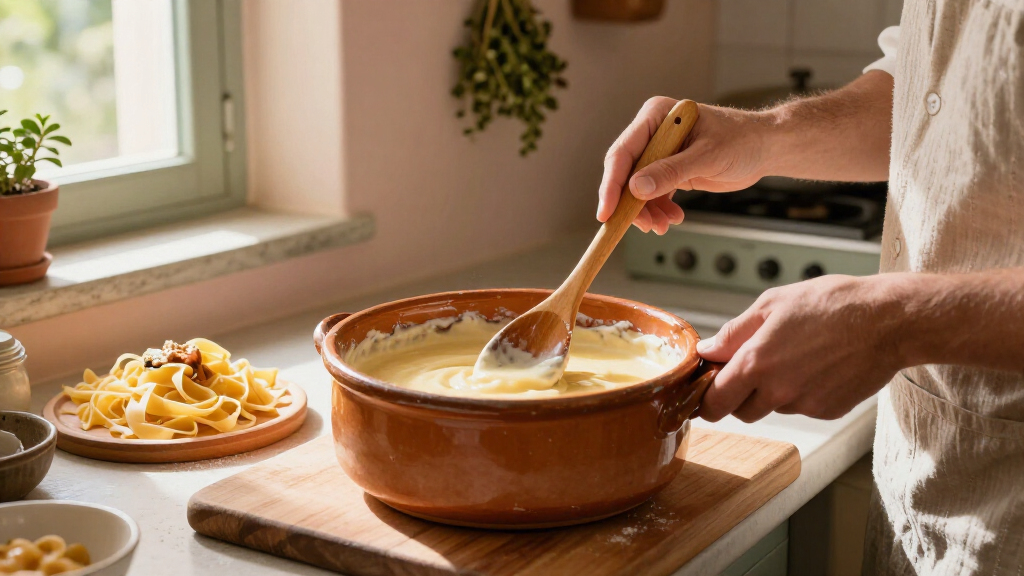
Béchamel should be smooth, pourable, and lightly seasoned, because its job is to moisten the pasta rather than form a thick white filling. Cook equal weights of butter and flour briefly, whisk in warm milk, then stop cooking when the sauce coats a spoon but still flows easily.
For a standard family pan, start with about 75 grams of butter, 75 grams of flour, and 1 liter of whole milk. Melt the butter, stir in the flour, and cook for roughly two minutes until the mixture smells faintly of warm biscuits. Add the milk in several pours, whisking each addition smooth before adding more.
The brief cooking of the butter and flour removes the raw flour taste without taking the mixture into the darker, nuttier territory of a brown roux. That distinction matters here: a pale béchamel supports the ragù without competing with it, while a deeply cooked roux has less thickening power and introduces a toasted flavor that changes the dish’s gentle dairy character.
Season with salt and a small grating of nutmeg. The nutmeg should hover in the background, a warm brown note rather than a loud perfume. Since pancetta and Parmigiano already carry salt, taste the béchamel with the other components in mind; seasoning every pot aggressively can make the finished pan taste briny.
You will know the texture is right when a ladleful falls in a broad ribbon and spreads with two or three strokes. If it sits like mashed potatoes, whisk in warm milk a little at a time. Loose sauce protects thin sheets; stiff sauce catches their edges, tears them, and leaves dry pockets in the corners.
Do not confuse pourable with watery. Béchamel that runs like milk cannot suspend the ragù or bind adjacent sheets, so liquid collects at the bottom rather than becoming part of the structure. The useful middle ground is a sauce fluid enough to spread under its own weight but thick enough to leave a translucent coating on the back of a spoon.
Make béchamel close to assembly and press reusable wrap or parchment against its surface if it must wait. Keep dairy below 40°F or 4°C during storage, and do not leave the finished sauce at room temperature for more than two hours. The recipe contains milk and wheat allergens; the full lasagne also contains egg, and Parmigiano Reggiano adds more dairy.
Parmigiano Reggiano is not interchangeable with a shelf-stable shaker labeled Parmesan. The DOP designation ties production to a defined area that includes Parma, Reggio Emilia, Modena, and parts of Bologna and Mantua, under controlled production rules [2]. Grate it finely so it dissolves between layers, then use a slightly fuller handful on top for toasted, amber patches.
Assemble Five to Seven Layers That Hold Their Shape
Sunday lunch in Emilia works best when you build five to seven thin, even pasta layers instead of a few overloaded ones. Coat the dish lightly, repeat pasta, ragù, béchamel, and Parmigiano in restraint, then finish with enough sauce and cheese to protect the surface while it browns.
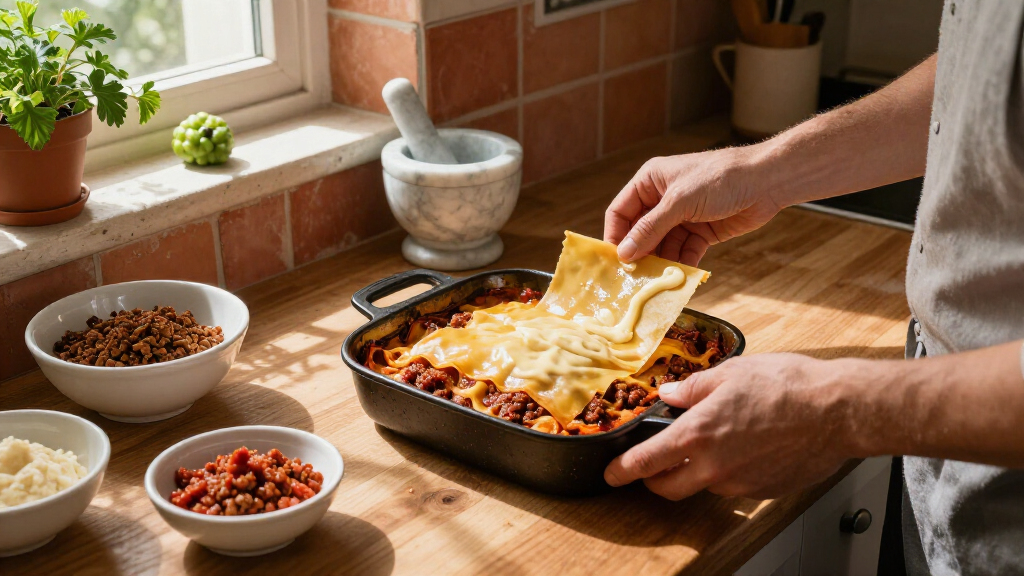
Set every component within reach before you begin: trimmed pasta sheets, warm or cool ragù, pourable béchamel, and a bowl of finely grated cheese. Spread a light film of béchamel or mixed sauce over the bottom of the dish. This first coating anchors the sheet and keeps its underside from drying against the hot pan.
Lay down one fitted pasta sheet, trimming or overlapping minimally.
Spread a thin veil of ragù all the way toward the edges.
Spoon over enough béchamel to add moisture without hiding every trace of meat.
Scatter a modest layer of Parmigiano Reggiano.
Repeat until you have five to seven pasta layers, then finish with sauce and a little extra cheese.
Think of plastering a wall, not filling a sandwich. A thick ridge in one corner creates a landslide when you slice, while repeated fine coatings bind into a stable whole. In a 9-by-13-inch dish, each pass should look almost too spare; repetition builds the richness.
The number of layers is therefore a structural choice, not a display of abundance. More layers create additional contact points where starch, béchamel, and cheese can set together, but only if every coating remains thin. Fewer overloaded layers concentrate weight and liquid into broad seams, making the upper sheets slip when the knife presses down.
Bake at about 375°F or 190°C until the center bubbles and the top carries browned patches, usually 35 to 45 minutes depending on pan depth and starting temperature. A lasagne assembled the day before may need extra time from the refrigerator. For food safety, the center of a meat lasagne should reach at least 165°F or 74°C.
Pan material affects that timing. A metal dish transfers heat quickly and encourages crisp edges, while ceramic or glass warms more slowly and retains heat longer during the rest. The visible bubbling tells you that heat has reached the sauces throughout the pan; surface color alone can appear before the center is ready.
The finished surface should show crisp edges and a moist center, not a hard brown lid. If the top colors before the middle heats, cover it loosely with foil and uncover it near the end. Then wait 15 to 30 minutes before cutting; the pan will hold its heat while the sauces settle and the sheets regain their clean lines.
Plan the Weekend So Sunday Feels Like Lunch, Not Labor
Sunday lunch in Emilia becomes manageable when you make the ragù one or two days ahead and save the pasta, béchamel, and assembly for later. A full homemade pan is a half-day project, but the work feels lighter when the long simmer happens separately from the rolling and layering.
On Friday evening, cook the ragù while you prepare another simple dinner. Its two- or three-hour simmer needs only occasional stirring, and an overnight rest lets the flavors knit together. Once chilled, you can lift away excess solid fat if you prefer, though leaving some gives the sauce its plush texture.
Making the ragù first also gives you room to correct it. Once chilled and reheated, you can judge whether it needs broth for spreadability or further reduction for concentration before it reaches the pasta. That flexibility disappears when every component is made at once and the oven schedule begins dictating your decisions.
On Saturday afternoon, wash and cook the spinach, squeeze it dry, and weigh it. You can also grate the Parmigiano and check that the baking dish fits your pasta-sheet dimensions. This is the quiet work: the rasp of cheese against metal, the green stain on the towel, and the calm satisfaction of clearing Sunday’s path.
On Sunday morning, make and rest the dough, prepare the béchamel, roll the sheets, and assemble the pan. If guests arrive at noon, aim to put the lasagne in the oven around 11:15 a.m., adjusting for your pan and whether it starts cold. It can rest while you serve a few slices of mortadella Bologna IGP, set out water, and open the wine.
The schedule preserves quality as well as sanity. Ragù benefits from waiting, but béchamel is easiest to spread while fresh and pasta is simplest to manage before its edges dry. Assembling too early can cause raw sheets to absorb sauce unevenly, while leaving every task until Sunday creates pressure to skip resting, browning, or drying steps.
A dry Lambrusco from Emilia has the freshness and bubbles to cut through the rich sauces; a Sangiovese-based red also works. Wine is for adults, and a modest glass belongs beside food rather than becoming the focus of the afternoon. For a nonalcoholic pairing, sparkling water with a strip of lemon peel cleans the palate without competing with the ragù.
After lunch, refrigerate leftovers within two hours in shallow covered portions. Reheat them to 165°F or 74°C and eat refrigerated portions within three to four days. You can also freeze baked or unbaked lasagne tightly wrapped; thaw it overnight in the refrigerator for more even heating.
Fix the Mistakes That Cause Watery, Dry, or Sliding Slices
Lasagne alla Bolognese stays moist and sliceable when you control water at every stage: squeeze the spinach, reduce the ragù until cohesive, keep béchamel fluid but not thin, dry blanched sheets, spread restrained layers, and let the baked pan rest before cutting.
A watery slice often begins long before assembly. Wet spinach loosens the dough, pale unbrowned meat releases liquid, and pasta sheets carried dripping from the blanching pot add another hidden layer of water. Imagine cutting the first square for your guests and watching green sheets skate across the plate; the puddle came from several small shortcuts, not one dramatic failure.
Moisture itself is not the enemy; unmanaged moisture is. Pasta needs liquid to soften, and the sauces need enough fluidity to merge during baking. Removing too much water creates dry corners and tough sheets, so the goal is to place moisture where starch and heat can absorb it rather than allowing free liquid to collect between layers.
If the center looks soupy, bake a little longer and give it a full 30-minute rest.
If the edges turn hard, spread sauce fully to the corners and cover the pan for part of baking.
If the layers slide, use less filling per layer and let hot components cool before assembly.
If the pasta feels doughy, roll it thinner or blanch it briefly next time.
If the dish tastes salty, reduce salt in the sauces and let pancetta and Parmigiano season the whole.
These remedies work at different stages. Extra baking and resting can help a mildly loose finished pan because heat evaporates water and cooling firms the sauces. They cannot fully repair severely wet dough or overloaded layers, and prolonged baking eventually trades soupiness for dryness. When the imbalance is large, treat the result as information for the next pan rather than trying to cook it indefinitely.
Dryness comes from overcorrection. You can reduce the ragù too far, thicken the béchamel too much, and bake until every bubble has gone silent. The ideal center remains moist enough for the fork to pass through without resistance, while the pasta still reads as separate green lines in the cut face.
More cheese does not automatically create more flavor. A heavy blanket can make the lasagne greasy and blur the careful work underneath. Use finely grated cheese in modest amounts, taste your components before assembly, and rely on browning, aged Parmigiano, and patient cooking to carry the savory character.
The best test is sensory and simple. You want tender but visible sheets, ragù that tastes more of beef than tomato, béchamel that binds without forming a white slab, and a top that crackles at the corners. When the knife lifts a neat square and releases a warm ribbon of nutmeg and meat, the structure has done its work.
Frequently Asked Questions
Is traditional lasagne alla Bolognese always green?
Green spinach pasta is the signature choice and gives lasagne verdi alla Bolognese its recognizable look. Some Emilia households use plain egg pasta, so green is not an absolute rule, but it is the most regionally distinctive version.
Does authentic lasagne alla Bolognese contain ricotta or mozzarella?
Classic Bologna-style lasagne usually contains neither ricotta nor mozzarella. Its creamy element is béchamel, while Parmigiano Reggiano supplies the cheese flavor and browned surface. Ricotta and mozzarella belong more strongly to lasagne traditions from other Italian regions.
Can you use dried lasagne sheets?
Yes, dried sheets offer a practical adaptation when you cannot make fresh pasta. Follow the package directions and keep the sauces fluid enough to hydrate the sheets, especially at the edges. You will get a firmer texture than you would from very thin homemade egg pasta.
Must you boil fresh pasta sheets before assembling the dish?
Thicker fresh sheets benefit from a 20- to 30-second blanch, followed by cooling and careful drying. Very thin sheets can cook directly in sufficiently moist sauces. If you are serving guests and have not tested your pasta thickness before, brief blanching gives you a more predictable result.
Can you assemble lasagne alla Bolognese the day before?
Yes, you can assemble it one day ahead, cover it, and keep it below 40°F or 4°C. A refrigerator-cold pan usually needs extra baking time, so judge it by a bubbling center and an internal temperature of 165°F or 74°C, not the clock alone.
Why does lasagne fall apart when you slice it?
A slice collapses when the layers hold too much sauce, the sheets are overly thick, or the pan comes straight from the oven to the knife. Use thin coatings and let the baked lasagne rest for 15 to 30 minutes. The pause lets the sauces thicken and the pasta settle into a stable square.
What should you serve with lasagne for a modern Sunday lunch?
Serve a bitter-leaf salad with sharp vinaigrette after the lasagne, perhaps using radicchio from Veneto or simple arugula. A dry Lambrusco from Emilia suits adults who drink, while sparkling water with lemon offers a clean nonalcoholic match. The lasagne is rich enough that you do not need another heavy course.
Conclusion
Your best move is to start the ragù early and let every other part stay light: thin pasta, thin coatings of sauce, and a fine snowfall of Parmigiano. That balance gives you a lasagne that tastes generous without feeling blunt, with crisp bronze edges around a tender center.
Bring the rested pan to the table whole and cut it where everyone can see the green layers. Then sit down while it is still warm, pour a responsible glass of dry Lambrusco if you wish, and let Sunday move at Emilia’s pace: slowly enough for another story, another slice, and the soft scrape of forks against empty plates.
Knowing the surprising reasons behind cilantro’s divisive nature reveals a fascinating mix of genetics and culture that leaves many wondering why their taste differs so drastically.
Witness the remarkable journey of plant-based meat alternatives and uncover how ancient practices have transformed into today’s innovative solutions for a sustainable future.