
TL;DR

Get kitchen staples and gadgets delivered free — and shop member deals
- Fast, free delivery on millions of items
- Access to Prime Big Deal Days deals on October 6–7
- Prime Video, Amazon Music and more included
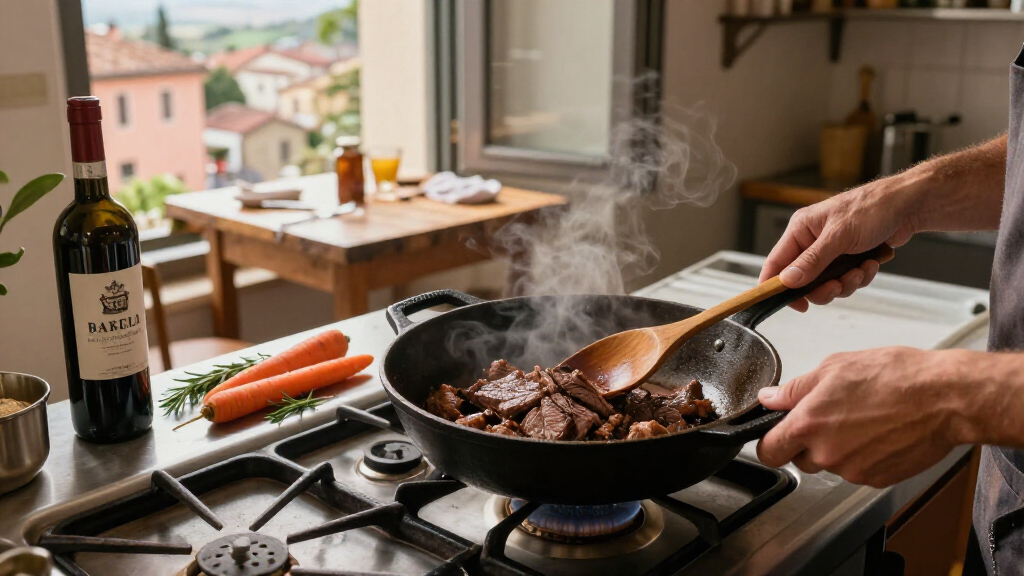
Brasato al Barolo is Piedmontese beef slowly braised with Barolo wine, vegetables, and aromatics until fork-tender. Use a collagen-rich cut, brown it thoroughly, keep the pot at a gentle simmer, and judge doneness by tenderness rather than the clock. Make it a day ahead if you can; chilled sauce is easier to defat, and the flavors have time to settle.
The first chilly Saturday can make a pot of brasato al Barolo feel like the right kind of weekend plan: beef searing in a heavy pot, red wine darkening around it, and a warm, savory smell settling into the kitchen. This classic braise comes from Piedmont, in northwest Italy, where Barolo is part of the region’s food and wine culture. The name says what you’re making: brasato means “braised,” and al Barolo means “with Barolo wine.”
You don’t need a complicated schedule or a restaurant-sized budget to cook it well. You need a cut that can handle long cooking, a dry red wine you’d be happy to drink, and enough time for the meat to soften at a quiet simmer. The oven does much of the work while you set the table or take a walk through the cold air.
This guide walks you through the choices that matter, from whether to marinate the beef to what “done” looks like in the pot. You’ll also get a practical make-ahead plan, serving ideas, and safe storage advice, so Sunday dinner feels generous without keeping you at the stove all day.
Choose chuck, shoulder, brisket, or beef cheek for a tender braise; lean cuts can dry out during long cooking.
Use Barolo for the classic flavor, or choose another dry, full-bodied red you enjoy drinking.
Brown the beef well and keep the braise at a gentle simmer; test with a fork instead of relying on a fixed cooking time.
Marinating is optional, and you can strain, blend, or leave the sauce rustic depending on the texture you prefer.
Cook a day ahead, refrigerate the beef with its sauce, remove chilled fat, and reheat gently for an easier Sunday meal.
Piedmont · First Cold Weekend
Sunday Braise:
Brasato al Barolo
A patient, generous beef braise for the first chilly weekend. Brown it well, let the covered pot simmer gently, and give the sauce an overnight rest if Sunday dinner is the plan.
The key to a tender braise
Let the fork decide when the beef is ready.
Time varies with the cut and its size. A firm roast needs more gentle cooking, not a hotter pot.01 / The essentials
A cold-weekend classic, made practical
Brasato means “braised”; al Barolo means “with Barolo wine.” A large, collagen-rich cut slowly cooks with wine and aromatics until tender, then gets sliced and served with its dark, savory sauce.
Choose connective tissue
Chuck, shoulder, brisket, or beef cheek stay forgiving through a long braise. Some marbling and seams of connective tissue help keep the result succulent.
Dry, robust, drinkable
Barolo is traditional. Another dry, full-bodied red works too; choose a bottle you would enjoy at dinner. Sweet or heavily oaked wine can skew the sauce.
Quiet simmer, covered pot
Gentle heat gives connective tissue time to soften and lets the wine mellow. Turn the beef occasionally if it is only partly covered by the liquid.
02 / The method
Build flavor, then let time work
Use a heavy pot and a tested recipe for exact amounts. Roast shape and pot size affect liquid needs; the beef can be partly covered if you turn it during cooking.
Brown the beef
Pat dry. Sear patiently on several sides without crowding the pot.
Soften aromatics
Cook the vegetables and herbs; scrape up the browned bits as they soften.
Return the beef
Add measured wine and recipe liquids, then nestle the roast into the pot.
Braise low and slow
Cover and cook in a low oven or at a quiet stovetop simmer.
Finish the sauce
Lift out tender beef. Reduce, strain, blend, or serve the sauce rustic.
03 / The doneness test
Use the fork, not the clock
Several hours is a useful expectation, not a promise. A large shoulder roast can still feel firm at an early check; cover it again and continue gently until a fork slips in easily.
Find the tender zone
Gentle heat keeps the braise on a steady path. A hard boil can toughen the meat and make the sauce less pleasant. If the center resists, it needs more time at the same calm pace.
Target: quiet bubbles and steady, covered heat.
04 / Personalize the finish
Marinade and sauce: choose your style
Traditional recipes vary. Both choices are flexible, so match the method to the time you have and the texture you like.
Marinating is optional
Some cooks leave the beef overnight in wine and aromatics; others brown it and begin the braise right away. A marinade adds another layer of wine flavor, while browning and slow cooking already build a deep, rounded taste.
- Have time? Marinate overnight for an extra wine note.
- Short on time? Skip it and brown the beef thoroughly.
Three satisfying sauce textures
Wine contributes acidity, tannin, and flavor. It should mellow as the braise cooks, not taste harsh or strongly alcoholic.
- Strained: smooth and refined.
- Blended: fuller, with the vegetables incorporated.
- Rustic: leave the vegetables and aromatics visible.
05 / The Sunday advantage
Cook Saturday. Finish with ease.
A day ahead gives the flavors time to settle. Chilling also firms the fat, making it easier to remove before you gently reheat the beef in its sauce.
Balance the richness
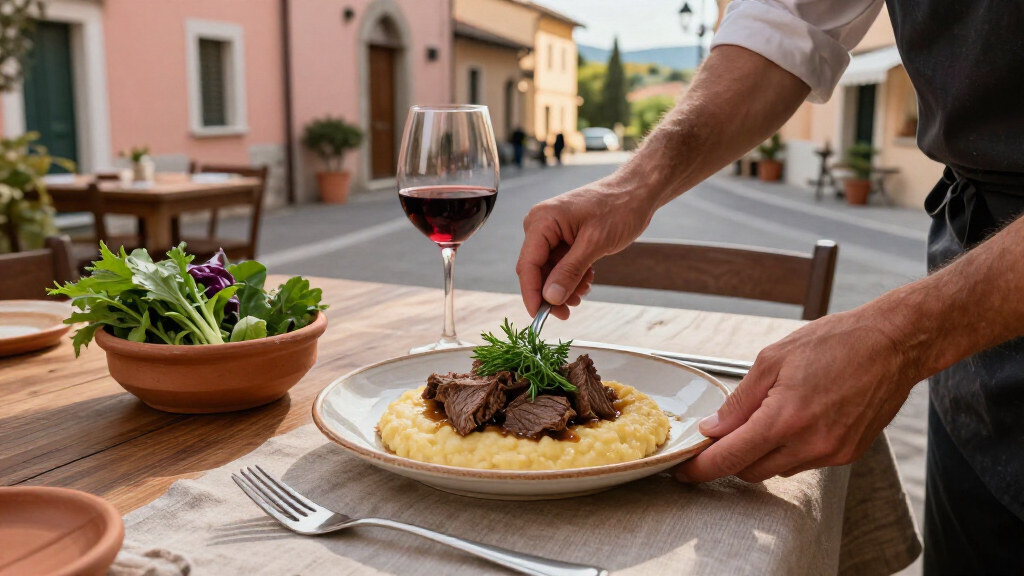
Serve with polenta, mashed potatoes, or soft potato purée. Add a simple green vegetable or bitter salad for a fresh, crisp counterpoint.
Store it safely
Refrigerate promptly with the sauce. The braise also freezes well; thaw in the refrigerator, then reheat gently until hot throughout.
06 / Quick answers
Good to know before the pot goes on
No Barolo?
Use another dry, robust red. It will differ from the classic, but can still make a deeply satisfying braise.
Can I use a lean cut?
You can, though lean beef is more likely to dry out. Collagen-rich cuts are more forgiving over a long cook.
Thin or greasy sauce?
Chill and skim the fat, then simmer the sauce uncovered to reduce. Strain or blend for a smoother finish.
Slow cooker or pressure cooker?
Yes, with adjustments. Brown the beef and vegetables first, then use a tested appliance-specific recipe for timing and liquid.
What Makes Brasato al Barolo So Right for a Cold Weekend?
Brasato al Barolo is a classic braise from Piedmont, in northwest Italy: a substantial piece of beef slowly cooked with Barolo wine, vegetables, and aromatics until tender. The wine becomes part of the cooking liquid and later the sauce, while the covered pot gives the meat time to soften. It suits the first cold weekend because the cooking takes hours, but most of those hours are hands-off.
Think of the pot as a slow winter walk. The beef starts firm, the wine smells sharp and fruity, and the vegetables release their sweetness a little at a time. Heat too fierce turns that walk into a sprint; a gentle simmer gives connective tissue time to yield and lets the wine mellow into the sauce.
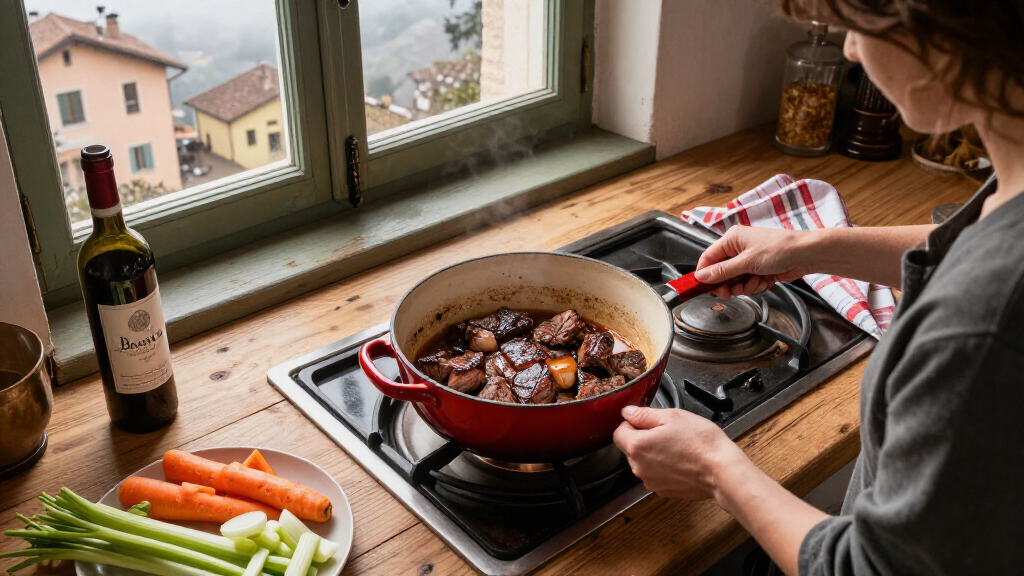
On Saturday afternoon, you can brown the beef, add the wine and aromatics, and let the pot cook in a low oven while you fold laundry or watch the weather change at the window. The next day, slices of beef and dark sauce feel like a meal with a sense of place, even if your table is nowhere near Piedmont.
Recipes vary. Some cooks marinate the beef overnight in wine and aromatics; others put it straight into the pot after browning. Either route can make a good braise. Marinating adds another layer of wine flavor, but it is optional: browning and slow cooking do much of the work that gives this dish its deep, rounded taste.
The result is not quite a stew. You braise a larger piece of beef, then slice it and spoon the sauce over the top. That simple difference changes the feel of the meal: one pot gives you tender slices, a rich sauce, and plenty of room for polenta or potatoes.
As an affiliate, we earn on qualifying purchases.
Choose Beef and Wine That Give You Tender, Balanced Sauce
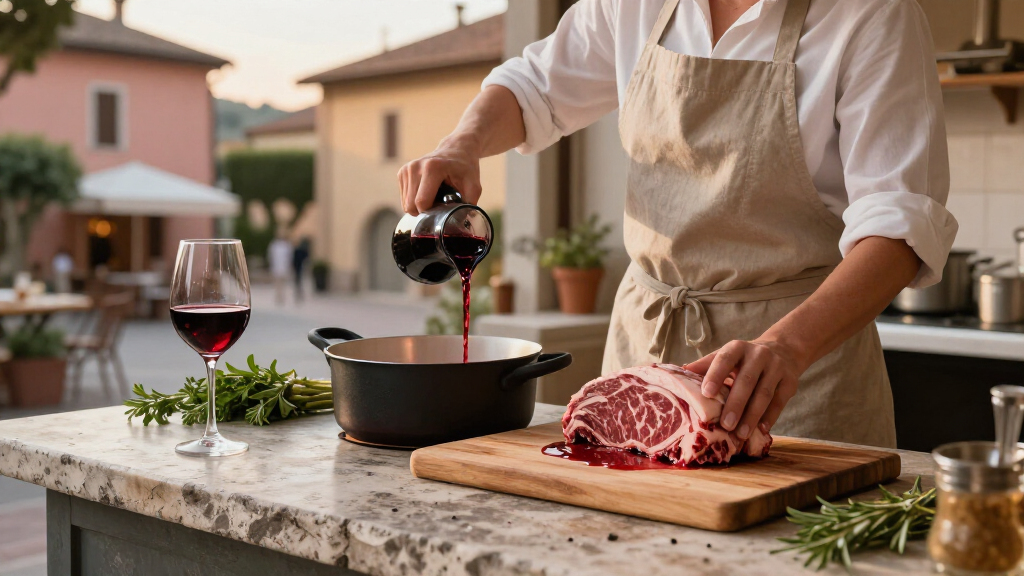
Choose a well-marbled, collagen-rich cut such as chuck, shoulder, brisket, or beef cheek, and use Barolo or another dry, robust red wine. Those cuts stay forgiving through a long cook, while a dry wine adds acidity and flavor without pushing the sauce toward sweetness. Lean beef can work, but it is more likely to dry out before it turns tender.
For a practical grocery-store choice, ask for a single piece of chuck or shoulder suited to braising. A compact roast is easier to brown and slice than a collection of small cubes. If the meat has a few seams of fat and connective tissue, don’t trim them all away; they help the finished braise feel succulent rather than stringy.
Barolo is the traditional choice, but the bottle doesn’t need to be precious. Pick a dry, full-bodied red you’d enjoy drinking with dinner. A sweet wine can make the sauce cloying, while a heavily oaked bottle may leave a strong wood flavor after reduction. If Barolo is outside your budget, another dry red can still make a deeply satisfying brasato, though it won’t taste exactly like the classic.
The wine’s job is to add acidity, tannin, and flavor, not to make the meat taste raw or harsh. A sauce that smells alcoholic early in the cook often needs more time; gentle heat and reduction soften its edges. In a small kitchen, the difference is easy to notice: an early spoonful can taste sharp, while the finished sauce clings to the beef with a darker, rounder flavor.
Avoid pouring in a wine you would reject at the table. The braise concentrates flavor as liquid reduces, so an unpleasantly sweet or bitter wine won’t become a better one in the pot. You can still save a bottle for drinking alongside dinner and use a less expensive, sound dry red for cooking.
Follow These Steps for a Gentle, Flavorful Braise
Brown the beef, soften the aromatics, add the wine, and cook low and slow until a fork slips easily into the meat. This sequence builds flavor in the same heavy pot, and each stage gives you a useful cue before the long oven time begins. Use a tested recipe for exact ingredient quantities and liquid proportions, since pot size and roast shape change how much liquid you need.
- Dry and brown the beef. Pat the meat dry and brown it on several sides in a heavy pot. Work patiently; a well-browned surface builds a savory base, while a crowded or damp pot steams the meat.
- Cook the vegetables and aromatics. Add the recipe’s vegetables and herbs to the same pot and let them soften. Scrape up the browned bits as the vegetables release moisture.
- Add wine and return the beef. Pour in the measured wine and other recipe liquids, then settle the beef back into the pot. It may be partly covered rather than fully submerged.
- Braise gently. Cover and cook in a low oven or on the stovetop at a quiet simmer. Turn the beef occasionally if liquid doesn’t reach all sides.
- Check the meat, then finish the sauce. Test with a fork. When the beef is tender, lift it out and reduce, strain, blend, or leave the sauce rustic to suit your preference.
The clock is a guide, not the final judge. Several hours may be needed, depending on the cut and size, and a roast that still resists the fork needs more time. Keep the liquid at a gentle simmer; a hard boil can toughen the meat and make the sauce less pleasant.
Imagine checking a shoulder roast after three hours. If your fork meets a firm center, return the lid and give it more time rather than cranking up the heat. When the fork slides in easily, the meat is ready to rest briefly before slicing across the grain.

Decide Whether to Marinate and How Smooth to Make the Sauce
Marinating is optional, and sauce texture is a matter of preference. Some Piedmont-style recipes soak the beef overnight with wine and aromatics before braising; others skip that step and rely on browning, vegetables, and a long cook. A strained sauce feels silky, a blended sauce turns lush and thick, and an unstrained sauce keeps a more rustic texture.
If you have space and time, marinate the beef in the refrigerator in a covered, nonreactive container, following your chosen recipe. The next day, take care to dry the meat before browning so it can form a deep crust. Don’t leave raw beef sitting at room temperature to marinate; keep it cold, and handle the raw marinade as uncooked food unless you boil it thoroughly as part of a recipe.
Skipping the marinade makes the schedule simpler. For example, if you shop Saturday morning and want the pot in the oven by noon, pat the beef dry, brown it well, and move on to the braise. You’ll still get layers of flavor from the fond, the browned bits that cling to the pot, and from the wine and aromatics cooking together.
For a smooth, restaurant-style sauce, strain out the vegetables and herbs, then reduce the liquid uncovered until it lightly coats a spoon. Blending the softened vegetables into the liquid makes a thicker, fuller sauce. Leave everything as it is if you like visible bits of vegetable and a more homey finish.
There’s no need to settle the choice before you taste the sauce. If it feels too thin, reduce it; if it feels too intense, loosen it with a little braising liquid or water. A good finishing choice is the one that helps the sauce sit comfortably over a slice of beef instead of running off into the plate.

Make It Saturday and Serve It Sunday with Less Fuss
Making brasato al Barolo a day ahead can make Sunday dinner calmer and help you remove excess fat from the sauce. Refrigerate the cooked beef with its sauce, then lift off the firm fat after chilling and reheat the dish gently. The rest also gives the flavors time to meld, though the braise tastes good on the day you cook it, too.
After cooking, transfer the beef and sauce to shallow containers so they cool more quickly, and refrigerate them promptly. Keep the food cold rather than leaving the pot out overnight. For reheating, bring the beef and sauce back up gently on the stove, covered, until hot throughout; stir the sauce and turn the meat so the slices warm evenly.
That overnight chill is especially useful if the sauce looks greasy on Saturday. Cold fat firms into a pale layer on top, making it easy to lift away before reheating. You can then simmer the sauce uncovered to reduce it if it still seems thin. Skim first, reduce second gives you more control than trying to boil fat away in a hot pot.
If you want to freeze leftovers, store the beef with enough sauce to keep it moist, cool it promptly, and freeze in portions. Thaw in the refrigerator and reheat gently. For a Sunday meal with guests, portioning the beef after it chills can make serving easier: slice it cold, arrange the slices in the sauce, and warm the whole dish slowly.
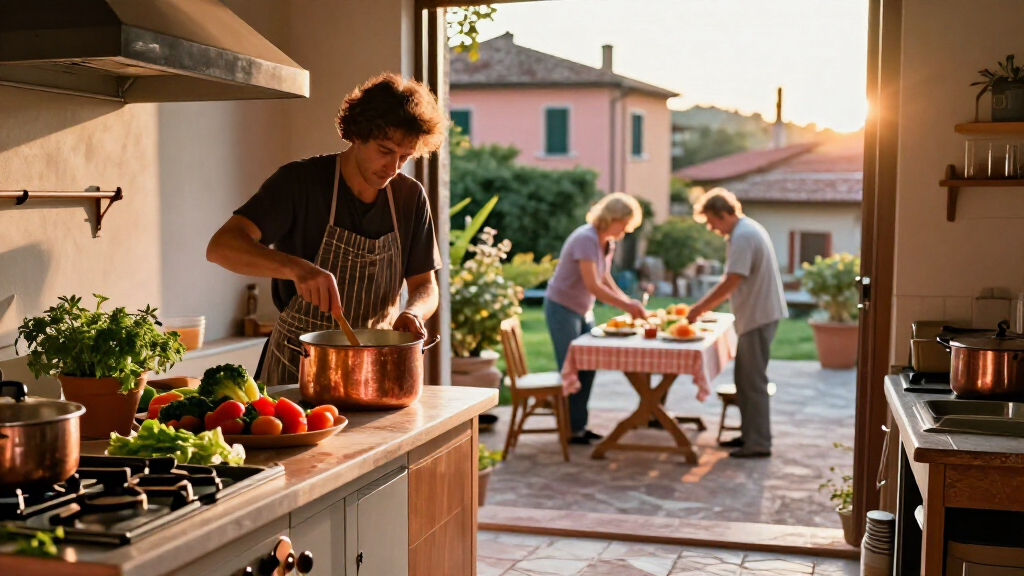
Picture setting the table while the pot warms over low heat and the kitchen smells of wine and herbs. You’ve already done the long cooking; now all that remains is a simple side, a green vegetable, and enough time to sit down with everyone while the sauce is still glossy.
Serve the Beef with Polenta and Something Fresh
Serve brasato al Barolo with polenta, mashed potatoes, or soft potato purée, then add a simple green vegetable or bitter salad to balance the richness. Polenta is a natural match for a spoonful of deep red sauce; its soft, warm texture catches every drop. Potatoes offer a similarly comforting base if that’s what you already have in the pantry.
For a Piedmont-inspired Sunday table, start the polenta while you warm the braise. Keep stirring as it thickens so the grains cook evenly, then spoon it into shallow bowls and set a slice of beef over each portion. A little sauce across the top is enough; serve extra at the table for anyone who wants another spoonful.
A crisp green vegetable makes the plate feel less heavy. Try simply cooked greens, or a bitter salad with a sharp dressing. The fresh, slightly bitter edge works like a clean note after the wine-rich sauce. If you’re serving a crowd, put the salad in a wide bowl and the polenta in a warm serving dish so guests can help themselves.
Keep the portions in proportion: a substantial slice of beef, a generous scoop of polenta, and a smaller serving of greens makes a satisfying plate. The dish is rich by design, so you don’t need a parade of elaborate sides. A loaf of bread can help catch the sauce, but a crisp salad may be all you need to finish the meal.
If you serve Barolo or another wine with dinner, treat it as an adult beverage and enjoy it responsibly. You can also serve the braise with water or a nonalcoholic drink; the meal’s warmth comes from the food, not from the glass.
Use These Fixes if the Meat or Sauce Isn’t Quite Right
If the beef is firm, keep braising it gently; if the sauce is thin or greasy, adjust it after the meat is tender. Brasato asks for patience, and the easiest mistake is to treat the cooking time as a deadline. A fork that slides into the center tells you more than a timer does, especially when roast size and cut vary.
When the meat stays tough, put the lid back on and check again after more gentle cooking. Turning up the heat can make the outside seem ready while the connective tissue inside still needs time. If the liquid is boiling hard, lower the oven or burner until it settles into a quiet simmer.
For thin sauce, remove the beef and simmer the liquid uncovered until it thickens to your liking. For a greasy sauce, chill the braise and lift off the solid fat. If you’re cooking and serving the same day, skim the surface with a spoon as carefully as you can, then taste before reducing so you don’t concentrate the fat’s heaviness along with the flavor.
A lean cut is the harder problem to solve because it has less fat and connective tissue to protect it through a long cook. If you’ve already bought one, keep it covered, watch tenderness closely, and serve it with plenty of sauce. Next time, ask the butcher for chuck, shoulder, brisket, or cheek and explain that you plan to braise it for several hours.
The same practical logic applies to wine. If the sauce tastes too sharp early in the cooking, give it more time before changing the seasoning. A spoonful at the end tells you whether the balance is right far better than a taste from the first hour.
Frequently Asked Questions
Can I make brasato al Barolo without Barolo?
Yes. Use another dry, robust red wine that you would enjoy drinking. The flavor will differ from the Piedmont classic, but a sound dry wine still makes a rich braising sauce.
Do I have to marinate the beef overnight?
No. Some recipes marinate beef in wine and aromatics, while others go straight from browning to braising. If you skip the marinade, brown the meat thoroughly and give it time to cook gently in the wine and vegetables.
How can I tell when the beef is done?
The beef should be fork-tender, with a fork sliding into the center easily. If it still feels firm, keep cooking it gently and check again; the time varies with the cut and size.
Can I make brasato ahead or freeze the leftovers?
Yes. Cool it promptly, refrigerate the beef with its sauce, and reheat it gently. You can freeze portions with enough sauce to keep the meat moist, then thaw them in the refrigerator before reheating.
Why is my brasato sauce thin or greasy?
Chill the braise so excess fat firms on top, then lift it away. If the sauce is still thin, simmer it uncovered after removing the beef until it reaches the texture you like.
Conclusion
For your first cold weekend, choose a forgiving cut, brown it patiently, and let the oven do its slow work. If you can, cook the brasato on Saturday, chill it with its sauce, and lift away the firm fat before Sunday’s gentle reheat.
Then spoon that dark, wine-rich sauce over soft polenta and sit down while the windows turn cold. The best part of a long braise is how little it asks of you at the table: just a warm plate and time to eat.
Fall Picks
fall essentials
As an affiliate, we earn on qualifying purchases.