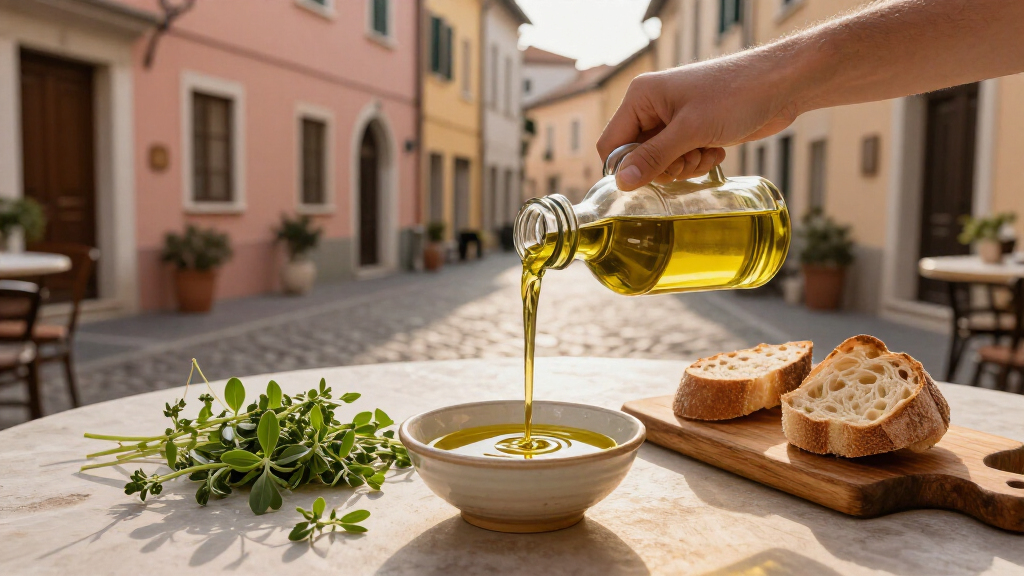

TL;DR

Get kitchen staples and gadgets delivered free with Prime
- Fast, free delivery on millions of items
- Prime Video, Amazon Music and more included
- Member-only deals all year
Real Italian extra virgin olive oil is verifiable: look for a DOP or IGP seal, a harvest date within the last 12–18 months, a named region and mill, and dark glass or tin packaging. A peppery, bitter bite in your throat is the signature of fresh, high-polyphenol oil — its absence is a warning sign, not a flaw.
The bottle says extra virgin. The label shows a Tuscan hillside, a jaunty olive branch, maybe a grandmothers surname in cursive. And there is a decent chance the oil inside is neither extra virgin nor entirely Italian.
Its not paranoia — its math. Italy consumes far more olive oil than it produces, so the country imports millions of liters of oil from Spain, Greece, Tunisia, and beyond, some of which gets bottled and shipped out under vaguely Italian-looking labels. Investigators in Italy have cracked several large adulteration rings in recent years, and testing consistently finds that a meaningful share of bottles sold as extra virgin fail sensory standards by the time they reach store shelves.
The good news: you can beat the system with label literacy. This guide walks you through the five things that separate real Italian extra virgin olive oil from the impostors — certifications, harvest dates, origin language, packaging, and taste — plus how to store it once you get it home.
Choose bottles with a DOP or IGP seal (like Chianti Classico DOP or Toscano IGP) — they legally guarantee origin and enforceable production standards.
Buy only oils with a visible harvest date and use them within 12–18 months of that date; a bottling date alone can hide months of warehouse time.
"Bottled in Italy" means only the packaging is Italian; "Product of Italy" or a named single estate means the olives are too.
Expect bitterness and a peppery throat sting — that’s oleocanthal and polyphenols, the markers of fresh, genuine extra virgin; flat, buttery oil is the warning…
Store oil in dark glass or a tin, in a cool cupboard away from the stove, and buy sizes you’ll finish within 6–8 weeks of opening.
Extra Virgin, Really: How to Buy Italian Olive Oil You Can Trust
The bottle says extra virgin. The label shows a Tuscan hillside and a grandmother’s surname in cursive. And there is a decent chance the oil inside is neither extra virgin nor entirely Italian. Italy consumes far more olive oil than it produces — so millions of liters are imported from Spain, Greece, and Tunisia, some bottled under vaguely Italian-looking labels. The good news: you can beat the system with label literacy.
That throat-catching, peppery bite is the signature of fresh, high-polyphenol oil — its absence is a warning sign, not a flaw.
Italy imports millions of liters of oil annually — much of it re-bottled as “Italian.” It’s not paranoia. It’s arithmetic.
Your Five-Step Test Before Checkout
Five quick checks — certifications, harvest dates, origin language, packaging, and taste — separate real Italian extra virgin from the impostors.
Find the Seal
Look for DOP or IGP certification — legally guaranteed origin and enforceable standards.
Check the Date
A harvest date (raccolta) within the last 12–18 months — not just a bottling date.
Read Origin
“Product of Italy” means the olives are Italian. “Bottled in Italy” means only the glass is.
Check Packaging
Dark glass or tin only. Clear bottles under supermarket lights destroy the oil.
Taste Test
Fruity, bitter, peppery. A cough in the throat means you bought well.
What DOP and IGP Seals Guarantee — and What They Don’t
DOP (Protected Designation of Origin) is the strongest guarantee on the bottle: growing, pressing, and bottling all happened inside a defined zone under EU-enforced rules, with chemical and taste testing before the oil earns the seal. IGP (Protected Geographical Indication) is slightly looser: at least one major production stage took place in the named region. Think of DOP as a locked suitcase — it doesn’t guarantee you packed well, but it guarantees nobody opened it along the way.
Chianti Classico DOP
From frantoio and leccino olives: grassy and fiercely peppery. The locked-suitcase guarantee — every step inside the certified zone.
Toscano IGP & Terra di Bari DOP
Puglian coratina oils are bold and bitter; Tuscan IGP oils deliver that signature throat sting. Each region tastes distinctly different.
Val di Mazara & Riviera Ligure DOP
Ligurian taggiasca oils are delicate, sweet, almost buttery — wonderful on fish, hopeless if you want a punch. Sicilian oils sit boldly between.
If a “DOP” oil costs $6.99, be suspicious. Certification, hand harvesting, and early picking are expensive — and seals can be counterfeited. Honest oil rarely lands at that price.
Decoding the Label: ‘Bottled in Italy’ vs. ‘Product of Italy’
Small print does big work. “Bottled in Italy” or “packed in Italy” means only the bottle is Italian — the oil could be a blend from Spain, Greece, Tunisia, and Turkey, trucked to an Italian facility and put into glass. Both statements are legal. Only one is what you picture when you buy “Italian” oil.
| Label Phrase | What It Legally Means | Trust Level |
|---|---|---|
| Product of Italy + DOP seal | Olives grown, pressed, and bottled in a certified zone | ✓ Highest |
| Product of Italy, single estate named | Italian olives, traceable mill | ✓ High |
| Blend of EU olive oils, bottled in Italy | Multi-country oil, Italian packaging | ~ Moderate |
| “Imported from Italy,” no origin details | Marketing language, minimal guarantee | ✗ Low |
An honest producer names the olives: frantoio, leccino, coratina, nocellara del Belice, taggiasca. If the front of the bottle spends more energy on scenery and calligraphy than on olives, regions, and dates, the marketing department is doing the winemaking.
The Harvest Date Is the Single Most Important Line
Italian olive oil is fruit juice, and fruit juice has a shelf life. Olive oil doesn’t improve with age the way wine does — it’s on a slow slide from the moment the olives leave the tree. Polyphenols, the compounds behind the bitterness and pepper, degrade steadily — and with them goes both flavor and the health benefit everyone quotes at dinner parties.
A bottle with no harvest date at all is telling you something: the producer would rather you not know. Treat that as a disqualifier and move on.
Why the Pepper in Your Throat Means You Bought Well
That cough-inducing, back-of-the-throat burn is the flavor of quality. The technical terms are fruttato, amaro, piccante — fruity, bitter, peppery. The pepper comes from oleocanthal, a polyphenol with anti-inflammatory properties studied for effects similar to ibuprofen. More sting, more polyphenols.
Rancid · Crayons · Wine vinegar — legally disqualified
Flat · Buttery · Waxy — suspicious “extra virgin”
Fruity · Bitter · Peppery cough — the real thing
Color tells you almost nothing — which is why professional tasters use blue glasses to remove the bias. And when studies, including work from the UC Davis Olive Center, tested supermarket extra virgins, a startling share failed sensory standards before reaching the shelf.
At a Glance: Five Rules You Can Trust
Choose DOP or IGP seals
Like Chianti Classico DOP or Toscano IGP — they legally guarantee origin and enforceable production standards.
Buy by harvest date
Use within 12–18 months of harvest; a bottling date alone can hide months of warehouse time.
Decode origin language
“Bottled in Italy” means only the packaging is Italian; “Product of Italy” or a named estate means the olives are too.
Expect the sting
Bitterness and peppery throat sting — oleocanthal and polyphenols — are the markers of fresh, genuine extra virgin.
Store it like it’s alive
Dark glass or tin, cool cupboard away from the stove, and sizes you’ll finish within 6–8 weeks of opening.
Verify with tech
Leading producers now use QR codes and blockchain traceability — scan the bottle to confirm the mill, the harvest, and the chain of custody.
What DOP and IGP Seals Actually Guarantee (and What They Don’t)
DOP (Denominazione di Origine Protetta — Protected Designation of Origin) is the strongest guarantee you can get on an Italian olive oil bottle. It means every step — growing, pressing, bottling — happened inside a defined zone, under rules enforced by the EU, with chemical and taste testing before the oil earns the seal. IGP (Indicazione Geografica Protetta — Protected Geographical Indication) is slightly looser: at least one major production stage took place in the named region.
Think of DOP the way you might think of a locked suitcase. It doesn’t guarantee you packed well, but it guarantees nobody opened it along the way. A non-certified oil can still be excellent — plenty of small mills skip the paperwork — but certification removes most of the guesswork for you, the buyer standing in a foreign supermarket aisle.
Named designations to look for include Toscano IGP, Chianti Classico DOP, Terra di Bari DOP from Puglia, Val di Mazara DOP from Sicily, and Riviera Ligure DOP from Liguria. Each tastes distinctly different: Tuscan oils from frantoio and leccino olives are grassy and fiercely peppery; Puglian coratina oils are bold and bitter; Ligurian taggiasca oils are delicate, sweet, and almost buttery — wonderful on fish, hopeless if you want a punch.
One caution: seals can be counterfeited. If a DOP oil costs $6.99, be suspicious — certification, hand harvesting, and early-picking are expensive, and honest oil rarely lands at that price.

Italian extra virgin olive oil with DOP seal
As an affiliate, we earn on qualifying purchases.
As an affiliate, we earn on qualifying purchases.
The Harvest Date Is the Single Most Important Line on the Bottle
Italian olive oil is fruit juice, and fruit juice has a shelf life. Look for a harvest date (raccolta) — not just a bottling date, which only tells you when the oil went into glass, sometimes many months after pressing. Fresh oil tastes alive; old oil tastes like crayons and stale nuts.
The window that matters: use extra virgin olive oil within 12 to 18 months of harvest. Olive oil doesn’t improve with age the way wine does — it’s on a slow slide from the moment the olives leave the tree. Polyphenols, the compounds behind the bitterness and pepper, degrade steadily, and with them goes both flavor and the health benefit everyone quotes at dinner parties.
Here’s a scenario every oil lover knows: you find a half-liter of Tuscan oil in the back of the cupboard, bought on a trip two Autumns ago. You pour it over white beans, taste it, and get… nothing. No grass, no sting, just faintly sweet fat. That’s oxidation. The oil isn’t dangerous — it’s just dead, culinarily speaking.
Italian harvests happen between October and December, with early-picked oils (October) sharper and greener, and later picks (December) mellower and more golden. A bottle with no harvest date at all is telling you something: the producer would rather you not know. Treat that as a red flag and move on.
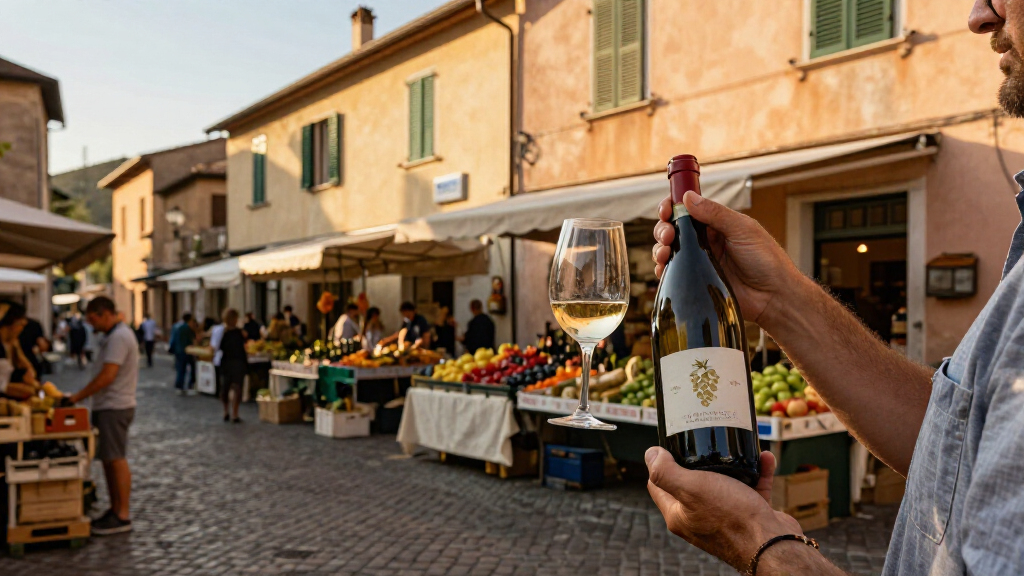
How to Decode Origin Language: ‘Bottled in Italy’ vs. ‘Product of Italy’
Small print does big work on olive oil labels. “Product of Italy” means the olives were grown and pressed in Italy. “Bottled in Italy” or “packed in Italy” means only the bottle is Italian — the oil could be a blend from Spain, Greece, Tunisia, and Turkey, trucked to an Italian facility and put into glass. Both are legal. Only one is what you probably picture when you buy “Italian” oil.
Then there’s the word blend itself. EU law allows oils labeled simply “extra virgin olive oil” to mix oils from multiple countries. Again legal, sometimes even decent — but you’re buying anonymity, not character. A single-estate oil, or one naming a specific mill (frantoio) and olive varieties, is making a promise it can be held to.
Comparison of what label language really tells you:
| Label phrase | What it legally means | Trust level |
|---|---|---|
| Product of Italy + DOP seal | Olives grown, pressed, bottled in a certified zone | Highest |
| Product of Italy, single estate named | Italian olives, traceable mill | High |
| Blend of EU olive oils, bottled in Italy | Multi-country oil, Italian packaging | Moderate |
| “Imported from Italy,” no origin details | Marketing language, minimal guarantee | Low |
The olive varieties are another tell. An honest producer names them: frantoio, leccino, coratina, nocellara del Belice, taggiasca. If the front of the bottle spends more energy on scenery and calligraphy than on olives, regions, and dates, the marketing department is doing the winemaking.
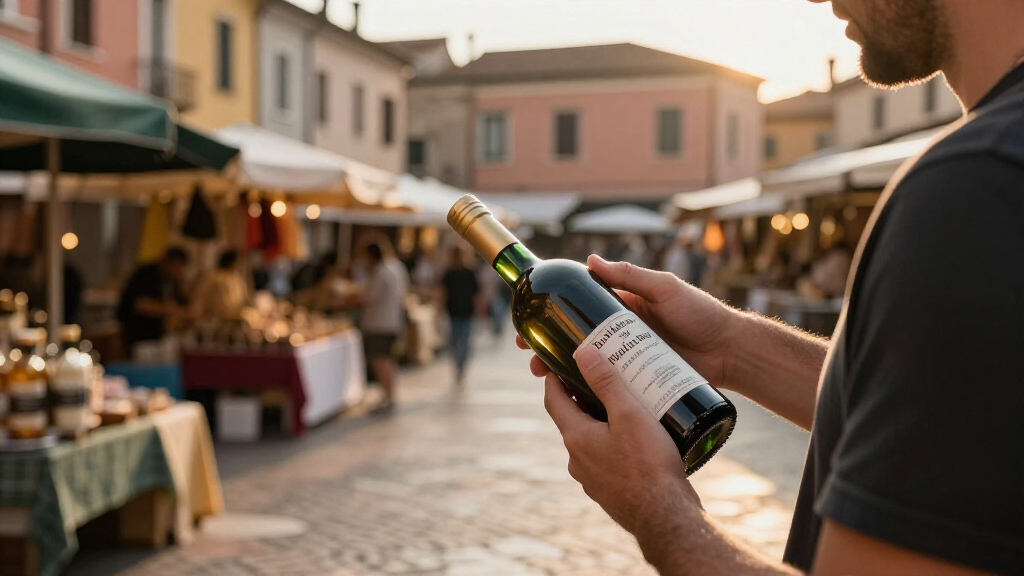
Why the Pepper in Your Throat Means You Bought Well
That cough-inducing, back-of-the-throat burn is the flavor of quality. Authentic extra virgin olive oil should taste fruity, bitter, and peppery — the technical terms are fruttato, amaro, and piccante. The pepper comes from oleocanthal, a polyphenol with anti-inflammatory properties studied for its effects similar to ibuprofen. More sting, more polyphenols. A fresh oil that makes you cough a little in the throat is doing exactly what it should.
So flip the logic: flat, buttery, waxy oil labeled extra virgin is the suspicious one. Extra virgin means acidity under 0.8 percent, no refined oil, no defects detectable by trained tasters. Oil that smells like crayons, old peanuts, damp cardboard, or wine vinegar has defects — rancidity or fermentation — that legally disqualify it from the grade. When studies (including work from the UC Davis Olive Center) have tested supermarket extra virgins, a startling share failed sensory standards.
Color tells you almost nothing, which is why professional tasters use blue glasses — to remove the bias. Green oil isn’t automatically better than golden; the shade depends on olive variety and ripeness. Ignore the color, trust your nose and throat.
If you can, taste before buying. Many specialty shops pour samples, and in Italy, frantoi (mills) offer tastings during the November–December pressing season — bread, a small warm glass of nuovo, the mill humming behind you. That’s also the moment to buy a year’s supply straight from the source.
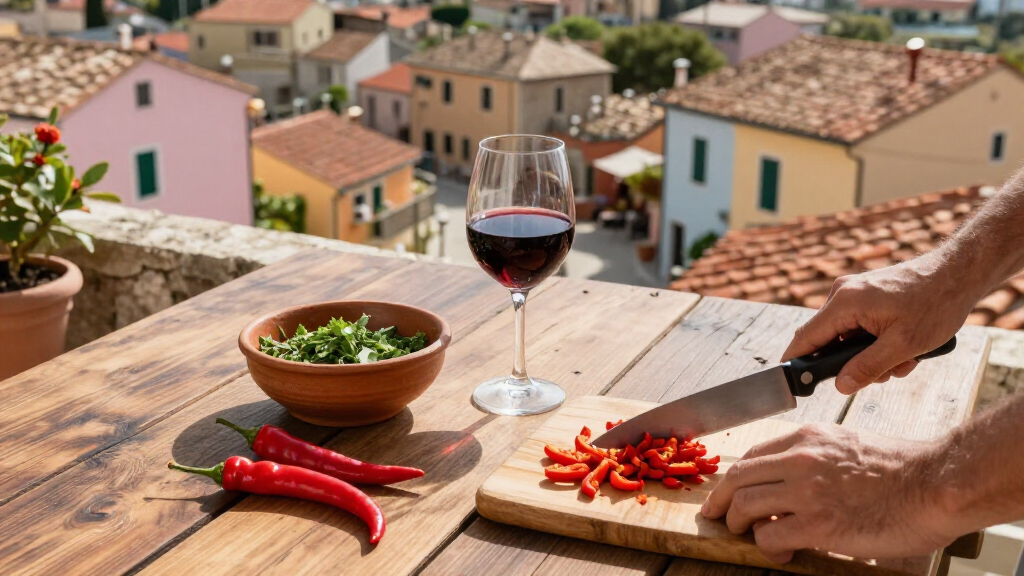
Packaging, Price, and Storage: The Details That Keep Good Oil Good
Light is olive oil’s quiet enemy, and understanding why changes how you shop. The same chlorophyll that gives fresh oil its green tint also makes it photo-sensitive: when light hits the oil, chlorophyll catalyzes oxidation, breaking down the very polyphenols you paid for. Oil sitting in a clear glass bottle on a bright supermarket shelf can degrade within weeks — studies show measurable quality loss after even a few days of intense light exposure, and the damage is cumulative and irreversible. That’s why serious producers use dark green or amber glass, or tins. A beautiful clear bottle full of golden oil under shop lights is essentially a display of slow spoilage, and the implication is simple: you’re paying extra virgin prices for oil that may already have lost its edge before checkout.
Price works as a rough filter, not because expensive equals good, but because there’s a floor below which honest production is mathematically impossible. Producing genuine Italian extra virgin costs real money: hand or aided harvesting, pressing within hours of picking, low yields from early-harvested olives. A liter often costs the producer $8–15 before it ever ships. A $6.99 liter labeled extra virgin isn’t a bargain — it’s an arithmetic problem with no honest solution. Somewhere in that bottle, a corner was cut: older oil, a multi-country blend, refined oil cut in, or olives harvested late and industrially. The tradeoff is yours to accept — cheap oil is fine for a medium-heat sauté where nuance dies anyway, but drizzling it raw means paying for flavor that isn’t there.
Once home, storage is less about rules and more about slowing a clock that can’t be stopped:
- Keep the bottle in a cool, dark cupboard, away from the stove — heat accelerates oxidation the same way light does, just via a different pathway. Ideal temperature is around 57–70°F (14–21°C).
- Never store it near the oven or on a windowsill, even if the bottle looks pretty there — you’d be combining the two fastest degradation routes in one spot.
- Close the cap tightly; every pour introduces fresh oxygen, and oxidation continues quietly in the headspace afterward.
- Buy sizes you’ll finish in 6 to 8 weeks once opened. This is the key tradeoff: a large tin costs less per liter, but half of it going stale is the most expensive oil you’ll ever buy. A 500 ml bottle for everyday use usually wins on cost-per-enjoyed-liter.
- Don’t refrigerate oil you use daily; condensation and repeated chilling can cloud it, though a brief chill won’t harm the quality. Refrigeration only makes sense for long-term storage of oil you won’t open for months.
And one safety-adjacent note: olive oil has a lower smoke point than refined oils (around 375–405°F for extra virgin) because its unrefined particulates and free fatty acids burn earlier. The practical implication: it’s superb for sautéing, finishing, and moderate roasting; save the deep-fryer for other fats — not because the oil becomes dangerous, but because high heat destroys the polyphenols that justified the price in the first place.
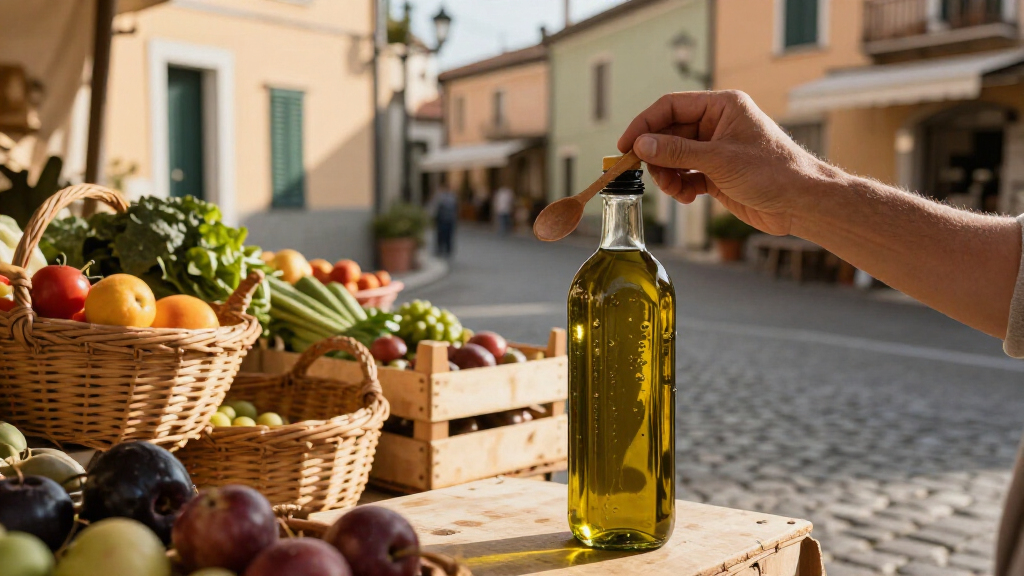
Your Five-Step Test Before Any Bottle Reaches the Checkout
You now have every tool you need. Here’s the whole method compressed into a routine that takes about twenty seconds per bottle — a quick mental checklist you can run anywhere, from an enoteca in Florence to a warehouse store at home. The reason it works as a sequence is that each step filters out a different failure mode: fakes, stale oil, anonymous blends, spoiled oil, and dishonest pricing. You rarely need all five to reject a bad bottle — one step usually breaks the story on its own.
- Find the seal. DOP or IGP designation, or at minimum a named region and named olive varieties. This step exists because provenance is the hardest thing to fake cheaply — counterfeiters invest in scenery, not verification. The tradeoff: you may skip some excellent uncertified small mills, but at the shelf, certification is the best proxy you have.
- Find the harvest date. Within the last 12–18 months, ideally from the most recent October–December harvest. This matters more than any other line because freshness can’t be marketed around — a producer either discloses the date or benefits from your not knowing. No date, walk away.
- Check the packaging. Dark glass or tin. Skip anything sunbathing in clear glass, and skip plastic for long-term storage — oxygen slowly permeates plastic, so even good oil fades faster inside it. This is the one flaw you can spot from across the aisle.
- Sanity-check the price. Under about $8–10 per liter for claimed Italian extra virgin means someone cut a corner somewhere. Price isn’t proof of quality — expensive oil can still be stale — but it’s a reliable floor test for authenticity.
- Taste it at home. Pour a spoonful, warm it in your hands, slurp. Look for fruit, bitterness, and that peppery finish. If it’s flat or crayon-like, return it — good retailers will refund, and you’ll have learned something about that brand. This step closes the loop: it’s how the checklist moves from theory to trained instinct.
Run this checklist on three bottles in your pantry right now. Most people discover at least one that fails — and that discovery is exactly how your buying improves permanently, because each failed bottle teaches you which corner of the label you personally tend to skip.
Trust in olive oil isn’t built by brands. It’s built by details: a region, a date, a mill, a peppery finish that catches your throat.
Frequently Asked Questions
How can I tell if an olive oil is really from Italy?
Look for a DOP or IGP seal, the phrase “Product of Italy” (not just “bottled in Italy”), and a named region such as Toscana, Puglia, or Sicily with named olive varieties. Producers with nothing to hide print the mill name and harvest date. You can also scan QR codes now appearing on many bottles, which trace the oil back to its grove.
Is extra virgin olive oil always better than regular olive oil?
Extra virgin is the highest grade: acidity under 0.8 percent, no refined oil, no sensory defects, and the fullest complement of polyphenols. “Pure” or “light” olive oils are refined, with neutral flavor and fewer beneficial compounds. For raw use — finishing, salads, bread — extra virgin wins outright; refined oils only make sense for very high-heat cooking where their higher smoke point helps.
Why does good olive oil burn my throat?
That peppery bite comes from oleocanthal, a natural anti-inflammatory polyphenol found in fresh, early-harvested oil. Its effect on the throat has been compared to ibuprofen in research. Intensity varies by variety — Puglian coratina hits hard, Ligurian taggiasca barely stings — but a complete absence of bitterness or pepper in an oil labeled extra virgin suggests age, oxidation, or dilution.
What’s a fair price for real Italian extra virgin olive oil?
Genuine Italian extra virgin typically costs $12–25 per liter at retail, because harvesting and pressing within hours is labor-intensive. A liter under about $8–10 labeled Italian extra virgin should raise suspicion — producers can’t cover real costs at that price, so the oil is likely a multi-country blend, older stock, or a lower grade wearing a better label.
Should I refrigerate my olive oil?
No, not for everyday use. Keep it in a cool, dark cupboard (57–70°F / 14–21°C), away from the stove and sunlight, with the cap tightly closed. Refrigeration clouds the oil and causes condensation with repeated opening. Buy sizes you’ll finish within 6–8 weeks of opening, and use the oil within 12–18 months of the harvest date on the bottle.
Conclusion
Real Italian extra virgin olive oil isn’t a luxury or a mystery — it’s a readable object. The region, the harvest date, the seal, the dark glass, the sting in your throat: five details that together give you Italian olive oil you can trust, whether it’s a $25 single-estate Tuscan or a modest tin of Puglian coratina. The labels that hide these details are hiding them on purpose.
Next time you drizzle oil over ribollita or a plate of cannellini beans, make it one that answers your questions before you ask them. Good oil introduces itself — by region, by date, by that little cough at the back of your throat.
Halloween Picks
halloween
As an affiliate, we earn on qualifying purchases.