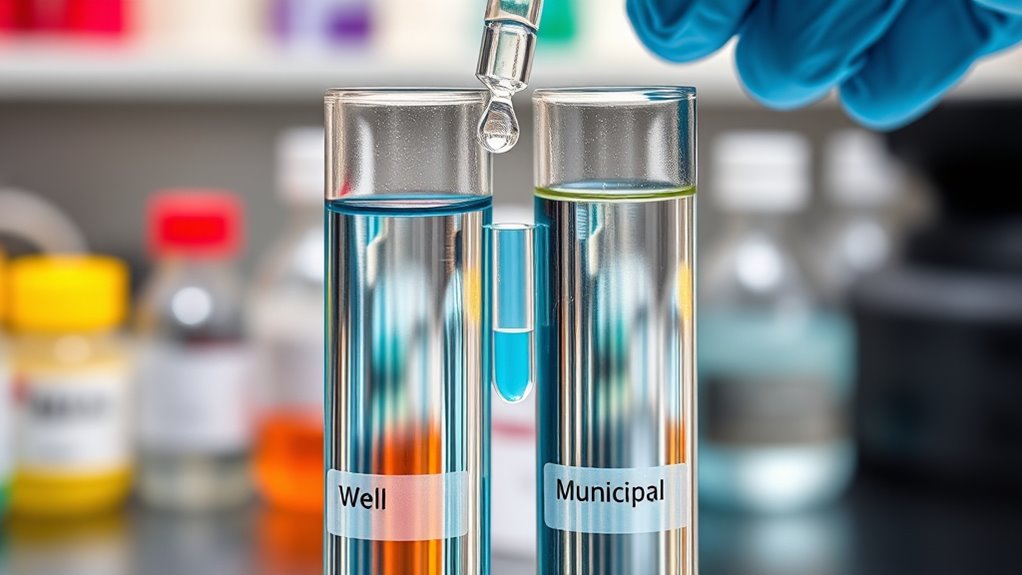

When testing well water versus municipal water, you need to use different approaches. Well water testing involves collecting samples in sterile containers to check for bacteria, nitrates, or heavy metals, often through laboratory analysis or DIY kits. Municipal water, after treatment, usually requires less frequent testing but still benefits from periodic checks for residual chemicals or contaminants. Understanding these differences can help you keep your water safe; explore further to learn more about choosing the right testing methods for each source.
Key Takeaways
- Well water requires regular testing for bacteria, nitrates, and heavy metals due to potential natural and human contamination.
- Municipal water is treated and tested by providers, but occasional testing at home ensures ongoing safety.
- Testing methods include certified lab analysis for detailed results and DIY kits for quick initial assessments.
- Proper sampling procedures, such as sterile containers and correct storage, are essential for accurate testing results.
- Based on test results, consider filtration or treatment systems to address specific contaminants in well or municipal water.

Are you trying to decide between well water and municipal water for your home? One of the most important steps in making that choice is understanding water quality and how to test it properly. Knowing what’s in your water can help you determine if it’s safe and whether any treatment is necessary. Testing procedures are straightforward but essential, and they give you a clear picture of your water’s health and safety.
Understanding water quality is key to ensuring safe drinking water at home.
First, it’s vital to know that water quality can vary considerably between well water and municipal water sources. Well water is drawn directly from underground aquifers, which makes it more susceptible to contamination from natural and human-made sources. Municipal water, on the other hand, is treated at a water treatment plant before reaching your tap. Still, both types of water can contain impurities, and testing is the only way to confirm their safety.
When you’re testing your water, it’s best to start with a detailed water analysis. You can do this through a certified laboratory or a reliable DIY test kit. Laboratory testing provides more detailed results, covering a wide range of contaminants such as bacteria, nitrates, heavy metals, pH levels, and chemical pollutants. DIY kits are more convenient and can give you quick insights into basic parameters, but they might not be as thorough. Regardless of the method, following proper testing procedures is vital to ensure accuracy.
The testing procedures typically involve collecting a water sample in a clean container, which you then send to a lab or analyze on-site with a test kit. For lab tests, you’ll usually fill a sterile bottle and follow specific instructions to avoid contamination. Many labs offer sampling instructions, including how to store and ship your sample to maintain integrity. For quick DIY tests, you’ll dip test strips into the water or add reagents, then compare the color change to a reference chart. Be sure to follow instructions carefully to avoid false readings.
Once you have your results, you can interpret them to assess your water’s quality. Look for indicators of contamination, such as bacteria, high nitrate levels, or heavy metals. If your tests reveal issues, consider installing appropriate filters or treatment systems. Regular testing is advisable, especially for well water, which can change over time due to environmental factors or nearby land use.
Frequently Asked Questions
How Often Should I Test My Well Water for Contaminants?
You should test your well water at least once a year to check for contamination risks. Additionally, test immediately after any significant changes, such as storms, repairs, or if you notice a change in water quality or taste. Regular well water testing helps you catch potential contaminants early, ensuring safe drinking water and protecting your health. Don’t forget to follow local guidelines for specific testing recommendations based on your area.
What Are the Common Health Risks of Contaminated Well Water?
Contaminated well water can pose serious health hazards like gastrointestinal illnesses, infections, and long-term issues such as heavy metal poisoning. Common contamination sources include bacteria from sewage, nitrates from fertilizers, and chemicals from nearby industrial sites. If you don’t test regularly, you risk exposure to these dangers, which can lead to serious health problems. Regular testing helps identify contamination sources early, ensuring safe, clean water for you and your family.
Can Municipal Water Be Contaminated, and How Is It Tested?
Municipal water can definitely be contaminated, causing concerns and complications. You should stay vigilant by understanding water testing protocols, which regularly scrutinize for harmful chemicals and contaminants. These protocols include routine sampling and analysis, ensuring safety standards are met. By staying informed, you can detect dangers early, defend your health, and demand diligent testing, all while trusting that your municipal water system stays safe through strict scrutiny and systematic surveillance.
How Do Seasonal Changes Affect Water Quality in Wells?
Seasonal changes can impact your well water quality due to groundwater fluctuations and seasonal infiltration. During heavy rainfall or snowmelt, surface contaminants can seep into the ground, increasing bacteria or pollutant levels. Conversely, dry seasons may concentrate minerals. Regular testing during different seasons helps you catch these variations early, ensuring your water remains safe to drink. Stay vigilant and schedule tests accordingly to protect your health year-round.
What Are the Costs Associated With Regular Water Testing?
Did you know that homeowners typically spend around $100 to $300 annually on water testing? Your testing frequency and expenses vary based on your water source and local regulations. Regular testing helps catch contaminants early, preventing health issues. Expect to pay for lab analysis, which may include testing for bacteria, nitrates, and heavy metals. While costs differ, investing in routine testing safeguards your health and ensures water safety.
Conclusion
Whether you’re sipping from a well or drawing from the municipal tap, remember that water is the lifeblood of your home. Testing is your shield, like a trusty lighthouse guiding you through the fog of uncertainty. Keep your water’s story clear and true, so you can enjoy each drop as a invigorating gift from nature or city. Trust in the process, and let your water’s purity be the gentle song that keeps your home safe and happy.