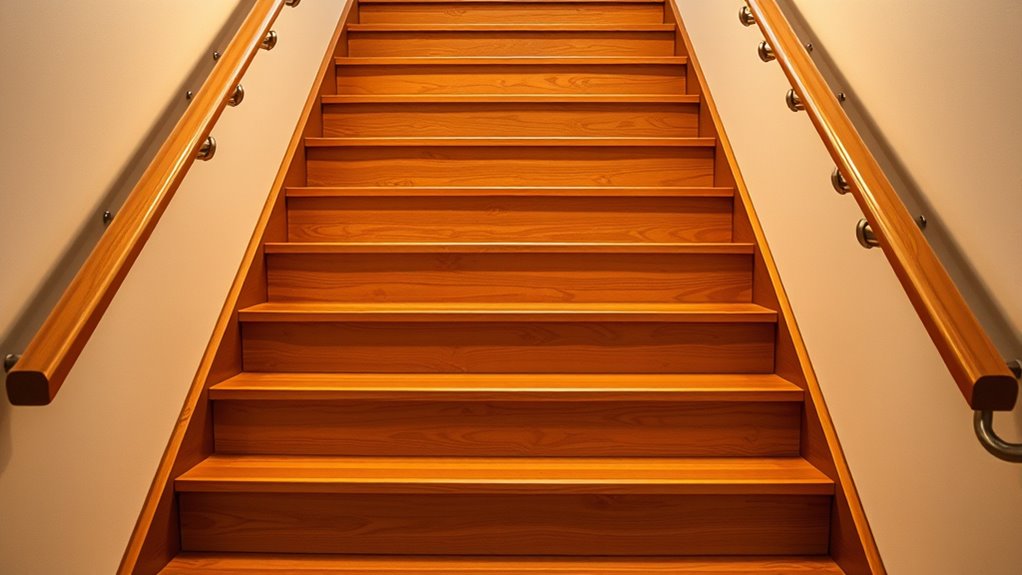

To guarantee stair safety, follow building codes that specify proper handrail placement, height between 34-38 inches, and continuous support along the stairs. Make sure risers are uniformly between 4-7.75 inches high to prevent trips. Regular inspections and maintenance help catch loose handrails or uneven steps early. Staying compliant with these standards creates a safer environment for everyone. Keep looking to discover more essential tips for safer stairs.
Key Takeaways
- Handrails should be continuous, mounted 34–38 inches above stair nosing, and extend beyond top and bottom transitions.
- Riser heights must typically range from 4 to 7.75 inches, with consistent measurements to prevent tripping.
- Proper stair design and maintenance reduce risks of slips, trips, and falls, especially for vulnerable users.
- Adhering to local building codes ensures safety features are correctly implemented and accessible.
- Regular inspections of stairs and handrails help identify and fix hazards before accidents occur.
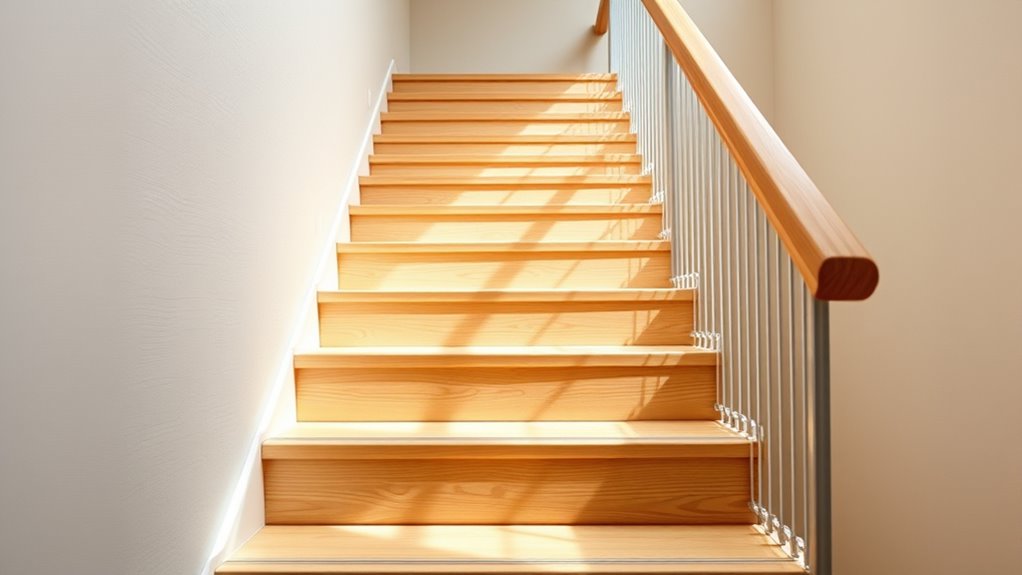
Stairs are a crucial part of any building, but they can pose serious safety risks if not designed and maintained properly. One of the most important aspects of stair safety is ensuring that features like handrail placement follow established guidelines. Properly positioned handrails provide essential support, especially for children, the elderly, or anyone with mobility challenges. Typically, handrails should run continuously along the entire length of the staircase and be mounted at a height that allows a comfortable grip—usually between 34 and 38 inches above the stair nosing. This height range ensures that users can hold onto the handrail securely without reaching too high or bending down awkwardly. Additionally, the handrail should extend beyond the top and bottom of the stairs to provide support during transition points, reducing the risk of falls. The placement and height of the handrail must comply with local building codes to guarantee safety and accessibility.
Equally critical is adhering to riser height standards. Riser heights refer to the vertical distance between each step, and inconsistent riser heights can lead to trips and falls. Building codes generally specify a maximum riser height—commonly around 7 to 7.75 inches—and a minimum of about 4 inches. Keeping risers consistent throughout the staircase is essential; even slight variations can cause users to misjudge step depth, leading to accidents. When designing or inspecting stairs, measure each riser carefully to ensure they meet these standards. If risers are too high, users may struggle to ascend comfortably; if too low, the staircase could become awkward and unsafe. Proper riser height not only enhances safety but also contributes to the overall comfort and usability of the staircase.
Both handrail placement and riser height standards are fundamental to creating safe, code-compliant stairs. When you follow these guidelines, you’re substantially reducing the risk of slips, trips, and falls. Regular inspections and maintenance are also essential—over time, parts may loosen or become damaged, compromising safety. If you notice any issues with handrails or uneven risers, address them promptly to maintain a safe environment. Remember, building codes are designed to protect users, so adhering to these standards isn’t just about compliance; it’s about ensuring everyone can navigate stairs confidently and safely. Proper building code compliance and attention to detail can significantly improve stair safety. By paying close attention to details like handrail placement and riser height standards, you help create a safer space for yourself and others, preventing accidents and fostering confidence in your stairway design.

Hand Rails for Outdoor Steps,2 Step Stair Handrail & Indoor Stair Railing Kit,Metty Metal Railings for Outdoor Steps and Hand Rails for Seniors for Porch Railing
【𝐒𝐭𝐮𝐫𝐝𝐲 𝐇𝐚𝐧𝐝 𝐑𝐚𝐢𝐥𝐬 𝐟𝐨𝐫 𝐎𝐮𝐭𝐝𝐨𝐨𝐫 𝐒𝐭𝐞𝐩𝐬】:Metty 2 Step Handrail are meticulously crafted to meet the rigorous building standards,Armrest…
As an affiliate, we earn on qualifying purchases.
As an affiliate, we earn on qualifying purchases.
Frequently Asked Questions
Are There Specific Materials Recommended for Non-Slip Stair Treads?
You should choose stair tread materials that include non-slip surface options like rubber, textured vinyl, or anti-slip treads. These materials provide better traction and reduce slipping hazards. You can also add adhesive non-slip tapes or coatings to wooden or concrete stairs for extra safety. Always guarantee the non-slip surface options you select are durable, weather-resistant if outdoors, and compliant with safety codes to keep everyone safe while using your stairs.
How Often Should Stair Handrails Be Inspected for Safety?
You should inspect your stair handrails at least once every six months to guarantee safety. Regular inspections help you assess handrail durability, checking for looseness, corrosion, or damage. If you notice any issues, tighten or replace the handrail promptly. Frequent inspections maintain safety standards and prevent accidents, especially in high-traffic or outdoor areas. Staying proactive with your inspection frequency keeps your stairs safe and compliant with safety guidelines.
Do Building Codes Vary for Residential Versus Commercial Stairs?
You notice the difference when you step onto a cozy residential staircase versus a bustling commercial one. Building code differences matter: residential stairs often have simpler requirements, like smaller riser heights, while commercial stairs must meet stricter standards for safety, durability, and accessibility. These variations guarantee each type of staircase supports its specific use, helping you feel secure whether at home or in a busy public space.
What Are the Penalties for Violating Stair Safety Codes?
If you violate stair safety codes, you face penalty fines and legal consequences, which can include hefty monetary penalties and potential lawsuits if accidents occur. Building authorities may also order repairs or halt construction until compliance is guaranteed. Ignoring these regulations puts users at risk and exposes you to liability. Staying compliant helps avoid fines, legal issues, and ensures safe, secure stairs for everyone.
Can DIY Modifications Improve Stair Safety Compliance?
Think of DIY upgrades as adding seasoning to your staircase recipe; they can definitely improve safety compliance if done carefully. You can tighten loose handrails, replace worn treads, or add non-slip strips to make your stairs safer. Just guarantee your modifications follow local building codes, like a well-choreographed dance. Proper DIY efforts can transform your stairs into a safer, more reliable pathway without waiting for a professional.

Stair Tread Gauge and Shelf Layout Tool, Suitable for Stairs, Risers and Partitions
1. Adjustable range: 30 inches -49 inches
As an affiliate, we earn on qualifying purchases.
As an affiliate, we earn on qualifying purchases.
Conclusion
Knowing stair safety and code basics is essential to protect yourself and others. Remember, falls from stairs account for nearly 15% of all accidental injuries at home. By following proper building codes and inspecting your stairs regularly, you reduce this risk markedly. Stay vigilant, maintain good lighting, and make certain your stairs are secure. Prioritizing safety not only keeps everyone safe but also helps avoid costly repairs and legal issues down the line.

BearTOOLS Ladder Inspection Record Kit, Includes Holders and Safety Inspection Tags Inserts, Weatherproof, Clear Visible Tags, For All Step Sizes, Complete With Cable Ties (Holder, 2 Inserts + Marker)
VISIBLE AND CLEAR: bold colours allows the ladder record to be well spotted within the construction site. Ladder…
As an affiliate, we earn on qualifying purchases.
As an affiliate, we earn on qualifying purchases.

Hand Rails for Outdoor Steps,3 Step Stair Handrail & Indoor Stair Railing Kit,Black Railings for Outdoor Steps and Hand Rails for Seniors for Porch (3 Step)
【𝐒𝐭𝐮𝐫𝐝𝐲 𝐇𝐚𝐧𝐝 𝐑𝐚𝐢𝐥𝐬 𝐟𝐨𝐫 𝐎𝐮𝐭𝐝𝐨𝐨𝐫 𝐒𝐭𝐞𝐩𝐬】Metty 3 Step Handrail are meticulously crafted to meet the rigorous building standards,Handrail…
As an affiliate, we earn on qualifying purchases.
As an affiliate, we earn on qualifying purchases.