Automatic pool cleaners typically last between 3 and 8 years, depending on factors like model quality, usage frequency, water conditions, and maintenance routines. Cheaper models usually need replacing sooner, around 3-5 years, while high-quality ones can last up to 8 years with proper care. Regular maintenance, such as cleaning filters and inspecting parts, extends their lifespan. To guarantee your cleaner performs well for years to come, explore the key tips and signs of wear.
Key Takeaways
- Most automatic pool cleaners last between 3 to 8 years depending on quality and usage.
- Regular maintenance and timely replacement of worn parts extend their lifespan.
- Higher-end models with durable build quality typically last longer than cheaper options.
- Harsh water conditions and frequent use can shorten the cleaner’s effective life.
- Signs of declining performance or frequent repairs indicate it may be time to replace the cleaner.
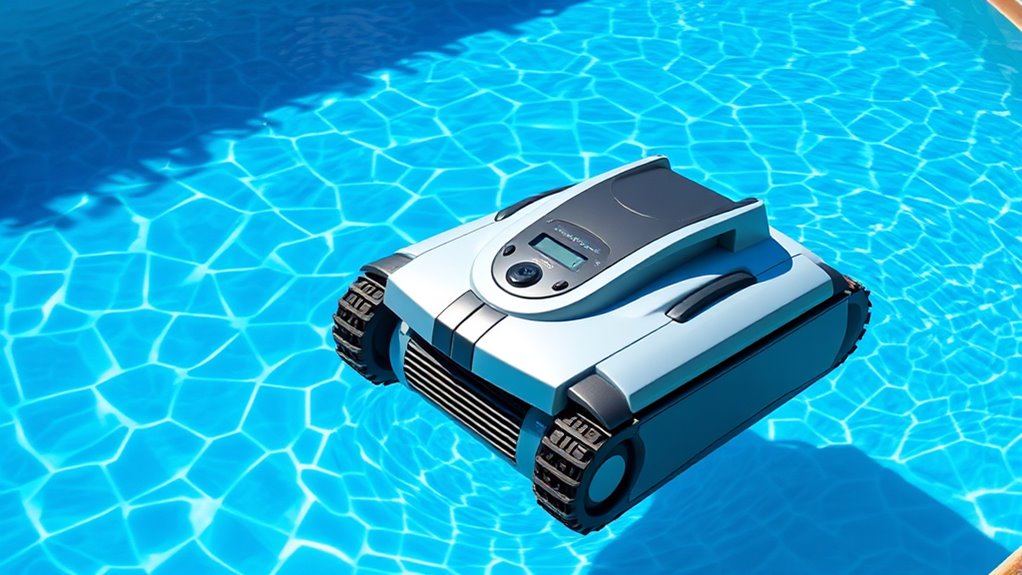
Automatic pool cleaners can be a real time-saver, but understanding how long they last is key to maximizing your investment. The lifespan of your cleaner depends on several factors, including usage frequency, water quality, and how well you maintain it. Regular maintenance tips can extend its life and help you avoid unexpected replacement costs. For instance, cleaning the filters frequently, checking the brushes and hoses for wear, and removing debris that might clog the system are simple steps that keep your cleaner running smoothly. When you stay proactive with these tasks, you reduce strain on mechanical parts and prevent early breakdowns. Additionally, the integration of robotics in pool cleaners is advancing rapidly, which can influence durability and functionality over time. Knowing when to replace parts is vital to prolonging your cleaner’s lifespan. Small components like brushes, gaskets, and o-rings often wear out first, typically after 1 to 2 years with regular use. Replacing these parts as needed can delay the need for a full replacement and save you money. Properly maintaining your pool cleaner can also help mitigate issues caused by harsh water conditions, which can accelerate wear and tear on components. Regularly inspecting and replacing worn parts can help prevent unexpected breakdowns, ensuring consistent performance. Furthermore, selecting a model with robust construction and quality materials can significantly impact its durability and lifespan. Using high-quality components can also reduce the frequency of repairs and replacements. However, if you notice persistent malfunctions despite maintenance, it might be time to consider a replacement. Keep in mind that replacement costs can vary widely depending on the model and brand. Basic models might cost a few hundred dollars, whereas high-end cleaners could reach into the thousands. Investing in quality parts and timely repairs can be more cost-effective in the long run. The durability of your automatic pool cleaner also depends on its design and build quality. Cheaper models may have a shorter lifespan, often around 3 to 5 years, especially if they’re subjected to harsh water conditions or heavy use. On the other hand, premium models with robust construction and advanced features tend to last longer—sometimes up to 7 or 8 years—if properly maintained. The frequency of use also impacts longevity; a cleaner running daily will naturally wear out faster than one used a few times a week. Ultimately, a well-maintained automatic pool cleaner can serve you for several seasons, but it’s important to monitor its performance and address issues promptly. Regular maintenance tips not only help extend its lifespan but also keep your pool cleaner operating efficiently, reducing overall replacement costs. Additionally, choosing models with advanced features can enhance performance and longevity, especially in challenging water conditions. When it’s time for a replacement, weigh the cost against the benefits of upgrading to a newer, more durable model. Staying aware of these factors ensures you get the most value from your investment and enjoy hassle-free pool cleaning for years to come.

Spa Part Nylon Mesh Pool Cleaner All Purpose Bag – Fits Polaris 280, 480 Cleaner – Zippered K13 K16 (2)
- OEM Compatibility: Same size as original parts
- Durable Material: Strong stitching and tight weave
- Easy to Empty: Wide zipper opening for convenience
As an affiliate, we earn on qualifying purchases.
As an affiliate, we earn on qualifying purchases.
Frequently Asked Questions
Can Automatic Pool Cleaners Be Repaired or Do I Need to Replace Them?
You might wonder if you can repair your automatic pool cleaner instead of replacing it. Many models have repair options for common issues like broken brushes or clogged filters, which can save you money. However, if the damage is extensive, replacement costs could be more practical. Before deciding, assess the repair options available and compare them to the cost of a new cleaner to make the best choice.
How Often Should I Perform Maintenance on My Pool Cleaner?
Imagine you notice your pool cleaner isn’t working efficiently. You should perform maintenance weekly, like checking the pool filter to prevent clogs and inspecting the brushes for wear. If it’s battery-powered, consider battery replacement every 1-2 years to keep it running smoothly. Regular maintenance ensures your cleaner lasts longer, saving you money and hassle. Staying proactive helps maintain peak performance and prolongs your pool cleaner’s lifespan.
Are There Differences in Lifespan Between Robotic and Suction-Side Cleaners?
You might notice differences in lifespan between robotic and suction-side cleaners, mainly due to robotic efficiency and suction power. Robotic cleaners tend to last longer because they operate with advanced motors and better components, reducing wear and tear. Suction-side cleaners, relying on your pool’s pump, often experience more strain, which can shorten their lifespan. Regular maintenance helps extend their durability, ensuring you get the most out of your pool cleaning system.
What Are Signs That My Pool Cleaner Is Nearing the End of Its Life?
You’ll notice signs that your pool cleaner’s durability is declining, like reduced cleaning efficiency or strange noises. If it’s struggling to pick up debris or getting stuck often, it’s a sign it’s nearing the end. Regular maintenance tips, like cleaning filters and checking brushes, can extend its life. Keep an eye on these indicators to guarantee your cleaner stays in good shape longer and maintains ideal performance.
Does Frequent Use Shorten the Lifespan of Automatic Pool Cleaners?
Using your automatic pool cleaner frequently can feel like running a marathon every day, but it doesn’t necessarily prolong its lifespan. Frequent use may increase energy consumption and wear parts faster, impacting cost efficiency. However, proper maintenance and timely repairs help maximize its durability. So, while constant use might seem intense, taking good care ensures your cleaner keeps working efficiently for years to come, saving you money and hassle.
Conclusion
Think of your automatic pool cleaner as a trusty partner that dances in your pool’s depths. With proper care, it can keep your water sparkling for years, like a loyal companion standing guard. But like any tool, it’ll wear down over time, whispering that it’s ready for a well-deserved rest. Keep it happy with regular maintenance, and it’ll continue to glide gracefully through your pool, making your summer days feel like a revitalizing breeze.