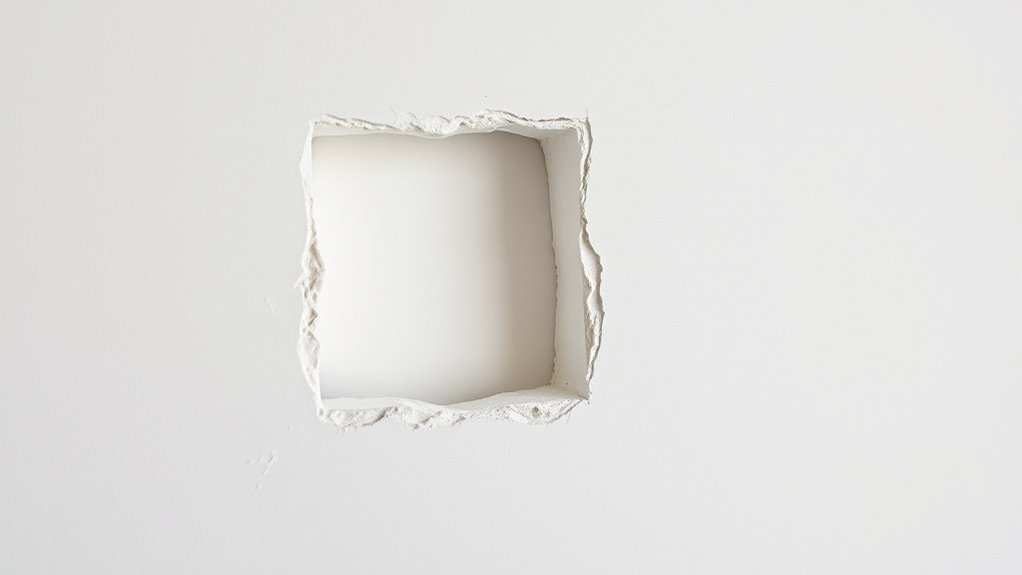

To patch drywall holes cleanly, start by prepping the area—remove loose debris and cut a drywall patch to fit the hole. Secure it with drywall tape or joint compound, then apply thin, even layers of mud, feathering the edges to blend with the wall. Sand smoothly between coats until flat, and match the texture before priming and painting for a seamless finish. For detailed tips on perfecting your repair, keep exploring the process.
Key Takeaways
- Clean and prepare the hole and surrounding area to ensure a smooth patching surface.
- Use drywall tape and joint compound to securely attach and blend the patch into the wall.
- Apply multiple thin coats of mud, feathering edges, and sand between layers for a seamless finish.
- Match wall texture carefully using spray, brush, or sponge techniques for invisibility.
- Prime and paint the repaired area after smoothing and texturing for a clean, professional look.

Have a hole in your drywall? Don’t worry—patching it cleanly is easier than you might think. The key is to focus on proper texture matching and mud application, which guarantee your repair blends seamlessly with the existing wall. When you start, make sure you gather all the necessary tools: drywall patch, joint compound (or mud), a putty knife, sanding sponge, and possibly a texture spray or brush if your wall has a specific finish.
Begin by cleaning the area around the hole, removing any loose debris or rough edges. If the hole is small, a simple patch might suffice; for larger holes, cut a piece of drywall to fit snugly. Once you have your patch, secure it with drywall tape or joint compound to hold it in place. When applying mud, use a putty knife to spread a thin, even layer over the patch and surrounding wall, feathering the edges to blend the repair into the existing surface. Proper mud application is essential for creating a smooth, flat finish that doesn’t draw attention to the repair.
Start by cleaning the area, then secure the patch with drywall tape and apply a smooth layer of mud to blend seamlessly.
After the first coat of mud dries, lightly sand the area with a sanding sponge to smooth out any ridges or imperfections. Apply a second coat of mud, extending it slightly beyond the first to further blend the patch. Once the second layer dries, sand again. Repeat this process until the patch is flush with the wall and the surface is smooth. When it comes to texture matching, this is where your skills shine. If your wall has a textured finish—such as knockdown, popcorn, or swirl—you’ll want to replicate it. You can do this by spraying a texture spray or using a brush or sponge to mimic the existing pattern.
Achieving a clean patch depends on your attention to detail during mud application and your ability to replicate the wall’s texture. Don’t rush the drying times; patience assures a seamless blend. Using the right tools, such as a texture spray or sponge, can significantly improve your results. If you’re unsure about matching textures, practice on a scrap piece first. Once your patch looks perfect and the texture matches, prime and paint over the area. This final step will make the repair virtually invisible, giving your wall a fresh, finished look. With careful mud application, patience, and a bit of practice in texture matching, you can patch drywall holes cleanly and confidently, restoring your wall’s appearance without a trace of damage.
Frequently Asked Questions
What Tools Are Best for Small Drywall Repairs?
For small drywall repairs, you’ll want a drywall saw to cleanly cut around the hole. Use a putty knife to apply joint compound smoothly over the patch, ensuring a seamless finish. Sandpaper helps to smooth out any uneven areas. Keep these tools handy: a drywall saw, putty knife, joint compound, and sandpaper. With these, you can efficiently repair small holes and achieve a professional-looking result.
How Do I Match Paint Colors After Patching?
Imagine your wall as a blank canvas waiting for a masterpiece. To match paint colors after patching, start with a small sample of your original paint. Use color matching tools or a color-matching app to find a close match. Apply paint blending techniques—feathering the edges and layering thin coats—to seamlessly hide the repair. Always compare in natural light and tweak as needed until the patch blends effortlessly into the wall.
Can I Patch Drywall Without Sanding?
You can patch drywall without sanding by using effective drywall patch techniques and the right tools for drywall repair. Start by applying a thin layer of joint compound over the patch, then smooth it out with a putty knife. Use a primer or paintable patch that minimizes the need for sanding. Keep tools like a taping knife and lightweight joint compound handy to achieve a smooth finish without extensive sanding.
How Long Should I Wait Before Painting Over a Patch?
Imagine waiting for your favorite dial-up internet to connect; patience is key. You should wait at least 24 hours before painting over a drywall patch. Confirm the joint compound is completely dry, and the drywall tape is secure. Lightly sand the patch for a smooth surface, then apply primer if needed. This waiting period helps prevent cracking or peeling, giving your repair a professional finish.
Is It Necessary to Use Primer on Patched Areas?
Yes, you should use primer on patched areas to guarantee proper primer application. Applying primer improves paint adhesion, helping the new paint stick better and last longer. It also seals the patch, preventing stains or imperfections from showing through. Skipping primer can result in uneven color or peeling over time. So, always prime your patched drywall before painting for a smooth, professional finish that lasts.
Conclusion
Now that you know how to patch drywall holes cleanly, you’re well on your way to a flawless finish. Just remember, patience is key, and rushing can lead to more trouble than it’s worth. With a little care and attention to detail, you’ll have your walls looking as good as new in no time. Don’t let small repairs become a mountain out of a molehill—tackle them head-on and enjoy the satisfaction of a job well done.