TL;DR

Get kitchen staples and gadgets delivered free with Prime
- Fast, free delivery on millions of items
- Prime Video, Amazon Music and more included
- Member-only deals all year
Cioccolata calda is Italian hot chocolate, usually thickened with starch and often enriched with melted dark chocolate. Whisk cocoa, sugar, and cornstarch into cold milk, then heat gently while stirring until the drink lightly coats a spoon; serve it while warm, because it thickens as it cools.
On a cold afternoon in Turin, a small cup of cioccolata calda can feel more like dessert than a drink. It arrives dark, glossy, and thick enough to leave a soft trail on your spoon. That texture is the point—but it should still pour.
You can make that Italian-style cup at home with milk, cocoa, chocolate, sugar, and a little starch. The trick is to dissolve the starch while everything is cold, then heat the mixture slowly. Get that sequence right and you’ll have smooth chocolate instead of lumps or a pot that sets like pudding.
This guide explains what makes cioccolata calda different from hot cocoa, how to control its thickness, and how to adjust the recipe for different chocolates and milks. You’ll also get practical fixes for the most common kitchen mishaps, so your next winter treat tastes rich and balanced from the first sip to the last.
Cioccolata calda gets much of its thick texture from starch cooked in milk, often alongside cocoa and melted chocolate.
Whisk cornstarch, cocoa, and sugar into cold milk before heating to reduce lumps.
Stop cooking when the drink lightly coats a spoon; it thickens further as it cools.
Taste before adding sugar because cocoa and dark chocolate vary in bitterness and sweetness.
Refrigerate leftovers promptly and reheat gently with a splash of milk.
The winter kitchen • Turin, Italy
Hot Chocolate,
Italian Thickness
Cioccolata calda is dark, glossy and spoon-coating, yet still pourable. Make it properly by dispersing starch in cold milk, heating gently, and serving while warm.
What gives it that Italian thickness?
Starch cooked in milk creates the signature body. Cocoa brings roasted intensity; melted chocolate adds richness. The goal is a velvety pour, not pudding.
Starch sets the pace
As milk warms, starch granules absorb liquid and swell. The drink thickens and clings to a spoon. Too much starch or too long on the heat can make it pasty.
Cocoa meets chocolate
Cocoa powder deepens the roasted flavor. Chopped dark chocolate melts in cocoa butter, sweetness and a fuller mouthfeel. Use both to tune the balance.
Cooling adds body
The mixture continues to firm up as it rests. Take it off the heat while it is a little looser than your ideal cup, then serve promptly.
Hot cocoa
Often thinner, with cocoa powder doing most of the flavor work. It can be light and easy to sip.
Cioccolata calda
Usually thickened with starch, and may combine cocoa with melted chocolate for a more concentrated, glossy cup.
Choose ingredients for the cup you want
Chocolate, cocoa and milk all shape sweetness, flavor and body. Taste the chocolate before cooking, then adjust one thing at a time.
Start with body
Whole milk gives a classic, rounded result. Oat milk tends to bring gentle sweetness; almond milk can taste lighter and nuttier. Plant milks may behave differently as they heat.
Taste before sweetening
A 70% bar may need less sugar, while a sweeter bar may need none. Good-quality dark chocolate is a dependable starting point; cocoa can sharpen flavor without adding much richness.
Keep extras subtle
A pinch of salt can sharpen chocolate. Vanilla, cinnamon or orange zest can shift the flavor; add a little so the chocolate remains the star.
How to make a smooth, spoon-coating cup
For two small servings: whisk the dry ingredients into cold milk, then cook gently while stirring. No boil needed.
Mix dry
Whisk cocoa, sugar and cornstarch in a small saucepan until evenly combined.
Start cold
Add a little cold milk to make a smooth paste, then whisk in the rest gradually.
Warm gently
Use medium-low heat. Stir constantly, reaching the corners to prevent sticking.
Melt chocolate
As the milk gets hot and begins to thicken, stir in chopped chocolate until smooth.
Check & serve
When it lightly coats a spoon, take it off the heat and serve while warm.
Watch the texture
Use gentle heat. Boiling can make the texture uneven, and milk at the bottom of the pan can scorch before you notice. A small saucepan and balloon whisk are enough.
Stop just before your target. The chocolate should still flow from the spoon. It will thicken more as it cools, so pour it into small cups straight away.
brief gentle simmer Sweet spot
coats spoon + pours Too thick
splash of milk + whisk
Quick fixes for a better next sip
Small adjustments can bring the cup back into balance. Change gradually, then taste again.
Lumpy
Starch may have met heat before it dispersed. Whisk cocoa, sugar and starch with cold milk first, then warm gradually while stirring.
Too thick
Whisk in a splash of milk until it loosens. Remember that it thickens further as it cools.
Too thin
Simmer briefly over gentle heat, stirring constantly, until it lightly coats a spoon.
Too bitter or sweet
Taste before adding sugar. Cocoa and chocolate vary; adjust sweetness in small steps near the end.
Reheating leftovers
Refrigerate leftovers promptly. Reheat gently, whisking in a little milk to restore a pourable texture.
Using plant milk
Choose a milk whose flavor and body you enjoy. Add starch carefully and watch how the mixture thickens.
What Makes Cioccolata Calda Thicker Than Hot Cocoa?
Cioccolata calda is Italian hot chocolate thickened with starch, often with cocoa and melted chocolate for a deep, rounded flavor. It should coat a spoon lightly but still flow into a cup. That balance matters: starch gives the drink body without requiring a large amount of cream, while a pourable finish keeps it pleasant to sip rather than eat with a spoon.
As milk warms, starch granules absorb liquid and swell, slowing the mixture and making it cling to the chocolate. This changes how the drink feels and tastes: a thicker liquid moves more slowly across the tongue, so each sip seems fuller and the cocoa flavor lingers. Starch also helps keep cocoa and melted chocolate suspended together instead of letting heavier chocolate settle. The tradeoff is that thickness keeps increasing with heat and cooling. Too little starch leaves a drink that feels closer to cocoa; too much, or cooking too long, can make it pasty. Judge the endpoint in the pan while it is still a little looser than you want in the cup, allowing for that extra thickening as it rests.
Cocoa and chocolate contribute different things. Cocoa brings roasted intensity without adding much fat, while chopped dark chocolate melts into the milk and adds cocoa butter, sweetness, and a fuller mouthfeel. Using both gives you more control: you can make the flavor darker with cocoa and richer with chocolate. The balance depends on the bar, though. A sweeter bar may make added sugar unnecessary, while a very bitter one can overwhelm a small serving. There is no single official ratio that every Italian cook follows, so treat the first batch as a starting point and adjust one ingredient at a time.
In Piedmont, the Alpine cold makes a small cup of thick chocolate especially appealing after a walk through Turin’s arcades. At home, you can serve the same style after a snowy afternoon or a long walk, with plain biscotti for a crisp contrast. A modest serving suits the richness: the drink’s thickness and concentrated flavor can make a large mug feel heavy before you finish it.
Hot cocoa is often thinner and may rely mainly on cocoa powder. Cioccolata calda may use both cocoa and real chocolate, with starch doing much of the work of creating its characteristic texture. That distinction is useful when adjusting a recipe: adding more chocolate deepens richness, but it also adds fat and sweetness; starch changes the body more directly. If yours pours like pudding, add a splash of milk and whisk until it loosens.

As an affiliate, we earn on qualifying purchases.
Choose Chocolate and Milk for the Flavor You Want
Use good cocoa, a dark chocolate you enjoy eating, and milk with enough body to carry them. Your ingredient choices shape both flavor and texture, so taste the chocolate before you cook. A very bitter bar can make the drink intense; a sweeter one may need little or no added sugar. Choosing ingredients with the finished cup in mind matters because sweetness, cocoa intensity, and thickness build together rather than being easy to correct independently at the end.
For a classic, creamy cup, whole milk gives you a soft, rounded base. A semi-sweet or bittersweet dark chocolate brings depth, while cocoa powder adds a familiar roasted flavor. If you reach for a 70% bar, start with less sugar and taste near the end; a milder chocolate may call for a little more. More cocoa can sharpen the flavor without adding much richness, while more chocolate brings a smoother, fuller feel but may also make the drink sweeter and heavier. Cocoa and chocolate products vary, so taste beats a rigid sweetness rule.
Plant-based milk works too, but each kind has its own personality. Oat milk often brings gentle sweetness and a full feel; almond milk can make the chocolate taste lighter and nuttier. Those differences affect more than flavor: a naturally sweet milk can make the finished drink seem richer, while a thinner-tasting milk may leave the chocolate less rounded. Start with the recipe as written, then adjust starch only after you see how that particular milk behaves. If you are cooking for someone with a dairy allergy, check the chocolate label as well as the milk carton. Chocolate can contain milk or carry a cross-contact warning.
Keep add-ins optional. A pinch of salt can sharpen the chocolate, while orange zest, cinnamon, or vanilla can steer the flavor in a different direction. Try a little orange zest with dark chocolate on a rainy evening; the bright citrus lifts the rich drink without hiding its cocoa flavor. Use a light hand: strong spices can compete with the chocolate, and extra ingredients can make it harder to tell whether the base itself needs adjustment. Common allergens include milk and, depending on the chocolate, soy.

How to Make Smooth, Spoon-Coating Cioccolata Calda
Whisk the cocoa, sugar, and starch into cold milk before heating, then cook gently while stirring. This order gives the starch a chance to spread through the liquid before it thickens. For two small servings, begin with 2 cups milk, 2 tablespoons cocoa, 2 tablespoons sugar, 1 tablespoon cornstarch, and about 2 ounces chopped dark chocolate.
- Combine the dry ingredients. Whisk cocoa, sugar, and cornstarch in a small saucepan until no pale starch pockets remain.
- Add cold milk gradually. Pour in a little at a time, whisking into a smooth paste first, then add the rest.
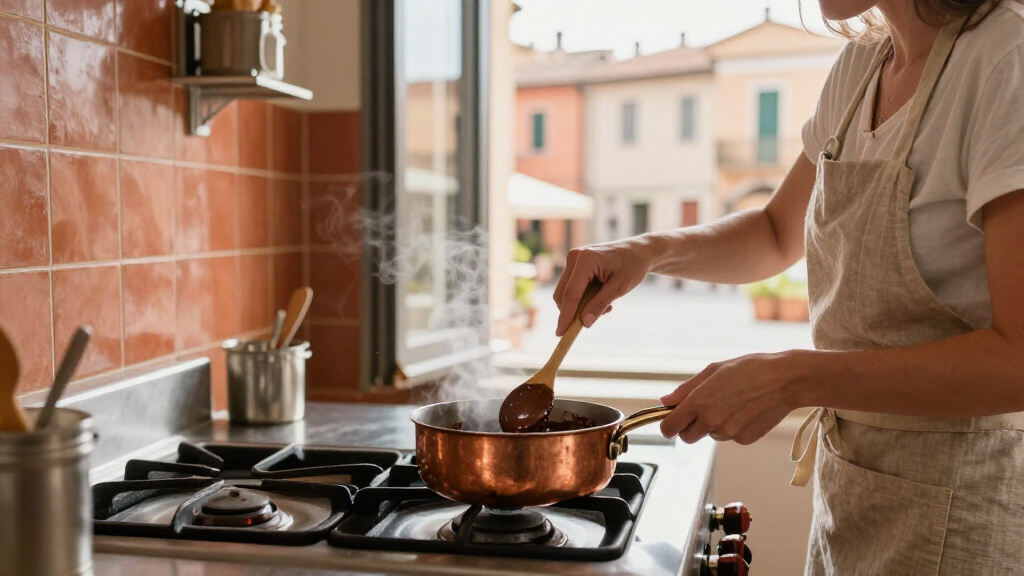
- Warm over medium-low heat. Stir constantly, reaching into the corners of the pan so nothing sticks or scorches.
- Add the chopped chocolate. When the milk is hot and the mixture starts to thicken, stir in the chocolate until it melts.
- Check the pour. When the chocolate lightly coats a spoon, take the pan off the heat and serve promptly.
A small saucepan and a balloon whisk are enough. You do not need to boil the mixture; a simmer can make the texture uneven, and milk at the bottom of the pan can scorch before you notice. If a friend joins you halfway through, keep stirring while you chat—the mixture thickens quickly near the end.
Adjust the texture at the finish. If it is too thick, whisk in milk a tablespoon at a time. If it looks thin, give it another short stretch over gentle heat while stirring. It will thicken a little more in the cup, so stop when it is still pourable.
Fix Lumps and Get the Thickness Back on Track
Lumps usually form when starch meets hot liquid too quickly or the mixture heats unevenly. Starting with cold milk and whisking steadily prevents most of them. Gentle heat gives you time to see the texture change before the starch tightens the whole pan. This matters because once starch clumps, the outside can thicken around a dry center, leaving a grainy texture even when the rest of the drink is smooth.
If you spot small lumps early, whisk briskly and scrape the bottom and sides of the pan. For stubborn lumps, take the saucepan off the heat and pass the drink through a fine-mesh strainer, then return it to low heat briefly if needed. Straining can restore a smooth feel, but it cannot fix an overall ratio that is too thick; loosen that with milk after straining. A strainer is a rescue tool, not a substitute for mixing the starch into cold liquid.
Thickness is easier to steer if you treat the last minute as a taste-and-texture check. Imagine drawing a line across the back of a spoon: the drink should cling lightly, while the line remains visible for a moment. This cue is more useful than waiting for a particular number of minutes because pans and burners vary. If the chocolate holds a mound, thin it with milk. If it runs off like plain milk, stir and warm it a little longer. The aim is a texture that feels substantial but still moves freely when poured.
The pan keeps working after you turn off the burner. A batch that looks perfect in the saucepan can set too firmly by the time you sit down, especially in a cold kitchen. That cooling effect is the reason to stop early and make final adjustments at serving, rather than trying to cook the drink to its ideal cold thickness. For example, if you want to serve it after dinner, leave the pot off heat and loosen each portion with a splash of warm milk as you serve. That keeps the cup smooth without reheating the entire batch for too long.

Serve It Like a Small Winter Treat, Not a Giant Mug
Serve cioccolata calda hot, in modest portions, while it still pours easily. Its dense texture asks you to slow down, so a small cup often feels more satisfying than a full-size mug. You can offer plain biscotti, dry cookies, or a small pastry alongside it for a crisp bite.
That pairing works like a short walk between rich sips: a dry biscuit resets your palate without competing with the chocolate. In Bologna, you might set out simple butter cookies on a winter afternoon; at home, use whatever plain, crisp biscuit you have. If your chocolate already tastes sweet, choose a less sweet companion.
Keep the toppings restrained if you want the chocolate itself to lead. Whipped cream can be lovely, but it adds richness to an already substantial drink. A dusting of cocoa or a little orange zest brings aroma without changing the body much. When serving children or guests who avoid dairy, label the plant-based version clearly and check the topping ingredients.
For a leisurely afternoon, make the base fresh and serve it right away rather than letting it sit for an hour. If you need to hold it briefly, keep it warm over very low heat and whisk often. Do not leave milk-based chocolate at room temperature for an extended stretch; refrigerate leftovers promptly, then reheat gently with a little milk and whisk until smooth.

Make Ahead, Reheat, and Adapt Without Losing the Texture
Cioccolata calda is best fresh, but you can loosen and reheat leftovers gently. As it cools, the starch continues to give the drink body, so yesterday’s cup may look more like soft chocolate pudding in the refrigerator. That does not mean it is ruined; it needs gentle heat and a little milk.
For example, if you have one serving left after a family movie, transfer it to a covered container and refrigerate it within two hours. The next day, warm it in a small pan over low heat, whisking in milk a tablespoon at a time until it pours. Avoid a hard boil, which can make the texture less even and scorch the chocolate on the bottom.
Milk alternatives can change how the drink thickens, so make a small test batch before serving a crowd. If your oat milk version turns too firm, reduce the starch slightly next time; if it stays thin, simmer gently a little longer or adjust the starch in a later batch. Add changes gradually and keep notes, like a cook tuning a favorite song one instrument at a time.
You can also make a starch-free version, but it will generally be thinner unless you add more melted chocolate. That tradeoff may suit you if you want a simpler, cocoa-forward drink. If you want the classic spoon-coating body, starch is the reliable route; just use it with care and stop heating as soon as the texture lands where you like it.
Frequently Asked Questions
Is cioccolata calda the same as hot cocoa?
They are related, but the texture and ingredients often differ. Hot cocoa is commonly thinner and built mainly from cocoa powder. Cioccolata calda is usually thickened with starch and may include melted chocolate for a richer, more dessert-like cup.
What thickener is used in cioccolata calda?
Cornstarch is a common thickener. Whisk it into cold milk with the cocoa and sugar before heating so it spreads evenly. Some recipes use other starches, but each can affect texture and flavor.
How thick should Italian hot chocolate be?
A good cup lightly coats a spoon but still pours. It should not sit in a mound or hold its shape like pudding. Take it off the heat while it is slightly looser than your preferred final texture, since it thickens as it cools.
Why did my cioccolata calda turn lumpy?
The starch may have clumped before it dispersed, or the pan may have heated too quickly. Mix the starch with cocoa and sugar, whisk in cold milk gradually, and warm the mixture over gentle heat while stirring. Strain stubborn lumps as a last-minute fix.
Can I make cioccolata calda with oat or almond milk?
Yes, though the texture and flavor will change with the milk you choose. Oat milk often tastes fuller and sweeter, while almond milk can make the drink feel lighter. Test a small batch and adjust the starch gradually rather than assuming every milk thickens the same way.
Can I make it ahead and reheat it?
Fresh is best, but leftovers can be reheated gently. Refrigerate them promptly in a covered container, then warm over low heat while whisking in a little milk. Avoid boiling, which can scorch the chocolate and leave the texture uneven.
Conclusion
Remember the cold-start rule: disperse your starch in cold milk, then warm the chocolate slowly while you stir. That simple sequence gives you the smooth, glossy body that makes cioccolata calda feel special, without pushing it into pudding territory.
Make a small batch on the next cold afternoon, pour it into little cups, and let the dark chocolate aroma fill the kitchen before the first sip.
Fall Picks
fall essentials
As an affiliate, we earn on qualifying purchases.