During Diwali, you decorate your home with vibrant lights and beautiful rangoli patterns to welcome prosperity and goddess Lakshmi. You hang colorful string lights around windows, doorframes, and trees to symbolize victory of light over darkness, creating a warm, festive glow. You also craft intricate rangoli designs using colored powders or flower petals at the entrance to invite good luck. These traditional decorations foster joy, togetherness, and cultural pride—exploring more reveals the rich history behind these beautiful customs.
Key Takeaways
- Decorating homes with colorful string lights symbolizing victory of light over darkness.
- Creating intricate rangoli designs with vibrant powders and flower petals at doorsteps.
- Using traditional lamps and diyas to illuminate indoor and outdoor spaces.
- Incorporating festive motifs and personal touches into decorations for a personalized feel.
- Enhancing the celebration with community lighting and decorative arrangements fostering togetherness.
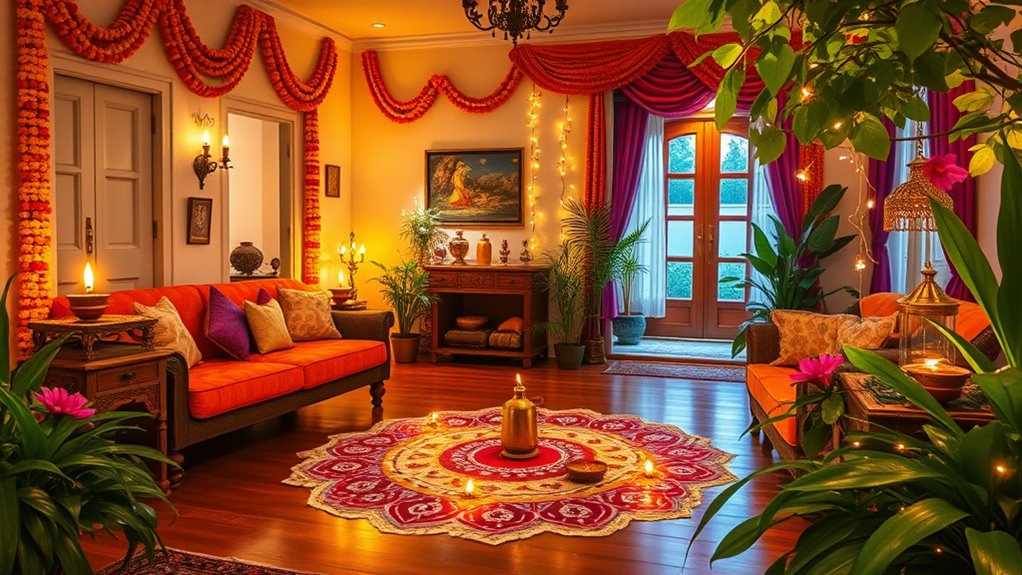
Have you ever wondered how families transform their homes during Diwali? It’s a vibrant process that combines tradition, creativity, and a love for celebration. One of the most striking aspects of Diwali decor is the use of festive lighting. As the festival approaches, you’ll notice homes illuminated with strings of bright, colorful lights that shimmer in every corner. These lights aren’t just decorative; they symbolize the victory of light over darkness and bring a warm, inviting glow to the entire neighborhood. You might hang fairy lights along windows, wrap them around trees, or drape them over doorframes, creating a magical ambiance that makes everyone feel the spirit of celebration. The flickering lights also serve as a reminder to keep hope and positivity alive, especially during challenging times. Incorporating multi-functional gear or energy-efficient lighting options can help reduce energy consumption while maintaining a festive look.
Alongside the festive lighting, traditional rangoli plays a central role in Diwali home decor. You might wake up early on the festival morning to create intricate designs on the floor at your doorstep or in the courtyard. Using vibrant colored powders, flower petals, rice, or even chalk, you craft beautiful patterns that welcome Lakshmi, the goddess of wealth, into your home. These rangoli designs are more than just decorative; they are believed to invite prosperity and good luck. As you carefully arrange the colors and motifs, you’re participating in a tradition that has been passed down through generations. The process is both meditative and joyful, often accompanied by the aroma of fresh flowers or incense. Your rangoli might feature geometric patterns, floral designs, or images of deities, each adding a personal touch to the celebration.
The combination of festive lighting and traditional rangoli sets the tone for the entire Diwali celebration. As you step into a home decorated with shimmering lights and vibrant patterns, you feel an immediate sense of joy and togetherness. These traditions are more than mere decorations—they’re expressions of hope, gratitude, and the desire for a prosperous new year. When family and friends gather around, admiring the colorful rangoli and the glowing lights, you realize how these simple yet meaningful elements create a festive atmosphere that brings everyone closer. Whether you’re lighting lamps, setting up a rangoli, or simply enjoying the warm glow of your home, these traditions help you connect with your cultural roots and make Diwali a truly special occasion.
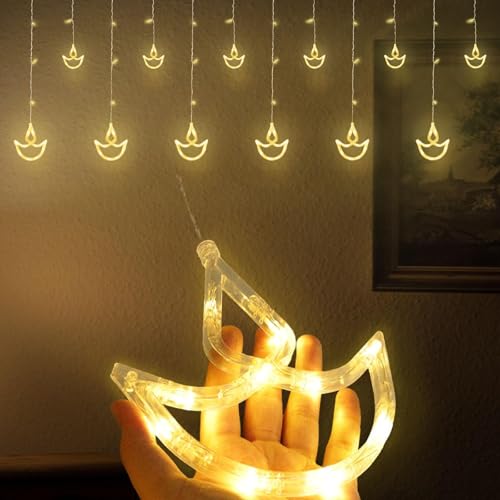
Diwali Decorations Items, Diwali Lights, 12 Warm White Diya Curtain Decoration Lights, Happy Diwali Decorations for Indoor Outdoor, Diyas for Decor (Diwali String Lights 1)
[EXCLUSIVE DIWALI AMBIANCE] Transform any space with our exclusive Diwali Diya Lights. Whether windows, rooms, or walls, these…
As an affiliate, we earn on qualifying purchases.
As an affiliate, we earn on qualifying purchases.
Frequently Asked Questions
What Are the Origins of Diwali Home Decoration Customs?
You might find that Diwali home decoration customs originate from symbolic meanings rooted in Hindu mythology, like lighting lamps to symbolize light over darkness. Over time, these practices have undergone a historical evolution, blending various regional traditions. As you decorate, you’re participating in a tradition that reflects spiritual enlightenment, prosperity, and the triumph of good, with each decoration embodying these enduring cultural symbols.
How Do Different Regions Vary in Diwali Decor Traditions?
You’ll notice that regional craftsmanship and cultural symbolism shape Diwali decor differently across regions. In North India, you might see intricate rangoli designs and brass lamps, emphasizing prosperity and enlightenment. South India favors vibrant kolam patterns and banana leaf decorations, symbolizing abundance. In Bengal, terracotta figurines and floral arrangements highlight cultural stories. These regional variations reflect local craftsmanship and deep-rooted cultural symbolism, making each celebration unique and meaningful.
Are There Specific Colors Associated With Diwali Decorations?
You’ll notice that vibrant colors like red, yellow, and gold are common in Diwali decorations because of their strong color symbolism representing prosperity, happiness, and energy. You might also incorporate decorative motifs such as diyas, lotus flowers, and elephants, which are believed to bring good luck. These colors and motifs create a festive atmosphere, inviting positive energy into your home and celebrating the spirit of Diwali.
What Eco-Friendly Materials Are Recommended for Diwali Decor?
You should consider using eco-friendly materials like sustainable DIY crafts, such as handmade paper lanterns or recycled fabric decorations, to make your Diwali decor more sustainable. Opt for biodegradable lighting options, like LED fairy lights or solar-powered lanterns, to reduce environmental impact. These choices not only brighten your celebration but also help protect the planet, making your festivities more eco-conscious and beautiful.
How Can I Incorporate Modern Trends Into Traditional Diwali Decor?
You can incorporate modern trends into traditional Diwali decor by blending fusion decor with contemporary motifs. Use sleek, minimalist lanterns alongside classic oil lamps, or add metallic accents to traditional rangoli designs. Incorporate geometric patterns and bold colors in your decorations while maintaining traditional elements like marigolds and diyas. This fusion decor creates a fresh, stylish look that respects tradition while embracing contemporary aesthetics, making your celebration uniquely vibrant.

SATVIK – Pack of 10 – Shades Rangoli Color Powder Pouch Set with Glitter | Decorative Stone Powder for Art & Home Décor | Easy to Store | No Gulal | Festival Floor Art Kit
Complete Set – Includes 10 colorful rangoli powder pouches (50g each) + 1 glitter pouch for decorative highlights.
As an affiliate, we earn on qualifying purchases.
As an affiliate, we earn on qualifying purchases.
Conclusion
As you embrace Diwali home decor traditions, remember that over 80% of people in India decorate their homes to welcome prosperity and positivity. These rituals connect you to centuries of cultural heritage, creating a warm, inviting atmosphere for loved ones. By incorporating traditional elements, you not only honor your roots but also foster joy and togetherness during this festive season. Let your decor reflect the rich history and vibrant spirit of Diwali, making your home truly special.

Electric Plastic Light, Pooja Diya with LED Spark, Home Temple Decor, Electric Diya Golden,Mandir Diya,Diwali Diya Lamp (1 Layer, 2)
✔️ LED Spark Technology: Immerse your home temple with a mesmerizing glow using the innovative LED Spark technology….
As an affiliate, we earn on qualifying purchases.
As an affiliate, we earn on qualifying purchases.

HOME LIGHTING Window Curtain String Lights, 300 LED 8 Lighting Modes Fairy Copper Light with Remote, USB Powered Waterproof for Christmas Bedroom Party Wedding Home Garden Wall Decorations, Cool White
Christmas Window Curtain Lights: Add a wonderful Christmas wall backdrop as you decorate for your event with 9.8×9.8ft…
As an affiliate, we earn on qualifying purchases.
As an affiliate, we earn on qualifying purchases.