
TL;DR

Get kitchen staples and gadgets delivered free — and shop member deals
- Fast, free delivery on millions of items
- Access to Prime Big Deal Days deals on October 6–7
- Prime Video, Amazon Music and more included
A sagra del porcino is a local Italian food festival celebrating the porcini mushroom, held in small towns across northern and central Italy from September through November. The most famous is Borgotaro in Emilia-Romagna, whose mushrooms carry IGP protected status; multi-course festival meals typically cost €15–30 and require no tickets for most seatings.
In the first weekends of September, a town of about 7,000 people in the Tuscan-Emilian Apennines fills with the smell of butter, garlic, and mushrooms sizzling on griddles the size of car hoods. Borgotaro, in Emilia-Romagna, calls itself the porcini capital of Italy, and for a few weeks each autumn, nobody argues.
The occasion is the Sagra del Porcino — a local festival celebrating the king bolete mushroom, Boletus edulis, one of Italy’s most prized ingredients. A sagra (plural: sagre) is a community food festival, usually in a small town, built around one regional specialty. You eat at long communal tables, drink local wine, and pay festival prices, not restaurant prices.
This is your guide for your first sagra trip: where to go, when, what you’ll eat, what it costs, and the mistakes first-timers make. Think of it as a plan for an autumn weekend that pairs mushrooms with mountain air and Lambrusco.
A sagra del porcino is a volunteer-run village festival, not a tourist event — expect communal tables, multi-course menus at €15–30, and almost no English outs…
Borgotaro (Emilia-Romagna, September weekends) is the definitive porcini festival; its Fungo di Borgotaro IGP is one of Europe’s only legally protected mushroo…
Pair your trip smartly: Borgotaro in September, Alba’s white truffle fair in October–November, or small Tuscan and Friulian sagre in autumn — dates shift yearl…
Buy dried IGP porcini rather than fresh for the flight home, and check customs rules for your destination country.
Foraging porcini legally usually requires a regional permit with quantity limits; join a guided sagra excursion instead of going alone, and never eat a wild mu…
Sagra del Porcino: Mushroom Festivals Worth Planning a Trip Around
From September through November, small towns across northern and central Italy celebrate the king bolete mushroom — Boletus edulis — with communal tables, volunteer kitchens, and festival prices. This is your plan for an autumn weekend pairing mushrooms with mountain air and Lambrusco.
“Fungo di Borgotaro is one of the only mushrooms in Europe with IGP protected status — the same legal protection as Parmigiano-Reggiano.”
Key Insight · Consortium est. 1963What a Sagra Actually Is — And Why It’s Not a Tourist Event
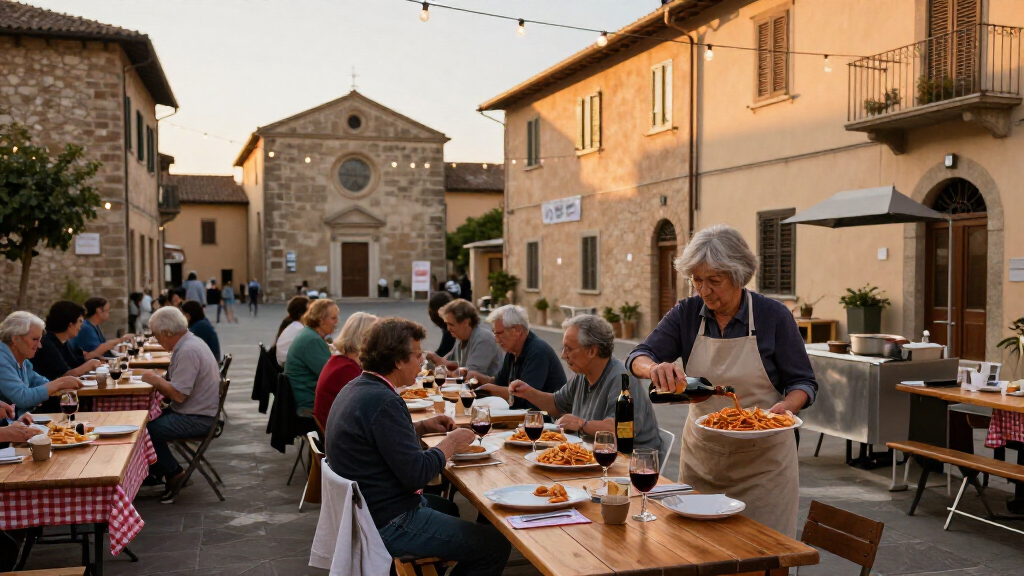
A sagra is a village food festival run by and for locals, organized by the town’s pro loco, the parish, or a producers’ consortium. The word comes from the Latin for sacred — many festivals are still tied to saint’s days and harvest thanksgivings. Think of it as a wedding you were invited to by accident: long tables under tents, nonnas ladling tagliatelle, and a cover band playing 1980s Italian pop at 9 p.m., loudly.
Volunteers, Not Vendors
Meals are cooked in industrial quantities by volunteers, which keeps prices astonishingly low — often €15–30 for a multi-course menu including wine. Compare a single porcini risotto plate in Florence at €18.
Communal Everything
Long shared tables, plastic chairs, kids running between them, local wine poured freely. Tourists are welcome, but nobody rearranged the event for you — and that’s the whole appeal.
One Ingredient, Peak Season
Each sagra celebrates a single regional specialty — chestnuts, wild boar, truffles, or porcini — at the exact moment it’s best. The religious procession and the fried mushrooms share the same weekend.
Borgotaro: The Porcini Festival With Legal Protection Behind It
In the province of Parma, in the Tuscan-Emilian Apennines, chestnut and beech forests at 600–1,400 meters produce mushrooms locals swear cannot be matched anywhere on Earth. Here’s the remarkable part: they have paperwork to back it up.
Arrive in Parma
Roughly 90 minutes by car through the Ceno valley. A car is close to essential for the surrounding communes.
Town Fills Up
Mushroom market stalls, foraging exhibitions, guided woodland walks, and cooking demos take over the town.
Watch the Grading
See how a fresh porcini is graded by size and cap tightness — hundreds of licensed local foragers sell direct.
Eat & Buy
Take a seat at the communal tables — then buy vacuum-sealed IGP dried porcini for the flight home.
Practical Note · Getting There
Borgotaro does have a train station on the Parma–La Spezia line, useful if you’re committed to public transport. If you buy only one thing at Borgotaro, make it a bag of IGP dried porcini: light, legal to fly home with in most cases, and worth every cent compared to dusty supermarket jars.
Four Porcini Destinations Worth the Drive
The sagra del porcino is a format, not a single event. Timing is everything: porcini season runs roughly September through November, and each festival anchors itself to the local harvest.
| Destination | Region | When | Why Go |
|---|---|---|---|
| Borgotaro | Emilia-Romagna | Weekends, September | IGP mushrooms, market stalls, the definitive sagra |
| Alba | Piedmont | October–November | Porcini alongside the Fiera Internazionale del Tartufo Bianco (white truffle fair), plus Barolo country |
| Apennine Tuscan towns | Tuscany (Arezzo, Massa-Carrara) | Late summer–autumn | Small, deeply local sagre with mountain hiking nearby — rarely translated into English |
| Apt & Friulian towns | Friuli-Venezia Giulia | Autumn | Porcini in the Friulian style, paired with the region’s white wines |
What You’ll Actually Eat: Six Dishes, Decoded
Porcini at a sagra appear in every form the mushroom allows, and the menu can look like a wall of unfamiliar Italian. Here’s your decoder, so you order with confidence instead of pointing randomly.
Festival Value, By the Plate
Volunteer kitchens keep prices at festival levels, not restaurant levels. Here’s how a typical sagra menu stacks up against city restaurant pricing.
First-Timer Mistakes to Avoid
Go hungry — portions are generous and courses are many. Bring cash; small festival vendors may not take cards. Arrive early or book ahead for popular weekends. Foraging porcini legally usually requires a regional permit with quantity limits — join a guided sagra excursion instead of going alone, and never eat a wild mushroom unidentified.
From Forest Floor to Festival Table
The Fungo di Borgotaro IGP chain, protected by a consortium since 1963:
What a Sagra Actually Is (And Why It’s Not a Tourist Event)
A sagra is a village food festival run by and for locals — typically organized by the town’s pro loco (volunteer tourism and heritage association), the parish, or a producers’ consortium. It exists to celebrate one ingredient at the peak of its season: chestnuts, wild boar, truffles, or, in this case, porcini. Tourists are welcome, but nobody rearranged the event for you.
That’s the whole appeal. Unlike a food fair or a restaurant week, a sagra feels like a wedding you were invited to by accident. Long tables under tents. Nonnas ladling tagliatelle ai funghi porcini. Kids running between the plastic chairs. A cover band playing 1980s Italian pop at 9 p.m., loudly.
Meals are cooked in industrial quantities by volunteers, which keeps prices astonishingly low — often €15–30 for a multi-course menu including wine. Compare that to a single plate of porcini risotto in a Florentine restaurant at €18 and you see why Italians plan their autumns around sagre.
The word itself matters: sagra comes from the Latin for sacred, and originally these festivals were tied to saint’s days and harvest thanksgivings. Many still are. The religious procession and the fried mushrooms share the same weekend, and nobody finds that strange.
Top picks for "sagra porcino mushroom"
As an affiliate, we earn on qualifying purchases.
Borgotaro: The Porcini Festival With Legal Protection Behind It
Borgotaro, in the province of Parma, hosts Italy’s most famous porcini sagra, typically on weekends in September. The town sits in the Tuscan-Emilian Apennines, where chestnut and beech forests at 600–1,400 meters produce mushrooms that locals will tell you — with a straight face — cannot be matched anywhere else on Earth.
Here’s the remarkable part: they have paperwork to back it up. Fungo di Borgotaro IGP (Protected Geographical Indication) is one of the only mushrooms in Europe to carry this status, the same legal protection afforded to Parmigiano-Reggiano and Prosciutto di Parma — both made an hour away. A local consortium, established in 1963, regulates picking, grading, and labeling.
During the festival, the town fills with mushroom market stalls, guided woodland walks, cooking demonstrations, and foraging exhibitions where you can see how a fresh porcini is graded by size and cap tightness. Local foragers — and Borgotaro has hundreds of licensed ones — sell fresh, dried, and preserved mushrooms directly from trestle tables.
If you buy only one thing at Borgotaro, make it a vacuum-sealed bag of IGP dried porcini: light, legal to fly home with in most cases, and worth every cent compared to the dusty supermarket jars.
Getting there takes effort. The easiest route is a drive of roughly 90 minutes from Parma through the Ceno valley, and a car is close to essential for exploring the surrounding communes. Borgotaro does have a train station on the Parma–La Spezia line, useful if you’re committed to public transport.

Beyond Borgotaro: 3 More Porcini Destinations Worth the Drive
Borgotaro is the headliner, but the sagra del porcino is a format, not a single event — and several other regions host versions worth planning around. Timing is everything: porcini season runs roughly September through November, and each festival anchors itself to the local harvest.
| Destination | Region | When | Why Go |
|---|---|---|---|
| Borgotaro | Emilia-Romagna | Weekends, September | IGP mushrooms, market stalls, the definitive sagra |
| Alba | Piedmont | October–November | Porcini alongside the Fiera Internazionale del Tartufo Bianco (white truffle fair) |
| Apennine Tuscan towns (Arezzo, Massa-Carrara provinces) | Tuscany | Late summer–autumn | Small, deeply local sagre with mountain hiking nearby |
| Apt and Friulian towns | Friuli-Venezia Giulia | Autumn | Porcini in the Friulian style, paired with the region’s white wines |
Alba deserves special mention for trip-planners: the Fiera Internazionale del Tartufo Bianco d’Alba runs October into November, and while truffles are the marquee name, the markets brim with fresh porcini from the surrounding Langhe hills. One town, two of Italy’s greatest forest products, plus Barolo country on the doorstep.
Tuscan sagre, by contrast, are smaller and rarely translated into English. That’s either a barrier or the entire point, depending on your temperament. Bring patience and a few Italian phrases, and you’ll be rewarded with the most unfiltered version of the experience.
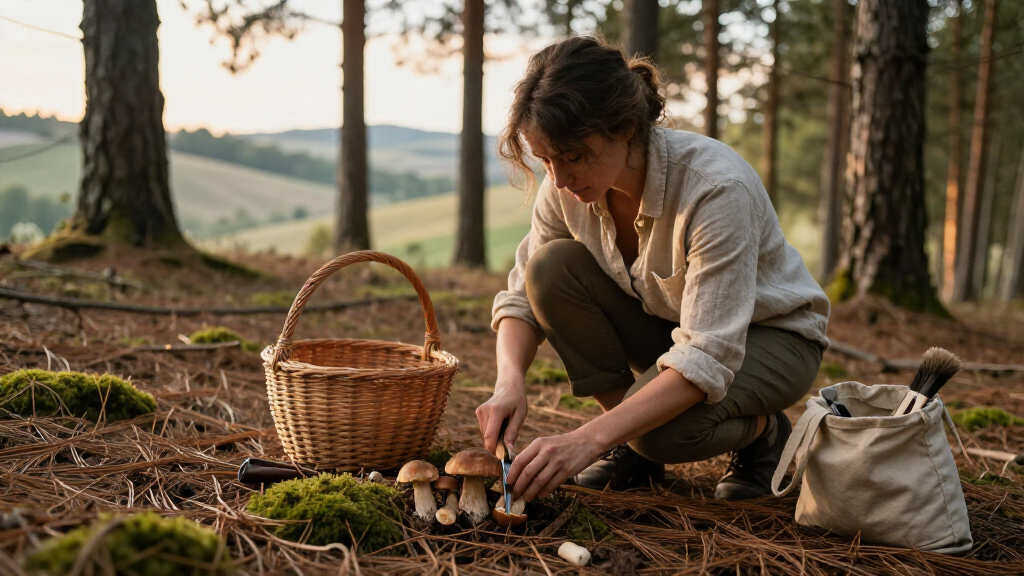
Porcini at a sagra appear in every form the mushroom allows, and the menu can look like a wall of unfamiliar Italian. Here’s your decoder, so you order with confidence instead of pointing randomly.
- Porcini fritti — thick slabs dipped in batter or flour and fried. The gateway dish; crisp outside, meaty and juicy within.
- Porcini alla griglia — grilled caps with olive oil, garlic, and parsley. The purest test of mushroom quality.
- Porcini crudi — sliced raw, dressed with oil and shaved Parmigiano. Only served when mushrooms are impeccably fresh.
- Tagliatelle ai porcini — the pasta course; ribbons in a buttery mushroom ragù.
- Risotto ai porcini — more common in the north; the dried mushroom soaking liquid often deepens the flavor.
- Porcini in umido — stewed slowly with tomato and herbs, often as the main course.
Wash it down with whatever the region pours. Around Borgotaro, that means Lambrusco — the real thing, dry and brisk, not the sweet export version. In Piedmont, expect Dolcetto or Barbera. Wine is usually included in the fixed menu price or costs a few euros for a carafe.
One practical note for allergy-aware diners: menus focus tightly on the featured ingredient, so if you have mushroom allergies — or you’re traveling with someone who does — a porcini sagra is not the venue to negotiate around it. Vegetarians, however, eat like royalty; nearly every dish above is meatless. And a food-safety habit worth importing from the foragers themselves: fresh porcini should be firm, dry-surfaced, and free of dark soft patches, and they’re best cooked the day you buy them — never stored wet in sealed plastic, where they spoil fast.

How to Plan the Trip: A 5-Step Weekend Framework
Planning a sagra trip is simple once you know the rhythm: dates are announced locally, towns are small, and weekends fill fast. Follow this sequence and you’ll avoid the classic first-timer errors — showing up at 8:30 p.m. with no table, or discovering the festival ran the weekend before.
- Pick your window. September for Borgotaro and the Apennine sagre; October–November for Alba and its truffle fair. Dates shift yearly with the harvest, so confirm before booking anything.
- Check official sources. The Borgotaro tourism office, the local comune website, and the Emilia-Romagna tourism board publish current schedules. Some sagre now offer English-language pages, but many still don’t — an auto-translated Italian page is your friend.
- Book lodging early. Apennine towns have limited beds, and festival weekends sell out months ahead. Borgotaro, Borgo Val di Taro, and nearby Bedonia are the bases; Parma works as a comfortable fallback about an hour away.
- Reserve a table if you can. Most sagre seat walk-ins, but large groups and peak Saturday nights often require booking through the organizer’s phone line or website. Reserve a slot and arrive by 7:30 p.m.
- Build the rest of the day around it. Morning market or guided woodland walk, a hike in the autumn foliage, a long lunch or late dinner at the sagra. The Apennines in late September are a tapestry of copper and gold — the scenery is half the reason to go.
Budget realistically: dinner at the sagra might cost €25, a room in a small local hotel €70–100, and fuel or a rental car the rest. Even with flights, this is one of the more affordable food trips in Western Europe — a fraction of what a comparable eating weekend costs in Milan or Florence.

Can You Forage Porcini Yourself? Here’s the Honest Answer
Standing in a beech forest at a sagra’s guided walk, you will want to pick your own porcini. Sometimes you can — but Italy regulates foraging, and the rules vary by region and even by commune. In many areas you need a permit, and there are daily quantity caps, restrictions on tools like rakes, and designated picking zones.
In the Borgotaro zone, mushroom collecting is managed intensively: local pickers are licensed, the IGP consortium monitors the product, and random tourist foraging is not the norm. Tuscany and Piedmont each have their own permit systems, typically purchased at the comune for a modest fee, with limits often around 3 kilograms per person per day.
Never eat a wild mushroom you’ve identified yourself without local expert confirmation — misidentified boletes, though rarely deadly, can cause serious illness, and dangerous lookalikes exist.
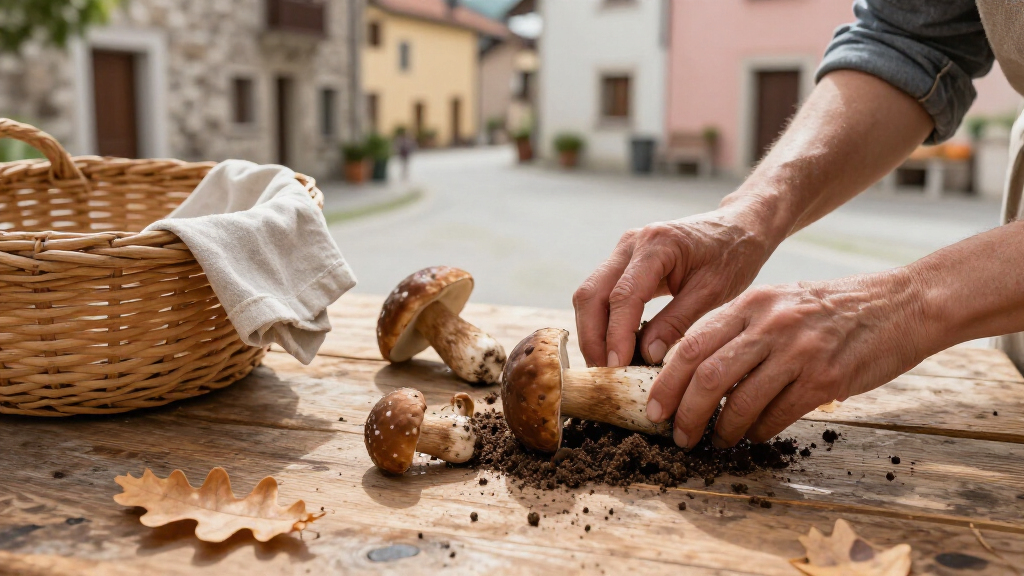
The smart move: join a guided foraging excursion, which several sagre offer, led by licensed local experts. You learn to spot the telltale signs — the swollen stem, the reticulated cap underside, the way a porcino pushes up the forest litter like a raised tent canvas — and you contribute to sustainable picking rather than depleting it. Erratic rainfall in recent years has made harvests unpredictable, and responsible foraging matters more than it used to.
And on the subject of legality: if you buy dried IGP porcini to take home, check your destination country’s customs rules for plant products. Dried mushrooms are generally permitted into the US and UK for personal use, but fresh ones often are not — another reason dried is the traveler’s format.

Sagra Survival Tips That Locals Assume You Already Know
The gap between a great sagra evening and a frustrating one comes down to half a dozen small things. None of them are complicated. All of them are things locals do automatically and first-timers learn the hard way.
- Bring cash. Small festival vendors and volunteer-run kitchens may not take cards, and the nearest ATM can be in the next town.
- Go hungry. Courses are many and portions are generous; a multi-course porcini menu is a commitment, not a snack.
- Arrive early. Popular Saturday seatings fill by 8 p.m.; arriving at 7 p.m. gets you a table and time to browse the market first.
- Learn five phrases. Un tavolo per due, per favore (a table for two) and Altro vino, grazie (more wine, please) cover most of the evening.
- Dress in layers. Apennine September evenings turn cool fast, and you’ll be eating under open-sided tents.
- Pace the wine. Lambrusco goes down dangerously easily with fried porcini, and these are long evenings — festival wine is for adults, and the drive back on mountain roads demands a clear head.
One last scenario worth picturing: it’s 9:15 p.m., the band has started, and a volunteer hands you a plate of porcini in umido you never ordered because the kitchen overcooked on purpose and everything gets eaten. That’s a sagra. Say grazie, take the plate, and stay a while.
Frequently Asked Questions
When and where is the Sagra del Porcino held?
The most famous porcini sagra takes place in Borgotaro, Emilia-Romagna, typically on weekends in September. Other notable events run through autumn across Tuscany, Piedmont, and Friuli. Exact dates change every year with the harvest, so check the Borgotaro tourism office, the local comune website, or the Emilia-Romagna tourism board before booking travel.
How much does it cost to attend a porcini festival?
Sagre are famously affordable: a multi-course porcini menu usually costs €15–30, often including wine. Market purchases, like dried IGP porcini, cost extra. Bring cash, since volunteer-run kitchens and small vendors may not accept cards, and ATMs can be scarce in mountain towns.
Are porcini festivals family-friendly?
Yes — sagre are community events designed for all ages, with music, markets, food demonstrations, and plenty of children running around. Seating is communal and informal. Wine is served, but these are family evenings, not drinking festivals; alcohol is for adults and moderation is the local norm.
Can I forage porcini myself while visiting?
Sometimes, but usually not freely. Many Italian regions require a foraging permit with daily quantity limits, and rules vary by commune. The best option for visitors is a guided foraging walk offered at some sagre, led by licensed local experts. Never eat a wild mushroom you’ve identified yourself without expert confirmation.
Can I buy porcini to take home from the festival?
Yes — stalls sell fresh, dried, and preserved porcini, often direct from licensed foragers. Dried mushrooms are the traveler’s choice: light, shelf-stable, and generally permitted through customs for personal use. Fresh mushrooms face stricter rules in many countries, so verify your destination’s regulations before buying.
Do I need a car to get to Borgotaro?
A car makes the trip far easier. Borgotaro is roughly 90 minutes’ drive from Parma, and exploring the surrounding Apennine communes and trailheads is impractical without one. There is a train station on the Parma–La Spezia line, which works for committed public-transport travelers, but festival logistics are simplest with your own wheels — and a designated driver.
Conclusion
If you plan one food trip to Italy this decade, make it a September weekend in Borgotaro — cash in your pocket, an empty stomach, and a seat at a plastic table under a tent where volunteers have been frying porcini since noon. You’ll eat one of the world’s great ingredients at its source, surrounded by the people who’ve guarded it for generations, for the price of a pizza dinner in a major city.
The forests will smell of rain and fallen leaves, the Lambrusco will be drier than you expect, and by the end of the evening the word sagra will stop needing translation. That’s the moment the trip worked.
Fall Picks
fall essentials
As an affiliate, we earn on qualifying purchases.