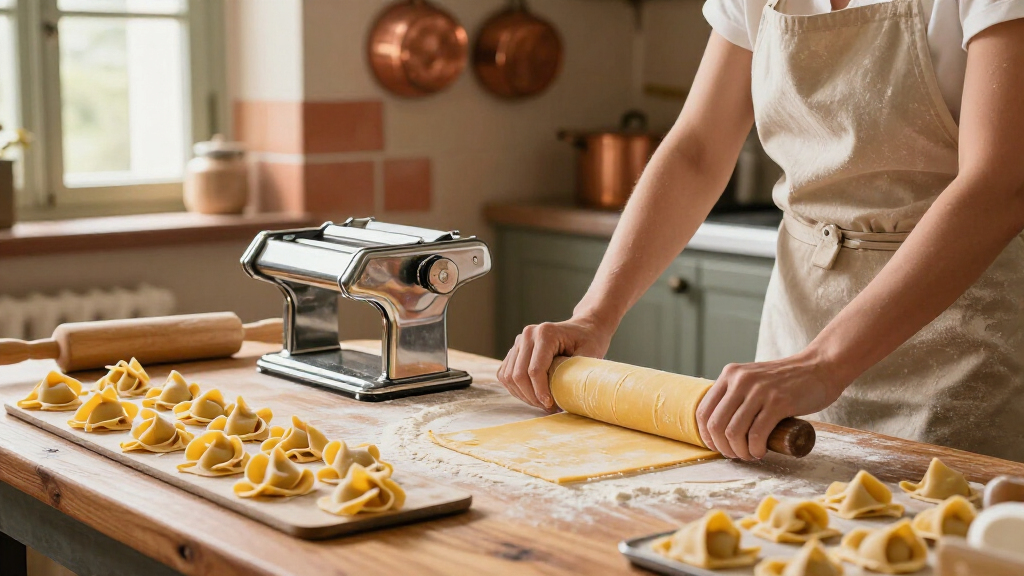

The best Italian pasta maker for most home cooks is the Marcato Atlas 150 Classic, a chrome-steel, hand-crank machine built in Italy that rolls and cuts consistently and lasts for decades. If budget matters more than heritage, the Sailnovo 3-in-1 Manual Pasta Maker covers the same rolling and cutting jobs for far less, while the Imperia Pasta Maker Classic Line is the Atlas 150’s closest rival and a better fit for cooks who want a slightly wider roller. The real tradeoff in this category is not price alone: manual crank machines deliver thin, even sheets but demand counter space and elbow grease, electric sheeters like the Dyna-Living save effort but cost more, and single-purpose tools such as the Silifine Chitarra or Eppicotispai Garganelli Stripper make shapes that rollers simply cannot. Keep reading for the full breakdown of all 13 machines and tools.

Get kitchen staples and gadgets delivered free — and shop member deals
- Fast, free delivery on millions of items
- Access to Prime Big Deal Days deals on October 6–7
- Prime Video, Amazon Music and more included
Key Takeaways
- The Marcato Atlas 150 and Imperia Classic separated themselves from budget crank machines through roller machining quality — smoother, more even sheets at the thinnest settings, where cheap machines tear dough.
- Several sub-$60 machines (Sailnovo, Nuvantee, the generic 3-in-1) are functionally near-identical clones; the differences come down to crank comfort, clamp quality, and finish, not performance.
- Single-purpose traditional tools — the chitarra, cavatelli boards, and garganelli stripper — cannot replace a roller machine, but they produce shapes no roller can, and they cost a fraction of the price.
- Electric convenience is the biggest single jump in effort saved, but the Dyna-Living sheeter sacrifices the fine thickness control that makes manual Italian machines prized for delicate pastas.
- The CucinaPro ravioli tray fills a specific gap: none of the 13 rollers here make filled pasta on their own, so accessory trays or attachments are required for ravioli.
| Imperia Pasta Maker Machine – Classic Line |  | Best Overall | Origin: Made in Italy | Material: Chromed steel | Max Dough Sheet Width: 150mm | VIEW LATEST PRICE | See Our Full Breakdown |
| 3-in-1 Pasta Maker with 9 Thickness Settings, Dough Rollers & 2 Size Cutters |  | Best Value | Thickness Settings: 9 (0.3–2.6 mm) | Cutter Widths: 2 mm and 6.6 mm | Operation: Manual hand crank | VIEW LATEST PRICE | See Our Full Breakdown |
| Dyna-Living Electric Pasta Maker and Dough Sheeter |  | Best Electric Pick | Motor Power: 135 W | Adjustable Dough Thickness: 0.3–3 mm | Cutting Widths: 2 mm, 2.5 mm, 4 mm, 9 mm | VIEW LATEST PRICE | See Our Full Breakdown |
| Fante’s Cavatelli Maker Machine for Authentic Italian Pasta |  | Best for Cavatelli Purists | Material: Non-stick cast aluminum | Dimensions: 9.25 x 4.4 x 5.75 inches | Clamp Fit: Countertops up to 1.365 inches thick | VIEW LATEST PRICE | See Our Full Breakdown |
| Silifine Pasta Chitarra Cutter with Rolling Pin |  | Best Traditional Craft Pick | Material: Beech wood, stainless steel strings | Cutter Dimensions: 18.5 x 9 x 3.1 inches (47 x 23 x 8 cm) | Wire Surface: 16.5 x 6.5 inches (42 x 16.5 cm) | VIEW LATEST PRICE | See Our Full Breakdown |
| O’Creme Wooden Roller Cavatelli Pasta Maker |  | Best for Cavatelli and Gnocchi Beginners | Brand: O’Creme | Model Number: OC5300W | Pasta Types: Cavatelli, gnocchi, dumplings | VIEW LATEST PRICE | See Our Full Breakdown |
| Sailnovo 3-in-1 Manual Pasta Maker with 9 Thickness Settings |  | Best Value All-Rounder | Brand: Sailnovo | Model: Machine1 | Type: Manual pasta maker | VIEW LATEST PRICE | See Our Full Breakdown |
| CucinaPro Ravioli Maker Tray and Press |  | Best for Ravioli Batches | Brand: CucinaPro | Type: Ravioli tray and press | Capacity: 12 ravioli per press | VIEW LATEST PRICE | See Our Full Breakdown |
| Marcato Atlas 150 Classic Manual Pasta Maker Machine, Chrome Steel with Black Hand Crank | 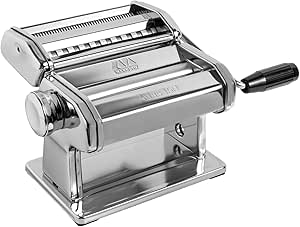 | Best Premium Classic | Brand: Marcato | Model: Atlas 150 Classic | Material: Nickel-plated steel, chrome-plated steel, ABS | VIEW LATEST PRICE | See Our Full Breakdown |
| Sailnovo 3-in-1 Manual Pasta Maker with 9 Thickness Settings, Red |  | Best Thin-Sheet Manual Option | Brand: Sailnovo | Type: Manual pasta maker | Thickness Settings: 9 | VIEW LATEST PRICE | See Our Full Breakdown |
| Nuvantee Pasta Maker with Adjustable Thickness Settings – 3 in 1 Manual Noodle Maker |  | Best Budget-Friendly Starter Machine | Brand: Nuvantee | Model Number: XK1005 | Material: 100% premium grade stainless steel | VIEW LATEST PRICE | See Our Full Breakdown |
| Sur La Table Va Bene Manual Pasta Maker Machine with Rollers & Cutters |  | Best Style Pick for Design-Minded Kitchens | Material: Stainless Steel | Color: Juniper Green | Thickness Settings: 9 adjustable settings (0-9) | VIEW LATEST PRICE | See Our Full Breakdown |
| Eppicotispai Garganelli and Gocchi Stripper |  | Best Specialty Tool for Traditional Shapes | Material: Natural beechwood | Origin: 100% Made in Italy | Shapes: Garganelli and gnocchi | VIEW LATEST PRICE | See Our Full Breakdown |
| Italian pasta maker | Material |
|---|---|
| Imperia Pasta Maker Machine | Chromed steel |
| 3-in-1 Pasta Maker with 9 Thic | Food-grade rollers and cutters |
| Dyna-Living Electric Pasta Mak | — |
| Fante’s Cavatelli Maker Machin | Non-stick cast aluminum |
| Silifine Pasta Chitarra Cutter | Beech wood, stainless steel strings |
| O’Creme Wooden Roller Cavatell | — |
| Sailnovo 3-in-1 Manual Pasta M | — |
| CucinaPro Ravioli Maker Tray a | — |
| Marcato Atlas 150 Classic Manu | Nickel-plated steel, chrome-plated steel, ABS |
| Sailnovo 3-in-1 Manual Pasta M | — |
| Nuvantee Pasta Maker with Adju | 100% premium grade stainless steel |
| Sur La Table Va Bene Manual Pa | Stainless Steel |
| Eppicotispai Garganelli and Go | Natural beechwood |
More Details on Our Top Picks
Imperia Pasta Maker Machine – Classic Line
Genuine Italian heritage is the dividing line in this category, and the Imperia Classic Line sits on the right side of it. Made in Italy by a manufacturer dating back to 1932, this chromed steel machine produces sheets up to 150mm wide with six roller settings from 0.5 to 5mm, plus fettuccine and tagliolini cutters built in. Compared with the 3-in-1 Pasta Maker later in this list, the Imperia’s roller range tops out at 5mm rather than 2.6mm, which matters when you want thick pappardelle-adjacent sheets or a first pass on stiff dough. The real advantage is expandability: a motor attachment and ravioli accessories let this grow into a semi-electric workstation. The tradeoff is cost and a fully manual crank out of the box.
Pros:- Made in Italy by a manufacturer established in 1932
- Heavy-duty chromed steel build built to last decades
- Wide 150mm sheets and a 0.5–5mm roller range for thick and thin dough
- Expandable with motor attachment and ravioli accessories
Cons:- Hand-crank operation demands effort and a second pair of hands for long sessions
- Motor and ravioli attachments sold separately, adding to total cost
Best for: Serious home pasta makers who want an authentic Italian machine they can expand with a motor and ravioli attachments over time
Not ideal for: Buyers on a tight budget or anyone wanting electric convenience from day one — the motor is sold separately
- Origin:Made in Italy
- Material:Chromed steel
- Max Dough Sheet Width:150mm
- Cut Widths:Fettuccine 6.5mm, Tagliolini 2mm
- Roller Adjustments:6 heights, 0.5mm to 5mm
- Operation:Manual crank (motor-compatible)
- Includes:Pasta machine, cotton pouch, crank handle, cleaning brush, non-slip base, table support, user manual
Our verdict“The pick for anyone who wants a true Italian-made workhorse that can scale up with accessories as their pasta skills grow.”
3-in-1 Pasta Maker with 9 Thickness Settings, Dough Rollers & 2 Size Cutters
This 3-in-1 machine covers the essentials — rolling, thinning, and cutting — at a price point well below the Imperia Classic Line. With nine thickness settings from 0.3 to 2.6mm and two cutter widths (2mm and 6.6mm), it handles spaghetti, fettuccine, lasagna sheets, and even dumpling skins, which makes it more versatile than the single-purpose Fante’s Cavatelli Maker. The included table clamp keeps it anchored during cranking, something cheaper machines often skimp on. The tradeoff is build character: it lacks the made-in-Italy pedigree and the thicker top-end roller range of the Imperia, and there’s no upgrade path to a motor. Cleanup is also fiddlier than fully automatic models, since the cutters trap dough bits even when disassembled.
Pros:- Nine thickness settings from 0.3 to 2.6mm for everything from delicate sheets to dumpling skins
- Two cutter widths cover spaghetti and fettuccine in one unit
- Sturdy table clamp keeps the machine stable during cranking
- Disassembles for easier cleaning than fixed-cutter designs
Cons:- Manual cranking demands more effort than electric options like the Dyna-Living
- Cleanup remains fiddly compared to fully automatic machines
- No accessory or motor upgrade path
Best for: First-time pasta makers and budget-conscious cooks who want full sheet-and-cut functionality without the premium price
Not ideal for: Buyers who plan to make pasta weekly for years — the construction won’t match the Imperia’s longevity, and there’s no motor upgrade path
- Thickness Settings:9 (0.3–2.6 mm)
- Cutter Widths:2 mm and 6.6 mm
- Operation:Manual hand crank
- Material:Food-grade rollers and cutters
- Includes:Pasta machine, dough roller, pasta cutter, hand crank, table clamp, user manual
Our verdict“The smart entry point for anyone testing whether homemade pasta becomes a habit before investing in an Imperia or Marcato.”
Dyna-Living Electric Pasta Maker and Dough Sheeter
If cranking a handle sounds like a chore rather than a ritual, this is where the Dyna-Living earns its spot. The 135W motor rolls sheets from 0.3 to 3mm and cuts four noodle widths — 2, 2.5, 4, and 9mm — a wider cutting range than either the Imperia Classic Line or the 3-in-1 manual machine, both of which stop at two widths. That 9mm setting is what opens up wide noodle styles like pappardelle without buying extra cutters. The stainless steel body and blades feel appropriately sturdy for an electric at this tier. Two honest caveats: you’ll need to run dough through before first use to clear protective grease, and it lacks the Italian pedigree that defines the Imperia — this is convenience engineering, not artisan heritage.
Pros:- Electric motor eliminates hand-cranking entirely
- Four cutting widths (2–9mm) cover more shapes than comparable manual two-cutter machines
- Adjustable 0.3–3mm thickness handles pasta, dumpling, and wonton wrappers
- Stainless steel food-contact parts wipe down smoothly
Cons:- Requires conditioning the rollers with dough before first use to remove factory grease
- No motor-free fallback if you ever want manual operation
- Lacks the accessory ecosystem of the Imperia or Marcato lines
Best for: Cookswith limited hand strength or anyone who wants sheet-and-cut pasta without the arm workout of a manual crank
Not ideal for: Traditionalists who value Italian craftsmanship and expandable accessories — this is a closed system with no upgrade path
- Motor Power:135 W
- Adjustable Dough Thickness:0.3–3 mm
- Cutting Widths:2 mm, 2.5 mm, 4 mm, 9 mm
- Materials:Food-grade stainless steel; ABS protective cover
- Model:BIZM0081IEC49
- Included:Pasta maker, separate dough cutter
Our verdict“The choice for cooks who prioritize effortless output and cutting variety over hand-cranked tradition.”
Fante’s Cavatelli Maker Machine for Authentic Italian Pasta
Where the Imperia and the 3-in-1 machines are generalists, the Fante’s Cavatelli Maker does one shape exceptionally well. Cavatelli — those ridged little rolled shells — are nearly impossible to shape consistently by hand, and this cast-aluminum tool forms and cuts them uniformly so they cook evenly and hold sauce in the ridges. Fante’s heritage as a Philadelphia Italian Market institution since 1906 gives it genuine credibility, and the included family recipes are a nice touch you won’t find with the Dyna-Living. It’s compact enough for an RV or small kitchen, and the non-stick aluminum wipes clean easily. The obvious limitation: unlike the 3-in-1, it makes cavatelli and nothing else — no sheets, no fettuccine, no lasagna.
Pros:- Forms authentic ridged cavatelli with uniform size and even cooking
- Non-stick cast aluminum construction cleans up quickly
- Compact and portable, suited to small kitchens and RVs
- Includes Fante’s family recipes from a brand dating to 1906
Cons:- Single-shape tool with no sheet-rolling or other cutting capability
- Requires a consistent handle pace for even results
- Hand wash only
Best for: Cooks who grew up on cavatelli or want to master one authentic regional shape without hand-shaping each piece
Not ideal for: Anyone seeking versatility — this makes a single pasta shape and can’t produce sheets or flat noodles of any kind
- Material:Non-stick cast aluminum
- Dimensions:9.25 x 4.4 x 5.75 inches
- Clamp Fit:Countertops up to 1.365 inches thick
- Care:Hand wash in warm, soapy water
- Includes:Cavatelli maker, clamp, instructions, Fante’s family recipes
- Brand Heritage:The Italian Market Original since 1906
Our verdict“A specialist’s tool worth owning only if cavatelli is a dish you actually make — everyone else should buy a roller machine first.”
Silifine Pasta Chitarra Cutter with Rolling Pin
The chitarra — literally “guitar” — is the most artisanal tool in this roundup, and Silifine’s Italian-made version honors that with beech wood and stainless steel strings in two spacings (0.08 and 0.2 inches). Unlike roller machines such as the Imperia, which squeeze dough between metal cylinders, the chitarra presses dough through strings with a rolling pin, producing a texture and slightly square-edged cut that purists argue no machine replicates. There’s nothing to crank, nothing to clamp, and it operates in near silence. But this is a hands-on instrument, not an appliance: the strings may arrive loose and need manual tightening, over-tightening can snap them, and you still need to roll your dough by hand first. Anyone expecting machine-style convenience should stick with the Dyna-Living.
Pros:- Crafted in Italy from natural beech wood and stainless steel strings
- Two string spacings produce both thin and wide strips from one board
- Cuts cleanly without squeezing or tearing dough like roller machines
- Quiet operation and simple cleanup
Cons:- Strings may arrive loose and require manual tightening
- Over-tightening can break strings, demanding careful maintenance
- Pointed strings must be stored away from children; requires pre-rolled dough
Best for: Slow-food enthusiasts and traditionalists who want an Italian-crafted, motor-free tool for authentic alla chitarra pasta
Not ideal for: Impatient cooks or families with young children — it requires hand-rolled dough, string maintenance, and careful storage of its sharp wires
- Material:Beech wood, stainless steel strings
- Cutter Dimensions:18.5 x 9 x 3.1 inches (47 x 23 x 8 cm)
- Wire Surface:16.5 x 6.5 inches (42 x 16.5 cm)
- String Spacing:0.08 inch (one side), 0.2 inch (other side)
- Rolling Pin Length:12.2 inches (31 cm)
- Country of Origin:Italy
- Includes:1 pasta cutter, 1 rolling pin
Our verdict“A beautiful, traditional buy for cooks who value the ritual of pasta-making over speed — skip it if you want plug-and-play results.”
O’Creme Wooden Roller Cavatelli Pasta Maker
Most machines in this roundup roll sheets and cut noodles, but the O’Creme Cavatelli Maker solves a different problem: shaping dumpling-style pastas like cavatelli and gnocchi without any skill. Compared with the Fante’s Cavatelli Maker, this option leans on natural wooden rollers with a non-stick coating, which keeps dough from grabbing and makes cleanup a rinse-and-wipe job rather than a scrubbing session. The food-grade metal frame keeps it steady on the counter while you feed strips of dough through. The tradeoff is fundamental: this is a single-purpose tool. Unlike the Marcato Atlas 150, it cannot roll sheets or cut tagliolini, so anyone wanting fettuccine on Sunday and cavatelli on Tuesday will need two machines. Cranking by hand also takes real effort for large batches.
Pros:- Forms evenly sized cavatelli and gnocchi within minutes, even for first-timers
- Non-stick coated wooden rollers release dough easily and wipe clean
- Sturdy food-grade metal frame holds steady during cranking
- Handles cavatelli, gnocchi, and dumplings in adjustable sizes
Cons:- Manual operation demands more physical effort than electric alternatives like the Dyna-Living sheeter
- Single-function tool — no sheet rolling or noodle cutting capability
Best for: Home cooks focused specifically on cavatelli, gnocchi, or small dumplings who want evenly shaped results without practice
Not ideal for: Anyone who wants a general-purpose pasta machine — it makes one style of pasta and nothing else
- Brand:O’Creme
- Model Number:OC5300W
- Pasta Types:Cavatelli, gnocchi, dumplings
- Roller Material:Natural wood with non-stick coating
- Frame Material:Food-grade metal
- Operation:Manual hand crank
- Included Components:1 cavatelli maker
Our verdict“A focused, beginner-friendly pick for cooks whose real goal is handmade cavatelli and gnocchi, not a do-everything pasta machine.”
Sailnovo 3-in-1 Manual Pasta Maker with 9 Thickness Settings
The Sailnovo 3-in-1 covers the full manual pasta workflow — sheet rolling, thinning, and cutting — at a price point well below Italian-built machines like the Imperia Classic Line. Its nine thickness settings run from 0.5 mm up to 3 mm, enough range for delicate tagliatelle dough or sturdy dumpling wrappers, and the dual cutter handles 2.0 mm and 4.5 mm widths for spaghetti-style and fettuccine-style noodles. The stainless steel body feels more durable than the typical budget hand-crank machine, and the included clamp plus English manual lower the barrier for first-time users. The compromise shows in cleaning: the aluminum rollers and cutters must never touch water or a dishwasher, so dried dough has to be picked out with a brush or wooden stick — a chore the Marcato Atlas 150 shares but handles with more forgiving build quality.
Pros:- Nine thickness settings cover everything from thin noodles to thick dumpling wrappers
- Two cutter widths produce spaghetti-style and fettuccine-style pasta
- Stainless steel body with rust-resistant construction
- Includes a stabilizing clamp and English manual for easy setup
Cons:- Blades cannot be washed with water or in a dishwasher
- Dough residue must be removed with a brush or small tool, which slows cleanup
Best for: Budget-conscious beginners who want sheet rolling and two noodle widths in one machine without paying Italian-brand prices
Not ideal for: Anyone who wants fast cleanup — blades can’t be washed with water, so dried dough must be brushed out by hand
- Brand:Sailnovo
- Model:Machine1
- Type:Manual pasta maker
- Thickness Settings:9
- Dough Thickness Range:0.5–3 mm
- Cutting Widths:2.0 mm and 4.5 mm
- Materials:Stainless steel body, aluminum rollers
- Included Components:Pasta maker, clamp, English manual
Our verdict“The most sensible entry point for first-time pasta makers who want versatility on a budget and can live with brush-only cleaning.”
CucinaPro Ravioli Maker Tray and Press
Rollers and cutters dominate this roundup, but filled pasta is where most home cooks actually struggle — and the CucinaPro Ravioli Tray addresses exactly that. Instead of crimping each pillow by hand, you lay a sheet over the tray, drop fillings into the wells, add a top sheet, and press. The result is 12 uniform ravioli at once, each a generous 1 3/4 inches — noticeably larger than what most mold-based tools produce. Compared with the Sailnovo 3-in-1, this is not a machine at all: it assumes you already have rolled sheets, whether from a machine or a rolling pin. That makes it a natural companion piece rather than a competitor. The honest limitation is capacity and shape — you get one ravioli size, and dinner for six still means multiple press cycles. There is also no pasta-machine functionality whatsoever.
Pros:- Produces 12 ravioli in a single press cycle
- Generous 1 3/4-inch ravioli size holds substantial filling
- Simple lay-fill-press process needs no technique
- Sturdy construction holds up to repeated pressing
Cons:- Requires pre-rolled dough sheets from another tool or a rolling pin
- Limited to one ravioli size and shape, with no sheet rolling or cutting
Best for: Cooks who already roll dough and want to produce tidy, uniform filled ravioli quickly instead of crimping by hand
Not ideal for: Anyone expecting a pasta machine — this press makes ravioli only and requires pre-rolled dough sheets
- Brand:CucinaPro
- Type:Ravioli tray and press
- Capacity:12 ravioli per press
- Ravioli Size:1 3/4 inches each
- Operation:Manual press
- Dough Required:Pre-rolled sheets
Our verdict“A low-cost companion tool that turns an existing pasta setup into a ravioli production line — but it is not a standalone machine.”
Marcato Atlas 150 Classic Manual Pasta Maker Machine, Chrome Steel with Black Hand Crank
If this roundup has a gold standard, the Marcato Atlas 150 Classic is it — a machine made in Italy from nickel-plated and chrome-plated steel, built to the same design Italian kitchens have trusted for decades. Where the Sailnovo 3-in-1 gets you three shapes at a budget price, the Atlas 150 delivers a smoother roller action, tighter machining tolerances, and sheet consistency that shows in every batch of lasagna, fettuccine, and tagliolini. The manual crank gives precise control over thickness passes, which experienced pasta makers prefer over electric units like the Dyna-Living sheeter. The compromises are real, though: you pay a premium for the name and build, the hand crank still demands effort on stiff doughs, and out of the box it covers only three shapes — anything else, from ravioli to angel hair, means buying Marcato’s separate attachments, which add up quickly.
Pros:- Made in Italy with durable chrome- and nickel-plated steel construction
- Produces three pasta types out of the box: lasagna, fettuccine, and tagliolini
- Manual crank gives full control over sheet thickness pass by pass
- Extensive attachment ecosystem for expanding shapes later
Cons:- Premium price compared with budget options like the Sailnovo 3-in-1
- Limited to three shapes unless you buy additional attachments
- Manual cranking requires real effort, especially on firm doughs
Best for: Serious home pasta makers who want Italian-built durability and consistent sheets and will invest in attachments over time
Not ideal for: Casual or first-time users — the premium price is hard to justify for occasional batches, and extra shapes cost extra money
- Brand:Marcato
- Model:Atlas 150 Classic
- Material:Nickel-plated steel, chrome-plated steel, ABS
- Pasta Types:Lasagna, fettuccine, tagliolini
- Operation:Manual hand crank
- Country of Origin:Italy
- Included Components:User manual
Our verdict“The buy-once choice for committed pasta makers who value Italian craftsmanship and plan to grow into the attachment system.”
Sailnovo 3-in-1 Manual Pasta Maker with 9 Thickness Settings, Red
This red Sailnovo 3-in-1 looks like the earlier Sailnovo model, but the differences matter. It rolls dough down to 0.3 mm — thinner than the 0.5 mm floor of its counterpart and thin enough for delicate silk-noodle styles and refined lasagna layers — and its 6.25 mm cutter runs wider than the other version’s 4.5 mm, producing a broader pappardelle-adjacent strand. The aluminum alloy rollers and cutters, stabilizing clamp, and detachable design make both use and cleaning more manageable than most hand-crank machines in this guide, though like the standard Sailnovo it should be wiped rather than washed. Set against the Marcato Atlas 150, it trades brand heritage and long-term durability for a lower price and a finer minimum thickness. The hand crank is still work, and buyers wanting true durability may find the aluminum cutters less robust over years of heavy use.
Pros:- Rolls dough as thin as 0.3 mm for delicate pasta styles
- Wider 6.25 mm cut produces broader noodles than the standard Sailnovo model
- Stabilizing clamp keeps the machine steady during cranking
- Detachable design makes cleaning and storage easier
Cons:- Requires manual cranking effort for every batch
- Wipe-only cleaning — washing with water is discouraged
- Aluminum cutters are less durable than the steel construction of the Marcato Atlas 150
Best for: Cooks who want very thin, delicate sheets and a wider noodle cut at a lower price than Italian-made machines
Not ideal for: Heavy daily users — aluminum alloy cutters and a manual crank are less durable and more laborious than premium or electric options
- Brand:Sailnovo
- Type:Manual pasta maker
- Thickness Settings:9
- Dough Thickness Range:0.3–3 mm
- Cutting Widths:2 mm and 6.25 mm
- Materials:Aluminum alloy rollers and cutters
- Included Components:Pasta maker, desk clip
- Color:Red
Our verdict“The pick for thinner-than-average sheets and wider cuts on a budget, provided you accept manual labor and wipe-only cleaning.”
Nuvantee Pasta Maker with Adjustable Thickness Settings – 3 in 1 Manual Noodle Maker
For a first step into homemade pasta, this option stands out for keeping the entry price low without cutting the core feature set. It mirrors the Sailnovo 3-in-1 with its seven thickness settings and dual cutters, though its fully stainless build gives it a slight edge in hygiene and odor-free rolling compared with cheaper chromed clones. The 0.5mm minimum setting is thin enough for delicate sheets and dumpling wrappers, which the Sur La Table Va Bene also handles but at a more premium asking price. Where the Nuvantee gives ground is refinement: the rollers and cutters feel less smooth than an Imperia Classic, and the crank requires patience and steady effort. This pick makes the most sense for occasional pasta nights rather than weekly production.
Pros:- Full stainless steel construction with no metallic or plastic odors
- Seven thickness settings cover everything from 3mm sheets down to 0.5mm wrappers
- Includes both 2mm spaghetti and 6mm fettuccini cutters in one unit
- Simple hand-crank design that kids and seniors can operate
Cons:- Manual cranking demands real physical effort for larger batches
- Only two cutting widths — no linguine, tagliolini, or ravioli capability
Best for: Beginners and casual home cooks who want a complete manual roller-and-cutter setup without a big investment
Not ideal for: Frequent pasta makers — the two cutter widths and less refined rollers become limiting fast compared with the Imperia or Marcato Atlas 150
- Brand:Nuvantee
- Model Number:XK1005
- Material:100% premium grade stainless steel
- Thickness Settings:7 adjustable settings (0.5mm to 3mm)
- Cutting Attachments:2 (2mm spaghetti, 6mm fettuccini)
- Operation:Manual hand crank
- Color:Silver
Our verdict“A sensible low-commitment first pasta machine for occasional cooks who value stainless build over attachment variety.”
Sur La Table Va Bene Manual Pasta Maker Machine with Rollers & Cutters
Most manual pasta machines are strictly functional silver boxes; this one earns its place by pairing capable hardware with a Juniper Green finish that you won’t mind leaving on the counter. Performance-wise it sits between the Nuvantee 3-in-1 and the Marcato Atlas 150: its nine thickness settings beat the Nuvantee’s seven for dialing in thin sheets, while the sturdy countertop clamp keeps cranking stable the way pricier Italian machines do. The 150mm sheet width is standard for household portions, and the detachable shaper handles both fettuccine and spaghetti. The tradeoff is purely practical — hand-wash-only care and no option for motorized or extra attachments, so buyers planning to expand beyond two shapes should look at the Marcato ecosystem instead.
Pros:- Nine thickness settings allow finer control than seven-setting rivals
- Sturdy clamp holds the machine firmly during cranking
- Detachable shaper cuts both 6mm fettuccine and 2mm spaghetti
- Distinctive Juniper Green finish and durable stainless build
Cons:- Hand-crank operation still requires effort on stiff doughs
- Hand wash only, with no additional cutter attachments available
Best for: Home cooks who want reliable nine-setting performance in a machine that looks at home on an open shelf or styled countertop
Not ideal for: Expansion-minded makers — there’s no attachment ecosystem like the Marcato Atlas 150 offers, and hand-wash-only care adds chore time
- Material:Stainless Steel
- Color:Juniper Green
- Thickness Settings:9 adjustable settings (0-9)
- Max Sheet Width:150mm
- Fettuccine Cut Width:6.0mm
- Spaghetti Cut Width:2.0mm
- Included Components:Pasta maker, detachable pasta shaper, handle, clamp
- Care Instructions:Hand wash only
Our verdict“A well-equipped manual machine for buyers who care how their kitchen tools look as much as how they perform.”
Eppicotispai Garganelli and Gocchi Stripper
Not every pasta project needs a roller machine. This handcrafted beechwood board earns its spot by doing something none of the crank machines in this roundup can: shaping garganelli, the ridged rolled tubes of Emilia-Romagna, plus texturing gnocchi. Compared with the Silifine Chitarra Cutter, another single-shape wooden specialty tool, the Eppicotispai doubles up on two shapes in one board, and its 100% Made in Italy provenance gives it genuine authenticity for traditionalists. The ridges it imprints also help sauce cling, a functional benefit, not just decoration. The real tradeoff is scope — it shapes dough you’ve already rolled elsewhere, so it complements rather than replaces a machine like the Imperia, and it needs hand washing and occasional care to keep the wood from drying out.
Pros:- Shapes two traditional Italian forms — garganelli and ridged gnocchi — with one tool
- Handcrafted in Italy from natural beechwood
- Ridged texture helps sauce adhere to finished pasta
- No moving parts to break or maintain
Cons:- Requires hand washing and wood care to prevent cracking
- Depends on a separate roller machine to produce the dough sheets
Best for: Enthusiasts who already own a roller and want to add authentic garganelli and ridged gnocchi to their repertoire
Not ideal for: Anyone without a pasta roller — this board shapes pre-rolled dough only and can’t produce sheets or flat noodles on its own
- Material:Natural beechwood
- Origin:100% Made in Italy
- Shapes:Garganelli and gnocchi
- Construction:Handcrafted
- Care:Handwash recommended
Our verdict“A worthwhile second purchase for hobbyists deep into regional Italian pasta — but a roller comes first.”
How We Picked
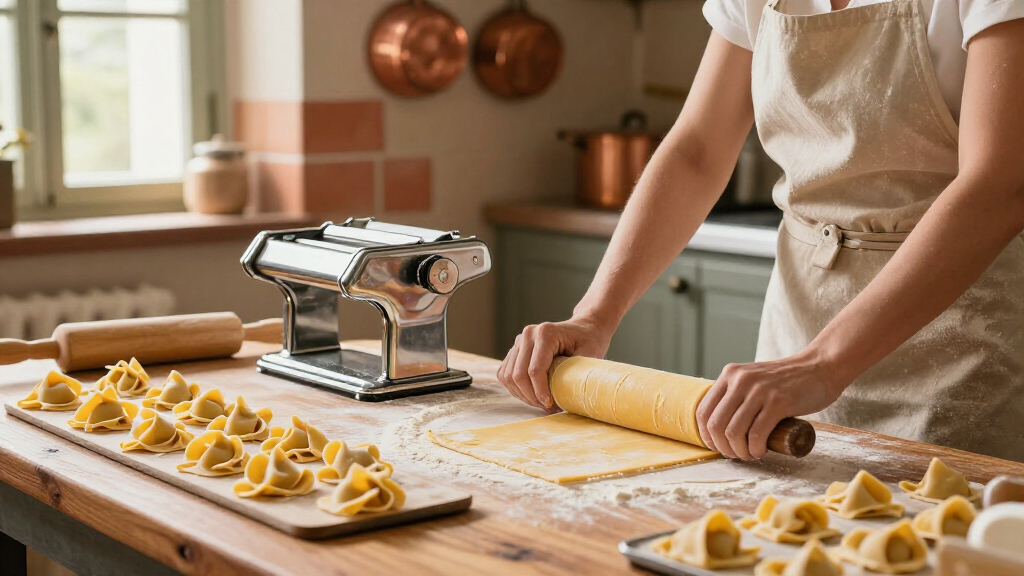
I judged each of these 13 products on five factors: rolling and cutting consistency, build quality, ease of use, cleaning and maintenance, and value for the job it performs. Manual crank machines were compared against each other on roller precision and how well they hold a setting across a full sheet, while single-purpose tools like the cavatelli boards and chitarra were judged on shape quality and durability rather than versatility — penalizing a chitarra for not making tagliatelle would miss the point of the tool.
The ranking favors machines that do one job exceptionally well over gadgets that do several jobs adequately. That is why the Italian-made Marcato Atlas 150 and Imperia sit at the top, clone-tier manual machines fill the value tier, the electric sheeter occupies a niche for high-volume cooks, and the traditional shape tools round out the list for buyers who already own a roller or want regional Italian shapes specifically.
Factors to Consider When Choosing Italian Pasta Makers
Before choosing a pasta maker, it helps to understand what actually separates a satisfying purchase from a gadget that ends up in a drawer. These are the factors that shaped my rankings and the ones most buyers get wrong.Manual Crank vs. Electric
The first decision is how much effort you want to trade for money and control. Manual crank machines cost less, roll more precisely at thin settings, and give you a feel for the dough — experienced pasta makers prefer them because you can feel resistance change as the sheet thins. Electric machines and sheeters free both hands for guiding the sheet, which matters if you make large batches or have wrist or hand issues, but you give up tactile feedback and usually fine thickness control. A common mistake is assuming electric means easier for beginners; beginners actually benefit more from slowing down and watching the dough on a crank machine. Match the mechanism to your hands and your batch size, not to a preference for gadgets.
Roller Width and Machine Stability
Roller width determines sheet width, which determines what you can make: a 150mm roller handles lasagna sheets and wide pappardelle, while narrower rollers force you to trim everything down. Just as important is how the machine anchors to your counter. A weak clamp is the single most common complaint on budget machines — the machine walks, the sheet comes out uneven, and the crank binds. Before buying, check that your counter has a lip or edge the clamp can grip; thick or stone countertop overhangs can make clamping impossible. Italian-made machines generally have heavier bodies and better clamps, which is part of what you pay for beyond the name.
Thickness Settings and What They Mean
Nine settings sounds uniform across brands, but the numbers are not standardized — a setting 6 on one machine may equal a setting 4 on another. What matters is the range between the thinnest and thickest settings, because delicate pastas like tagliolini and laminated doughs for ravioli need very thin, even sheets without tearing. Cheap machines often tear dough at their thinnest setting because the rollers are machined less precisely. My advice: ignore the number of settings and look at whether the machine holds consistent thickness across the full width of the sheet. Edges thinner than the center means imprecise rollers, and no recipe can compensate for that.
Traditional Shape Tools: Complements, Not Replacements
Tools like the chitarra, cavatelli boards, and garganelli strippers are frequently bought by mistake — shoppers expect a pasta ‘maker’ and receive a shaping board that still requires you to produce the dough sheet by hand. For cooks who already own a roller, these tools open up genuinely regional Italian shapes that cutters cannot produce, and they are inexpensive. But if you are starting from zero, buy a roller machine first and add shape tools later. The one exception is cavatelli and gnocchi, which start from a dough rope rather than a sheet, so boards like the Fante’s and O’Creme work standalone. Knowing which category a tool belongs to is the difference between a smart purchase and a duplicate.
Materials, Cleaning, and Longevity
Nearly every machine here is marketed as stainless steel, but there is real variation in body rigidity, roller hardness, and gear quality. Never put a pasta machine in the dishwasher or wash it with water — the gears and bearings trap moisture and rust; the standard cleaning method is letting scraps dry and brushing them out. This means dough that does not stick is your real cleaning strategy, which comes back to roller quality. Chrome-plated steel bodies on Italian-made machines resist corrosion far better over years of humid kitchen storage. If longevity is your priority, the premium machines are cheaper over a decade than replacing a budget unit twice.
Attachments and Upgrade Paths
Think of a pasta machine as a platform, not a single product. The Marcato Atlas 150 and Imperia both have ecosystems of attachments — ravioli makers, extruders for bucatini, wider cutters — that effectively double the machine’s usefulness years later. Budget clone machines rarely have genuine attachment ecosystems, so what you buy is what you are stuck with. If you can picture yourself eventually making filled pasta or extruded shapes, paying more upfront for an expandable machine is the better long-term value. If you only ever want fettuccine and linguine, that upgrade path has no value and a basic machine is the smarter buy.
Frequently Asked Questions
Is the Marcato Atlas 150 worth the extra cost over budget 3-in-1 machines?
It depends on how often you make pasta and how thin you need your sheets. The Atlas 150’s rollers are machined to tighter tolerances, which shows up at the thinnest settings where budget machines tear delicate dough, and its Italian-made chrome body holds up better over years of use. It also has a genuine attachment ecosystem for ravioli and extruded shapes that clone machines lack. If you make pasta monthly or less and mostly want fettuccine at medium thickness, the budget machines will do the job for a fraction of the price. But if fresh pasta becomes a regular ritual, the Atlas 150 costs less per use over its lifespan than replacing a cheaper machine.
Can one machine make ravioli, or do I need a separate tool?
None of the 13 machines here produce filled pasta on their own — rollers make flat sheets and cutters make strands. For ravioli you either need a tray press like the CucinaPro, a dedicated ravioli attachment compatible with the Marcato or Imperia, or you hand-fold sheets. The tray route is the cheapest and easiest for beginners, since you lay a sheet over the tray, press filling into the wells, and seal with a top sheet. Attachment-based ravioli makers give more control over size and shape but cost more. If filled pasta is your main goal, plan for one of these add-ons from the start rather than expecting the base machine to cover it.
Do I need an electric pasta maker if I make pasta for a family?
For a family of four, a manual crank machine is usually still the better choice — the volume is manageable and crank time is maybe ten minutes once dough is kneaded. Electric sheeters like the Dyna-Living earn their place when you are making double batches, running sheets for ravioli production, or have hand and wrist limitations that make cranking painful. The tradeoff is real, though: electric machines sacrifice the fine thickness increments that manual machines offer, and delicate pasta suffers for it. A good middle path is pairing a quality manual machine with a motor attachment if your arm tires, which preserves roller precision while removing the cranking.
What is the difference between a chitarra, a cavatelli board, and a regular pasta machine?
A regular pasta machine rolls dough into sheets and cuts those sheets into strands — it is the general-purpose tool. A chitarra is a framed wire cutter you press sheets or ropes through by hand, producing square-cut spaghetti alla chitarra and other regional shapes with a texture rollers cannot match. A cavatelli board does not use sheets at all; you roll small dough pieces along ridged grooves to form shaped pasta, often with a rolling pin like the O’Creme model. Both are traditional Italian tools, inexpensive, and quick to learn, but they complement rather than replace a roller machine. Buy them when you already have sheet-making covered or specifically want those shapes.
How do I keep a manual pasta machine from sliding on the counter?
Sliding almost always comes down to the clamp and the counter, not your technique. The clamp needs a straight countertop edge of standard thickness to grip — very thick stone counters or lips that angle underneath give it nothing to hold. If your counter cannot take the clamp, a portable cutting board clamped to a table, then the machine clamped to the board, solves it. Avoid wedging cardboard under the machine, which tilts the rollers and produces uneven sheets. Heavier Italian-made machines resist walking better even when the clamp grip is imperfect, which is one practical reason the premium tier ranks above the budget clones.
Conclusion
For most home cooks, the Marcato Atlas 150 Classic is the best overall choice — precise rollers, durable chrome build, and an attachment path that grows with your skills. The best value pick is the Sailnovo 3-in-1 Manual Pasta Maker, which delivers genuinely usable sheets and cutters at a fraction of the premium price, with the Nuvantee as a close alternative if the Sailnovo is unavailable. The Imperia Classic Line stands as the best premium alternative for cooks who want a wider roller and a slightly different hand feel than the Atlas. Beginners get the gentlest entry through the 3-in-1 machines with nine thickness settings, since starting at thick settings and working down teaches dough feel without wasting ingredients.
For specific needs: choose the Dyna-Living Electric if volume or wrist strain rules out cranking; add the CucinaPro Ravioli Tray once you want filled pasta; and reach for the Silifine Chitarra, Fante’s or O’Creme cavatelli boards, or the Eppicotispai Garganelli Stripper when regional Italian shapes are the goal — none of them replace a roller, and all of them do something a roller cannot. Whichever route you take, match the tool to the pasta you actually want to eat, not the one with the longest feature list.
Evergreen bestsellers Picks
bestsellers
As an affiliate, we earn on qualifying purchases.