TL;DR

Get kitchen staples and gadgets delivered free with Prime
- Fast, free delivery on millions of items
- Prime Video, Amazon Music and more included
- Member-only deals all year
Pasta alla Genovese is a deeply savory Neapolitan ragù made primarily from onions and beef, despite a name that points toward Genoa. You cook it gently for three to six hours, dress broken ziti with the bronze onion sauce, and often serve the braised beef afterward as a separate course.
Several pounds of onions can disappear into one pot so completely that your guests may never guess what created the sauce. After hours of quiet cooking, those pale slices become a glossy bronze ragù with the weight of meat gravy, the sweetness of roasted vegetables, and a peppery finish that clings inside every piece of pasta.
This is pasta alla Genovese, one of Naples’s great Sunday dishes and a recipe that deserves more attention outside Campania. Despite the name, you will not find basil, pine nuts, or the bright green color of Ligurian pesto. You get beef, onions, wine, rendered fat, and enough time for the ingredients to stop tasting separate.
You will learn why the dish belongs to Naples, how it turns one pot into two traditional courses, and what makes the onions melt instead of scorch. You will also get a practical cooking method, fixes for watery or overly sweet sauce, serving ideas, allergen notes, and food-safe storage guidance. By the end, you will know what to order during a Sunday in Naples and how to bring the same slow rhythm into your own kitchen.
Use roughly 2.5 to 4 pounds of onions per pound of collagen-rich beef; the onions create the sauce rather than merely seasoning it.
Cook Genovese for three to six hours over moderate heat, judging doneness by a dense bronze color and onions that have almost lost their shape.
Dress broken ziti or another sturdy tube with the sauce, then serve the braised beef separately for a traditional Neapolitan two-course lunch.
Correct watery sauce by removing the tender meat and reducing the onions uncovered in a wide pot.
Cool leftovers within two hours, refrigerate them below 40°F, and reheat the sauce to 165°F before eating.
Neapolitan Sunday Table · Slow-Cooked Classic
Sunday in Naples: Genovese Sauce, the Onion Ragù Nobody Talks About
Several pounds of pale onions disappear into one pot, emerging hours later as a glossy bronze ragù with the weight of meat gravy, the sweetness of roasted vegetables, and a peppery finish built for sturdy pasta.
01 · Identity
A Neapolitan ragù hiding behind a Genoese name
Pasta alla Genovese belongs to Naples. Its exact name origin remains unresolved, but its modern culinary identity is clear: beef, onions, wine, rendered fat, and time—not basil pesto.
The vegetable becomes the sauce
Onions supply moisture for the braise, then collapse into sweetness, body, and a dense coating for the pasta.
A rich white ragù
Meat juices, collagen, wine, fat, and reduction create depth without depending on a conventional red sauce.
The history stays uncertain
Theories cite Genoese merchants, visiting cooks, a cook called “’o Genovese,” or exchange between two port cities.
Naples
Genovese: bronze onion-and-beef ragù served with broken ziti and often followed by the braised meat.
Genoa
Pesto Genovese: the bright Ligurian combination of basil, garlic, pine nuts, cheese, and olive oil.
02 · The ratio
More onion than meat—by design
A useful home range is 2.5 to 4 pounds of onions for every pound of collagen-rich beef. The onions are not a supporting aromatic; they are the structure of the finished ragù.
Choose chuck, brisket, shank, or another braising cut. Collagen and fat enrich the sauce; very lean steak contributes less body.
03 · Method
Six steps from sharp slices to bronze ragù
Use moderate heat, limited liquid, and a long uncovered finish. The final judge is not the clock but the onions: amber-brown, glossy, and almost without shape.
Slice evenly
Cut thin half-moons about ⅛ inch thick. Avoid processing the onions into wet pulp.
Brown the beef
Pat it dry, season it, and work in batches. Crowding creates steam instead of savory browning.
Start the collapse
Add onions and a restrained soffritto. Salt lightly and cook until their abundant moisture releases.
Deglaze modestly
Add a small pour of dry white wine. Excess stock or wine dilutes the defining concentration.
Braise and reduce
Cook gently for three to six hours, stirring more often as the mixture thickens.
Finish the pasta
Toss broken ziti with sauce and a splash of pasta water. Add pepper and measured hard cheese.
04 · Sunday rhythm
One pot becomes two traditional courses
The structure explains the dish’s place at a long family lunch: the onions dress the pasta, while the tender beef follows as the main protein.
Broken ziti with onion ragù
The dense sauce settles into every hollow tube. Paccheri, candele, and rigatoni are sturdy alternatives.
Braised beef with vegetables
Serve the tender meat with bitter greens, potatoes, or a crisp salad to balance its richness.
05 · Troubleshooting
Read the pot, then correct the course
Good Genovese balances sweetness, meatiness, richness, acidity, and pepper. Most problems come from stopping early, rushing the heat, or adding too much liquid.
| What you see | Diagnosis | Status | Correction |
|---|---|---|---|
| Pale, distinct onion strips | The sauce stopped too early | ~ Keep cooking | Continue gently until the onions nearly lose their shape. |
| Thin liquid around tender meat | Too much moisture remains | ~ Reduce | Remove the meat and reduce uncovered in a wide pot. |
| Dark flecks and harsh bitterness | The onions scorched | ✕ Burned | Transfer unburned contents without scraping the pot bottom. |
| Sweet but flat flavor | Salt, acidity, or savoriness is low | ~ Rebalance | Add pepper, hard cheese, salt, or a restrained acidic note. |
| Bronze, glossy, cohesive coating | Water has reduced and flavors have merged | ✓ Ready | Toss with pasta and enough pasta water to emulsify. |
The doneness spectrum
Target: dense bronze color, little free liquid, tender beef, and onions that no longer read as separate slices.
06 · The supporting cast
Choose ingredients that protect the onion’s lead role
Household variations are welcome, but herbs, tomato, carrots, or excess wine should never become louder than the slow-cooked onions.
07 · Serve safely
Storage, reheating, and guest notes
Treat the finished ragù like any cooked meat dish. Cool it promptly, store it cold, and disclose optional ingredients that may affect guests.
Time and temperature
- Cool leftovers within two hours of serving.
- Divide large quantities into shallow containers for faster cooling.
- Refrigerate below 40°F and reheat the sauce thoroughly to 165°F.
Potential dietary flags
The core dish can vary by household. Check the pasta, cooking fat, cheese, wine, soffritto, and cured meat before serving guests.
The secret is not a hidden spice. It is enough onions, moderate heat, and the patience to let separate ingredients become one sauce.
What Genovese Sauce Really Is—and Why Genoa Is a Red Herring
Sunday in Naples: Genovese Sauce, the Onion Ragù Nobody Talks About is the story of a Neapolitan white ragù, not a Ligurian pesto. It combines abundant onions with beef and cooks them until the vegetables lose their shape, leaving a dense, bronze sauce that tastes sweet, meaty, peppery, and deeply savory.[1]
The practical definition is simple: Genovese is an onion-led meat ragù in which the onions become the sauce. They do not sit in the background like the spoonful of chopped onion that starts many stews. Their water slowly braises the beef, then evaporates as the remaining sugars, fat, and meat juices gather into a glossy coating.
The name creates an understandable mix-up. Its exact origin remains unresolved, with stories involving Genoese merchants or cooks in Naples, a cook nicknamed ’o Genovese, and centuries of exchange between two busy port cities. Those accounts remain theories rather than proven history, while the dish’s place in modern Neapolitan cooking is clear.[1]
Imagine ordering Genovese in Genoa and expecting the Naples version. You would more likely encounter pesto Genovese, the Ligurian mixture of basil, garlic, pine nuts, cheese, and olive oil. In a Naples trattoria, the same word can bring a plate of brown, onion-rich pasta with a smell closer to a Sunday roast than a summer herb garden.

The easy distinction: pesto Genovese belongs to the cooking of Liguria, while pasta alla Genovese is a slow-cooked specialty of Naples.
Products Worth Considering

Dyson Cyclone V10 Origin Cordless Vacuum

Dyson V15 Detect Cordless Vacuum

Levoit Eleva 300X Air Purifier with Sealed HEPA Filtration
As an affiliate, we earn on qualifying purchases.
Why a Neapolitan Sunday Gives You Two Courses From One Pot
Sunday in Naples: Genovese Sauce, the Onion Ragù Nobody Talks About makes sense when you see it as two courses from one pot. The onion sauce dresses pasta for the primo, or first course, while the tender beef can follow as the secondo, the main protein course.[1]
This arrangement turns modest ingredients into a long family meal without asking you to cook two separate centerpieces. A chuck roast flavors the onions for hours; the onions return the favor by bathing the meat in moisture and fat. At the table, broken ziti arrives first, followed by beef with bitter greens, potatoes, or a crisp salad.
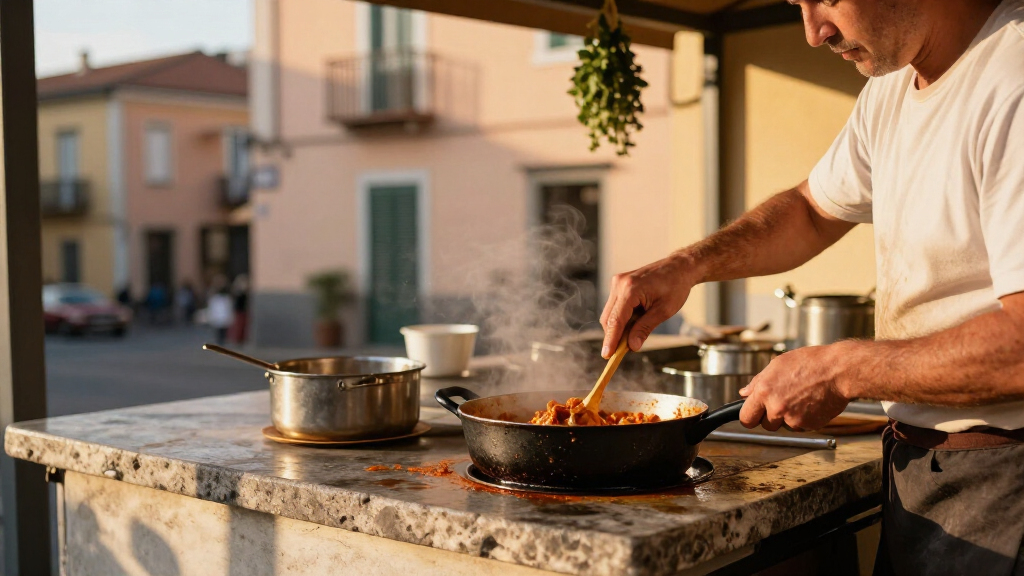
That rhythm explains why Genovese belongs to Sunday. You can start the pot in the morning, hear it murmur through the afternoon, and eat when the sauce tells you it is ready. In an apartment near Naples’s Vomero district, for example, the smell may reach the stairwell before the guests reach the door; the pot announces lunch on the cook’s behalf.
Genovese also corrects a familiar misunderstanding about southern Italian food. Campanian cooking does not depend on tomatoes for every rich sauce. Here, onion sugars, collagen, wine, meat juices, and slow reduction create the depth that tomatoes supply elsewhere.
You can follow the older two-course custom or shred some beef back into the sauce for a one-bowl meal. The first approach gives you a cleaner onion ragù and a distinct second course; the second feels convenient on a weeknight. Neither changes the central lesson: time is an ingredient, and the meal rewards you for giving it room.

The Onion-to-Beef Balance That Builds the Sauce
Sunday in Naples: Genovese Sauce, the Onion Ragù Nobody Talks About depends on using far more onions than meat. A useful home ratio is roughly 2.5 to 4 pounds of onions for every pound of beef, adjusted for your pot, the onions’ moisture, and how concentrated you want the final ragù.
For a six-person lunch, you might pair 3 pounds of mild onions with 1 to 1.5 pounds of chuck, brisket, or shank. Collagen-rich beef softens during the long braise and gives the sauce body. Very lean steak costs more yet contributes less gelatin, making it a poor bargain for this job.
| Ingredient | What it does | Practical choice |
|---|---|---|
| Onions | Create moisture, sweetness, and most of the sauce | Yellow, white, copper-skinned, or Cipolla Ramata di Montoro from Campania |
| Beef | Adds savoriness, fat, and gelatin | Chuck, brisket, shank, or another braising cut |
| Cooking fat | Carries flavor and softens the vegetables | Olive oil, lard, pancetta, or a household mixture |
| Wine | Adds acidity and lifts browned flavors | A modest pour of dry white wine |
| Pasta | Holds the dense finished sauce | Broken ziti, candele, paccheri, or rigatoni |
A small soffritto, meaning a gently cooked base of carrot and celery, can round out the flavor. Keep it restrained. If herbs, tomato paste, or carrots become the loudest voices, the onions never get to tell their story.
Finish the pasta with black pepper and a measured handful of Pecorino Romano DOP, Parmigiano Reggiano DOP, or both. The salty cheese reins in the onions’ sweetness. If you use celery, wheat pasta, butter, cheese, pancetta, or wine, flag celery, gluten, dairy, pork, and sulfites for guests whose allergies or dietary needs make those ingredients unsafe.

6 Steps That Turn Sharp Onions Into Bronze Ragù
The reliable path to good Genovese is thin slicing, moderate heat, limited liquid, and a long uncovered finish. You are waiting for the onions to surrender their water, collapse into the fat, and turn amber-brown without burning. Depending on quantity and pot shape, that process takes three to six hours.[1]
- Slice the onions evenly. Aim for thin half-moons about 1/8 inch thick. A food processor saves time when you face three or four pounds, but stop before it turns the onions into wet pulp.
- Brown the beef in batches. Pat the meat dry, season it, and give each piece room in a heavy Dutch oven. Crowding creates gray steam; open space creates the dark fond that later dissolves into the sauce.
- Soften the vegetables gently. Add your onions and restrained soffritto over medium-low heat. The heap may look absurdly tall, yet it will slump and release enough juice to surround the beef.
- Add only a modest splash of wine. Scrape the bottom, let the sharp alcoholic smell fade, and avoid flooding the pot. Genovese needs concentration, not a stock-filled broth.
- Braise, reduce, and stir more often near the end. Cover the pot during the early stage if the onions need help releasing moisture, then offset or remove the lid. As the sauce thickens, the bottom can catch quickly, so lower the heat and scrape every 10 to 15 minutes.
- Toss the sauce with sturdy pasta. Boil broken ziti until just shy of done, then finish it in the ragù with a small ladle of pasta water. Add cheese and black pepper until the sauce grips the pasta instead of pooling underneath it.
Your eyes matter more than the timer. At hour two, you may still see pale onion ribbons swimming around firm pieces of beef. At hour four, the spoon should draw a clean path across the pot, and the onions should look like bronze silk rather than vegetables.
Use a heavy pot because it softens the heat’s sharp edges. A thin saucepan behaves like an impatient cook: it rushes the bottom while the top remains wet. If you hear hard frying instead of a gentle simmer, add a tablespoon or two of water, lower the burner, and stir before the sugars burn.
If you serve wine with lunch, reserve it for adults of legal drinking age and drink responsibly. Cooking reduces alcohol, but it does not always remove every trace, so use alcohol-free wine or a little mild stock plus wine vinegar when complete avoidance matters.

Fix the Five Mistakes That Keep Genovese Pale or Watery
Most disappointing Genovese comes from stopping early, adding excess liquid, or turning up the heat to rush evaporation. A finished sauce should look dense and amber-brown, with few recognizable onion strips. If it resembles pale onion soup, it needs more gentle cooking rather than more ingredients.
- Pale onions: Remove or offset the lid and keep simmering. A wide pot speeds evaporation, while a narrow pot can add an hour or more.
- Watery sauce: Take out the tender meat so it does not fall apart, then reduce the onions uncovered. Return the beef only long enough to warm it.
- Burned flavor: Do not scrape blackened material into the sauce. Move the unburned portion to a clean pot and continue over lower heat.
- Excessive sweetness: Add salt in small pinches, plenty of black pepper, aged cheese, and a little acidity. Proper beef browning also gives the sweetness a savory counterweight.
- Greasy texture: Skim excess surface fat or chill the sauce overnight and lift off part of the hardened layer. Leave enough fat to carry flavor and help the sauce cling.
One common wrong turn is treating the dish like caramelized-onion pasta. Caramelized onions can taste jammy and sweet, but Genovese is a meat ragù with gelatin, rendered fat, vegetable moisture, and browned beef flavors woven through it. That difference is why onions alone cannot produce quite the same weight.
Another trap is adding tomato until the sauce turns red. Some modern and family recipes use a spoonful of tomato paste, and household variation belongs to Italian cooking. Still, the classic profile remains white or tomato-free; a large can of tomatoes pushes the defining onion flavor behind a familiar red ragù.
Suppose dinner is 30 minutes away and your sauce still looks loose. Remove the meat, spread the onions across the pot’s full base, and simmer uncovered while you cook the pasta. That simple change gives moisture more surface from which to escape, and the sauce can tighten surprisingly fast.

Serve, Store, and Reheat Genovese Without Losing Its Gloss
Serve Genovese by coating sturdy pasta with the onion sauce, then offering the braised beef separately or folding some into the bowl. Cool leftovers promptly, refrigerate them below 40°F or 4°C, and reheat the sauce gently to 165°F or 74°C before serving.[2]
Broken ziti remains the emblematic choice because its rough snapped ends catch thick sauce. If you cannot find long ziti, use paccheri, rigatoni, or candele rather than delicate angel hair. A dense spoonful of ragù can bully thin strands, while a wide tube carries it with ease.
Keep the rest of the plate restrained. Sautéed escarole, broccoli rabe, or a salad sharpened with wine vinegar cuts through the richness. If the beef follows as a second course, serve it with potatoes or plainly cooked greens rather than another heavy sauce.
Genovese often tastes even better the next day because the fat, onion, and meat flavors settle into one another. Divide a large batch into shallow containers within two hours of cooking, rather than leaving the warm pot on the counter all evening. Refrigerated sauce keeps for three to four days, while frozen sauce keeps its texture best when packed without pasta.[2]
For a Tuesday dinner, thaw a container overnight in the refrigerator, warm it over low heat, and loosen it with a spoonful of pasta water. The sauce may look separated at first; steady stirring brings back the gloss. Freeze cooked pasta separately only if you must, since freshly boiled tubes provide a much better bite.
Modern versions use pressure cookers, mushrooms, legumes, or shredded beef, and each can solve a real need. A pressure cooker cuts hands-on time, while mushrooms give a vegetarian onion ragù savory depth. Call the meatless version an adaptation rather than the classic dish, and keep the high onion ratio so the recipe retains its Neapolitan character.
Frequently Asked Questions
Is Genovese sauce actually from Genoa?
Genovese sauce is a Neapolitan specialty, although its name may reflect old connections between Genoese people and Naples. Historians have not settled the exact naming story, so claims about one specific inventor belong to legend rather than documented fact.[1]
Does traditional pasta alla Genovese contain tomatoes?
Classic Genovese is generally tomato-free and belongs to the family of white ragùs. Some cooks add a little tomato paste or tomato, but it should support the onions rather than turn the sauce into a standard red ragù.
Which onions work best for Genovese sauce?
Choose mild yellow, white, or copper-skinned onions that soften readily. In Campania, Cipolla Ramata di Montoro, the copper-colored onion associated with Montoro, offers sweetness and good structure, but ordinary yellow onions can still make an excellent pot.
How long should Genovese cook?
Plan on three to six hours, depending on the onion quantity, meat cut, pot width, and burner. Trust the texture: the sauce is ready when the onions have nearly vanished and a spoon leaves a path through the thick bronze mixture.
Can you make Genovese a day ahead?
Yes, and an overnight rest often improves the flavor. Cool the sauce in shallow containers within two hours, refrigerate below 40°F, and reheat it to 165°F; you can also remove some hardened fat before warming.[2]
Can Genovese sauce be frozen?
Freeze the sauce without the pasta in meal-sized containers. Thaw it in the refrigerator, reheat it gently, and stir in a little pasta water if it looks tight or separated; freshly cooked ziti will give you a firmer, cleaner bite.
Conclusion
The one thing to remember is that you cannot rush the onions. Give them a heavy pot, moderate heat, and enough time to change from a pale heap into a bronze, spoon-coating ragù. When the individual slices disappear, the real Genovese finally appears.
Plan it for a quiet Sunday, break the ziti by hand, and save the beef for the next course. Then open the kitchen door and let that dark, sweet-savory aroma drift through the house—the same patient signal that lunch is nearly ready across Naples.