
TL;DR

Get kitchen staples and gadgets delivered free with Prime
- Fast, free delivery on millions of items
- Prime Video, Amazon Music and more included
- Member-only deals all year
Porcini (Boletus edulis) season in Italy runs roughly August through November, peaking in September and October after autumn rains. Fresh porcini should be firm, dry, fragrant, and worm-free; clean them with a brush instead of water; and cook them simply — sliced and sautéed in olive oil with garlic and parsley, or folded into risotto and tagliatelle. Dried porcini are the year-round alternative, delivering concentrated flavor plus a soaking liquid that works as free stock.
The first cold rain of September changes everything at the Italian market. Overnight, the mushroom vendor’s table goes from pale cultivated button mushrooms to a heap of porcini — fat, bronze-capped, thick-stemmed forest mushrooms that smell like wet earth and toasted hazelnuts. In Tuscany and Piedmont, cooks treat that first appearance the way others treat the first strawberries of June.
Porcini (Boletus edulis) earned the title Italy’s king mushroom for good reason: a meaty texture that holds up to heat, and a depth of flavor that turns a humble plate of tagliatelle into something restaurant-worthy. But they’re expensive, seasonal, and unforgiving of bad handling. Buy a tired one and you’ve wasted fifteen dollars a pound.
This guide covers the whole journey: when and where the season opens, how to judge a fresh porcini in thirty seconds, the cleaning method Italian cooks swear by, and the classic dishes — plus storage and safety basics so nothing ends up in the bin or, worse, in an emergency room.
Porcini season runs late August through November in Italy, with the main harvest mid-September to October after autumn rains; Borgotaro (Emilia-Romagna) holds…
Judge freshness with the thirty-second test: firm dry cap, white pore surface, solid stem, earthy smell, and no worm pinholes at the base.
Clean porcini dry with a brush and paring knife — never soak them, because the flesh absorbs water and loses flavor.
Use fresh porcini where the mushroom stars (trifolati, tagliatelle, risotto) and dried ones as a seasoning; 1 oz dried plus its filtered soaking liquid flavors…
Store fresh porcini in a paper bag in the fridge at 40°F or below and use within 3–7 days; preserve extras by drying or sauté-then-freezing rather than oil-pac…
Porcini Season Opens: Buying, Cleaning & Cooking Italy’s King Mushroom
The first cold rain of September changes everything at the Italian market. Overnight, the mushroom vendor’s table goes from pale cultivated buttons to a heap of porcini — fat, bronze-capped, thick-stemmed forest mushrooms that smell like wet earth and toasted hazelnuts. Here’s how to buy, clean, and cook them like an Italian cook.
When Porcini Season Actually Opens
The real trigger isn’t the calendar — it’s weather. Porcini fruit when warm soil meets rain followed by cooling nights. A dry September pushes the main harvest into October; an early August storm brings an unexpected first flush. There are usually two harvests: a smaller summer flush sparked by thunderstorms, and the big autumn harvest from mid-September through October, when cooler temperatures mean denser flesh and fewer insects. In the Apennines, the fruiting window moves downhill as temperatures drop — porcini can be found into November.
How to Spot a Fresh Porcini in 30 Seconds
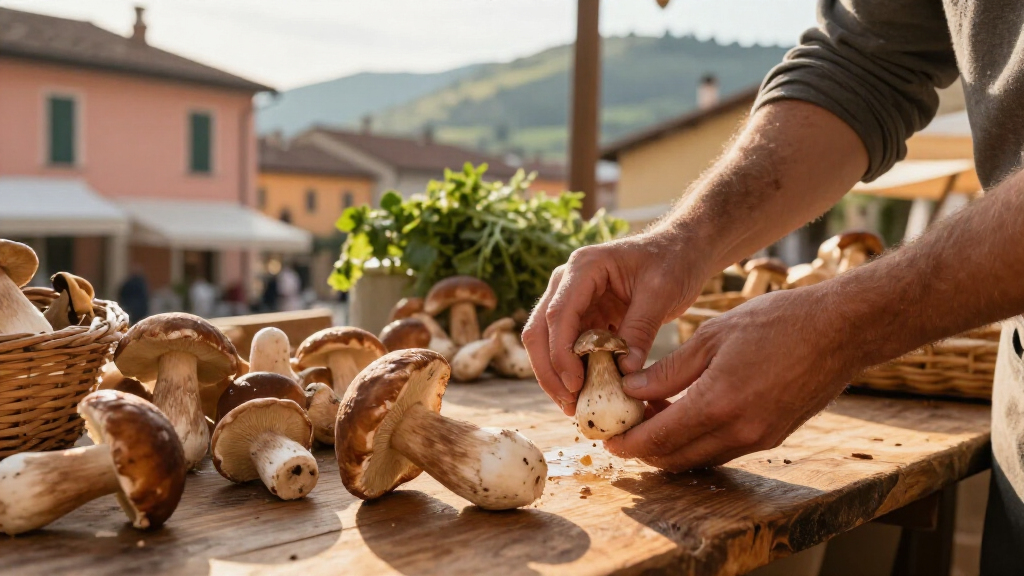
A fresh porcini is firm, dry, heavy for its size, and smells distinctly of forest floor. Pick it up: the cap should feel dense and slightly cool, the stem thick and solid like cork, not spongy. Remember — porcini have pores underneath, never gills. Buy from a reputable, licensed vendor (the funghivendolo), never an anonymous roadside seller.
Dry & Matte
✓ Firm, dense, brownish, slightly cool. ✗ Slimy, cracked wide open, or fully flattened — a flattened cap means old age.
White, Not Yellow
✓ White or pale cream pore surface. ✗ Greenish-yellow means past prime; brown and slimy means walk away.
Pinholes = Worms
Turn the stem upside down. One or two tiny holes near the base is normal and harmless. A cap riddled with tunnels is money down the drain.
Solid Like Cork
✓ Bulbous and firm. ✗ Soft spots mean decay has started inside the flesh.
Wet Earth & Hazelnut
✓ Rich, earthy, yeasty aroma. ✗ Sour or ammonia-like odor means spoilage — full stop.
White Interior
✓ White, unmarred flesh — some varieties slowly discolor faint blue-green where cut. ✗ Dark channels mean larvae tunnels.
Clean Like an Italian Cook: Brush, Don’t Soak
Porcini are cleaned dry — never under running water, because the flesh drinks water like a sponge and dilutes the flavor you paid for. This is the same process used in restaurant kitchens from Alba to Arezzo.
Brush
Soft mushroom brush or damp cotton cloth, working from cap down to base to push dirt away.
Scrape
Paring knife on the stem base for embedded soil; cut off the bottom entirely if crusted.
Trim
Remove bruised, soft, or tunneled areas; peel slimy cap skin off in strips like orange peel.
Split
Open a few stems lengthwise to check for worms, especially in late-season mushrooms.
Cut & Cook
Thick slices for grilling, cubes for ragù, fine dice for sauce. Clean just before cooking.
Water is for genuinely sandy mushrooms only — and then just a fast rinse followed by immediate patting dry. Cut porcini oxidize fast: store in a paper bag in the fridge, never plastic, which turns them slimy within a day.
Fresh vs. Dried: Which One Your Dish Actually Needs
Fresh porcini taste delicate, nutty, almost sweet — they shine when the mushroom is the point of the dish. Dried porcini are concentrated and intense, more like a seasoning than a vegetable, delivering umami fresh simply can’t match. Most serious Italian kitchens keep both.
| Attribute | Fresh Porcini | Dried Porcini |
|---|---|---|
| Flavor | Delicate, nutty, faintly sweet | Concentrated, intensely earthy |
| Best for | Grilling, sautéing, raw-style slicing with Parmesan | Risotto, broths, sauces, meat braises |
| Season | August–November only | Year-round |
| Storage | Paper bag in fridge, 3–7 days | Airtight jar, cool & dark, up to a year |
| Bonus | Meaty, substantial texture | Soaking liquid = free stock |
Liquid gold: soak dried porcini in warm (not boiling) water for 20–30 minutes, then pour the liquid through a coffee filter to trap grit. One ounce (28 g) rehydrates to roughly 4 oz of mushrooms — a small handful flavors an entire pot.
The Classic Dishes: Let the Mushroom Star
Cook porcini simply — sliced and sautéed in olive oil with garlic and parsley, or folded into risotto and tagliatelle. They pair beautifully with butter, olive oil, parsley, and lemon.
Porcini Trifolati
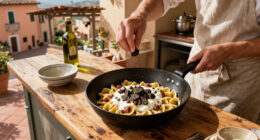
Thick slices sautéed in olive oil with garlic and parsley — the purest showcase of the fresh mushroom’s meaty texture and nutty sweetness.
Tagliatelle ai Porcini
Fresh porcini folded into ribbons of egg pasta. A humble plate becomes restaurant-worthy — the dish that earned porcini its crown.
Risotto ai Funghi
Rehydrated dried porcini plus their filtered soaking liquid as the stock base — concentrated umami that fresh mushrooms alone can’t match.
How Long Porcini Last
Store fresh porcini in a paper bag in the fridge at 40°F or below. Preserve the surplus by drying or sauté-then-freezing — rather than oil-packing, which carries botulism risk with low-acid vegetables in anaerobic oil.
The Whole Journey, Condensed
Season: Late August through November in Italy, with the main harvest mid-September to October after autumn rains. Borgotaro in Emilia-Romagna holds Italy’s only IGP-protected porcini — and a festival every September.
Buying: The thirty-second test — firm dry cap, white pore surface, solid stem, earthy smell, and no worm pinholes at the base.
Cleaning: Brush and paring knife only — never soak. The flesh absorbs water and loses the flavor you paid for.
Cooking: Use fresh where the mushroom stars (trifolati, tagliatelle, risotto); use dried as a seasoning — 1 oz plus its filtered soaking liquid flavors an entire pot.
When Porcini Season Actually Opens (and Why the Calendar Keeps Shifting)
Porcini season in Italy generally opens in late August and runs through October or November, but the real trigger isn’t the calendar — it’s weather. The fungus fruits when warm soil meets rain followed by cooling nights, so a dry September can push the main harvest into October, while an early storm in August can bring an unexpected first flush. In Castel del Monte in Abruzzo and the Borgotaro forests of Emilia-Romagna — home to Italy’s only IGP-protected porcini — season timing is tracked almost daily.
There are usually two harvests. The summer flush, sparked by August thunderstorms, produces smaller quantities of what locals sometimes call porcini neri (dark-capped porcini) in hotter, lower areas. The autumn harvest, from mid-September through October, is the big one: cooler temperatures mean denser flesh, fewer insects, and mushrooms that keep better. If you’re planning a trip around porcini — and the Festa del Fungo Porcino in Borgotaro every September is a good excuse — aim for late September.
Altitude matters too. In the Apennines, you can find porcini into November because the fruiting window simply moves downhill as temperatures drop. The mushroom grows in mycorrhizal partnership with oak, chestnut, pine, and beech roots — where those trees are, porcini follow.

Products Worth Considering

Philips Hue White and Color Ambiance Smart Light Starter Kit with Bridge and 4 A19 Bulbs

Roborock H60 Ultra-B Cordless Stick Vacuum Cleaner

Dyson Ball Animal 3 Upright Vacuum
As an affiliate, we earn on qualifying purchases.
How to Spot a Fresh Porcini in 30 Seconds at the Market
A fresh porcini is firm, dry, heavy for its size, and smells distinctly of forest floor — that’s the thirty-second test. Pick it up. The cap should feel dense and slightly cool, the stem thick and solid like a cork, not spongy. Underneath the cap, the pore surface (porcini have pores, not gills) should be white or pale cream. If it’s greenish-yellow, the mushroom is past its prime; if it’s brown and slimy, walk away.
Turn the stem upside down and look at the base. Tiny pinholes mean worms — common in wild porcini and not dangerous, but they eat the mushroom from the inside and hollow it out. One or two holes near the base is normal; a cap riddled with them is money down the drain. Slice one open if the vendor allows: the interior should be white and unmarred, slowly discoloring to a faint blue-green where cut on some varieties.
- Cap: dry, matte, brownish — never slimy or cracked wide open (a fully flattened cap means old age).
- Stem: bulbous and firm; soft spots mean decay has started inside.
- Smell: rich, earthy, yeasty. A sour or ammonia-like odor means spoilage, full stop.
- Cut surface: white, no tunnels or dark channels from insect larvae.
Buy from a reputable vendor who knows mushrooms — in Italy, that’s the licensed funghivendolo. Never buy wild mushrooms from an anonymous roadside seller, and never eat any wild mushroom you haven’t identified with certainty. That rule has no exceptions.

Clean Porcini Like an Italian Cook: Brush, Don’t Soak
Porcini are cleaned dry, with a brush and a paring knife — never under running water, because the flesh drinks water like a sponge and dilutes the flavor you paid for. Water is for genuinely sandy mushrooms only, and then only a fast rinse followed by immediate patting dry with paper towels.
Here’s the process, the same one used in restaurant kitchens from Alba to Arezzo:
- Brush the cap and stem with a soft mushroom brush or a damp cotton cloth, working from cap down to base to push dirt away from the flesh.
- Scrape the stem base with a paring knife to remove embedded soil — cut off the very bottom entirely if it’s crusted.
- Trim any bruised, soft, or tunneled areas; if the cap skin is slimy or dirty, peel it off in strips like an orange peel.
- Open a few stems lengthwise to check for worms, especially in late-season mushrooms.
- Cut into slices or cubes depending on your dish — thick slices for grilling, cubes for ragù, fine dice for sauce.
Clean them just before cooking, not hours ahead. Cut porcini oxidize and soften quickly, and exposure invites bacteria. If you must wait, keep cut pieces in the fridge in a paper bag — plastic traps moisture and turns them slimy within a day.

Fresh vs. Dried Porcini: Which One Your Dish Actually Needs
Fresh and dried porcini are two different ingredients, not substitutes in a one-to-one sense. Fresh porcini taste delicate, nutty, almost sweet — they shine when the mushroom is the point of the dish. Dried porcini are concentrated and intense, more like a seasoning than a vegetable, and they deliver umami that fresh simply can’t match. Most serious Italian kitchens keep both.
| Fresh Porcini | Dried Porcini | |
|---|---|---|
| Flavor | Delicate, nutty, faintly sweet | Concentrated, intensely earthy |
| Best for | Grilling, sautéing, raw-style slicing with Parmesan | Risotto, broths, sauces, meat braises |
| Season | August–November only | Year-round |
| Storage | Paper bag in fridge, 3–7 days | Airtight jar, cool and dark, up to a year |
| Bonus | Texture — meaty and substantial | Soaking liquid = free stock |
When you rehydrate dried porcini, soak them in warm (not boiling) water for 20–30 minutes, then pour the soaking liquid through a coffee filter or fine cloth to trap any grit — that liquid is liquid gold for risotto. About 1 ounce (28 g) of dried porcini rehydrates to roughly 4 ounces of mushrooms, and a small handful flavors an entire pot for four people.
The tradeoff is texture: rehydrated porcini go slightly rubbery, so chop them fine or combine them with fresh cultivated mushrooms. The classic restaurant trick is mixing both — fresh mushrooms for body, a few dried ones soaked in their liquid for depth.

Three Classic Dishes That Let Porcini Be the Star
The best porcini recipes are the simplest ones, because the mushroom is the flavor. Think of porcini the way you’d think of a great aged steak or a perfect summer tomato — the less you do to it, the more it gives you. Italian home cooking learned this generations ago: fat, heat, and salt do the work; heavy sauces only bury the prize, the way a heavy cream sauce would bury a good tomato in August. Start with these three, in order of difficulty.
1. Porcini trifolati (sautéed porcini). Slice thick, cook in olive oil over high heat with smashed garlic and a sprig of parsley — no crowding the pan, no stirring constantly. Two minutes per side gives you golden edges and a juicy center; crowd the pan instead and the mushrooms steam in their own liquid, going gray and limp like overcooked zucchini. Finish with lemon juice, or in Tuscany, a scattering of mentuccia (calamint). Serve on crostini or beside a grilled steak — a Florence trattoria classic is bistecca alla fiorentina with a mound of trifolati on top.
2. Tagliatelle ai porcini. Sauté cubed porcini in butter and olive oil, add a splash of the pasta cooking water, toss with fresh egg tagliatelle and grated Parmigiano-Reggiano. The starchy water plus mushroom juices makes its own light sauce — no cream needed, exactly like a classic cacio e pepe builds its sauce from pasta water and cheese. Twenty minutes, start to finish, and it tastes like a trattoria in the Borgotaro hills. A real October scenario: you come home from the market with two caps, and this is dinner before the table is even set.
3. Risotto ai funghi porcini. The signature dish. Build the risotto on porcini stock made from the dried soaking liquid, fold in sautéed fresh porcini at the end, and finish with butter and Parmigiano off the heat. Carnaroli rice holds its bite better than arborio — the small detail that separates good from great, the way a slow reduction separates a real ragù from a jar of sauce. This is the dish you’ll find on nearly every menu in Emilia-Romagna and Tuscany from late September onward, usually priced like the luxury it is.
Food safety notes: cook wild mushrooms thoroughly — raw or undercooked porcini can cause digestive upset even when correctly identified. An example: a correctly identified, perfectly fresh porcini sliced raw over a salad has still sent diners home with cramps, because the stomach has trouble with raw mushroom cell walls. Keep fresh porcini refrigerated at or below 40°F (4°C) and use within a week, preferably within three days. And if anyone at your table has a mushroom allergy or known fungal sensitivity, porcini dishes need flagging just like any other allergen.

Storing and Preserving Porcini So Nothing Goes to Waste
Fresh porcini keep 3 to 7 days in the fridge in a paper bag — never sealed plastic, which traps moisture and breeds slime within days. If you’ve bought more than you can eat, you have three good options, and Italians with a good autumn haul use all of them.
Drying is the tradition. Slice evenly about a quarter-inch thick, then use a dehydrator at 125°F (52°C) for 6–8 hours, an oven on its lowest setting with the door cracked, or string them and air-dry in a warm, dry, ventilated spot — the old Tuscan method. They’re done when the pieces snap cleanly. Store in airtight jars away from light; they hold their punch for up to a year.
Freezing works best when you cook first. Raw frozen porcini turn watery and limp; briefly sautéed ones, cooled and frozen flat in bags, keep for about three months and go straight from freezer into risotto. You can also freeze them raw, sliced, on a tray — acceptable, but expect softer texture.
In oil or under vinegar — porcini sott’olio — is the antipasto route, though home preserving of mushrooms in oil carries botulism risk if not done with correct acidity and refrigeration. Unless you follow a tested recipe precisely, stick to drying and freezing; they’re safer and taste more like the fresh mushroom anyway.
One pound of fresh porcini dries down to roughly 2 ounces — but those 2 ounces flavor a dozen dishes over the next year.
Frequently Asked Questions
How can I tell if a porcini mushroom is fresh or spoiled?
A fresh porcini is firm, dry, and smells intensely earthy. Spoilage shows up as sliminess on the cap, soft or spongy spots in the stem, a greenish-brown pore surface under the cap, and a sour or ammonia-like smell. Cut stems open to check for tunnels from insect larvae — a few pinholes at the base are normal, but a hollowed mushroom isn’t worth buying.
Are wild porcini safe to eat?
Yes, when correctly identified and fully cooked — but never eat any wild mushroom unless you’re an expert or bought it from a licensed, knowledgeable vendor. Italy requires inspected sale through recognized mushroom sellers. Even true porcini can cause digestive upset if eaten raw or undercooked, so always cook them thoroughly.
Can I substitute dried porcini for fresh?
Yes, with adjustments. Soak 1 oz (28 g) of dried porcini in warm water for 20–30 minutes until pliable, then chop and add them to your dish — expect a more concentrated, intense flavor and a softer texture than fresh. Always strain the soaking liquid through a fine filter and use it as stock; it’s often the best part.
How do I store fresh porcini mushrooms?
Keep unwashed fresh porcini in a paper bag in the refrigerator at 40°F (4°C) or below and use them within 3–7 days. Don’t store them in sealed plastic, which traps moisture and causes sliminess. For longer keeping, dry them completely or sauté briefly and freeze for up to three months.
What are the classic Italian dishes made with porcini?
The big three are risotto ai funghi porcini (porcini risotto built on the dried-mushroom soaking liquid), tagliatelle ai porcini (fresh egg pasta with butter-sautéed porcini and Parmigiano-Reggiano), and porcini trifolati — thick slices sautéed in olive oil with garlic and parsley. Porcini soup and grilled porcini caps are autumn staples too, especially in Tuscany and Emilia-Romagna.
Conclusion
If you remember one thing from porcini season, make it this: buy firm and fragrant, clean dry, cook simple. The mushroom has spent all year building its flavor under oak and chestnut roots — olive oil, garlic, and heat are all it needs from you.
Seek out a trusted vendor when the first autumn crates appear, slice a cap thick, and lay it in a hot pan. That first nutty, woodsy bite — ideally with a view of the Apennines, but your own kitchen will do — is what the whole season is for.