
For most mirrorless shooters, I’d start with the DJI RS 4 Mini Combo: it balances portability and camera-focused controls, while the FeiyuTech SCORP 3 Kit stands out for heavier setups and its detachable touchscreen handle. The DJI RS 4 is the stronger fit for buyers who prioritize a larger rig and room to grow. Choosing among gimbals for mirrorless cameras means balancing payload and lens clearance against weight, setup time, tracking features, and price. A compact stabilizer is easier to carry, but it may leave less headroom for a larger lens or accessories. Continue reading for the full breakdown and guidance on matching a gimbal to your camera kit.

Get kitchen staples and gadgets delivered free with Prime
- Fast, free delivery on millions of items
- Prime Video, Amazon Music and more included
- Member-only deals all year
Key Takeaways
The DJI RS 4 Mini Combo is the roundup’s best overall direction for many mirrorless users: it favors a manageable carry while retaining camera-oriented controls and broad brand compatibility.
The SCORP 3 Kit and full-size DJI RS 4 serve different rig needs. The SCORP 3 lists up to 3.5 kg payload and a detachable touchscreen handle; the RS 4 is the more suitable DJI option when a compact model’s capacity or working room is not enough.
FeiyuTech’s SCORP family places AI tracking and integrated controls near the center of the experience. The SCORP-C2 appears twice in the lineup, so compare the exact listing and included accessories before choosing between those entries.
The DJI RS 3 Mini and lightweight Weebill models suit carry-first kits, while the RS 4 and SCORP 3 make more sense when camera, lens, and accessories add substantial weight.
Model names and bundles matter as much as the brand. The roundup includes Mini, Combo, Kit, and Renewed versions, so buyers should verify payload, included parts, condition, and camera compatibility on the exact product listing.
| DJI RS 4 Mini Combo Gimbal Stabilizer for Canon, Sony, Nikon & Fujifilm |  | Best for Fast Setup and Vertical Content | Brand: DJI | Model: RS 4 Mini Combo | Payload capacity: 2 kg (4.4 lb) | VIEW ON AMAZON | See Our Full Breakdown |
| FeiyuTech SCORP 3 Kit Gimbal Stabilizer for DSLR and Mirrorless Cameras – AI Tracking, Detachable Touchscreen Handle, 3-Axis, Up to 3.5 kg Payload, Includes Carrying Bag |  | Best for Heavy Camera Rigs | Brand: FeiyuTech | Model: SCORP 3 Kit | Axis: 3-axis | VIEW ON AMAZON | See Our Full Breakdown |
| Zhiyun Weebill S 3-Axis Gimbal Stabilizer for Mirrorless and DSLR Cameras |  | Best for Lightweight Long Shoots | Brand: Zhiyun | Model: Weebill S | Weight: 0.9 kg (926 g) | VIEW ON AMAZON | See Our Full Breakdown |
| FeiyuTech SCORP-C2 3-Axis Camera Gimbal Stabilizer with AI Tracking |  | Best for Gesture-Controlled Solo Shooting | Brand: FeiyuTech | Model: SCORP-C2 | Stabilization: 3-axis | VIEW ON AMAZON | See Our Full Breakdown |
| ZHIYUN Cinepeer Weebill 3E 3‑Axis Lightweight Gimbal Stabilizer for DSLR & Mirrorless Cameras |  | Best Lightweight High-Payload Pick | Brand: ZHIYUN | Model: Cinepeer Weebill 3E | Weight: 1.05 kg | VIEW ON AMAZON | See Our Full Breakdown |
| FeiyuTech SCORP Mini-3-Pro Gimbal Stabilizer | 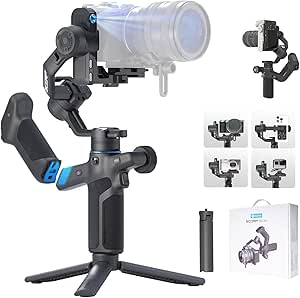 | Best for Solo Creators Who Need Tracking Range | Payload capacity: 2 kg (4.4 lb) | Tracking system: AI Tracking 4.0 | Maximum tracking distance: 18 m | VIEW ON AMAZON | See Our Full Breakdown |
| FeiyuTech SCORP Mini 2 Kit Gimbal |  | Best Beginner Kit | Payload capacity: 1.2 kg (1200 g) | Weight: 852 g | Unfolded dimensions: 9.21 × 2.32 × 8.43 in | VIEW ON AMAZON | See Our Full Breakdown |
| FeiyuTech SCORP 2 Gimbal Stabilizer |  | Best for Heavier Mirrorless Rigs | Payload capacity: 2.5 kg (2500 g) | Axis stabilization: 3-axis | Touchscreen: 1.3 in | VIEW ON AMAZON | See Our Full Breakdown |
| Hohem iSteady MT3 Pro Camera Stabilizer |  | Best for Remote Framing and Long Shoots | Payload capacity: 2.5 kg (5.5 lb) | Weight: 1070 g (2.36 lb) | Battery life: Up to 20 hours | VIEW ON AMAZON | See Our Full Breakdown |
| DJI RS 3 Mini Camera Gimbal Stabilizer |  | Best Compact Travel Pick | Weight in portrait mode: 795 g (1.75 lb) | Weight with horizontal arm: 850 g (1.8 lb) | Maximum payload: 2 kg (4.4 lb) | VIEW ON AMAZON | See Our Full Breakdown |
| FeiyuTech SCORP-C2 Camera Gimbal Stabilizer with AI Tracking |  | Best for Heavier Rigs and Solo Creators | Brand and model: FeiyuTech SCORP-C2 | Payload capacity: Up to 7.72 lb (3500 g) | AI tracking range: Up to 59 ft | VIEW ON AMAZON | See Our Full Breakdown |
| DJI RS 3 Mini 3-Axis Mirrorless Camera Gimbal Stabilizer (Renewed) | | Best Lightweight Renewed Pick | Brand and model: DJI RS 3 Mini | Type: 3-axis camera gimbal stabilizer | Weight: 795 g (1.75 lb) stated in item details; 800 g in portrait mode per product notes | VIEW ON AMAZON | See Our Full Breakdown |
| DJI RS 4 Mini Gimbal Stabilizer for Camera (Canon/Sony/Nikon/Fujifilm) |  | Best for Fast, Frequent Repositioning | Brand and model: DJI RS 4 Mini (model name P24M) | Payload capacity: 2 kg (4.4 lb) | Camera types: Designed for mirrorless cameras and smartphones | VIEW ON AMAZON | See Our Full Breakdown |
| DJI RS 4 Camera Gimbal Stabilizer |  | Best for Heavier Professional Mirrorless Kits | Brand and model: DJI RS 4 | Payload capacity: 3 kg (6.6 lb) | Shooting orientations: Horizontal and vertical | VIEW ON AMAZON | See Our Full Breakdown |
| gimbals for mirrorless camera | Payload capacity |
|---|---|
| DJI RS 4 Mini Combo Gimbal Sta | 2 kg (4.4 lb) |
| FeiyuTech SCORP 3 Kit Gimbal S | — |
| Zhiyun Weebill S 3-Axis Gimbal | — |
| FeiyuTech SCORP-C2 3-Axis Came | — |
| ZHIYUN Cinepeer Weebill 3E 3‑A | — |
| FeiyuTech SCORP Mini-3-Pro Gim | 2 kg (4.4 lb) |
| FeiyuTech SCORP Mini 2 Kit Gim | 1.2 kg (1200 g) |
| FeiyuTech SCORP 2 Gimbal Stabi | 2.5 kg (2500 g) |
| Hohem iSteady MT3 Pro Camera S | 2.5 kg (5.5 lb) |
| DJI RS 3 Mini Camera Gimbal St | — |
| FeiyuTech SCORP-C2 Camera Gimb | Up to 7.72 lb (3500 g) |
| DJI RS 3 Mini 3-Axis Mirrorles | — |
| DJI RS 4 Mini Gimbal Stabilize | 2 kg (4.4 lb) |
| DJI RS 4 Camera Gimbal Stabili | 3 kg (6.6 lb) |
More Details on Our Top Picks
DJI RS 4 Mini Combo Gimbal Stabilizer for Canon, Sony, Nikon & Fujifilm
The DJI RS 4 Mini Combo is the most setup-focused pick here: its auto axis locks and Teflon-enhanced balancing are aimed at getting a mirrorless rig ready with less adjustment between shots. The included tracking module and briefcase handle add practical options for solo creators, while native vertical shooting suits social-first work without an added orientation bracket. Compared with the ZHIYUN Weebill 3E, it carries less weight—up to 2 kg—so the 3E is a safer match for heavier camera-and-lens combinations. Its compact payload limit is the main compromise, and Android users should note that the Ronin app requires manual download rather than installation through Google Play. I’d choose this bundle for lighter mirrorless setups where quick changes matter more than headroom.
Pros:- Auto axis locks help speed up packing and setup between shots.
- Teflon-enhanced balancing makes fine camera adjustments easier.
- Included tracking module supports subject-following shots.
- Native vertical shooting avoids the need for an extra orientation bracket.
Cons:- The 2 kg payload limit rules out some heavier mirrorless combinations.
- Android users must manually download the DJI Ronin app.
- Its compact payload capacity offers less room for rig growth than the SCORP 3 Kit.
Best for: Solo mirrorless creators who frequently switch setups and shoot vertical social video with a camera-and-lens rig under 2 kg.
Not ideal for: Filmmakers using heavier lenses or accessory-heavy rigs, and Android users who prefer to install companion apps only through Google Play.
- Brand:DJI
- Model:RS 4 Mini Combo
- Payload capacity:2 kg (4.4 lb)
- Included tracking:RS Intelligent Tracking Module
- Shooting orientation:Native vertical shooting
- Balancing:Teflon-enhanced
- Included handle:Briefcase Handle
- Included accessories:Tripod, USB-C charging cable, quick-release plate, L-shaped multi-camera control cable, screw kit
Our verdict“Choose the RS 4 Mini Combo for quick setup and vertical shooting with a relatively light mirrorless rig, but pick a higher-payload model for heavier glass.”
FeiyuTech SCORP 3 Kit Gimbal Stabilizer for DSLR and Mirrorless Cameras – AI Tracking, Detachable Touchscreen Handle, 3-Axis, Up to 3.5 kg Payload, Includes Carrying Bag
For a mirrorless kit that has grown beyond a small body and standard zoom, the FeiyuTech SCORP 3 Kit brings the strongest stated payload here: 3.5 kg. That extra capacity over the DJI RS 4 Mini Combo’s 2 kg limit gives more latitude for heavier lenses and accessories, though actual compatibility still depends on the camera setup. Its detachable touchscreen handle doubles as a wireless remote with a stated 39-foot range, and built-in AI tracking works without an app. The kit also supplies an extension pole, fill light, shoulder strap and carrying case, making it more outfitted than the simpler SCORP-C2. The tradeoff is bulk: this is a less appealing choice for long handheld days or beginners who want a minimal setup. I’d favor it when payload headroom and remote operation outweigh portability.
Pros:- 3.5 kg payload supports heavier camera-and-lens combinations than the RS 4 Mini Combo.
- Detachable touchscreen handle can operate as a wireless remote from up to 39 ft away.
- Built-in AI tracking does not require an app.
- Included extension pole, fill light, shoulder strap and case provide a broad accessory package.
Cons:- Its heavier, bulkier build can increase fatigue during extended handheld use.
- The many included accessories and setup choices may challenge beginners.
- The added payload capacity and kit size are unnecessary for lightweight mirrorless setups.
Best for: Mirrorless and DSLR operators with heavier lenses or accessory-equipped rigs who want app-free tracking and remote framing options.
Not ideal for: Travel shooters prioritizing a light, compact carry, or first-time gimbal owners likely to find a large kit and its setup process unwieldy.
- Brand:FeiyuTech
- Model:SCORP 3 Kit
- Axis:3-axis
- Maximum payload:3.5 kg (7.72 lb)
- Remote range:39 ft
- Tracking:Built-in AI tracking; works without an app
- Included accessories:Carrying box, carbon-fiber extension pole, shoulder strap, articulating arm, fill light, tripod, quick-release plate and storage bag
- Warranty:1 year
Our verdict“Pick the SCORP 3 Kit when your mirrorless rig needs substantial payload headroom and remote control, not when compact carry is the priority.”
Zhiyun Weebill S 3-Axis Gimbal Stabilizer for Mirrorless and DSLR Cameras
The Zhiyun Weebill S makes the most sense for operators who value a light carry and long runtime over the latest convenience features. At 0.9 kg, it is the lightest listed option in this batch, and its stated 14-hour battery life suits long shooting days without frequent charging stops. The 2.5 kg payload sits between the DJI RS 4 Mini Combo and the ZHIYUN Weebill 3E, giving it more capacity than the DJI while falling short of the 3E’s 3 kg ceiling. Its sling mode offers an ergonomic alternative for lower-angle work, and the transmission module supports 1080p video up to 100 m. The tradeoffs are older-style cable dependence for full camera control and limited capacity for heavy lenses. I’d shortlist it for a modest rig where portability and runtime come first.
Pros:- At 0.9 kg, it is lighter than the other gimbals in this batch with stated weights.
- Up to 14 hours of battery life supports extended shooting days.
- Sling mode gives another way to hold the gimbal for low-angle shots.
- Transmission module supports 1080p video at 30 fps up to 100 m.
Cons:- The 2.5 kg payload may not suit heavy lenses or accessory-heavy rigs.
- Full camera control requires a compatible USB control cable.
- The gimbal is not water resistant.
Best for: Traveling mirrorless shooters with a modest camera-and-lens setup who need a lightweight stabilizer and long battery runtime.
Not ideal for: Filmmakers running heavy lenses, needing app-free camera control, or shooting in wet conditions.
- Brand:Zhiyun
- Model:Weebill S
- Weight:0.9 kg (926 g)
- Maximum payload capacity:2.5 kg (camera, lens and accessories)
- Battery life:Up to 14 hours
- Folded dimensions:19 × 14 × 30 cm
- Video transmission:1080p at 30 fps, up to 100 m
- Compatibility:Major Sony, Panasonic, Canon, Nikon, Fujifilm, Olympus and Z CAM models with the appropriate USB cable
Our verdict“Choose the Weebill S for a light, modestly equipped mirrorless setup and long operating time, but look to the Weebill 3E for more payload capacity.”
FeiyuTech SCORP-C2 3-Axis Camera Gimbal Stabilizer with AI Tracking
The FeiyuTech SCORP-C2 suits solo mirrorless creators who want face tracking and gesture control built into the gimbal, rather than relying on a separate tracking module. Its stated 7.72 lb payload matches the SCORP 3 Kit’s rating, giving it room for substantial camera-and-lens combinations when the specific rig is compatible. Native vertical shooting supports portrait-oriented work, while the OLED display and adjustable quick-release plate offer useful on-device setup information and positioning. Compared with the SCORP 3 Kit, the C2 is a more focused option: it lists the core gimbal functions, not the same expansive package of accessories or detachable remote handle. Its integrated rear handle also cannot be removed, so it is less adaptable for operators who prefer interchangeable grips. I’d choose it for face-tracked solo filming, after checking camera-and-lens compatibility.
Pros:- Stated 7.72 lb payload accommodates substantial compatible camera setups.
- Automatic face tracking and gesture control support solo filming.
- Native vertical shooting suits portrait video without an added bracket.
- OLED display and adjustable quick-release plate support setup adjustments.
Cons:- Compatibility depends on the specific camera-and-lens combination.
- The integrated rear handle is not removable.
- Compared with the SCORP 3 Kit, the listed package offers fewer supplied accessories and no detachable remote handle.
Best for: Solo creators filming themselves with a compatible mirrorless or DSLR setup who want gesture-controlled face tracking and native vertical framing.
Not ideal for: Operators who need a detachable handle, a supplied accessory-heavy kit, or certainty before checking their exact camera-and-lens compatibility.
- Brand:FeiyuTech
- Model:SCORP-C2
- Stabilization:3-axis
- Maximum payload:7.72 lb
- Tracking:Automatic face tracking with gesture control
- Shooting orientation:Native vertical shooting
- Display:OLED
- Warranty:1 year
Our verdict“Choose the SCORP-C2 for gesture-controlled face tracking and portrait shooting if your exact camera-and-lens setup is compatible and a fixed handle works for you.”
ZHIYUN Cinepeer Weebill 3E 3‑Axis Lightweight Gimbal Stabilizer for DSLR & Mirrorless Cameras
The ZHIYUN Cinepeer Weebill 3E bridges the gap between a travel-friendly body and enough capacity for a more substantial mirrorless setup. It weighs 1.05 kg yet supports up to 3 kg, exceeding the Weebill S’s 2.5 kg payload while remaining much lighter than the bulky SCORP 3 Kit. That mix is its clearest advantage for operators who move between locations and use heavier lenses. Native vertical shooting avoids an extra accessory, and the stated 16-hour battery life plus 14W PD charging helps keep downtime manageable. The compromises are around control and comfort: non-Panasonic users may need to buy a brand-specific cable, while sling-grip and wrist-rest accessories are optional. I’d choose it over the DJI RS 4 Mini Combo when a rig is too heavy for that model’s 2 kg limit.
Pros:- 1.05 kg weight pairs with a 3 kg payload capacity.
- Native vertical shooting works without an additional accessory.
- Up to 16 hours of battery life supports long shooting sessions.
- 14W PD fast charging and Bluetooth shutter control add convenience.
Cons:- Control cables for Canon, Sony and other brands must be purchased separately.
- Sling-grip and wrist-rest accessories are optional.
- It weighs more than the 0.9 kg Weebill S.
Best for: Mobile mirrorless filmmakers who want a relatively light gimbal for camera-and-lens setups up to 3 kg, plus native vertical shooting and long runtime.
Not ideal for: Buyers who need a fully accessorized sling setup in the box or expect brand-specific camera control cables to be included for their camera.
- Brand:ZHIYUN
- Model:Cinepeer Weebill 3E
- Weight:1.05 kg
- Maximum payload:3 kg (6.6 lb)
- Battery life:Up to 16 hours
- Charging:14W PD fast charging; listed charging time is 2 h 46 min
- Camera control:Bluetooth shutter control
- Shooting orientation:Native vertical shooting
Our verdict“Choose the Weebill 3E if you need more payload than the Weebill S or RS 4 Mini Combo while keeping your mirrorless gimbal relatively light.”
FeiyuTech SCORP Mini-3-Pro Gimbal Stabilizer
I’d choose the SCORP Mini-3-Pro when a mirrorless setup needs to follow a subject from farther away than the compact SCORP Mini 2 is designed to handle. Its 18 m AI Tracking 4.0 range and stated 0.003-second response time suit solo filming where the camera operator needs room to move, while the 2 kg payload accommodates many compact mirrorless kits. The detachable grip doubles as a remote, giving this model a useful framing option that the DJI RS 3 Mini doesn’t provide. Its broad compatibility also makes it easier to reuse with a phone or action camera. The tradeoff is a more involved setup: multiple supplied accessories may take time to learn, and the product data gives no battery-life figure, making shoot planning less certain.
Pros:- 2 kg payload supports a range of compact mirrorless camera setups.
- AI Tracking 4.0 is specified for tracking up to 18 m.
- Detachable grip can act as a remote controller for solo framing.
- Supports mirrorless, compact, action cameras and smartphones.
Cons:- The many accessories and switching options may complicate setup for new gimbal users.
- Battery life and power requirements are not specified in the supplied product data.
Best for: Solo mirrorless creators who film themselves at a distance and want one gimbal that can also support phones or action cameras.
Not ideal for: Beginners seeking a simple, clearly documented setup or shooters who need confirmed battery runtime before planning long sessions.
- Payload capacity:2 kg (4.4 lb)
- Tracking system:AI Tracking 4.0
- Maximum tracking distance:18 m
- Tracking response time:0.003 s
- Axis stabilization:3-axis
- Compatibility:Mirrorless, compact, action cameras and smartphones
- Warranty:1 year
- Included items:Gimbal, cables, GoPro adapter, tripod, slider, quick release plate and Allen key
Our verdict“Pick the SCORP Mini-3-Pro for long-range solo tracking and flexible camera compatibility, but look elsewhere if simple setup or known battery runtime matters more.”
FeiyuTech SCORP Mini 2 Kit Gimbal
The SCORP Mini 2 Kit is the approachable pick for someone building a first mirrorless video setup and wanting useful extras in one package. Its 852 g body is easier to carry than the heavier, higher-capacity SCORP 2, while the 1.2 kg payload suits lighter mirrorless bodies and modest lenses. Built-in AI tracking avoids relying on a separate phone app, and the included fill light, carrying case and extension rod give new creators practical tools for basic setups and solo shots. The compact 1.3-inch screen keeps controls on the gimbal, though it may be less comfortable to read in bright conditions. Compared with the DJI RS 3 Mini, this kit offers more bundled accessories, but its lower payload leaves less room for heavier camera-and-lens combinations.
Pros:- 852 g weight makes it comparatively easy to pack and carry.
- Built-in AI tracking works without a separate app.
- Kit includes a fill light, carrying case and extension rod.
- Touchscreen and Bluetooth and cable controls offer several ways to operate it.
Cons:- The 1.2 kg payload is lower than the 2 kg capacity of the DJI RS 3 Mini.
- The 1.3-inch touchscreen may be hard to view in bright outdoor light.
Best for: First-time gimbal buyers using a lightweight mirrorless camera who want tracking and a ready-to-carry accessory kit.
Not ideal for: Mirrorless shooters with heavier zoom lenses or rigs approaching the 1.2 kg payload limit, who need more capacity and room to balance.
- Payload capacity:1.2 kg (1200 g)
- Weight:852 g
- Unfolded dimensions:9.21 × 2.32 × 8.43 in
- Folded size:11.8 × 5.9 × 21.4 cm
- Touchscreen:1.3 in
- Compatibility:Mirrorless cameras, smartphones, DSLRs and action/video cameras
- Included accessories:Fill light, carrying case and extension rod
- Color:White
Our verdict“Choose this kit for a lighter mirrorless setup and useful starter accessories, but step up to a higher-payload model for heavier lenses.”
FeiyuTech SCORP 2 Gimbal Stabilizer
For a mirrorless camera that needs more support than compact travel gimbals can offer, the SCORP 2’s 2.5 kg payload is its main reason to make this list. That capacity gives it more room for a camera body and substantial lens than the 2 kg DJI RS 3 Mini, though actual compatibility still depends on balancing the specific setup. Its gesture-activated AI tracking can help a solo operator keep a subject in frame, while the upgraded L-shaped plate makes vertical shooting quicker to set up. A 1.3-inch touchscreen and multifunction knob put adjustments on the gimbal; Bluetooth and app control add remote options. This is the more capable choice for heavier builds, but it is also described as heavier and bulkier, and its gestures and app features may take practice.
Pros:- 2.5 kg payload offers more capacity than the DJI RS 3 Mini’s 2 kg limit.
- Gesture control activates integrated AI subject tracking.
- L-shaped mounting plate supports quicker vertical shooting.
- Touchscreen, multifunction knob, Bluetooth and app provide several control options.
Cons:- Its higher-capacity design is relatively heavy and bulky to carry.
- Learning gesture commands and app functions may take time.
Best for: Mirrorless filmmakers using heavier bodies or lenses who want gesture tracking and a faster switch to vertical video.
Not ideal for: Travel creators prioritizing the smallest, lightest kit or beginners who want fewer controls and app features to learn.
- Payload capacity:2.5 kg (2500 g)
- Axis stabilization:3-axis
- Touchscreen:1.3 in
- Connectivity:Bluetooth and USB-C cable
- Tracking:Integrated AI tracking with gesture control
- Vertical shooting:Supported with upgraded L-shaped mounting plate
- Included items:Gimbal, tripod, camera control cable, plates, slider, backing base, screws, lens holder and USB cable
Our verdict“Pick the SCORP 2 when a heavier mirrorless rig and built-in tracking matter more than compact travel size.”
Hohem iSteady MT3 Pro Camera Stabilizer
The iSteady MT3 Pro is the strongest fit here for creators who need to monitor framing away from the camera and keep working through a long shoot. Its detachable 1.4-inch touchscreen remote separates it from the SCORP Mini-3-Pro, whose detachable grip is described as a remote controller but has no display listed. The 2.5 kg payload matches the SCORP 2, giving both models more stated capacity than the DJI RS 3 Mini. Hohem also specifies up to 20 hours of battery life, a useful planning advantage for event or travel days. At 1070 g, it remains portable on paper, though it is heavier than the DJI RS 3 Mini. The product data does not list specific drawbacks, so I’d verify camera control compatibility and balance requirements for a particular mirrorless setup before buying.
Pros:- 2.5 kg payload is higher than the DJI RS 3 Mini’s 2 kg limit.
- Detachable 1.4-inch touchscreen remote supports remote framing.
- Battery life is specified at up to 20 hours.
- Supports mirrorless, compact, action cameras and smartphones.
Cons:- At 1070 g, it weighs more than the DJI RS 3 Mini in portrait mode.
- The supplied product data does not specify model-by-model camera control compatibility.
- The remote’s wireless range is limited to a stated maximum of 10 m.
Best for: Event, wedding and travel creators who want a remote display for framing and long stated battery life with a heavier mirrorless setup.
Not ideal for: Buyers who prioritize the lightest possible gimbal or need confirmed compatibility details for a specific camera-and-lens combination.
- Payload capacity:2.5 kg (5.5 lb)
- Weight:1070 g (2.36 lb)
- Battery life:Up to 20 hours
- Fast charging:30-minute charge adds 5 hours
- Remote display:Detachable 1.4-inch touchscreen
- Wireless range:Up to 10 m (33 ft)
- Compatibility:Mirrorless, compact, action cameras and smartphones
- Warranty:1 year manufacturer
Our verdict“Choose the iSteady MT3 Pro for remote framing and long stated runtime, provided its weight and your camera’s control compatibility suit your setup.”
DJI RS 3 Mini Camera Gimbal Stabilizer
The DJI RS 3 Mini earns its place for mirrorless travelers who would rather carry less than gain the extra payload offered by models such as the FeiyuTech SCORP 2 or Hohem iSteady MT3 Pro. At 795 g in portrait mode, it is the lightest option in this group by the listed weights, yet its 2 kg payload supports many compact mirrorless combinations. Native vertical shooting is useful for social clips without adding a separate mounting accessory, and the 1.4-inch color touchscreen keeps settings accessible on the gimbal. The tradeoff is less capacity than the 2.5 kg alternatives, so larger lenses can narrow its usefulness. DJI’s Ronin app also has to be downloaded from DJI’s website rather than Google Play, which adds friction for some Android users.
Pros:- 795 g weight in portrait mode makes it especially easy to pack.
- 2 kg payload is substantial for a compact travel gimbal.
- Native vertical shooting supports social-video framing without an extra mount.
- 1.4-inch full-color touchscreen and Bluetooth shutter control are built in.
Cons:- Its 2 kg payload is lower than the 2.5 kg SCORP 2 and iSteady MT3 Pro.
- The horizontal-arm configuration weighs more than portrait mode.
- Android users must download the Ronin app from DJI’s website rather than Google Play.
Best for: Travel and social-video creators using a compact Canon, Sony, Nikon or Fujifilm mirrorless setup who value low carry weight and native vertical shooting.
Not ideal for: Filmmakers with heavier camera-and-lens builds near or above 2 kg, or Android users who want to install the Ronin app through Google Play.
- Weight in portrait mode:795 g (1.75 lb)
- Weight with horizontal arm:850 g (1.8 lb)
- Maximum payload:2 kg (4.4 lb)
- Touchscreen:1.4-inch full-color
- Vertical shooting:Native support
- Bluetooth shutter control:Yes
- Compatibility:Canon, Sony, Nikon and Fujifilm mirrorless cameras
Our verdict“Choose the RS 3 Mini for a lightweight travel kit and straightforward vertical shooting, but select a higher-capacity gimbal for heavier mirrorless rigs.”
FeiyuTech SCORP-C2 Camera Gimbal Stabilizer with AI Tracking
The SCORP-C2 is the strongest fit here for a mirrorless setup that needs more payload headroom: its 7.72 lb capacity is well above the 2 kg limit of the DJI RS 4 Mini, leaving more room for a larger lens and accessories. Its built-in face and body tracking with gesture control can help a solo operator keep themselves framed without a separate tracking device. Native vertical mounting and an integrated underslung handle add flexibility for social video and low-angle shots. The tradeoff is bulkier-rig complexity: compatibility depends on the exact camera and setup, so check support before buying. Tracking also has a stated range of up to 59 ft, and this model is less compelling if your priority is the lightest travel kit rather than payload capacity.
Pros:- 7.72 lb payload capacity accommodates heavier compatible mirrorless rigs.
- Built-in face and body tracking includes gesture control.
- Native vertical mounting supports portrait-oriented content.
- Up to 14 hours of stated runtime and USB-C fast charging.
Cons:- Camera and accessory compatibility varies by setup and needs checking before purchase.
- AI tracking is specified for distances up to 59 ft.
- Its higher payload capacity may be unnecessary for compact mirrorless kits.
Best for: Solo mirrorless creators using compatible, heavier camera-and-lens setups who want built-in subject tracking and vertical shooting.
Not ideal for: Travel shooters with a compact camera kit, or buyers who need confirmed compatibility for a particular camera and lens without checking the support list.
- Brand and model:FeiyuTech SCORP-C2
- Payload capacity:Up to 7.72 lb (3500 g)
- AI tracking range:Up to 59 ft
- Battery capacity:4500 mAh
- Runtime:Up to 14 hours
- Charging:18 W USB-C; under 3 hours
- Compatibility:Compatible Sony, Canon, and Nikon DSLR and mirrorless cameras
- Included items:Gimbal, slider, quick-release plate, L-bracket base, lens support components, hex key, tripod, and USB-C cables
Our verdict“Choose the SCORP-C2 if your compatible mirrorless rig needs more payload headroom and you want built-in tracking; choose a lighter gimbal if portability matters more.”
DJI RS 3 Mini 3-Axis Mirrorless Camera Gimbal Stabilizer (Renewed)
For a compact mirrorless kit, the renewed RS 3 Mini makes a more travel-minded choice than the DJI RS 4: it weighs about 795 g in the stated item details and supports camera-and-lens combinations up to 2 kg. Native vertical shooting and Bluetooth shutter control keep common solo shooting tasks straightforward, while DJI’s third-generation stabilization algorithm is aimed at steady footage on the move. The payload ceiling is the key limit; unlike the FeiyuTech SCORP-C2, this gimbal is not designed for substantially heavier rigs. This listing is also renewed, so its 90-day limited warranty is shorter than the standard DJI warranty listed for the RS 4 Mini. Check DJI’s compatibility list for your exact camera before choosing it.
Pros:- Lightweight 795 g design is suited to carrying with a compact mirrorless kit.
- Supports compatible camera and lens combinations up to 2 kg.
- Native vertical shooting supports portrait video without an added mounting setup.
- Bluetooth shutter control supports photo and video operation.
Cons:- The 2 kg payload limit rules out many heavier camera-and-lens combinations.
- Camera support should be checked against DJI’s compatibility list.
- Renewed listing includes a 90-day limited warranty.
Best for: Traveling mirrorless owners with a compatible camera and modest lens setup who want a lightweight gimbal and are comfortable buying a renewed unit.
Not ideal for: Filmmakers using heavier camera rigs, or buyers who want a standard warranty rather than the stated 90-day limited coverage.
- Brand and model:DJI RS 3 Mini
- Type:3-axis camera gimbal stabilizer
- Weight:795 g (1.75 lb) stated in item details; 800 g in portrait mode per product notes
- Maximum payload:2 kg (4.4 lb)
- Camera compatibility:Canon, Sony, Panasonic, Nikon, and Fujifilm mirrorless cameras
- Features:Bluetooth shutter control, native vertical shooting, and 3rd-generation RS stabilization algorithm
- Warranty:90-day limited warranty
- Included accessories:L-shaped multi-camera control cable, quick-release plate, tripod, and USB-C charging cable
Our verdict“Pick the renewed RS 3 Mini for a portable, compatible mirrorless kit if its 2 kg limit and 90-day warranty suit your needs.”
DJI RS 4 Mini Gimbal Stabilizer for Camera (Canon/Sony/Nikon/Fujifilm)
The RS 4 Mini suits mirrorless shooters who lose time to setup changes: automated axis locks are designed to speed up packing and setup, while Teflon-enhanced balancing helps make fine adjustments easier. Its 2 kg payload matches the renewed RS 3 Mini, but this model adds intelligent subject tracking, making it the more appealing choice for dynamic solo shots when tracking matters. Native vertical shooting also makes orientation changes practical for short-form video. That compact payload still places it below the 3 kg DJI RS 4 and the 7.72 lb FeiyuTech SCORP-C2 for heavier rigs. Android users should also account for the Ronin app’s manual download requirement, since it is not available on Google Play.
Pros:- Automated axis locks are designed to speed setup and packing.
- Intelligent subject tracking helps keep moving subjects framed.
- Teflon-enhanced balancing supports quicker fine adjustments.
- Native vertical shooting suits portrait-format video.
Cons:- The 2 kg payload may not support heavier mirrorless rigs.
- The Ronin app requires manual download on Android because it is unavailable on Google Play.
Best for: Mirrorless creators who change locations or shooting orientation often and want quick setup, subject tracking, and a rig within the 2 kg payload limit.
Not ideal for: Operators with heavier camera-and-lens combinations, or Android users who prefer installing camera-control apps through Google Play.
- Brand and model:DJI RS 4 Mini (model name P24M)
- Payload capacity:2 kg (4.4 lb)
- Camera types:Designed for mirrorless cameras and smartphones
- Balancing:Teflon-enhanced balancing
- Axis locks:Automated axis locks
- Tracking:Intelligent subject tracking
- Shooting orientation:Native vertical shooting
- Included items:Gimbal, tripod, quick-release plate, L-shaped multi-camera control cable (USB-C, 30 cm), USB-C charging cable (40 cm), and screw kit
- Warranty:Standard DJI warranty
Our verdict“Choose the RS 4 Mini for a compatible, lighter mirrorless kit when fast setup and tracking matter more than the higher payload of the DJI RS 4.”
DJI RS 4 Camera Gimbal Stabilizer
The DJI RS 4 is the better fit than the RS 4 Mini when your mirrorless camera needs more room for a substantial lens or other rig components: its 3 kg payload exceeds the Mini’s 2 kg limit while remaining below the FeiyuTech SCORP-C2’s larger stated capacity. Teflon-coated axes are intended to make balancing smoother, and native horizontal and vertical shooting gives creators a direct route to portrait footage. The included BG21 battery grip is rated for up to 12 hours under stated test conditions, adding useful operating time without relying on a separate grip purchase. It is still a larger-payload choice rather than a compact travel specialist, and switching between landscape and portrait requires rebalancing. Android users must download DJI’s Ronin app from its website.
Pros:- 3 kg payload supports many mirrorless camera and lens combinations.
- Native horizontal and vertical shooting avoids a separate portrait accessory.
- Teflon-coated axes are designed for smoother, more precise balancing.
- BG21 battery grip is rated for up to 12 hours under stated test conditions.
Cons:- Changing between horizontal and vertical orientations requires rebalancing.
- Android users must download the Ronin app from DJI’s website because it is unavailable on Google Play.
Best for: Mirrorless filmmakers with camera-and-lens combinations up to 3 kg who want native vertical shooting, smoother balancing, and an included battery grip.
Not ideal for: Travel creators with very small rigs who prioritize the lightest setup, or operators who need to switch rapidly between horizontal and vertical without rebalancing.
- Brand and model:DJI RS 4
- Payload capacity:3 kg (6.6 lb)
- Shooting orientations:Horizontal and vertical
- Axis coating:Teflon-coated on all three axes
- Included battery grip:BG21
- Battery runtime:Up to 12 hours under stated test conditions
- Compatible camera brands:Canon, Sony, Nikon, and Fujifilm
- Included accessories:Quick-release plate, extended grip/tripod, lens-fastening support, camera control cable, USB-C charging cable, and screw kit
Our verdict“Choose the RS 4 over the RS 4 Mini when your mirrorless rig exceeds 2 kg or benefits from the included battery grip, and accept the rebalancing needed for orientation changes.”

How We Picked
I organized the 14 options around the problems mirrorless owners need to solve: whether the gimbal can balance their camera and lens, how manageable it is to carry, how much setup and adjustment it demands, and whether features such as AI tracking, vertical shooting, or a detachable handle help with their actual filming style. Payload claims are a starting point, not a guarantee of fit; camera dimensions, lens length, ports, and accessories can affect balance and clearance.
The order gives priority to versatile camera-first options that suit a broad range of mirrorless workflows, then separates compact and value-oriented models from feature-rich or higher-capacity choices. I also distinguish bundles and repeated model names rather than treating them as interchangeable. A listing with a useful accessory set can make a stronger kit, but it does not outrank a better-fitting stabilizer for every buyer; buyers should check the exact version and confirm camera compatibility before purchase.
Factors to Consider When Choosing Gimbals For Mirrorless Cameras
Picking a gimbal is less about chasing the biggest payload number and more about avoiding a poor match between your camera setup and how you shoot. I’d check the complete rig, your typical movement, and the time you’re willing to spend balancing before comparing convenience features.
Match Payload to the Complete Camera Rig
Add up the camera, lens, quick-release plate, microphone, monitor, and any other gear you expect to leave mounted. A payload figure describes supported weight, but it does not tell you whether a long lens will clear the arms or whether the setup can balance through its full range of motion. Buyers often choose a gimbal based on the camera body alone, then discover that a heavier lens or cage makes balancing awkward. Leave some capacity headroom if you plan to change lenses or add accessories; a setup right at its stated limit gives you less flexibility. If your rig stays light and simple, a compact model can be easier to carry than a larger stabilizer you rarely need. Check both the manufacturer’s compatibility information and the physical dimensions of your assembled kit.
Prioritize Balance and Setup for Your Shooting Routine
Balancing takes place before the shot, but it affects how willing you are to use a gimbal during a real shoot. If you move between locations or switch lenses often, look for a design and plate system that makes repeatable setup practical. A camera that is slightly off balance can strain the motors and make operation less predictable, even when its weight falls below the listed limit. For a studio or planned production, a slower setup may be acceptable if the rig offers the working range you need. For travel and spontaneous filming, fast adjustments may matter more than an extra feature. Check whether your camera’s buttons, battery door, and ports remain accessible once mounted.
Choose Capacity for the Lens, Not Just the Camera
Longer and front-heavy lenses can create clearance and balance problems that a simple total-weight comparison misses. Before buying, check whether the gimbal arms can accommodate the lens barrel and whether the camera can tilt and roll without hitting the frame. A compact body paired with a large zoom can be a harder fit than its weight suggests. If you use several lenses, identify the heaviest and longest combination you expect to stabilize, then check compatibility for that setup. Buyers who only use small primes may not benefit from paying for a larger frame. Those who expect to expand their kit may prefer capacity and adjustment room over the lightest possible carry.
Decide Whether Tracking and Built-In Controls Fit Your Work
AI tracking can help solo creators keep a subject in frame, but it is not a substitute for choosing the right composition or checking how tracking works with your camera and shooting mode. A detachable touchscreen handle or integrated display can make adjustments easier when the gimbal is held in a low or extended position. Built-in fill lights and remote controls may reduce the number of separate accessories you carry, though they add features you may never use. Before paying for them, ask whether you regularly film yourself, follow moving subjects, or work without a second operator. If your shots are mostly planned and repeatable, reliable balancing and comfortable handling may matter more than tracking extras. Confirm which functions are included in the specific kit, since bundles can differ.
Weigh Portability Against Working Room
A smaller gimbal is easier to pack and less tiring to carry, which can make it the better choice for travel, events, and quick run-and-gun shoots. Larger models can provide more space for heavier camera setups and may leave more room for future accessories. The tradeoff is not only weight: a larger stabilizer can take longer to pack, balance, and manage in crowded locations. Think about how often you’ll carry it compared with how often you’ll use your heaviest rig. A buyer who mostly shoots with a compact mirrorless camera may gain little from a full-size model. If your kit changes regularly, capacity and adjustment range may justify the extra bulk.
Compare Exact Versions, Bundles, and Camera Support
Similar model names can refer to different generations, kits, or included accessories, so compare the full listing rather than relying on the family name. The SCORP-C2 appears more than once in this roundup, and DJI’s RS 4 and RS 4 Mini also have distinct versions and bundles. A Combo or Kit may include a useful handle, tracker, case, or extension rod, but only if those parts match your workflow. Renewed listings require an extra check of condition, included components, and return terms. Camera compatibility also varies by body and control function; mounting a camera does not automatically mean every gimbal control will work with it. Verify support for your exact camera model, lens setup, and desired features before choosing.
Frequently Asked Questions
How do I know whether a mirrorless camera and lens will fit a gimbal?
Check the complete setup against the gimbal’s payload and camera compatibility information, then look at dimensions and clearance as well as weight. A long or front-heavy lens can prevent balancing even when the total load is within the stated limit. Include accessories that will stay mounted, such as a cage or microphone. If you change lenses often, check the heaviest and longest combination you expect to use. When the listing does not confirm your exact camera-and-lens setup, ask the manufacturer or seller before buying.
Should I choose a compact gimbal or a full-size model for travel?
For travel, a compact gimbal is often the better choice if your camera and lens are light enough to balance with room to spare. It is easier to carry and more practical for filming in tight spaces, but may offer less capacity for a larger lens or accessories. A full-size model makes more sense if you regularly bring a heavier rig or want room to expand your setup. Compare the weight and packed dimensions of the entire kit, not just the stabilizer. The best travel choice is the one you will actually bring and can balance reliably.
Is AI tracking worth choosing over a simpler camera gimbal?
Tracking is most useful when you film yourself or need a subject to remain framed while you operate the camera alone. It can reduce the need for a second person, but its usefulness depends on how well the feature supports your camera, subject, and shooting environment. If you mainly shoot planned camera moves, you may get more value from comfortable handling and straightforward balancing. Check whether tracking is built in or depends on an included accessory, and confirm how it is controlled. Treat it as a workflow aid rather than a replacement for composition and focus decisions.
Do I need a gimbal with more payload capacity than my current camera requires?
Some extra capacity can help if you expect to use heavier lenses or add accessories later, but the largest model is not automatically the best match. More capacity can come with more bulk, which may make a gimbal less appealing for everyday carry. Start with the heaviest complete rig you expect to use, then look for a compatible model with practical headroom. Also check lens clearance and balancing range, since payload alone does not describe fit. If your kit is unlikely to change, a lighter gimbal that suits it well may be the smarter choice.
What should I check when choosing between a standard, kit, and renewed listing?
Compare the exact model generation and confirm what is included, since a kit may add a handle, tracker, case, or extension rod that is absent from the standard version. Check that the accessories are relevant to your shooting routine rather than assuming a larger bundle is automatically better. For a renewed listing, review the stated condition, included parts, warranty, and return policy. Similar names can also hide differences in features or compatibility, so match the listing to your camera and lens. If two entries appear to be the same model, use those details to identify the one that best fits your needs.
Conclusion
For most mirrorless camera owners, I’d choose the DJI RS 4 Mini Combo as the best overall starting point, especially when portability and camera-focused operation matter. For buyers seeking a value-oriented compact option, compare the DJI RS 3 Mini and lightweight Weebill models against the exact camera support and kit contents rather than choosing by name alone. The DJI RS 4 is my best premium fit for a larger setup or added room to grow, while the DJI RS 3 Mini is the clearest beginner-friendly direction for a light, uncomplicated mirrorless kit. For solo creators who want built-in tracking and control options, I’d look closely at the FeiyuTech SCORP models; for a heavier rig with a detachable touchscreen handle, the SCORP 3 Kit is a standout. Before deciding, verify compatibility, capacity, clearance, and the contents of the exact listing.