
To follow the 3-1-1 rule for carry-on liquids, make sure each container is 3.4 ounces (100 mL) or less. You’ll need to pack all your liquids in a single, clear, quart-sized plastic bag. Keep items organized and within the size limits to speed up security checks. Staying compliant helps avoid delays and prevents liquids from being discarded. If you want more tips on packing efficiently, keep exploring how to stay prepared.

Get kitchen staples and gadgets delivered free with Prime
- Fast, free delivery on millions of items
- Prime Video, Amazon Music and more included
- Member-only deals all year
Key Takeaways
- Liquids in carry-on must be in containers of 3.4 ounces (100 mL) or less.
- All liquid containers must fit into a single, clear, quart-sized plastic bag.
- Each passenger is allowed one quart-sized bag containing all liquids.
- Larger or non-compliant containers may be discarded or checked separately.
- Proper preparation ensures smooth security screening and prevents delays.
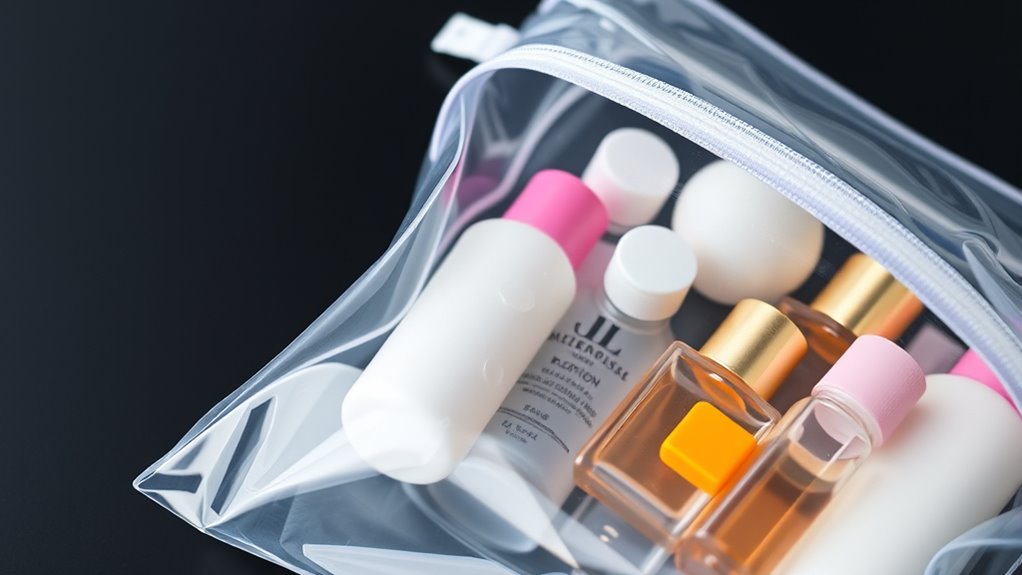
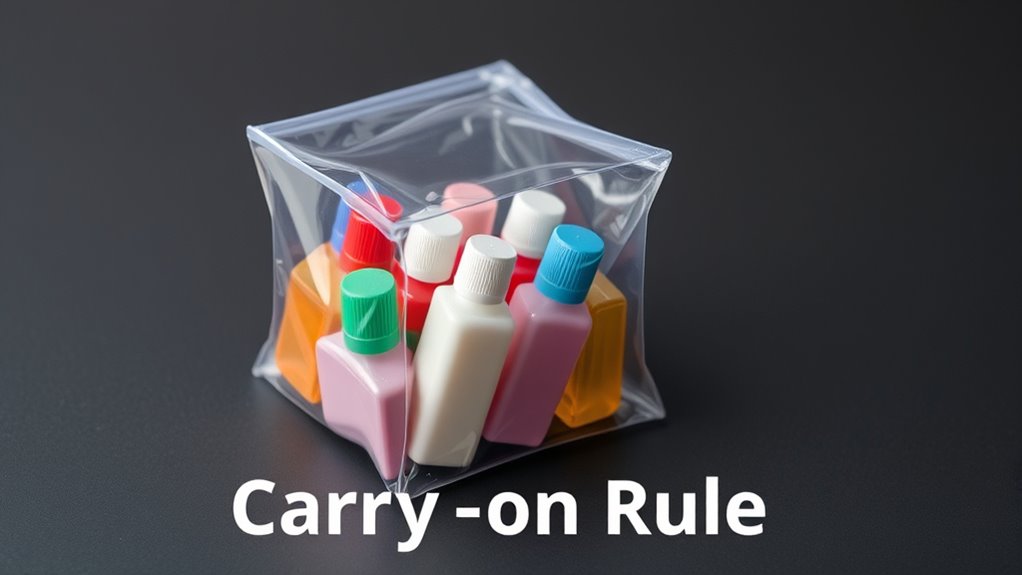
Have you ever wondered what liquids you can bring in your carry-on baggage? If so, you’re not alone. Navigating TSA regulations can be confusing, especially when it comes to packing liquid containers. The key is understanding the 3-1-1 rule, which is designed to keep security lines moving smoothly while allowing travelers to carry essential liquids. Essentially, the TSA limits you to containers of 3.4 ounces (100 milliliters) or less per item, all of which must fit into a single, clear, quart-sized plastic bag. This rule applies to a variety of liquid containers, including toiletries, beverages, gels, and aerosols. The goal is to guarantee that no single container exceeds the size limit, making it easier for security officers to screen your belongings quickly and efficiently.
When preparing for your flight, start by gathering all your liquid containers and checking their sizes. Even a small deviation, like a slightly larger bottle, can cause delays or require you to discard the item at the security checkpoint. It’s a good idea to transfer larger quantities into smaller travel-sized containers that meet TSA regulations. Many stores sell travel bottles designed specifically for this purpose. Keep in mind that all your small containers must fit comfortably inside your quart-sized bag; overcrowding can make it difficult to close the bag and may result in extra inspection.
As an affiliate, we earn on qualifying purchases.
Frequently Asked Questions
Can I Bring Full-Sized Liquids if I Have a Connecting Flight?
No, you can’t bring full-sized liquids through security, even with a connecting flight. Liquid restrictions are strictly enforced during security procedures, meaning all liquids must comply with the 3-1-1 rule—containers no larger than 3.4 ounces, in a quart-sized bag. If you want to carry full-sized liquids, you’ll need to pack them in checked luggage or buy them after passing through security.
Are There Exceptions for Medical Liquids Beyond the 3-1-1 Rule?
Every rule has its exceptions, and with medical liquids, you’re not bound by the 3-1-1 rule. You can bring larger quantities if you have valid medical exemptions, like essential medications or liquids needed for health reasons. Just make sure to declare these at security and carry proper documentation. It’s always best to inform security officers beforehand to avoid delays—your health comes first, after all.
How Are Liquids Defined for the 3-1-1 Rule?
TSA guidelines define liquids as any substance that flows or can be poured, including gels, aerosols, and creams. According to TSA guidelines, these liquids must be in containers of 3.4 ounces (100 milliliters) or less, and all containers should fit into a single quart-sized, clear plastic bag. This guarantees smooth screening, so make sure your liquids meet these liquid definitions before packing your carry-on.
Can I Pack Liquids in Checked Luggage Instead?
Yes, you can pack liquids in checked luggage, and you’ll face no liquid restrictions there. Unlike carry-on bags, checked baggage isn’t subject to the 3-1-1 rule, so you can bring larger containers of liquids, gels, or aerosols. Just make sure to pack them securely to prevent spills or damage, especially if they’re fragile or leak-prone. Keep in mind that some items, like aerosols, may still have specific airline or airport regulations.
What Happens if I Accidentally Violate the 3-1-1 Rule?
If you accidentally violate the liquid restrictions at the security checkpoint, TSA officers will likely confiscate the excess liquids. You might face delays as they inspect your belongings, and you could need to discard some items before proceeding. To avoid this, double-check your liquids adhere to the 3-1-1 rule beforehand. Remember, security is strict about liquid restrictions to ensure a safe and smooth screening process.
Conclusion
So, next time you’re tempted to bring that giant bottle of shampoo, remember the 3-1-1 rule—because nothing says “I’m ready to party” like a TSA pat-down over your precious liquids. Keep your liquids under 3.4 ounces, pack them in one clear quart bag, and avoid the awkward dance of removing everything at security. After all, your shampoo’s dreams of a glamorous airport debut should stay just that—a dream. Safe travels, liquid rebel!
Halloween Picks
halloween
As an affiliate, we earn on qualifying purchases.