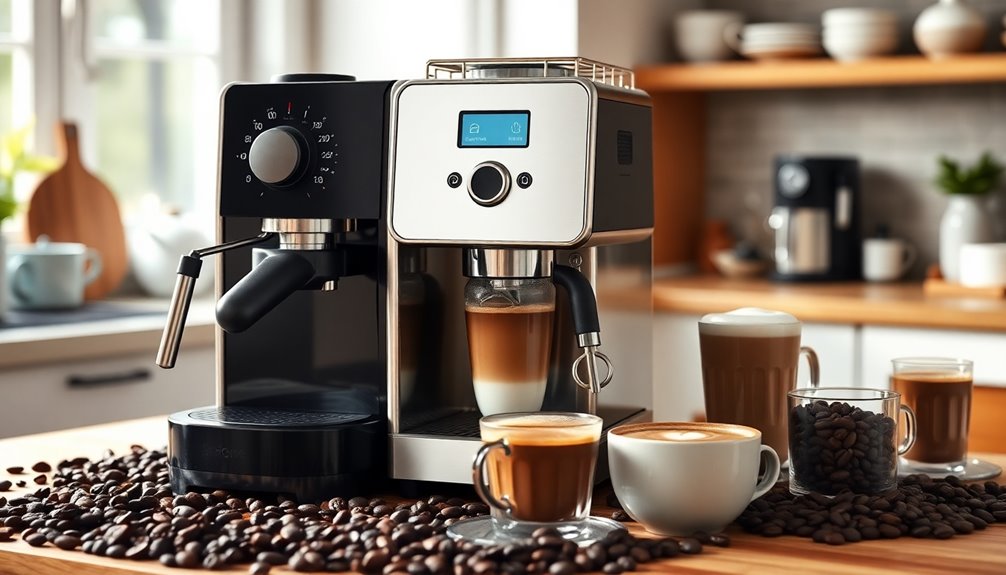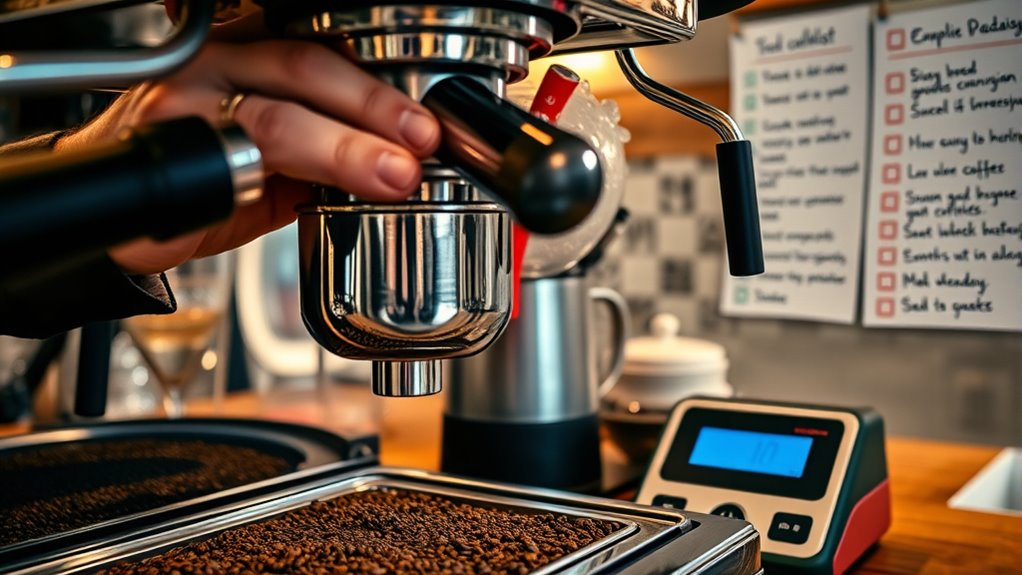

Start by ensuring your coffee is fresh, high-quality, and properly ground for espresso, with a consistent grind size. Dose accurately, tamp evenly with firm pressure, and level the bed before extraction. Monitor your shot’s timing—aim for 25-30 seconds—and watch for flow color and rate to catch channeling issues. Regularly clean your equipment and check water quality. Fine-tuning these factors can improve your espresso when you explore this checklist further.

Get kitchen staples and gadgets delivered free — and shop member deals
- Fast, free delivery on millions of items
- Access to Prime Big Deal Days deals on October 6–7
- Prime Video, Amazon Music and more included
Key Takeaways
- Use fresh, high-quality beans and ensure proper roast date for optimal flavor and easier troubleshooting.
- Calibrate grinder regularly for uniform particle size and evenly distribute grounds before tamping.
- Measure coffee doses precisely, tamp evenly with consistent pressure, and level the coffee bed.
- Aim for a shot extraction time of 25-30 seconds, monitoring flow rate and visual cues like crema color.
- Maintain equipment, clean group heads, replace filters, and verify machine calibration for consistent performance.
espresso grinder calibration tool
As an affiliate, we earn on qualifying purchases.
As an affiliate, we earn on qualifying purchases.
Assessing Your Coffee Grind Consistency
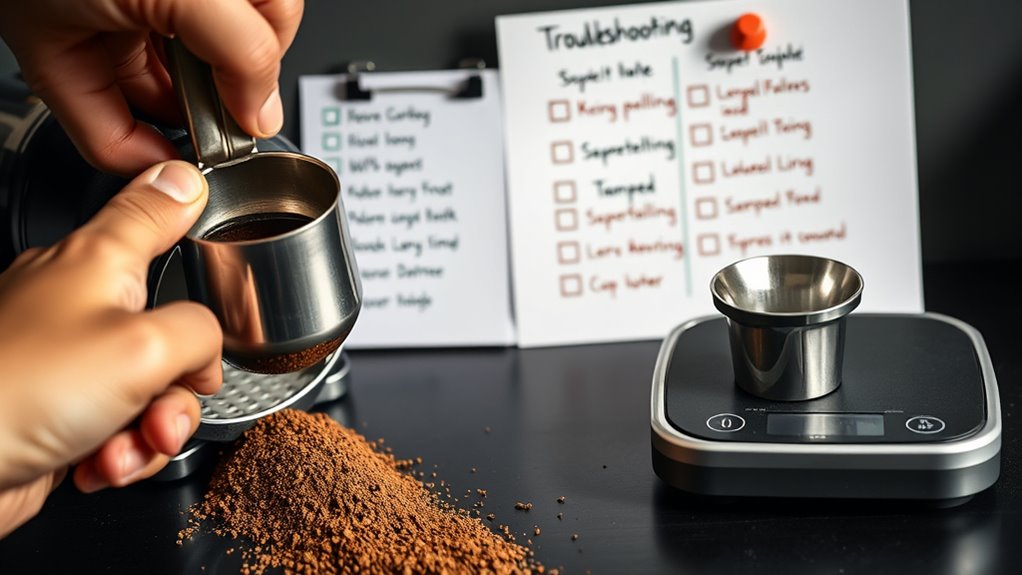
Ensuring your coffee grind is consistent is essential for brewing a perfect cup. Start by paying attention to your coffee bean selection, as different beans can produce varying grind sizes and textures. Consistency begins with choosing fresh, high-quality beans suited for espresso. Next, focus on grinder calibration; regularly adjusting your grinder guarantees uniform particle size. An improperly calibrated grinder can lead to uneven extraction, resulting in bitter or sour flavors. To check grind consistency, examine the grounds—look for uniform size without too many fines or coarse particles. Using a scale to measure your coffee helps maintain consistency in dosing. Regularly calibrate your grinder and select beans carefully, so every shot starts with the ideal foundation for a balanced espresso. Additionally, understanding how environmental impacts like humidity and temperature can affect your grind consistency can help you make more precise adjustments.
Adjusting Grind Size for Optimal Extraction
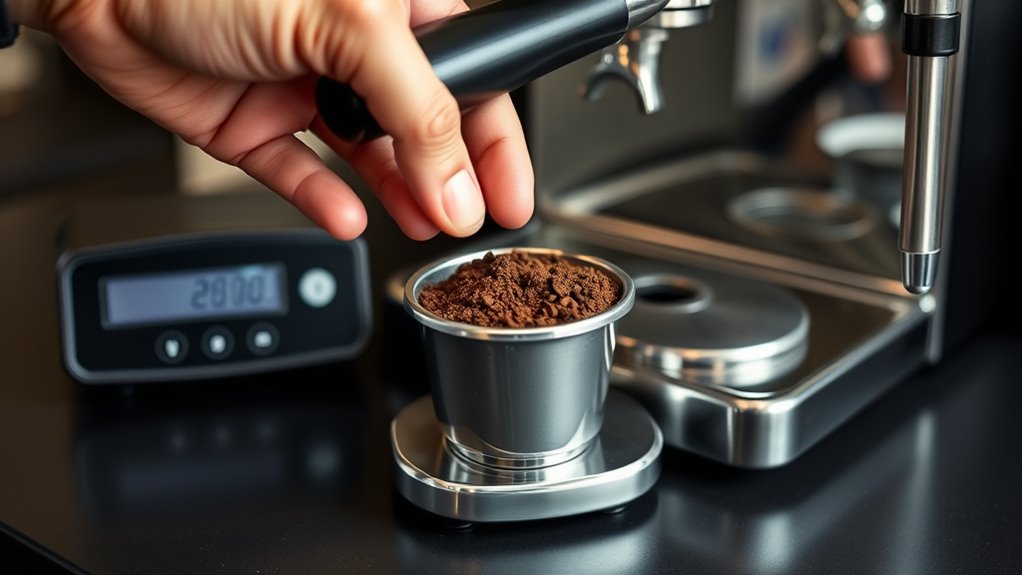
Adjusting your grind size is essential for achieving the perfect extraction, as it directly influences how water interacts with the coffee grounds. A fine grind increases resistance, slowing water flow and enriching flavors, while a coarse grind speeds up extraction, often resulting in a weaker flavor profile. To find the right balance, tweak your grind size incrementally and note the results. Use this table as a quick guide:
| Grind Size | Flavor Profile |
|---|---|
| Finer | Richer, more intense, potentially bitter |
| Medium | Balanced, smooth |
| Coarser | Light, watery, under-extracted |
Adjust as needed until your espresso’s flavor profile is ideal, avoiding over- or under-extraction. Monitoring extraction quality can help you refine your process for the best results.
Evaluating and Tamping Properly
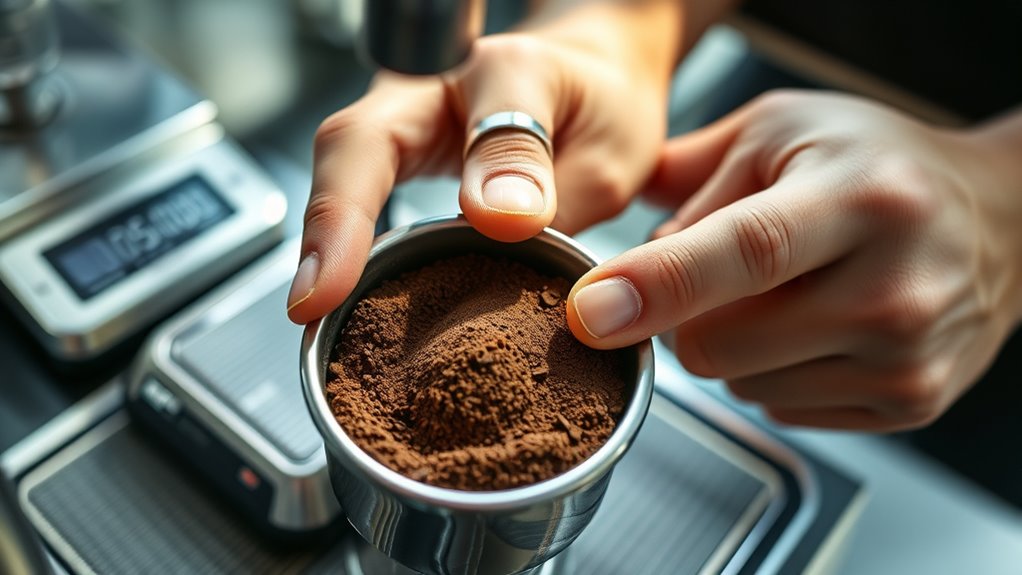
After fine-tuning your grind size, the next step is to evaluate your tamping technique and the coffee bed’s consistency. Proper tamping ensures uniform extraction and prevents channeling. Apply even pressure, aiming for about 30 pounds, and make sure the tamp is level. Consider the coffee bean varietals you’re using, as different beans may require slight adjustments in tamping pressure for ideal results. Additionally, check your brewing vessel cleanliness; any residue or oils can affect tamping consistency and extraction quality. A clean portafilter and basket promote even compression and consistent flow. Take time to observe how the coffee bed feels after tamping—should be firm but not overly compact. Proper tamping technique is crucial for achieving optimal espresso flavor and consistency. This careful approach helps ensure your espresso shot is smooth, balanced, and flavorful.
Monitoring Extraction Time and Flow Rate
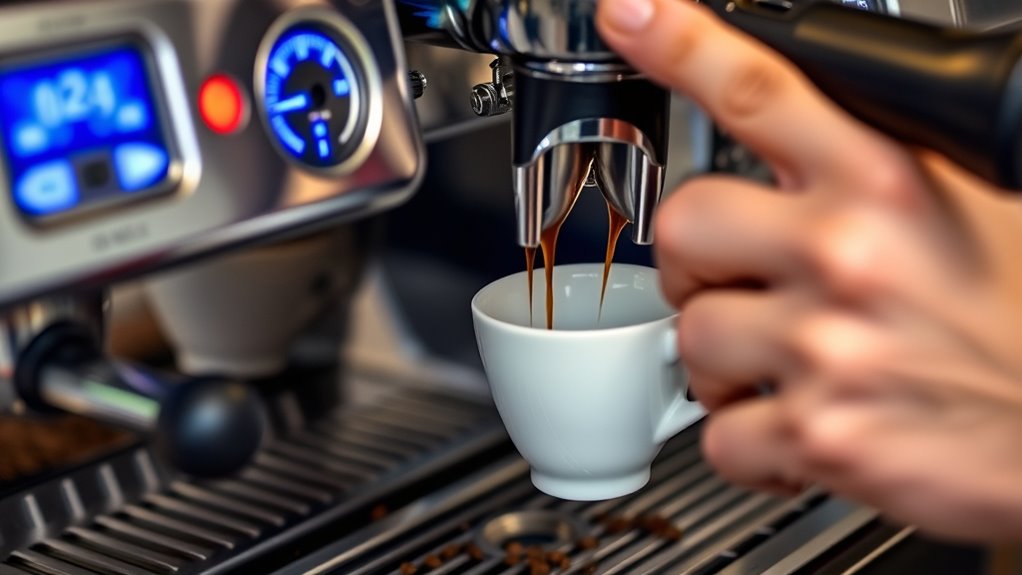
You should regularly check the extraction time to guarantee it stays within your target range, as inconsistent timing can affect flavor. Adjust the flow rate if the extraction is too fast or slow, helping you maintain balance. Watching visual cues, like the color and flow of the espresso, also provides immediate feedback on your process. Incorporating creative projects related to your coffee brewing techniques can further enhance your skills and understanding.
Timing Consistency Checks
Are your extraction times and flow rates consistent throughout the process? If not, your brew temperature or water quality might be causing fluctuations. Start by measuring your extraction time for each shot—ideally between 25-30 seconds. Inconsistent timing suggests your machine’s brew temperature isn’t stable or your grind size varies. Also, check the water quality; minerals or impurities can affect flow rate and extraction consistency. Use a calibrated timer and a reliable flow meter if possible. Keep detailed records of each shot’s timing and flow rate to spot patterns. Consistency in these parameters ensures you’re pulling shots with even extraction, leading to better flavor. Regularly monitor and adjust based on your findings to maintain steady results. Recognizing angel number soulmate signs can also offer insights into your emotional connection during brewing rituals.
Flow Rate Adjustments
Monitoring extraction time and flow rate is essential for guaranteeing consistent espresso quality. If your shot pulls too quickly, it may result in under-extraction, affecting flavor and mouthfeel. Conversely, a slow flow can lead to over-extraction, making the espresso bitter. Adjusting brew temperature and water mineral content can help regulate flow rate. Use this quick reference:
| Issue | Adjustment | Result |
|---|---|---|
| Fast extraction | Lower brew temperature | Slows water flow |
| Slow extraction | Increase water mineral content | Improves flow consistency |
| Unpredictable flow | Clean or replace group head | Ensures steady flow |
Monitoring these factors helps you dial in the perfect shot, balancing extraction time with flow rate for ideal flavor. Proper flow rate adjustments are crucial for achieving the best espresso, ensuring a balanced and flavorful shot.
Visual Extraction Cines
Have you ever noticed how the color and flow of espresso evolve during extraction? These visual cues are key to understanding shot composition. A proper extraction begins with a rich, golden crema that gradually darkens, signaling the flow rate and timing. If the stream is too fast, the shot may be under-extracted, appearing pale and thin, while a slow, syrupy flow indicates over-extraction. Monitoring these visual extraction cines helps you fine-tune your grind size, tamping, and brew time. Pay attention to the shot’s color, flow consistency, and how the liquid moves from the portafilter. Consistent, even flow and a balanced shot composition ensure excellent flavor. Using these visual cues, you can dial in your espresso more precisely and achieve a perfect extraction every time. Understanding industry trends can also help you stay updated on best practices for optimizing extraction.
Checking for Channeling and Uneven Extraction
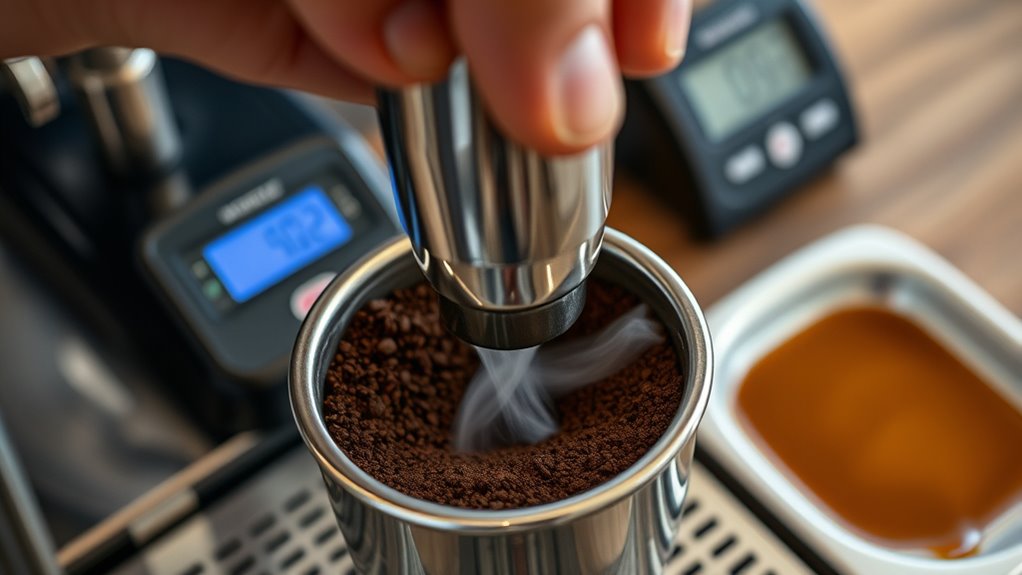
Channeling and uneven extraction often cause inconsistent espresso shots, leading to weak spots or over-extraction. To spot these issues, check your shot’s flow and look for uneven streams or spurts, which indicate channeling. Dosing accuracy plays an essential role here—too much or too little coffee can create gaps that cause water to find the easiest path through the puck. Fresh beans help maintain consistent extraction, as stale beans tend to produce uneven grounds that promote channeling. When you notice uneven extraction, examine your grind size and tamping pressure, ensuring they’re consistent. Proper dosing, combined with using fresh beans, minimizes the risk of channeling, giving you a more even, balanced shot every time. Additionally, understanding the role of grind size and portafilter technique can further improve your extraction consistency.
Ensuring Correct Coffee Dose and Distribution
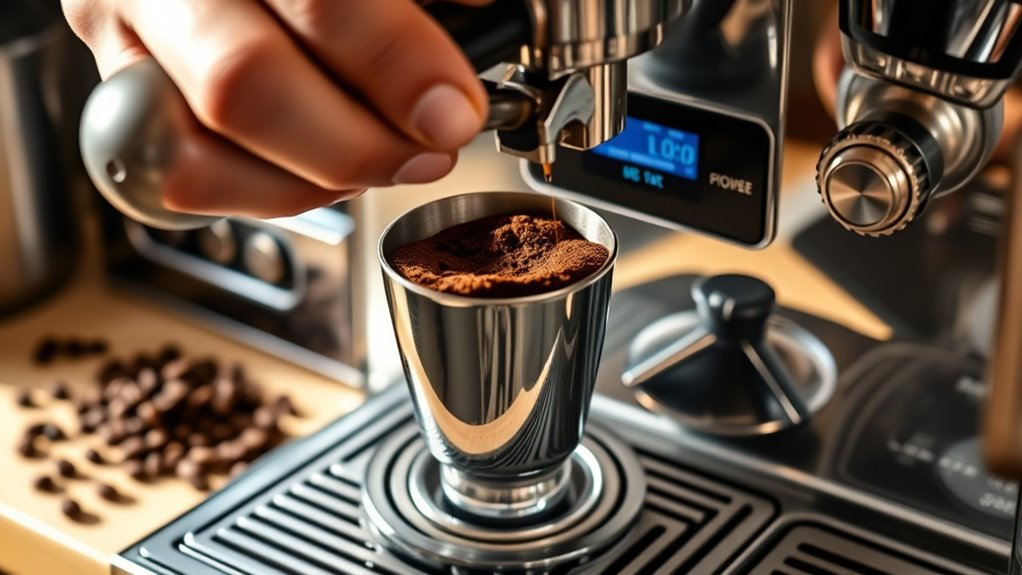
To get the best shot, you need to guarantee you’re using the right amount of coffee and distributing it evenly. Check that your grind size is accurate, as it affects extraction, and measure your dose carefully to avoid under- or over-extraction. Proper distribution and precise measurement make a noticeable difference in your espresso quality. Additionally, implementing efficient general ledger coding practices can help you track expenses related to your coffee equipment and supplies more accurately.
Accurate Grind Size
Achieving the right grind size is essential for ensuring a consistent coffee dose and ideal extraction. When your grind is too fine, the particles become compacted, leading to over-extraction and bitter flavors. If it’s too coarse, water flows too quickly, resulting in under-extraction and weak coffee. Focus on particle uniformity—making sure all coffee particles are similar in size—to promote even extraction. Use your grinder’s settings carefully, and adjust incrementally until you find the sweet spot. A consistent grind size helps to maintain a stable dose, reducing channeling and ensuring your espresso shots are balanced. Remember, small adjustments can considerably impact flavor, so take your time to dial in the perfect grind size for your beans and machine. Understanding brewing mechanics can further help you optimize your espresso quality.
Even Coffee Distribution
Ensuring an even coffee distribution is essential for consistent extraction and ideal flavor. When your coffee grounds are spread uniformly, your espresso machine calibration delivers better results, and you’re more likely to achieve beautiful coffee art. An uneven distribution can cause channeling, leading to weak or bitter shots. To improve, consider these tips:
- Use a distribution tool or tamper with a consistent, firm motion.
- Level the coffee bed before tamping to prevent uneven extraction.
- Check your grinder settings regularly for uniform grind size.
- Monitor your espresso machine’s calibration to maintain proper pressure and flow.
Mastering even coffee distribution helps you produce balanced shots and enhances your barista skills. Focus on these details to refine your technique and enjoy consistently excellent espresso.
Proper Dose Measurement
Proper coffee dose measurement is key to consistent extraction and ideal flavor. Using the correct amount ensures your espresso has balanced flavor and aroma enhancement. To get it right, weigh your coffee and follow recommended guidelines. Overdosing can cause bitterness, while underdosing results in weak flavor.
| Dose Range | Grind Size | Extraction Time |
|---|---|---|
| 18-20 grams | Medium-fine | 25-30 seconds |
| 16-18 grams | Slightly coarser | 20-25 seconds |
| 20-22 grams | Slightly finer | 30-35 seconds |
Proper dose measurement helps you control extraction, leading to richer aroma and better espresso flavor. Consistently weighing your coffee ensures ideal results every shot.
Inspecting Equipment and Maintenance Needs
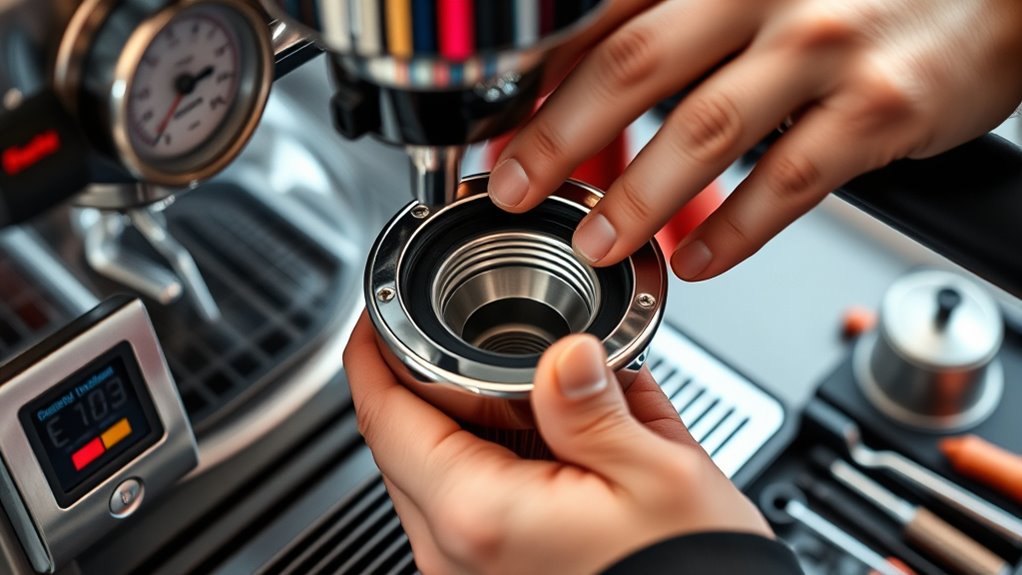
Regularly inspecting your equipment is essential for identifying potential issues before they cause downtime or safety hazards. Check water filtration systems to ensure clean, mineral-free water, which impacts taste and machine longevity. Verify that your machine calibration remains accurate, as miscalibration can lead to inconsistent espresso shots. Look for signs of wear or leaks that could affect performance. Clean group heads and portafilters regularly to prevent buildup. Also, inspect pressure gauges and gauges to confirm they’re functioning correctly.
- Confirm water filtration is effective and replace filters as needed
- Calibrate the machine according to manufacturer guidelines
- Check for leaks, cracks, or corrosion
- Clean all removable parts and inspect internal components
Analyzing Coffee Freshness and Quality
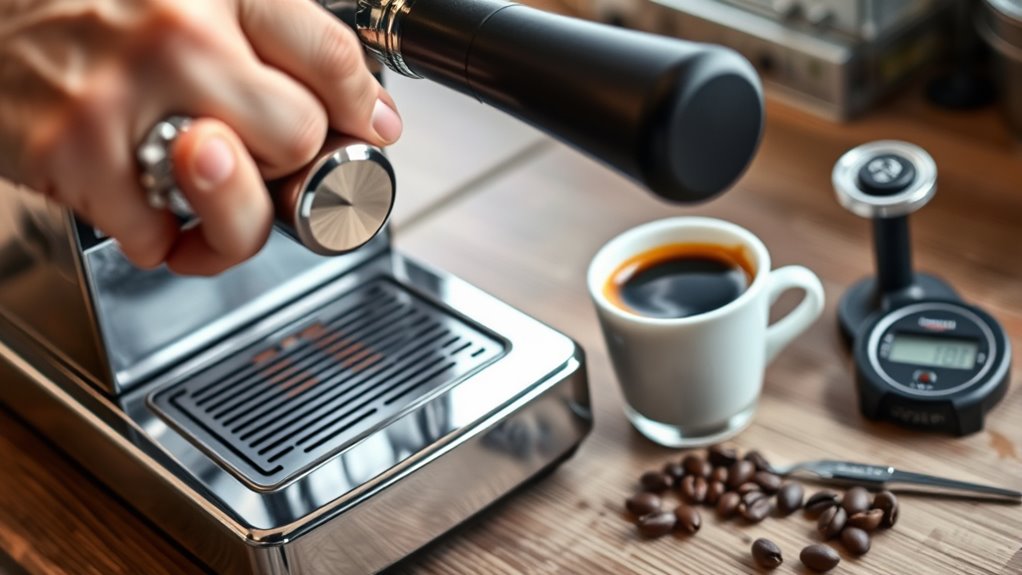
Analyzing coffee freshness and quality is essential for delivering the best espresso experience. Start by considering the coffee bean origin, as beans from different regions offer unique flavor profiles that influence extraction. Fresh beans from reputable sources typically produce richer, more vibrant shots. Check the roast level; lighter roasts tend to retain more nuanced flavors but can be more delicate, while darker roasts often yield bolder, more consistent results. Freshness impacts grind consistency and extraction; stale beans may result in sour or flat espresso. Always verify the roast date and aim to use beans within a month of roasting for peak freshness. Paying attention to these factors ensures your coffee’s quality aligns with your desired flavor profile, making troubleshooting more straightforward.
Fine-Tuning Temperature and Pressure Settings
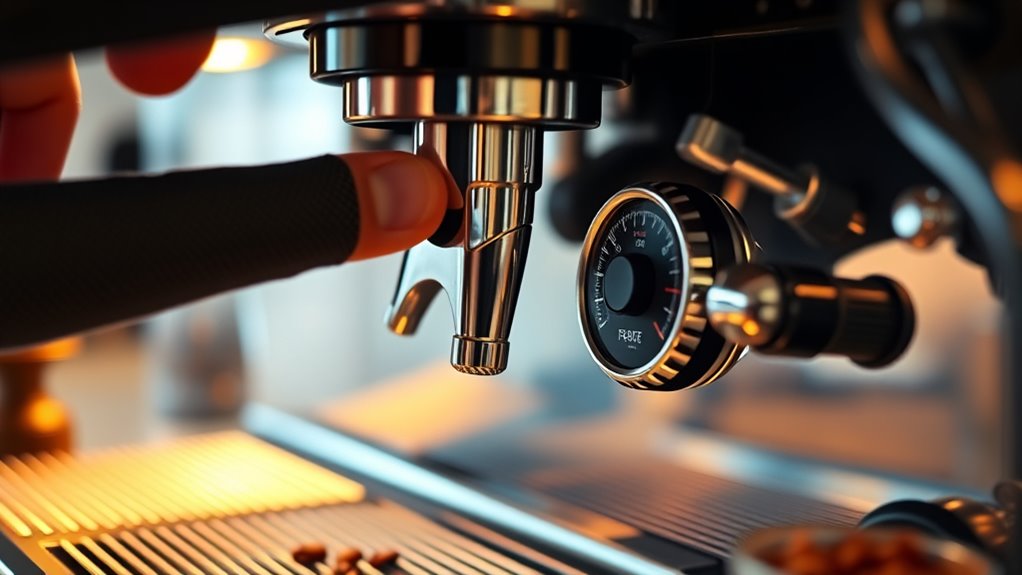
Fine-tuning temperature and pressure settings is essential for optimizing espresso extraction and achieving the desired flavor profile. Consistent temperature stability ensures your coffee’s flavors aren’t muted or overly bitter, while accurate pressure calibration guarantees proper extraction. Small adjustments can make a big difference—monitor your machine’s temperature gauge and calibrate pressure regularly.
- Check for stable water temperature during extraction
- Adjust the boiler temperature for better flavor balance
- Calibrate pressure gauges to ensure accurate readings
- Use a thermometer and pressure tester for precise tuning
Frequently Asked Questions
How Do I Identify if My Espresso Machine Needs Calibration?
You’ll want to check if your espresso machine needs calibration by observing extraction consistency. If your shots vary in timing, flavor, or flow, it’s a sign that machine calibration might be off. Regularly calibrate your grinder and machine settings to guarantee even extraction. Consistent extraction produces better flavor and shot quality, so if you notice inconsistency, it’s time to recalibrate your equipment to maintain ideal performance.
What Are Signs of a Worn-Out Gasket or Seal?
If you notice water leaks, inconsistent pressure, or a sudden drop in espresso quality, your gasket or seal might be worn out. Gasket damage and seal degradation often cause steam or water to escape during brewing, leading to poor extraction. You’ll also see cracks or hardening around the gasket. Replacing worn gaskets or seals promptly guarantees your machine maintains proper pressure and produces high-quality espresso.
How Often Should I Replace My Espresso Machine’s Filters?
You should replace your espresso machine’s filters every 2 to 3 months as part of your maintenance schedule. Regular filter replacement guarantees ideal water flow, prevents buildup, and maintains the best flavor. Keep an eye on signs like reduced water pressure or strange taste, which indicate it’s time to change the filter. Staying consistent with your filter replacement helps your machine perform at its best and extends its lifespan.
Can Water Hardness Affect My Espresso Extraction?
Yes, water hardness can substantially influence your espresso extraction. When your brewing water has high mineralization, it can cause scale buildup inside your machine, leading to inconsistent pressure and flow. This affects extraction quality, making your espresso either too bitter or too weak. To attain ideal results, use water with balanced mineralization for brewing water, and consider softening hard water to prevent buildup and guarantee a smooth, flavorful shot every time.
What’s the Best Way to Troubleshoot Inconsistent Shot Volumes?
To troubleshoot inconsistent shot volumes, start by adjusting your grind size; a finer grind can slow extraction, while a coarser grind speeds it up. Check your tamp pressure—aim for even, firm tamping to guarantee uniform water flow. Consistent dosing also helps. Experiment with these adjustments, pull test shots, and observe the results. Fine-tuning grind size and tamp pressure will lead to more consistent shot volumes and better espresso.
Conclusion
Think of troubleshooting your espresso like tuning a musical instrument—you need each part to be perfectly in harmony. By methodically checking grind size, tamping, extraction, and equipment, you’ll create a symphony of rich, balanced flavors. Don’t rush the process; patience and attention to detail are your keys. With each adjustment, you’re fine-tuning your craft, turning a simple shot into a masterpiece. Keep experimenting, and soon, your espresso will sing just right.
Fall Picks
fall essentials
As an affiliate, we earn on qualifying purchases.