If you’re traveling, understanding visa options is key. Visa-free travel lets you enter certain countries without applying in advance, just using your passport. Visa-on-arrival means you get your visa at the airport or border, making travel easier but possibly slower. E-visas are applied for online before your trip and often speed up entry. Knowing these options helps you plan better—keep going to learn more about how each one works.
Key Takeaways
- Visa-free travel allows entry without a visa for a limited time, requiring only a valid passport.
- Visa-on-arrival enables obtaining a visa at the border, often needing supporting travel documents.
- Evisa is an online application process that provides electronic approval before travel, simplifying entry procedures.
- All options depend on passport validity, destination policies, and traveler nationality.
- Proper documentation and understanding entry requirements help ensure smooth border crossings.
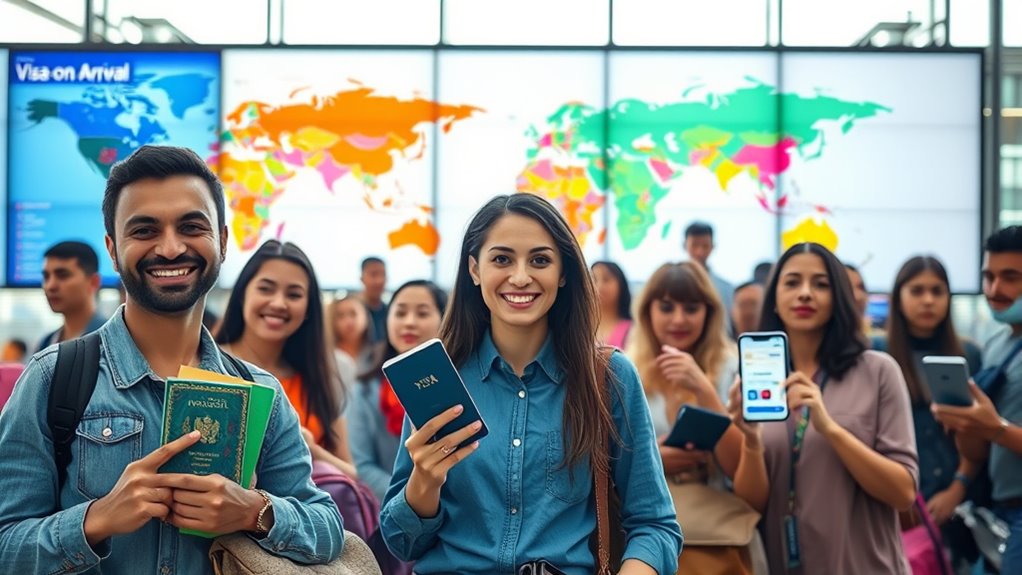
Are you considering traveling or moving abroad but unsure which visa suits your needs? Navigating the different entry options can be confusing, but understanding visa-free, visa-on-arrival, and eVisa programs can simplify your plans. Each option depends on your nationality, the destination country’s policies, and your travel documentation. Before diving into specifics, it’s essential to check passport requirements, as your passport’s validity and type often determine your eligibility for various entry methods. Many countries require your passport to be valid for at least six months beyond your travel dates, and some may need specific blank pages for visa stamps or visas. Ensuring your passport is up to date and meets these requirements is crucial to avoid denied entry or travel disruptions.
Check passport validity and requirements to ensure smooth entry and avoid travel disruptions.
Visa-free travel allows you to visit certain countries without obtaining a visa beforehand. This is common among travelers from countries with strong diplomatic relations. Typically, you can stay for a set period—ranging from a few days to several months—without needing additional travel documentation. However, you’ll still need to carry your passport, which serves as your primary travel document, and sometimes you might be asked to show proof of onward travel or accommodation details. Visa-free entry is often granted for tourism, business, or short visits, making it an ideal option if you’re planning a quick trip. Keep in mind, even if you don’t need a visa, border control authorities may still scrutinize your travel documents, so having a valid passport is essential. Additionally, understanding the optimal angles for pinball machines can help you better prepare for travel-related leisure activities at your destination.
Visa-on-arrival provides a convenient solution when you’re unable to secure a visa before departure. This option enables you to obtain your visa at the airport or border crossing upon arrival. To qualify, you generally need a valid passport, and some countries may require proof of sufficient funds, return tickets, or travel insurance. While visa-on-arrival simplifies travel planning, it’s essential to check the specific country’s requirements beforehand, as some nations impose strict rules or limit the eligibility for visas-on-arrival. Also, be prepared for potential delays at immigration counters, and always carry the necessary travel documentation to support your application. Remember, even with a visa-on-arrival, your passport’s validity and compliance with entry rules are critical to avoid being turned away.
EVisas are an increasingly popular option, especially as many countries modernize their immigration systems. You can apply online before your trip, often receiving approval within days. This process streamlines entry, reduces wait times at border control, and enhances security protocols. To qualify, your passport must meet the country’s requirements, including validity and sometimes specific biometric features. When applying for an eVisa, ensure you fill out all forms accurately and upload the required travel documentation, such as passport scans or proof of travel plans. Once approved, you’ll receive an electronic document or authorization linked to your passport, which you must present upon arrival. Having a valid, compliant passport is essential, as it’s the primary travel document used for your eVisa. This option is particularly useful for travelers planning longer stays or those visiting countries with complex visa procedures, as it provides a straightforward, paperless way to gain entry.

2 Pack Passport Cover With Card Slots RFID Blocking-White&Black
※【Multi-Purpose】:The passport holder with 2 fuction, vaccine card holder and passport holder, transparent pocket is for the vaccine…
As an affiliate, we earn on qualifying purchases.
As an affiliate, we earn on qualifying purchases.
Frequently Asked Questions
How Do I Determine My Eligibility for Visa-Free Travel?
You determine your eligibility for visa-free travel by checking your passport requirements and travel restrictions. First, guarantee your passport is valid for the required duration, often six months beyond your planned stay. Then, verify if your destination country permits visa-free entry for your nationality. Travel restrictions, such as health or security concerns, can also affect eligibility, so consult official government or embassy websites before making travel plans.
Are There Any Fees Associated With Visa-On-Arrival?
Yes, there are typically fees associated with visa-on-arrival. You’ll need to pay a visa fee, which covers the processing cost of your application at the port of entry. The exact amount varies depending on the country and your nationality. Make sure you have the required funds ready in cash or as specified by the embassy or immigration authority to avoid delays or issues during your entry process.
Can I Extend My Evisa Once I Arrive?
Yes, you can usually extend your evisa once you arrive. To do so, you’ll need to apply for a visa extension or evisa renewal before your current evisa expires. Make sure to verify the specific country’s rules, as procedures and requirements vary. Typically, you’ll need to provide documentation, pay a fee, and submit your application to the appropriate immigration authorities. Planning ahead helps ensure a smooth visa extension process.
What Documents Are Required for a Visa-On-Arrival?
For a visa-on-arrival, you need your valid passport with at least six months of validity, a completed application form, and a recent passport-sized photograph. Additionally, you’ll be asked for proof of travel insurance and proof of sufficient funds. Make certain your travel insurance covers your stay, and your passport validity is up-to-date, to avoid issues at immigration. Carry all these documents to ensure a smooth entry process.
How Long Does It Take to Process an Evisa Application?
You might find that your eVisa application moves faster than a race car, often taking just a few hours to a few days. The processing time varies depending on the country and the time of year, acting like a river that flows steadily or sometimes swells unexpectedly. Usually, you can expect the application duration to be around 24 to 72 hours, but it’s wise to check the specific embassy’s guidelines to avoid surprises.

Passport Holder Family RFID Travel Document Organizer for Women Waterproof Passport Wallet Men Portable Case for Cards, Boarding Pass, ID, Money, Tickets with Zipper
Efficient Organization: Our travel document holders are not only travel organizers but also family travel document organizers and…
As an affiliate, we earn on qualifying purchases.
As an affiliate, we earn on qualifying purchases.
Conclusion
Understanding visa options helps you travel more smoothly. For example, imagine planning a trip to Thailand—you might qualify for a visa-on-arrival, saving time and hassle. Knowing whether you need a visa, an eVisa, or can enter visa-free guarantees you’re prepared and avoid delays. By choosing the right option, you can focus on enjoying your trip instead of worrying about paperwork. Stay informed, plan ahead, and travel confidently across borders.
eVisa application guide
As an affiliate, we earn on qualifying purchases.
As an affiliate, we earn on qualifying purchases.

TOPBAG Passport Holder Family, Women Rfid Blocking Passport Wallet, Travel Document Organizer for Premium Wallets, Waterproof Passport Holders Bag for Women & Men Traveling, Credit Cards Case
【High Quality travel passport holder】This passport wallet and passport book holder is made of super strong and durable…
As an affiliate, we earn on qualifying purchases.
As an affiliate, we earn on qualifying purchases.