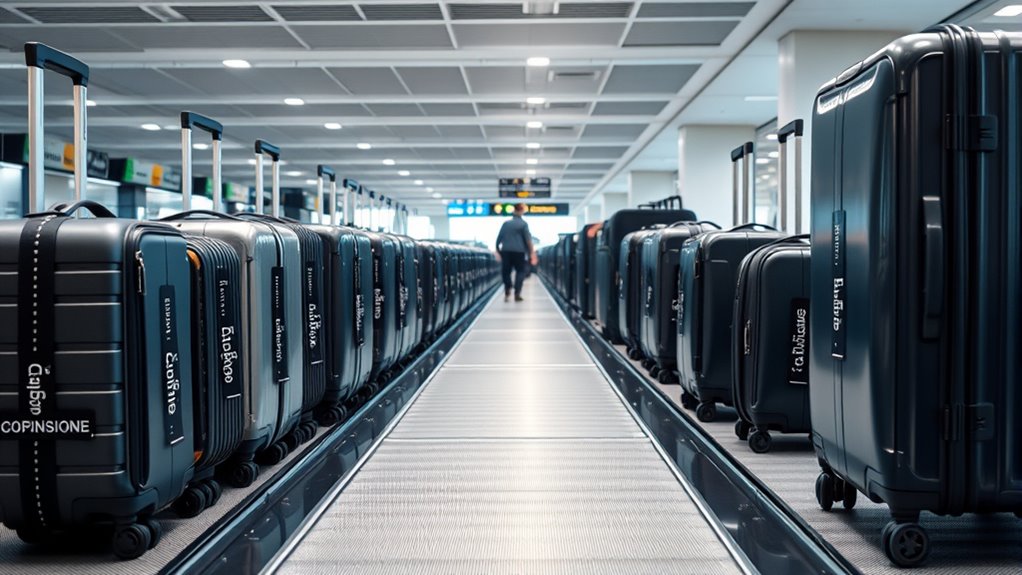

Luggage sizes in linear inches combine your bag’s length, width, and height to give a simple measurement for airline policies. Most airlines set limits by adding these dimensions together, often around 45 inches for carry-ons. Using linear inches makes it easier to verify your luggage complies and avoid extra fees or issues at check-in. Knowing how to measure your bags this way can save you time and hassle—keep exploring to learn more about traveling smart.
Key Takeaways
- Linear inches measure luggage size by adding length, width, and height for quick compliance checks.
- Most airlines specify baggage size limits in linear inches to standardize and simplify measurements.
- A typical carry-on size limit is around 45 linear inches (e.g., 22″ x 14″ x 9″).
- Exceeding linear inch limits may require checked luggage or extra fees, depending on airline policies.
- Accurate measurement in linear inches helps travelers avoid issues during check-in and adhere to regulations.
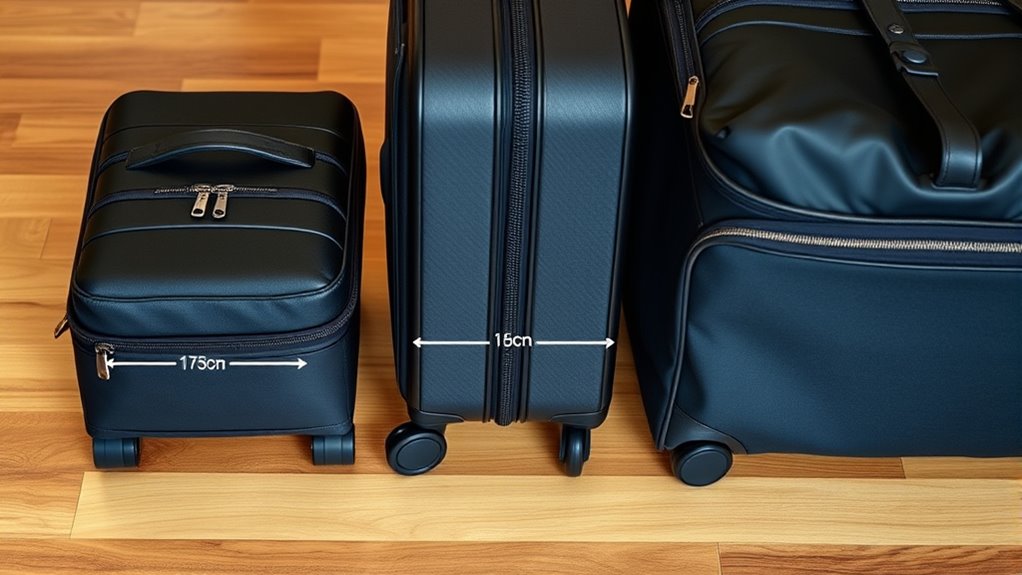
Have you ever wondered why airlines often specify luggage size limits in linear inches? It’s because airlines need a standardized way to measure and compare bags, ensuring compliance with their baggage policies. When traveling, especially internationally, understanding these measurements can save you from unexpected fees or having to check your luggage unexpectedly. Airlines typically combine the length, width, and height of your bag to get the total linear inches, which serves as a quick reference for size restrictions. If your bag exceeds this measurement, you might be asked to check it or pay additional fees. This system also streamlines the process at airports, making it easier for staff to quickly verify luggage sizes without complicated calculations.
In the context of airline baggage policies, linear inches are essential because they help airlines enforce their size restrictions efficiently. Most airlines specify both weight limits and size limits, but linear inches are often the primary measurement for determining if your luggage fits within their standards. For example, a common size limit for carry-on bags might be 22 inches in length, 14 inches in width, and 9 inches in height, totaling 45 linear inches. If your bag exceeds this measurement, you might be asked to check it or pay additional fees. This system also simplifies the process at airports, making it easier for staff to quickly verify luggage sizes without complicated calculations.
When traveling internationally, understanding luggage regulations becomes even more crucial. Different countries and airlines have varying rules regarding maximum luggage dimensions. Some international luggage regulations are stricter, especially for budget airlines or carriers operating in regions with limited space. Knowing how to measure your luggage accurately in linear inches helps you navigate these rules easily, avoiding surprises or extra costs at check-in. Also, some countries may have specific restrictions on the size and weight of baggage for certain flights or destinations, and knowing the linear inches of your luggage makes it easier to comply with those rules. Proper measurement and awareness of projector sizes and their limits can prevent last-minute issues during travel.

MaxWorks 51004 Foldable Travel Bag with Removable Rolling Wheels Large Carry On Suitcase Adjustable Size 25L to 55L for Gym Camping Business Trips Checkerboard Black
Carry-On Luggage with Removable Wheels: Made from wear-resistant, scratch-resistant, and waterproof Oxford cloth with a polyester lining. Features…
As an affiliate, we earn on qualifying purchases.
As an affiliate, we earn on qualifying purchases.
Frequently Asked Questions
How Do International Airlines Differ in Luggage Size Restrictions?
International airlines differ in luggage size restrictions, so you should always check their baggage policies before packing. Usually, carry-on limits are smaller, around 22x14x9 inches, while checked bags can be larger but often have a 50-pound weight limit. Some airlines are strict about linear inches, so exceeding these may mean extra fees or denied boarding. Always review your airline’s specific baggage policies to avoid surprises at the airport.
What Materials Are Best for Lightweight Luggage?
They say, “Light as a feather, stiff as a board,” so choose lightweight luggage materials. You should look for bags made from lighter materials like polycarbonate or nylon, as they’re both lightweight and durable. Durable fabrics, such as ballistic nylon or polyester, also withstand wear and tear. These materials help you travel effortlessly, without sacrificing strength or quality, making your journey smoother and more enjoyable.
Can Luggage Size Affect Baggage Fees?
Yes, luggage size can affect baggage fees. When you choose carry-on versus checked baggage, size matters—larger checked bags often incur higher fees. Airlines have weight limits and size restrictions, so if your luggage exceeds them, you’ll pay extra. To save, stick to the airline’s size guidelines, especially for checked bags, and consider using smaller, lightweight luggage that stays within the airline’s weight and size limits.
Are There Eco-Friendly Options for Luggage?
Sure, eco-friendly luggage options exist, and they’re surprisingly stylish. You can choose bags made from recyclable materials or buy from sustainable brands committed to reducing waste. Ironically, your eco-conscious choice doesn’t mean sacrificing durability or design. Instead, it helps the planet while keeping your belongings safe. So, go ahead—opt for a stylish, environmentally friendly suitcase and travel guilt-free, knowing you’re making a positive impact.
How Do I Measure Linear Inches Correctly?
To measure linear inches correctly, start by using a flexible measuring tape. Measure the length, width, and height of your luggage in inches. Add these three measurements together to get the total linear inch calculation. Make certain your tape stays snug but not tight, and record each measurement accurately. This guarantees your luggage complies with airline restrictions and helps you choose appropriately sized bags for your travels.

Wrangler 22" Hardside Spinner Carry-On Luggage, Lilac
360 degree spinner wheel system for smooth mobility and easy on the wrist
As an affiliate, we earn on qualifying purchases.
As an affiliate, we earn on qualifying purchases.
Conclusion
Now that you know how luggage sizes and linear inches work, you’re practically a travel ninja! With this knowledge, you can breeze through airports and dodge baggage surprises like a pro. Remember, understanding these measurements isn’t just helpful—it’s your secret weapon to avoid the chaos of oversized bags and hefty fees. So, pack smart, measure twice, and take on the skies with confidence—because you’re now equipped to conquer travel like a legend!

Travelon Stop and Lock Luggage Scale with Tape Measure
Save on overweight or oversize baggage fees
As an affiliate, we earn on qualifying purchases.
As an affiliate, we earn on qualifying purchases.

Narwey Carry on Luggage 22x14x9 Airline Approved Foldable Duffle Bag for Travel Packable Duffel Bag for Traveling Airplane for Women and Men 40L (Black (With Shoulder Strap))
Important: The bag size is 20.5 x 13.8 x 8.7 inch fits carry-on item size 22 x 14…
As an affiliate, we earn on qualifying purchases.
As an affiliate, we earn on qualifying purchases.