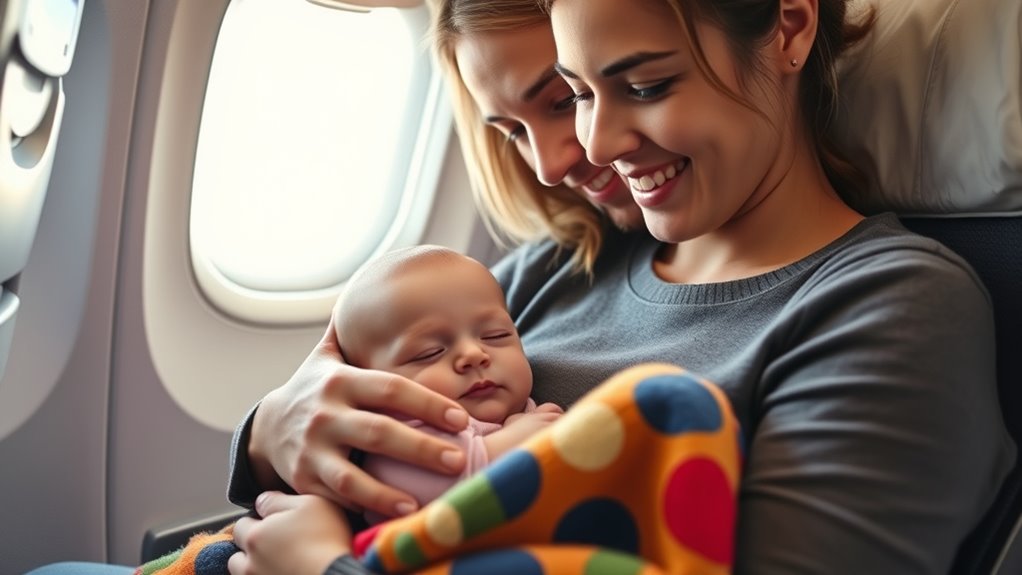

When flying with an infant, check airline policies about carrying a car seat and whether you can bring a stroller for free. Pack essentials like diapers, wipes, toys, and familiar comfort items to ease your baby’s travel stress. Timing flights around nap or bedtimes helps keep your infant calm and sleepy. Use a portable sleep nest and sound app to create a cozy environment. To discover more helpful tips and tricks, keep exploring ways to make your trip smoother.
Key Takeaways
- Check airline policies for infant ticket requirements, baggage allowances, and free check-in options for car seats and strollers.
- Bring necessary travel documents, including birth certificates or identification, for security and boarding.
- Pack enough diapers, wipes, clothes, and familiar comfort items to manage the entire trip comfortably.
- Use a portable sleep nest or familiar sleep accessories to help the infant rest during flights.
- Follow TSA guidelines for carry-on liquids and be prepared for security screenings with baby-related items.
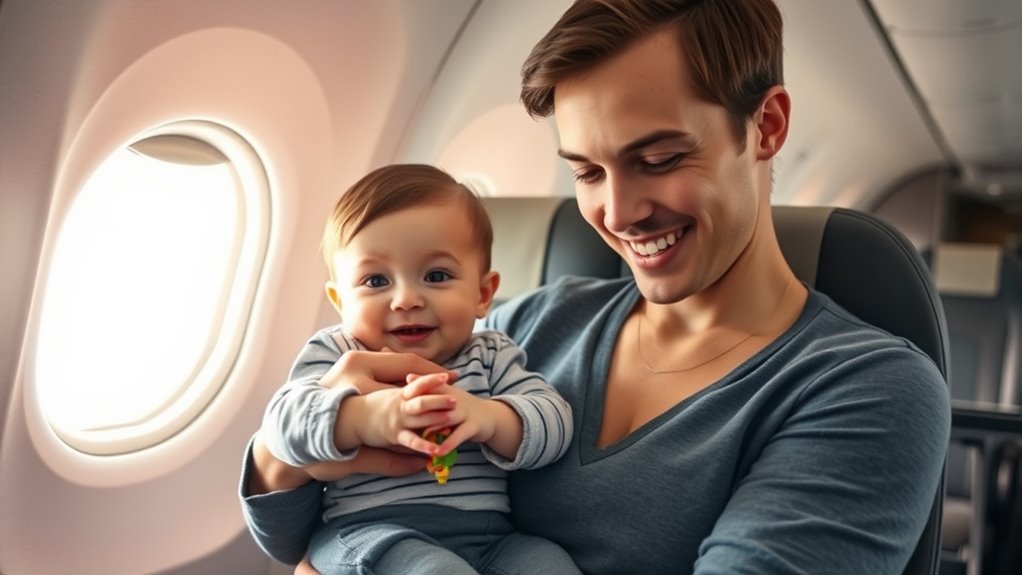
Traveling with an infant can seem intimidating, but with a little preparation, it becomes much more manageable. One of the best ways to stay organized and reduce stress is by packing the right travel accessories. Invest in a sturdy diaper bag with multiple compartments to keep diapers, wipes, bottles, and extra clothes easily accessible. A portable changing pad is a must-have, allowing you to change your baby comfortably anywhere. Consider bringing a compact stroller or carrier that’s lightweight and easy to maneuver through airports and crowded areas. Don’t forget a reliable car seat if you’ll be renting a car or using taxis; many airlines allow you to check these for free. To keep your infant entertained during flights, pack a selection of small toys, books, and comfort items like a blanket or stuffed animal. Having familiar items can help soothe your baby and make the journey more pleasant for everyone.
When it comes to infant sleep strategies, planning ahead is key. Airplane cabins can be noisy and uncomfortable, so bring along items that promote better sleep. A well-fitting, portable sleep nest or travel crib can provide a cozy space for naps, mimicking your baby’s usual sleep environment. If your infant is used to a particular sleep routine, try to replicate it as closely as possible on the plane. Bring familiar sleep accessories such as a blanket or a sound machine app on your phone to drown out background noise and create a calming atmosphere. Timing your flight around your baby’s sleep schedule can work in your favor—if possible, book flights during their usual nap or bedtime hours. This increases the chances they’ll sleep through most of the trip, reducing fussiness and making the experience easier for everyone. Additionally, understanding sustainable travel practices can help minimize your environmental impact while traveling with your infant.
Frequently Asked Questions
Can I Bring My Stroller Through Security?
Yes, you can bring your stroller through security. Stroller regulations typically allow you to take your stroller up to the security checkpoint, where it will undergo security screening protocols. After screening, you can usually gate-check or carry it onto the plane if it meets size requirements. Make sure to remove any valuables first, and check with your airline for specific policies, as regulations can vary between airports.
Are There Special Seat Belts for Infants?
Think of your infant’s safety as a precious gem—you wouldn’t leave it unprotected. Yes, there are special seat belts for infants, designed to secure your child safely in the airplane seat. These harnesses adhere to strict child safety and seat belt regulations, ensuring your little one stays secure during turbulence. Always check airline policies and use approved safety accessories to keep your infant safe and sound throughout the flight.
How Early Should I Arrive at the Airport?
You should arrive at the airport at least two hours before domestic flights and three hours for international trips. Bring your essential travel accessories, like a diaper bag and comfort items, and confirm seating arrangements for you and your infant. Early arrival gives you time to handle check-in, security, and any unexpected delays, ensuring a smoother journey. Planning ahead makes flying with your baby less stressful.
Is It Safe to Give My Baby Medication During Flight?
Medications and my baby? It’s perfectly permissible, but prioritize medication safety first. Always consult your pediatrician about medication safety and infant dosage before your flight. Never give your baby medication without professional advice, as incorrect doses can be dangerous. If approved, follow the pediatrician’s instructions carefully, and keep medications in your carry-on for quick access. Your cautious care can help ensure a smooth, safe flight for your little one.
Can I Breastfeed During Takeoff and Landing?
Yes, you can breastfeed during takeoff and landing. To guarantee breastfeeding comfort, find a comfortable position and use proper latch techniques to help your baby feed effectively. This can also ease their ear pressure changes during ascent and descent. Keep your baby close and monitor their cues. Remember, breastfeeding during these times can soothe your infant and help prevent discomfort caused by pressure changes in the ears.
Conclusion
Just remember, flying with your infant is like guiding a tiny ship through uncharted waters—you’ll face some rough patches, but with patience and preparation, you’ll reach calmer seas. Trust your instincts, stay flexible, and keep a sense of adventure alive. Like a seasoned sailor steering storms, you’ll find your rhythm. Before you know it, you’ll look back on this journey as a brave voyage, knowing you’ve charted a course for smooth skies ahead.