
To avoid common tourist scams, always research local customs and etiquette beforehand, so you blend in and avoid raising suspicion. Be cautious of strangers offering free photos, fake guides, or unsolicited help, and always verify credentials. Pay attention to cultural norms around bargaining, tipping, and site sensitivities to prevent misunderstandings. Respecting local traditions and signals helps build trust and reduces scams. If you want to stay safe and enjoy your trip fully, there’s more you should know.
Key Takeaways
- Research local customs and etiquette to recognize and avoid scams tailored to cultural misunderstandings.
- Be cautious of strangers offering unsolicited help or fake guides, verify credentials, and use official services.
- Avoid taking photos with strangers or touching sensitive objects to prevent manipulative setups or exploitation.
- Follow local norms on bargaining, tipping, and dress codes to prevent overcharges and unnecessary attention.
- Respect cultural traditions and site-specific sensitivities to build trust and reduce the risk of being targeted by scammers.
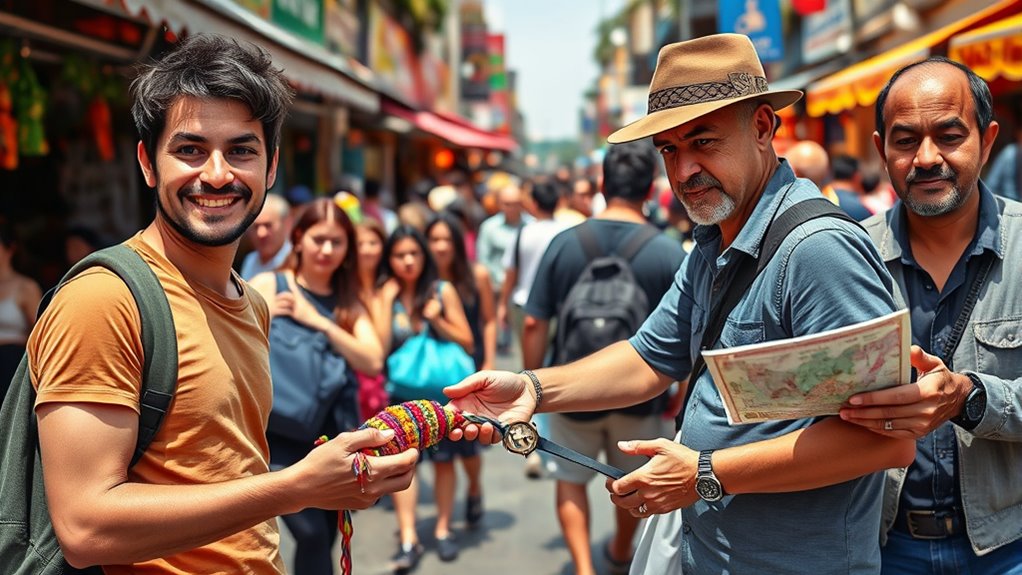
Traveling can be exciting, but tourists often fall prey to scams that can ruin the experience. One of the most common pitfalls involves not understanding or respecting local customs and cultural etiquette. When you arrive in a new destination, it’s essential to do some research beforehand. Knowing the local customs helps you blend in better and avoid unintentionally offending residents, which can make you a target for scams. For example, in some countries, certain gestures or dress codes are considered respectful, while in others, they might be taboo. Ignoring these norms can draw unwanted attention from scam artists who exploit unfamiliarity.
Many scams hinge on cultural misunderstandings. For instance, offering to take photos with strangers or accepting unsolicited help could be part of a setup. If you’re unaware of local etiquette, you might unknowingly offend someone or get involved in a situation that’s designed to distract or manipulate you. To prevent this, learn a few key customs and greetings—simple phrases, polite gestures, or appropriate attire. This shows respect and signals to locals that you’re genuine and well-intentioned, reducing chances of being targeted. Additionally, understanding the cultural etiquette around money, bargaining, or tipping can save you from being overcharged or caught in scams disguised as helpful advice.
Another common scam involves fake guides or overly friendly strangers who approach you in popular tourist spots. They might pretend to be part of the local culture or claim they’re offering free tours. Often, these “guides” lead you to shops or establishments where they receive commissions, or they inflate prices for goods and services. If you’re familiar with local customs regarding tipping or bargaining, you’ll be better equipped to recognize genuine interactions and avoid being misled. Always verify the credentials of tour guides and prefer official or well-reviewed operators.
Being aware of cultural etiquette also helps you navigate social cues and signals. When you respect local traditions, you’re less likely to attract scams that prey on cultural misunderstandings. For example, in some places, touching certain objects or taking photos of specific sites might be sensitive. Respect these boundaries, and you’ll not only show good manners but also avoid drawing attention from those looking to exploit tourists. Moreover, with the rise of AI-driven security systems, understanding local norms can help you avoid inadvertently triggering alerts or misunderstandings in technologically monitored areas.
In essence, understanding and respecting local customs and cultural etiquette is your best defense against many tourist scams. It fosters trust, helps you blend in, and makes your trip more enjoyable and safe. Take the time to learn about the place you’re visiting, and you’ll find that most locals will appreciate your effort, making it less likely for scam artists to target you.
Frequently Asked Questions
How Can I Identify a Fake Tour Guide?
You can identify a fake tour guide by checking their credentials, as legitimate guides usually display official licenses or certifications. Be cautious if they pressure you into quick decisions or ask for upfront payments without proof of authorization. Watch out for common scam tactics like vague explanations or inconsistent information. A real tour guide will confidently share detailed knowledge and provide verifiable credentials, ensuring you’re with a trusted professional.
Are There Specific Times When Scams Are More Common?
Yes, scams tend to spike during peak seasons, holiday weekends, and major events when crowds are larger and officials may be overwhelmed. During these times, scammers exploit the busy atmosphere, distractions, and increased tourist activity. You should stay alert, avoid rushing decisions, and double-check services. By remaining cautious during these busy periods, you can better protect yourself from falling victim to scams and enjoy your trip safely.
What Should I Do if I Fall for a Scam?
If you fall for a scam, act quickly by stopping any further transactions and gathering evidence like receipts or messages. Contact your bank or credit card company immediately for scam recovery and to prevent additional losses. Report the incident to local authorities and follow their reporting procedures. Staying calm and proactive helps minimize damage, and authorities can assist with potential recovery options or legal steps.
How Effective Are Travel Insurance Policies Against Scams?
Travel insurance can be quite the hero, but don’t rely on it to catch every scam. It’s effective against coverage gaps and helps you navigate claim processes when things go wrong. Still, scams often slip through, leaving you to deal with the mess. Think of insurance as a safety net—not a magic shield—so stay vigilant. It’s your best shot at reducing losses, but it’s not foolproof.
Can Local Customs Help Avoid Tourist Scams?
Yes, understanding local customs and cultural awareness can help you avoid tourist scams. When you respect local traditions and behave appropriately, locals are more likely to see you as genuine, reducing the chances of being targeted. Familiarize yourself with customary gestures, tipping practices, and social norms. This knowledge helps you navigate interactions confidently, making it less likely for scammers to exploit misunderstandings or unfamiliarity with local culture.
Conclusion
Remember, steering through tourist scams is like steering through choppy waters—you need to stay alert and know the right course. By staying informed and trusting your instincts, you can steer clear of trouble and enjoy your trip smoothly. Don’t let scammers sink your experience; instead, keep your eyes open and your mind sharp. With a little awareness, you’ll sail through your adventures with confidence, turning potential hazards into mere ripples on your journey.