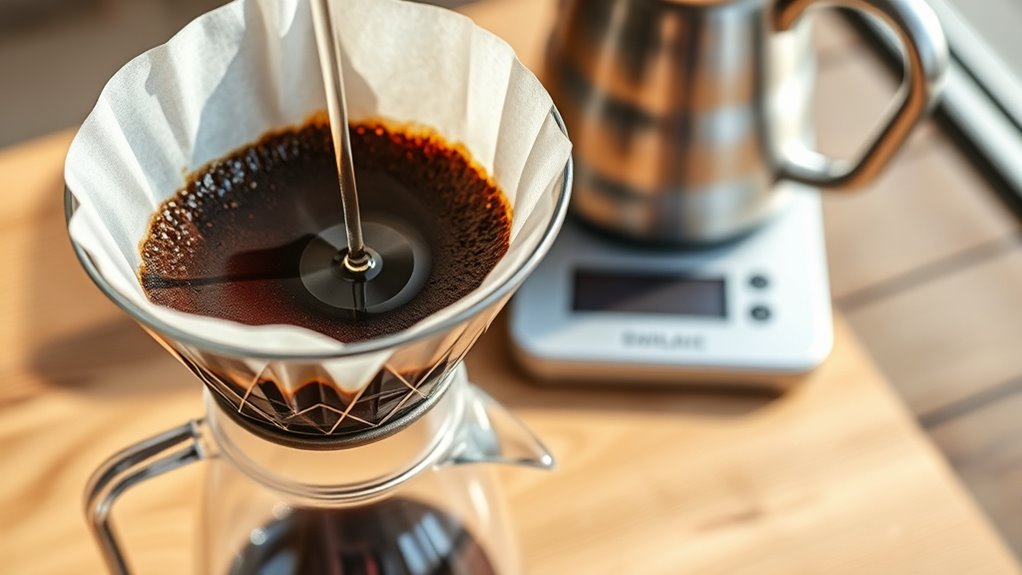

Pour-over brew ratios are all about balancing the amount of coffee and water you use to make your coffee taste just right. A common ratio is 1 gram of coffee to 15 grams of water, which helps create a rich and smooth flavor. Using accurate measurements and consistent ratios means you’ll get the same great taste each time. Stick around to learn more tips on perfecting your pour-over ratios for an ideal cup.
Key Takeaways
- Brew ratios determine how much coffee to water you use, affecting flavor strength and balance.
- The standard ratio is about 1 gram coffee to 15 grams water (1:15).
- Accurate measurement with a scale ensures consistent ratios and better taste control.
- Adjusting ratios can make your coffee stronger or milder based on personal preference.
- Proper ratios help prevent under-extraction (weak taste) or over-extraction (bitter taste).
coffee scale for pour-over brewing
As an affiliate, we earn on qualifying purchases.
As an affiliate, we earn on qualifying purchases.
What Are Brew Ratios and Why Do They Matter?

Have you ever wondered why some pour-over brews taste perfectly balanced while others fall flat? It all comes down to brew ratios. These ratios determine the amount of coffee to water you use, directly impacting your coffee flavor and brewing consistency. When you use the right ratio, your coffee develops a rich, well-rounded taste with clarity and depth. Too much water, and your brew may become weak or diluted; too little, and it might be overly strong or bitter. Consistent ratios help you replicate your favorite flavors every time you brew. By understanding and controlling your brew ratios, you guarantee each cup hits the mark, giving you a reliably great pour-over experience. It’s the foundation for achieving that perfect, balanced cup. For example, many baristas and enthusiasts prefer specific brew ratios to optimize flavor extraction and achieve the ideal strength.
precision coffee measuring spoon
As an affiliate, we earn on qualifying purchases.
As an affiliate, we earn on qualifying purchases.
Understanding the Standard Pour-Over Ratios
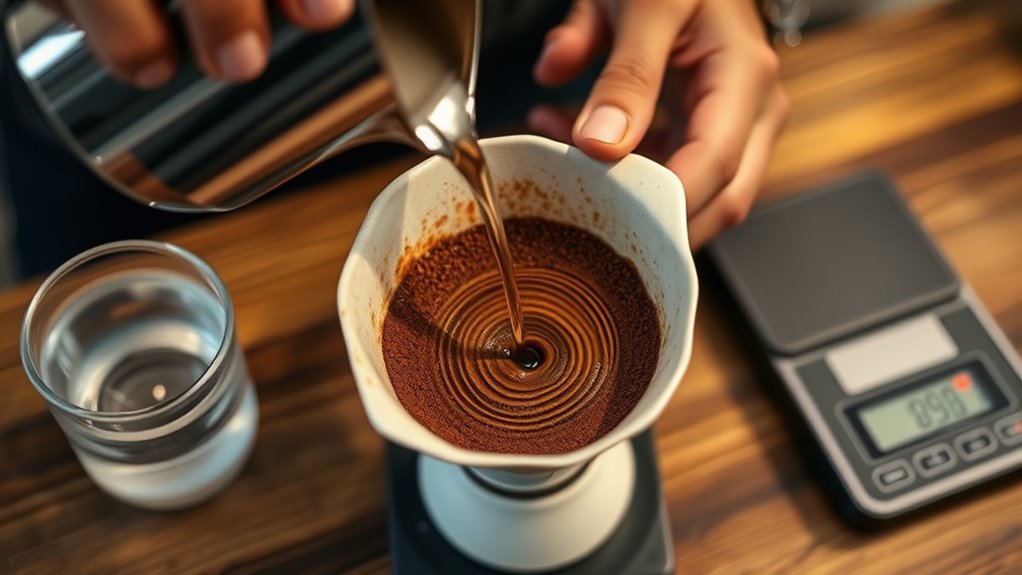
Understanding the standard pour-over ratios is key to mastering consistent and flavorful brews. Typically, a common ratio is 1:15, meaning 1 gram of coffee to 15 grams of water. You’ll want to start with a medium-coarse coffee grind, which allows water to extract flavors evenly. Maintaining the right brewing temperature—around 195-205°F—is also essential, as it influences extraction and enhances the coffee’s richness. Standard ratios help you achieve a balanced brew, ensuring neither under- nor over-extraction. While small adjustments might be needed based on your taste preferences or coffee type, sticking close to these ratios gives you a reliable foundation. Remember, consistency in grind size and temperature complements the ratios, guiding you toward a delicious, well-extracted cup every time. Additionally, paying attention to optimal extraction techniques can further improve your brewing results.
pour-over coffee dripper
As an affiliate, we earn on qualifying purchases.
As an affiliate, we earn on qualifying purchases.
How to Measure Coffee and Water Accurately

Using precise measuring tools helps you get consistent coffee and water amounts every time. Keep practicing to maintain the right ratios and improve your brew quality. Accurate measurements make your pour-over coffee more reliable and enjoyable. Paying attention to measuring techniques can also help you better understand how different ratios affect flavor.
Precise Measuring Tools
Accurate measurement is essential for achieving the perfect pour-over brew, and the right tools make all the difference. Precise measuring tools ensure you get the right coffee flavor and control water temperature. Using a digital scale, you can measure coffee and water to exact grams, ensuring consistency. A thermometer helps monitor water temperature, which impacts extraction and flavor. A gooseneck kettle allows for controlled pouring, helping you evenly saturate the grounds. Here’s what you’ll need:
- Digital kitchen scale – for precise weight measurements
- Thermometer – to maintain perfect water temperature
- Gooseneck kettle – for controlled, steady pours
- Proper measurement techniques are vital for consistency and flavor control in your brew.
These tools help you brew with accuracy, resulting in a balanced, flavorful cup every time.
Consistent Ratios Practice
To achieve consistent results in your pour-over brew, it’s essential to measure both coffee and water precisely each time. Use a reliable scale to weigh your coffee grounds, ensuring you’re using fresh coffee for ideal flavor. Freshness impacts extraction, so always start with freshly roasted beans. When measuring water, aim for accuracy to maintain your chosen ratio. Keep in mind that grind size adjustments can influence extraction and flavor; a coarser grind may require slightly more water, while a finer grind might need less. Consistently measuring your ingredients helps you dial in your desired ratio, making your brew predictable and delicious every time. Incorporate small tweaks based on coffee freshness and grind size to refine your process and achieve perfect, balanced extraction.
coffee brewing scale with timer
As an affiliate, we earn on qualifying purchases.
As an affiliate, we earn on qualifying purchases.
Adjusting Ratios for Different Coffee Strengths
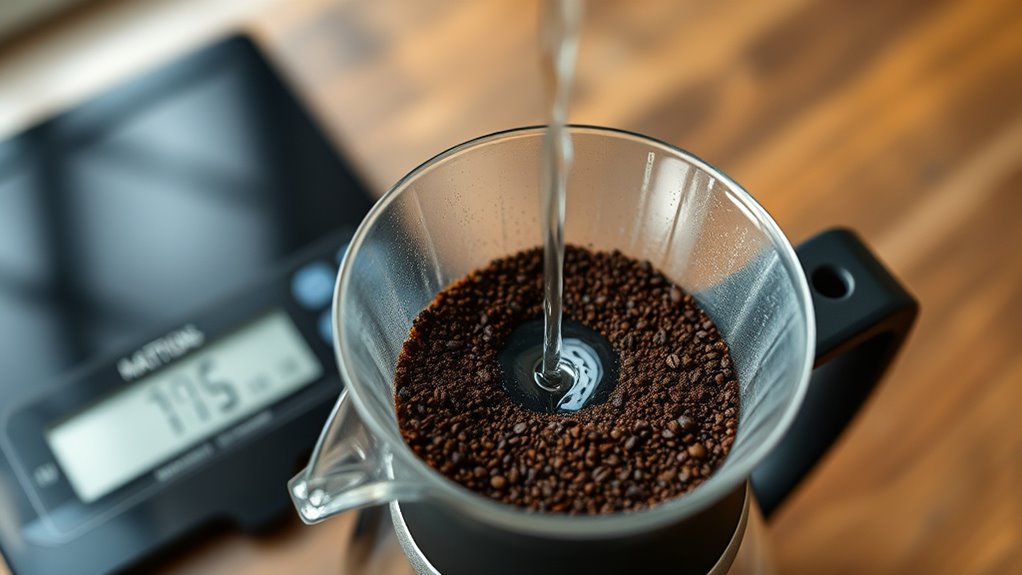
Adjusting your pour-over brew ratios allows you to customize the coffee’s strength to suit your taste. To do this effectively, consider these factors:
- Coffee bean varieties influence strength—darker roasts often need less coffee for a bolder flavor, while lighter roasts may require more.
- Water mineral content impacts extraction; mineral-rich water can enhance flavor, making a weaker ratio seem stronger.
- Desired strength guides your ratio—use a lower coffee-to-water ratio for a more concentrated brew or a higher one for a lighter cup.
Common Mistakes When Using Brew Ratios
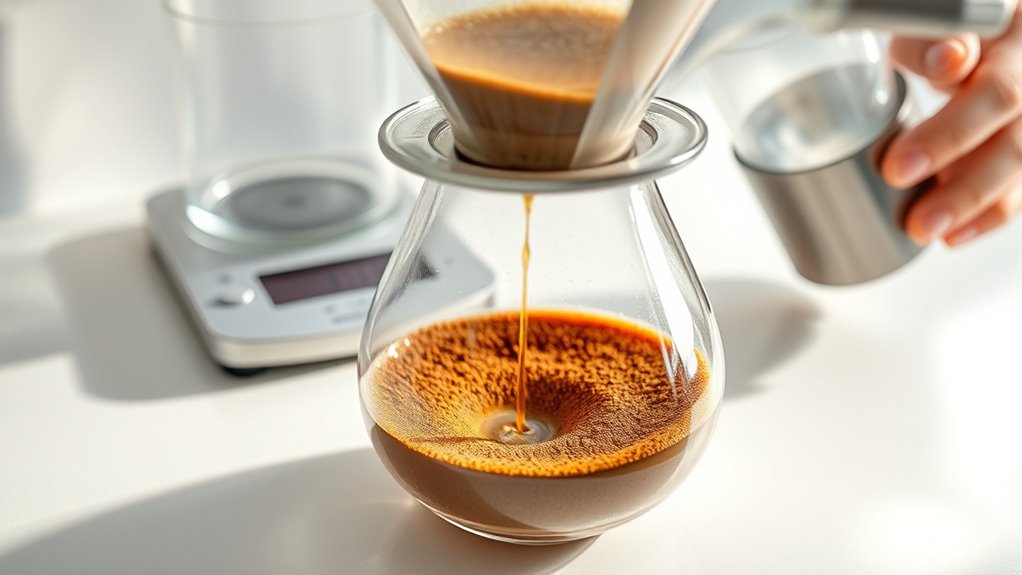
Many beginners overlook common pitfalls when experimenting with brew ratios, which can lead to inconsistent or disappointing results. One major mistake is ignoring over extraction pitfalls, where too much coffee grounds or too long extraction times produce bitter, harsh flavors. It’s also easy to overlook equipment calibration; if your scale or grinder isn’t accurate, your ratios will be off, resulting in weak or overly strong brews. Inconsistent measurements make it difficult to replicate successful results. Another mistake is blindly following ratios without understanding how variables like grind size, water temperature, and pouring technique affect extraction. By paying attention to equipment calibration and avoiding over extraction pitfalls, you’ll improve your pour-over consistency and flavor clarity. Recognizing the importance of local resources can also help you access expert advice and better tools to refine your brewing process.
Tips for Perfecting Your Pour-Over Brew Ratios

Achieving the perfect pour-over brew ratio requires attention to detail and a willingness to experiment. To refine your method, start by questioning common brew ratio myths that suggest a one-size-fits-all approach. Remember, flavor balance depends on adjusting ratios to suit your taste. Here are some tips:
- Start with a standard ratio like 1:16, then tweak based on taste—more coffee for a stronger brew, less for lighter.
- Use a scale to ensure consistency, since small changes can impact flavor balance considerably.
- Taste and record each brew, noting ratios that produce your ideal flavor profile, then refine your technique accordingly.
- Incorporating aesthetic wall organization can help keep your brewing space tidy and inspiring, encouraging experimentation and consistency.
Frequently Asked Questions
Can Brew Ratios Affect the Flavor Profile of My Coffee?
Yes, brew ratios can definitely affect your coffee’s flavor profile. When you adjust the ratio, you change the strength and extraction, impacting taste. Using a finer grind size or increasing brewing time can extract more flavors, making your coffee more robust or bitter. Conversely, a coarser grind or shorter brew time results in a milder flavor. Experimenting with ratios helps you find the perfect balance for your preferred taste.
What Are the Signs of Using Incorrect Brew Ratios?
Think of your coffee as a symphony—incorrect ratios throw off the harmony. If your brew tastes overly bitter or harsh, you’re likely experiencing signs of over-extraction, meaning too much flavor was pulled out. Conversely, if it tastes weak, flat, or sour, you’re seeing signs of under-extraction, where not enough flavor was extracted. Adjust your ratios for a balanced, delightful cup that sings with every sip.
How Do Ambient Temperature and Humidity Influence Brew Ratios?
Ambient temperature and humidity considerably impact your brew ratios. Higher temperatures can cause water to evaporate faster, leading to weaker extraction, while lower temperatures may slow down extraction. Humidity effects can cause your coffee grounds to absorb more moisture, making them denser and harder to brew properly. To maintain consistent ratios, adjust your grind size or brew time based on ambient impact, ensuring your coffee remains balanced and flavorful despite changing conditions.
Are There Recommended Ratios for Different Coffee Beans or Roast Levels?
You should adjust brew ratios based on bean origin and roast level. For lighter roasts or beans from delicate origins, use a slightly higher coffee-to-water ratio to highlight nuanced flavors. Darker roasts or more robust beans benefit from a bit less coffee to prevent overpowering the brew. Experiment with ratios like 1:15 for delicate beans or 1:16 for bolder roasts to find what suits your taste best.
How Often Should I Revisit and Adjust My Pour-Over Ratios?
You should revisit and adjust your pour-over ratios whenever you notice changes in your coffee’s flavor or aroma. Keep an eye on your coffee grind size and water temperature, as these factors impact extraction and taste. Experiment periodically, especially with different beans or roast levels, and make small adjustments to your ratios. Regular tweaking guarantees you get the best flavor, balancing strength and clarity every time you brew.
Conclusion
Mastering pour-over brew ratios means understanding, measuring, adjusting, and refining. It’s about knowing what works, avoiding common mistakes, and aspiring for consistency. By grasping these principles, you’ll craft better coffee, improve your skills, and enjoy every sip more. Keep experimenting, stay mindful, and never settle for less than perfect. Remember, the key to great pour-over coffee lies in your ratios—balanced, precise, and tailored to your taste.