To winterize your outdoor faucets and spigots, start by disconnecting hoses and draining any water from the connections. Install insulated covers or foam sleeves to keep cold air out, and consider insulating the water supply pipes nearby. Make sure all drainage ports are open or add drain valves to prevent water from freezing inside. Regular checks and proper insulation help prevent freezing and costly damage—continue exploring ways to protect your plumbing effectively.
Key Takeaways
- Disconnect hoses and drain water from spigots to prevent freezing and expansion damage.
- Install insulation covers or foam sleeves around outdoor faucets for added protection.
- Use a wet/dry vacuum to remove residual water from spigots and hose connections.
- Seal gaps and insulate the water supply pipe leading to outdoor faucets, especially in unheated areas.
- Regularly check and maintain insulation and drainage methods throughout winter for effective protection.
As winter approaches, it’s essential to protect your outdoor faucets and spigots from freezing temperatures that can cause costly damage. Freezing water inside the pipes can lead to cracks, leaks, or even burst pipes, resulting in expensive repairs and water waste. To prevent this, you should start by using effective drainage techniques. These methods ensure that any remaining water in your outdoor plumbing drains out completely. Begin by disconnecting hoses and draining any water from the spigots. If your spigots have drainage ports, open them to allow residual water to escape. For those without drainage ports, consider installing drain valves or using a wet/dry vacuum to suck out water from the spigot and hose connection. Drainage techniques are *crucial* because they eliminate standing water that could freeze and expand, causing damage.
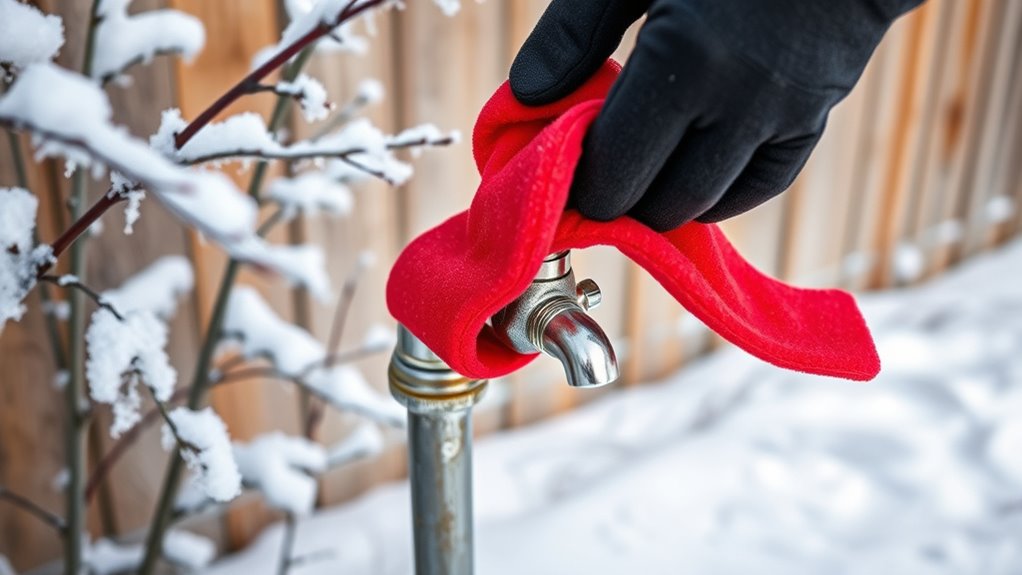
In addition to drainage, faucet insulation plays a *vital* role in winterizing your outdoor faucets. Insulating your spigots creates a barrier that keeps cold air away and reduces the risk of freezing. You can wrap faucet insulation sleeves or foam covers around each outdoor spigot. These covers are affordable, easy to install, and highly effective in maintaining warmer temperatures around the faucet area. If you have older or more exposed faucets, consider adding extra layers of insulation or sealing gaps around the base to prevent cold drafts from reaching the pipe. Beyond simple covers, you might also insulate the water supply pipe leading to the spigot, especially if it runs through unheated spaces, to further protect it from freezing. Additionally, using high-quality insulation materials can enhance the effectiveness of your winterization efforts.
Make sure to check your insulation regularly throughout the winter, especially after storms or temperature drops. Proper drainage techniques combined with adequate faucet insulation *significantly* reduce the likelihood of pipes freezing and bursting. These measures not only safeguard your property but also save you money and hassle in the long run. Remember, the goal is to eliminate any standing water and keep your outdoor plumbing as warm as possible. When spring arrives, you’ll be glad you took these precautions, as your faucets will be ready to use without leaks or damage. Protecting your outdoor faucets and spigots might seem simple, but the combination of drainage techniques and faucet insulation is the most effective way to winterize your outdoor plumbing system.
Frequently Asked Questions
Can I Winterize My Outdoor Faucet Without Turning off the Main Water Supply?
You can winterize your outdoor faucet without turning off the main water supply by disconnecting hoses from hose bibs and draining any remaining water. Use freeze prevention devices like faucet insulators or foam covers to protect the spigots. These steps help prevent freezing and potential damage, even if the main supply stays on. Just guarantee you thoroughly drain and insulate to keep your outdoor faucets safe during cold weather.
What Tools Are Necessary for Winterizing Outdoor Spigots?
For winterizing outdoor spigots, you’ll need a tools checklist that includes a wrench, an air compressor, and a screwdriver. You’ll also want insulation materials like foam faucet covers or pipe insulation to protect against frost. With these tools and materials, you can securely shut off the water supply, drain the line, and insulate the spigot, ensuring your outdoor faucet stays safe during cold months.
How Often Should I Check My Outdoor Faucets During Winter?
You should check your outdoor faucets at least once a month during winter to guarantee frost prevention. Regular inspections are part of your annual maintenance routine and help catch any leaks or damage early. By monitoring these faucets regularly, you prevent freezing issues and protect your plumbing. Keep an eye on them especially during cold snaps, so you can take quick action if needed, ensuring your outdoor spigots stay safe all winter long.
Are There Specific Materials Recommended for Faucet Insulation?
Think of your hose bibs as delicate plants needing protection from frost. Foam insulation is highly recommended because it’s easy to install and provides excellent thermal protection. It molds well around spigots, creating a barrier against cold. Avoid cheaper materials that can crumble or lose effectiveness over time. Proper insulation keeps water flowing smoothly and prevents costly repairs, ensuring your outdoor faucets stay safe all winter long.
What Signs Indicate My Outdoor Faucet Is Frozen or Damaged?
You’ll notice if your outdoor faucet is frozen or damaged by frost damage signs like stiffness or a complete lack of water flow. Look for leak signs such as dripping or pooling water around the spigot, which can indicate internal cracks or burst pipes. If you suspect frost damage, don’t force the faucet open, as this can worsen the problem. Acting quickly helps prevent further damage and costly repairs.
Conclusion
So, after all that effort to winterize your outdoor faucets, you might think you’re safe from the cold. But here’s the irony: neglecting these small steps can turn your cozy winter into a frozen nightmare, with burst pipes and costly repairs. It’s a little reminder that even the simplest tasks require attention—because sometimes, the biggest surprises come from ignoring the obvious. Stay vigilant, and your pipes will thank you when spring rolls around.