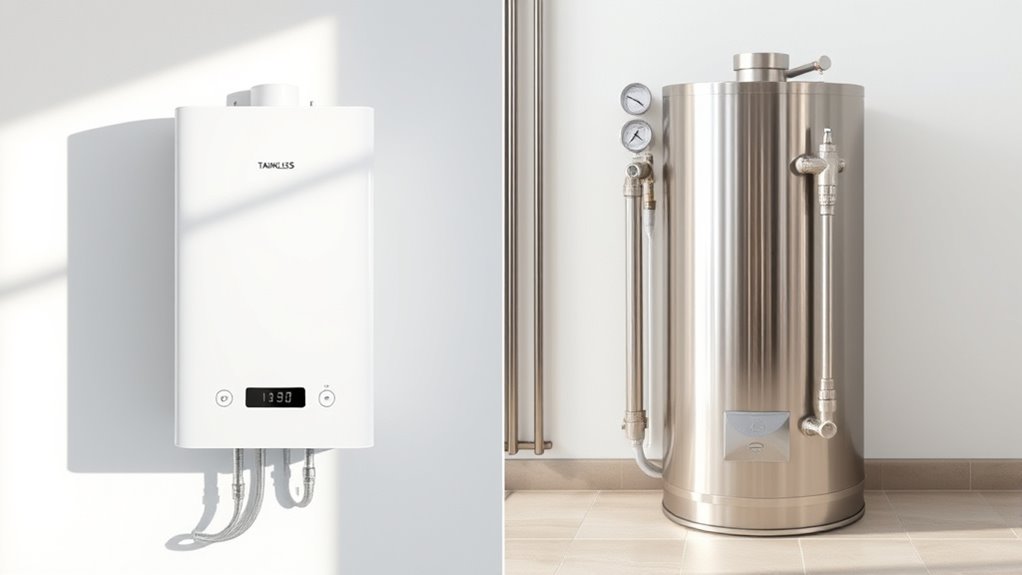

If you’re choosing between tankless and tank water heaters, consider efficiency and upfront costs. Tankless units heat water only when needed, cutting energy waste and lowering bills, but they usually cost more to buy and install. Traditional tanks are less expensive initially but consume more energy to keep water hot constantly. As you explore further, you’ll discover ways to save money and pick the best option for your home needs.
Key Takeaways
- Tankless heaters provide on-demand hot water, reducing energy waste compared to constantly-heated tank models.
- Higher initial costs for tankless units are offset by lower ongoing utility bills over time.
- Installation of tankless systems may require additional plumbing or electrical upgrades, unlike simpler tank heaters.
- Tankless models are more energy-efficient, leading to potential long-term savings on utility expenses.
- Technological advancements continue to improve both systems’ efficiency and performance, influencing their attractiveness.

Have you ever wondered if there’s a more efficient way to get hot water without running out? If so, you’re not alone. Many homeowners are exploring alternatives to traditional tank water heaters, especially as energy efficiency and installation costs become more important. Tankless water heaters, also called on-demand units, are gaining popularity because they heat water only when you need it, eliminating standby heat loss that tanks often suffer from. This means you get hot water instantly and continuously, which is a big advantage if you have a busy household.
When comparing tankless and tank water heaters, energy efficiency stands out. Tankless models typically use less energy because they don’t maintain a reservoir of hot water all the time. Instead, they heat water on demand, so you’re not paying to keep a tank full of hot water heated 24/7. This can considerably lower your utility bills over time. However, the initial investment might be higher, as the installation costs for tankless units are generally more expensive than traditional tanks. This is due to the need for upgraded gas lines or electrical wiring, especially if you’re switching from a tank model. Despite the higher upfront costs, many homeowners find that the long-term savings on energy outweigh the initial expenses.
Installation costs are an important consideration. While tankless water heaters tend to have a higher purchase price, the installation process can add to that cost. You might need additional plumbing work, new venting, or electrical upgrades, depending on your existing setup. Plus, the complexity of installing a tankless unit can mean hiring a professional, which adds to the overall expense. On the other hand, tank water heaters are usually simpler to install and can be less costly upfront. But remember, these units constantly use energy to keep water hot, so your ongoing utility bills might be higher than with a tankless system. Additionally, advancements in projector technology have made home systems more efficient, similar to how modern water heaters are designed for better energy savings.

Chefman Crema Supreme 15 Bar Espresso Machine with Milk Frother, Barista Steam Wand, Professional Coffee Maker with Coffee Grinder, 30 Grind Settings, 3L Removable Water Tank - Stainless Steel
BE YOUR OWN BARISTA: Enjoy beautiful café-quality beverages with next to no effort using a semi-automatic espresso maker...
As an affiliate, we earn on qualifying purchases.
Frequently Asked Questions
How Do Tankless Heaters Perform During Power Outages?
During power outages, tankless water heaters typically don’t perform well because they rely on electricity to operate, affecting their power outage resilience. Without power, they can’t heat water, leaving you without emergency hot water when you need it most. If maintaining hot water during outages is a priority, consider a tank model or a backup power source, since tankless units aren’t designed for reliable emergency hot water supply in outages.
Are There Specific Maintenance Requirements for Tankless Models?
You need to stay on top of maintenance schedules for your tankless water heater to keep it running smoothly, as neglect can lead to costly repairs. Regular descaling procedures are vital, especially in hard water areas, to prevent mineral buildup. Think of it as giving your heater a tune-up — it guarantees peak performance and longevity. Don’t let small issues snowball; a little upkeep now saves headaches later.
Can Tankless Water Heaters Be Installed Outdoors?
Yes, you can install a tankless water heater outdoors, but you need to take into account weather conditions. Outdoor installation is convenient, but you must make certain it’s weatherproofed and protected from freezing temperatures. Use a dedicated enclosure or shelter to prevent damage from rain, snow, or extreme cold. Regular maintenance and insulation help keep your outdoor tankless heater running efficiently, regardless of weather considerations.
What Is the Typical Lifespan Difference Between Tank and Tankless?
When it comes to durability comparison, tankless water heaters generally last longer, often 20 years or more, while traditional tank models typically need replacement every 10-15 years. You’ll want to keep in mind that the longer lifespan of tankless units means fewer replacements, saving you time and money in the long run. It’s a classic case of “the early bird gets the worm,” so investing in a tankless could pay off.
How Do Initial Costs Compare to Long-Term Savings?
You’ll find that tankless water heaters usually have higher initial costs compared to traditional tank models, but the cost comparison shifts in your favor over time. With energy savings, tankless units use less energy because they heat water on demand, reducing standby heat loss. While the upfront investment is higher, your long-term savings on energy bills offset the initial costs, making tankless systems a more economical choice over the lifespan.

Gevi Commercial Espresso and Coffee Makers, Professional 20 Bar Espresso Maker with Milk Frother, Stainless Steel Expresso Coffee Machines for Home, Compact Cappuccino Machine, Great Gift
𝐎𝐩𝐭𝐢𝐦𝐚𝐥 𝐅𝐥𝐚𝐯𝐨𝐫 𝐄𝐱𝐭𝐫𝐚𝐜𝐭𝐢𝐨𝐧 - Equipped with a 20-bar pump, NTC temperature control, pre-infusion feature, and a pressure gauge,...
As an affiliate, we earn on qualifying purchases.
Conclusion
Choosing between tankless and tank water heaters ultimately depends on your lifestyle and needs. Tankless units offer endless hot water and save space, making them a game-changer—like having a personal hot water fountain in your home. While they might come with a higher upfront cost, their efficiency and longevity can make them the smartest investment you’ll ever make. In the battle of hot water solutions, tankless heaters stand out as the true champions of modern comfort.

Breville Barista Express Espresso Machine BES870XL, Brushed Stainless Steel
The Breville Barista Express delivers third wave specialty coffee at home using the 4 keys formula and is...
As an affiliate, we earn on qualifying purchases.
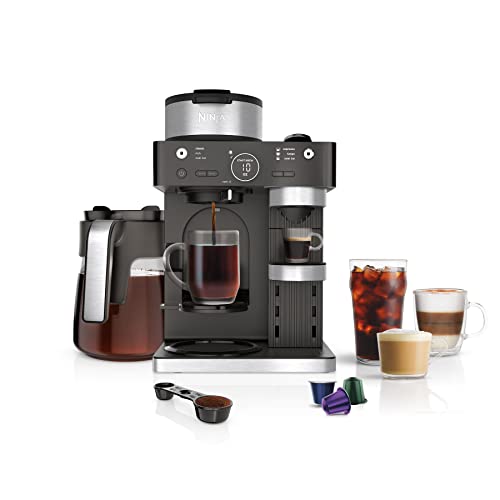
Ninja Espresso & Coffee Maker & Barista System, 3 Espresso Brew Styles, Single-Serve Coffee & Nespresso Capsule Compatible, Built-in Frother, Espresso, Cappuccino & Latte Maker, Black, CFN601
BARISTA PLUS TECHNOLOGY: The 19-bar pressure system delivers ultra-flavorful espresso with a silky-smooth crema by brewing at the...
As an affiliate, we earn on qualifying purchases.