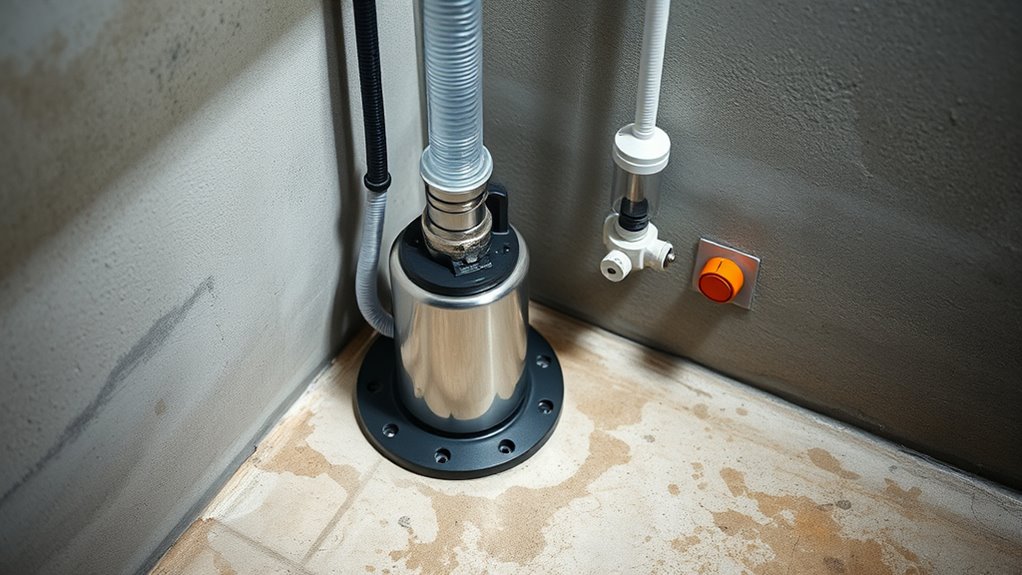

A sump pump helps keep your basement dry by removing excess water from a sump pit, especially during heavy rains. To guarantee it works well, choose the right model for your home’s water flow, install it in a deep, solid pit, and connect the discharge pipe to direct water away from your foundation. Regular maintenance, like testing the pump monthly and keeping parts clean, is essential. Keep exploring to learn detailed tips for reliable operation and long-lasting performance.
Key Takeaways
- Choose the right sump pump based on basement size and water flow needs during heavy rains.
- Properly install and prepare the sump pit on a stable, level surface, sealing it to prevent debris ingress.
- Regularly test the sump pump monthly by pouring water into the pit to ensure proper operation.
- Perform routine inspections, clean debris, and promptly replace worn parts to prevent failures.
- Ensure discharge piping is clear, directed away from the foundation, and at least 10-20 feet from the home to prevent water re-entry.
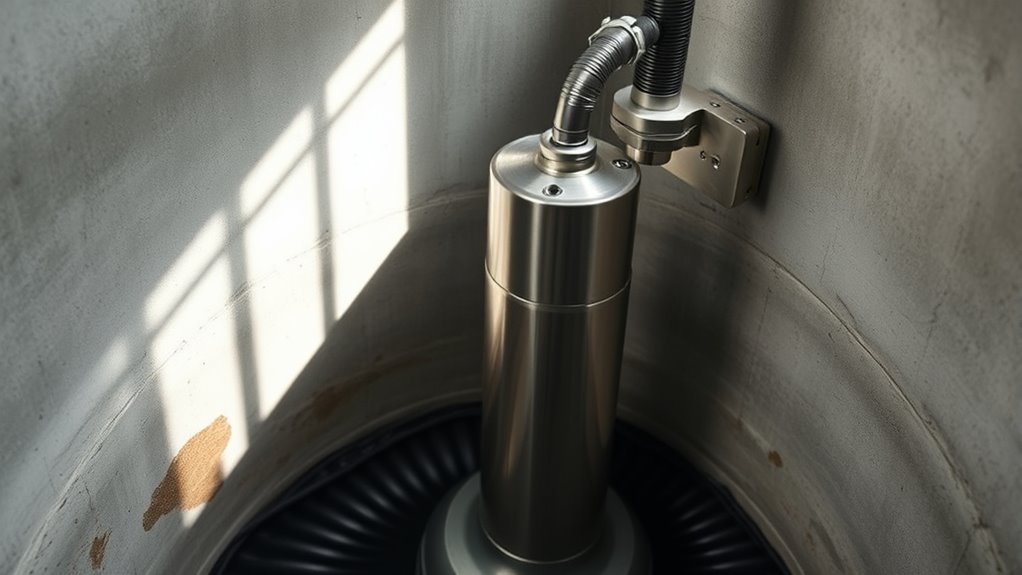
Have you ever wondered how to protect your basement from flooding? Installing a sump pump is one of the most effective ways to keep water out, but proper installation is *essential* to *guarantee* it functions correctly. When considering installation tips, start by selecting the right sump pump for your needs. Think about the size of your basement and the typical water flow during heavy rains. Once you’ve chosen the right model, choose a suitable location—usually in a corner where water tends to collect most. Dig a pit that’s deep and wide enough to house the sump pump comfortably, and make sure it’s placed on a solid, level surface. Connect the discharge pipe securely, directing water away from your foundation to prevent re-entry or water pooling near your home. Remember to check local codes and regulations, as they can influence the installation process. Proper sealing around the sump pit also helps prevent debris and groundwater from leaking in, which can cause your pump to work harder or fail prematurely. Implementing testing methods, such as the quick‑test of pouring water into the pit, can help verify proper operation.
Understanding common issues associated with sump pumps can help you troubleshoot problems early. A frequent issue is pump failure due to power outages; consider installing a battery backup system so your sump pump continues to operate during storms. Another common problem is clogging or debris buildup in the sump pit, which can hinder the pump’s operation. Regularly check and clear out any debris to keep the system running smoothly. Mechanical failures, such as a stuck float switch or worn-out motor, also occur over time. Testing your sump pump monthly by pouring water into the pit ensures it activates and discharges properly. If you notice strange noises or inconsistent operation, it’s a sign you need repairs or replacement. Additionally, improper or insufficient discharge piping can cause water to back up into your basement or pool near your foundation. Make sure the discharge pipe is clear, unobstructed, and directs water at least 10 to 20 feet away from your home.
Maintaining your sump pump is *crucial* for its longevity and effectiveness. Regular inspections, cleaning, and testing help prevent costly repairs and basement flooding. Keep an eye out for signs of wear, and don’t hesitate to replace parts as needed. With proper installation tips and awareness of common issues, you can *guarantee* your sump pump functions reliably when you need it most. Taking these steps not only protects your basement but also provides peace of mind during heavy storms, knowing your home’s foundation stays dry and secure.
Frequently Asked Questions
How Long Does a Sump Pump Typically Last?
A sump pump typically lasts around 10 years, but its lifespan can vary based on usage and maintenance. To maximize your pump’s lifespan, stick to a regular maintenance schedule, including testing it annually and cleaning the inlet screen. Proper upkeep can prevent costly failures and extend its life. Keep an eye on performance, and replace it when you notice signs of aging or decreased efficiency to ensure your basement stays dry.
Can I Install a Sump Pump Myself?
You can install a sump pump yourself if you’re comfortable with basic plumbing and electrical work. While some installation challenges exist, understanding different sump pump types and following instructions carefully makes it manageable. However, if you’re unsure about handling the electrical connections or basement setup, hiring a professional ensures proper installation and avoids costly mistakes. Assess your skills and tools before deciding—safety and correctness come first.
What Are Signs of a Failing Sump Pump?
You’ll know your sump pump is failing if it runs constantly, makes strange noises, or doesn’t turn on during heavy rain. Check if the pump’s capacity can handle your water flow needs, and follow a regular maintenance schedule to prevent issues. Also, look for signs like rust, leaks, or a sluggish motor. Addressing these early can save you from costly repairs and water damage.
How Often Should I Replace My Sump Pump?
You should replace your sump pump every 7 to 10 years, depending on its usage and condition. When choosing a new pump, consider installation tips and the different pump types to guarantee it fits your needs. Regularly inspecting your pump for signs of wear can extend its lifespan. If it’s over a decade old or showing signs of failure, it’s time for a replacement to prevent flooding and water damage.
Is Battery Backup Necessary for My Sump Pump?
Think of your sump pump as the guardian of your home’s foundation. A battery backup acts as its loyal shield, ensuring it fights off floodwaters even during power outages. Yes, a battery backup is necessary because storms or electrical failures shouldn’t leave your sump pump vulnerable. It keeps your sump pump operational, providing peace of mind and protecting your home when you need it most, rain or shine.
Conclusion
By understanding sump pump basics and performing regular maintenance, you can prevent costly flooding and water damage. For example, imagine a homeowner who neglected their sump pump until heavy rains caused basement flooding. With routine checks and prompt repairs, you avoid that hassle altogether. Keep your sump pump in top shape, and you’ll protect your home just like they did—peace of mind is worth it. Stay vigilant, and your basement will stay dry no matter the weather.