To soundproof walls and floors, start by installing acoustic insulation inside wall cavities and beneath floors to absorb sound. Add dense barriers like mass-loaded vinyl or extra drywall layers to block noise transfer. Seal all gaps and cracks with acoustic caulk to prevent leaks. Combining insulation with barriers and proper sealing creates a quieter space. If you want to understand how to optimize these techniques, there’s more to explore below.
Key Takeaways
- Use acoustic insulation within wall cavities and under floors to absorb sound energy and reduce noise transfer.
- Incorporate dense soundproof barriers like mass-loaded vinyl or drywall to block airborne and structure-borne noise.
- Seal all gaps, cracks, and penetrations with acoustic caulk to prevent sound leaks and maximize insulation effectiveness.
- Enhance soundproofing by layering multiple drywall sheets with damping compounds such as Green Glue.
- Properly install underlayment beneath floors and fill wall cavities for optimal noise reduction and acoustic comfort.
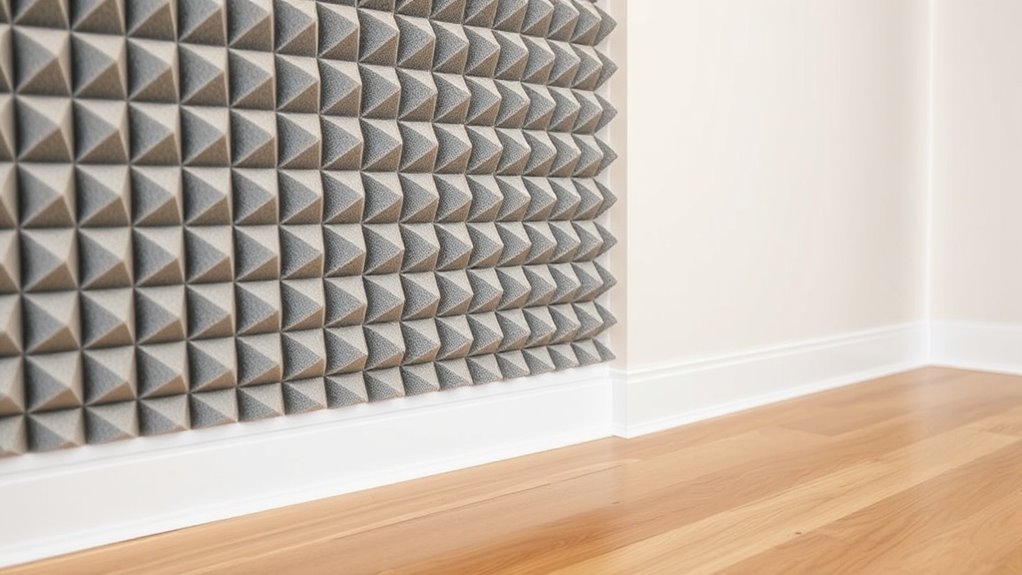
Have you ever wondered how to block out noise and create a quieter space? Whether you’re trying to reduce street sounds, noisy neighbors, or household chatter, understanding the basics of soundproofing can make a big difference. One of the most effective methods involves using acoustic insulation, a material designed specifically to absorb sound energy and prevent it from traveling through walls and floors. Acoustic insulation works by trapping sound waves within its fibers, reducing the amount of noise that passes from one room to another. When installed properly, it can considerably improve your space’s acoustic comfort and help you enjoy a peaceful environment. Utilizing the right soundproofing materials can significantly enhance overall noise reduction and create a more serene setting.
Soundproof barriers are another essential component in soundproofing your walls and floors. These barriers act as physical obstacles that block sound from moving between spaces. They can be constructed from dense materials like mass-loaded vinyl, drywall, or specialized soundproof panels. The key is to add mass and density to surfaces, which makes it harder for sound vibrations to pass through. Combining soundproof barriers with acoustic insulation creates a more extensive approach, effectively reducing noise transmission across different frequencies.
To get started, you need to identify the primary sources of noise and the areas that require the most attention. For walls, installing acoustic insulation within the wall cavity is a popular solution. You can use batt or blown-in insulation to fill the space between studs, then seal any gaps with acoustic caulk. This prevents sound leaks that could undermine the insulation’s effectiveness. On floors, installing acoustic underlayment beneath the final flooring material can minimize impact noise and airborne sounds. These underlays are designed to absorb vibrations and prevent them from traveling into the subfloor and beyond.
When working with soundproof barriers, consider adding a layer of mass to existing walls or floors. For example, attaching soundproof panels or mass-loaded vinyl over drywall can dramatically boost soundproofing without requiring complete reconstruction. If you’re renovating, stacking multiple layers of drywall with damping compounds like Green Glue between them can further improve sound isolation. Remember that sealing all gaps, cracks, and penetrations is essential, as even small openings can allow considerable noise to pass through. Using acoustic caulk and proper sealing techniques can help prevent sound leaks effectively.
In essence, creating a quieter space involves a combination of acoustic insulation and soundproof barriers, tailored to your specific needs. By layering these materials and ensuring proper installation, you can effectively block out unwanted noise and enjoy a more peaceful environment. The right approach not only enhances comfort but also boosts privacy and overall quality of life in your home or office.
Frequently Asked Questions
How Do I Measure Soundproofing Effectiveness Accurately?
To measure soundproofing effectiveness accurately, you should assess sound transmission and sound intensity levels. Use a decibel meter to compare noise levels before and after installing soundproofing materials. Focus on measuring sound transmission through walls or floors in various frequency ranges, especially those most relevant to your noise source. Consistent testing conditions help you determine improvements, ensuring your soundproofing efforts effectively reduce unwanted noise transmission.
Can Existing Walls Be Retrofitted for Better Soundproofing?
Yes, you can retrofit existing walls for better soundproofing. Start by adding wall insulation to improve sound absorption. Seal gaps with new door seals and use acoustic caulk around electrical outlets and vents. Installing soundproof panels or mass-loaded vinyl can also make a noticeable difference. These upgrades are effective and relatively simple to implement, helping you achieve a quieter, more peaceful space without complete wall reconstruction.
What Are the Best Affordable Materials for DIY Soundproofing?
Did you know that effective soundproofing can reduce noise by up to 70%? For affordable materials and DIY installation, consider using mass-loaded vinyl or acoustic foam panels, which are budget-friendly and easy to install. Adding resilient channels or sealing gaps with acoustic caulk also boosts soundproofing. These options let you improve your space without breaking the bank, making DIY soundproofing both practical and effective.
How Does Soundproofing Impact Indoor Air Quality?
Soundproofing can improve indoor air quality by reducing airborne particles that travel through gaps and vents. When you add soundproofing materials, you may also enhance ventilation effects, preventing stale air buildup and promoting better airflow. This helps maintain a healthier environment, as it limits particle exchange and keeps fresh air circulating. Just guarantee you balance soundproofing with proper ventilation to avoid trapping indoor pollutants.
Are There Specific Regulations or Codes for Soundproofing in Buildings?
You might think soundproofing is just a nice-to-have, but building codes and noise ordinances actually set clear standards. They require specific soundproofing measures in certain buildings, especially residential and commercial spaces. These regulations ensure privacy and comfort, so ignoring them could lead to fines or renovations. So, yes, there are strict rules, and you’ll need to adhere to building codes and noise ordinances to keep everything legit and peaceful.
Conclusion
Now that you understand the basics of soundproofing, you hold the keys to transforming your space into a peaceful sanctuary. Think of it as wrapping your home in a protective blanket, muffling unwanted noise and creating a calm oasis amid chaos. With the right materials and techniques, you can turn a noisy room into a quiet retreat. Your efforts will echo peace and tranquility, making every moment spent there feel like a gentle lullaby.