
For ideal safety, install smoke and CO detectors on ceilings or high on walls, 4-12 inches below the ceiling for smoke and at eye level or slightly above for CO. Place detectors in every sleeping area, outside bedrooms, and on every level of your home, including the basement. Keep them away from drafts, vents, windows, and fuel-burning appliances to avoid false alarms. Continue exploring for more tips to keep your home protected.
Key Takeaways
- Install smoke detectors on ceilings or high on walls, 4-12 inches below the ceiling.
- Place detectors outside each sleeping area and on every home level, including the basement.
- Position CO detectors on every level, near bedrooms and living spaces, at eye level or slightly above.
- Keep detectors at least 15 feet away from fuel-burning appliances and avoid humid, dusty, or greasy areas.
- Mount detectors high on walls or ceilings, ensuring they are unobstructed and follow manufacturer placement guidelines.
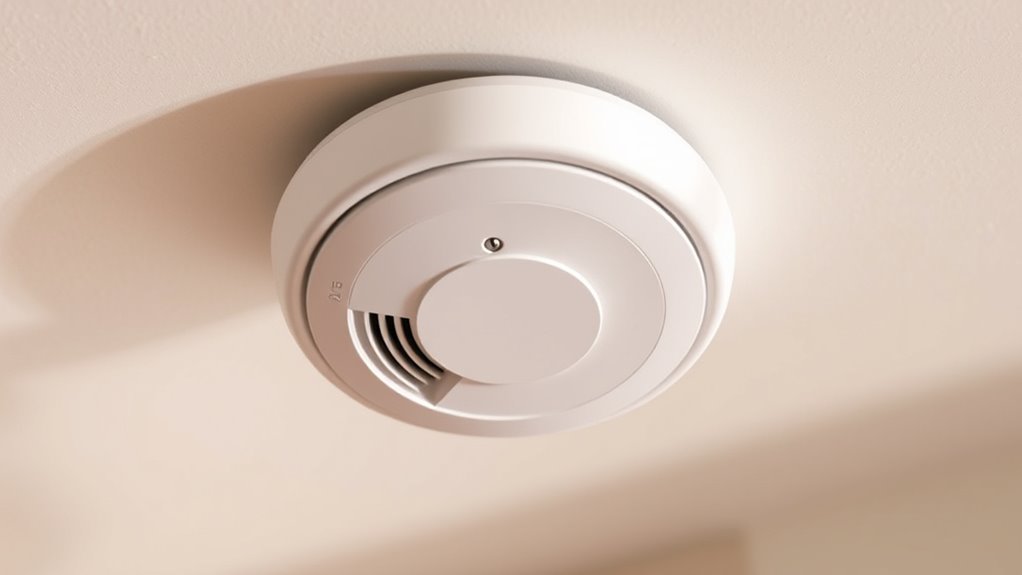
Have you ever wondered how to keep your home safe from fire and carbon monoxide dangers? Proper placement of smoke and CO detectors is essential, but equally important is maintaining their batteries. Regular battery maintenance guarantees your detectors will work when you need them most. You should check the batteries at least once a month, replacing them annually or when the detector chirps to signal low power. Using fresh batteries guarantees that your alarms will sound promptly during an emergency, providing you and your family extra seconds to escape.
When it comes to detector placement, position matters just as much as battery upkeep. Smoke detectors should be installed on the ceiling or high on the wall, ideally in every sleeping area, outside each separate sleeping zone, and on every level of your home, including the basement. Mounting them high on the wall, about 4 to 12 inches below the ceiling, makes sure smoke rises naturally into the detector, triggering an alarm early. Avoid placing detectors near windows, doors, or vents, where drafts could interfere with their operation or cause false alarms. Proper detector placement is key to early detection and safety.
For carbon monoxide detectors, placement requires a slightly different approach. Install these detectors on every level of your house, especially near bedrooms and in living areas. Keep them at least 15 feet away from fuel-burning appliances like furnaces or water heaters to prevent false alarms caused by normal operation. Position CO detectors at eye level or slightly above; since CO is slightly lighter than air, placing them too high or too low could reduce their effectiveness. Don’t place them in areas prone to high humidity, such as bathrooms, or in dusty or greasy environments, as these conditions can impair sensor function.
Frequently Asked Questions
How Often Should Smoke and CO Detectors Be Tested?
You should test your smoke and CO detectors at least once a month to guarantee they’re working properly. Regular detector maintenance includes replacing batteries as needed, especially if the battery life is low or the alarm chirps. Testing often helps catch issues early, so your detectors can protect you effectively. Remember, a quick monthly test keeps your alarms reliable and your home safer.
Can Detectors Be Installed Outdoors or in Garages?
Sure, you can slap smoke and CO detectors outdoors or in garages—if you enjoy false alarms and ignored warnings. But honestly, outdoor placement or garage installation isn’t recommended because extreme temperatures and humidity can trigger false alarms or damage the device. Instead, keep them inside living spaces and garages, away from vents or windows, to guarantee they work correctly. Your safety depends on proper placement, not outdoor adventures for your detectors.
What Types of Batteries Are Best for Detectors?
You should choose detectors with long-lasting battery types, like lithium batteries, for reliable power sources. These batteries last up to ten years and require minimal maintenance, ensuring your detectors stay functional without frequent replacements. For your safety, avoid using standard alkaline or rechargeable batteries, as they don’t last as long. Using the right battery types guarantees your smoke and CO detectors remain powered and ready to alert you in emergencies.
Are COmbination Smoke and CO Detectors More Effective?
They say, “Better safe than sorry,” and combination smoke and CO detectors are more effective because they use dual sensors to detect both hazards. This means you get quicker alerts for fires and CO leaks, reducing false alarms that can happen with single sensors. By combining functions, these detectors simplify your safety system, giving you peace of mind and ensuring you’re alerted promptly to dangerous situations.
How Do I Know if My Detector Is Malfunctioning?
You can tell if your detector is malfunctioning if it emits frequent false alarms or doesn’t respond during test checks. Regular detector maintenance, like cleaning the sensors and changing batteries, helps prevent false alarms and guarantees proper operation. If it’s still acting up, replace the unit or consult the manufacturer’s instructions. Always test your detector monthly to confirm it’s functioning correctly and provides reliable safety alerts.
Conclusion
To keep your home safe, you might think placing smoke and CO detectors randomly is enough, but that’s not true. Proper placement truly matters—near bedrooms, on every level, and away from vents guarantees they work when needed. When you follow these guidelines, you’re not just guessing; you’re actively protecting yourself and loved ones. So, don’t leave safety to chance—install and position your detectors correctly, and breathe easier knowing you’re doing everything you can to stay safe.