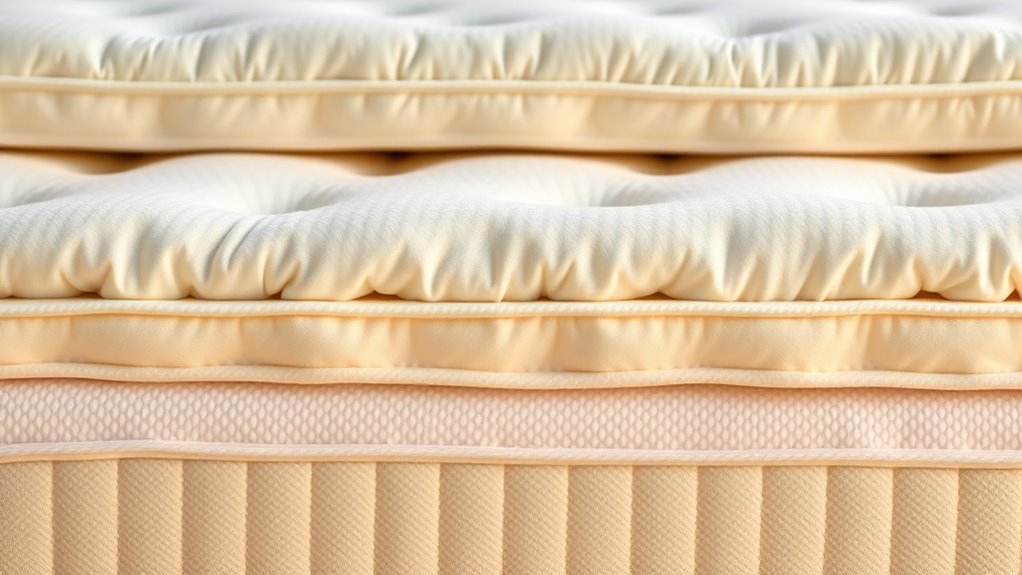

A mattress firmness scale typically ranges from 1 (very soft) to 10 (extra firm), helping you find the right support. Softer mattresses (1-2) contour closely and are ideal for pressure relief, while firmer options (7-10) offer more support and minimal sinkage. Your choice depends on your sleeping position, body weight, and comfort preferences. Understanding this scale can greatly improve your sleep quality, and if you keep exploring, you’ll discover how to pick the perfect firmness for you.
Key Takeaways
- Mattress firmness typically ranges from 1 (very soft) to 10 (extra firm), helping identify support and comfort levels.
- Soft mattresses (1-2) contour deeply for pressure relief, while firm (7-8) minimize sinkage for support.
- Proper firmness promotes spinal alignment, reduces pressure points, and improves sleep quality.
- Sleeping position and body weight influence ideal firmness choice; side sleepers prefer softer, stomach sleepers firmer.
- Regularly reviewing and adjusting mattress firmness ensures optimal support and comfort for better rest.
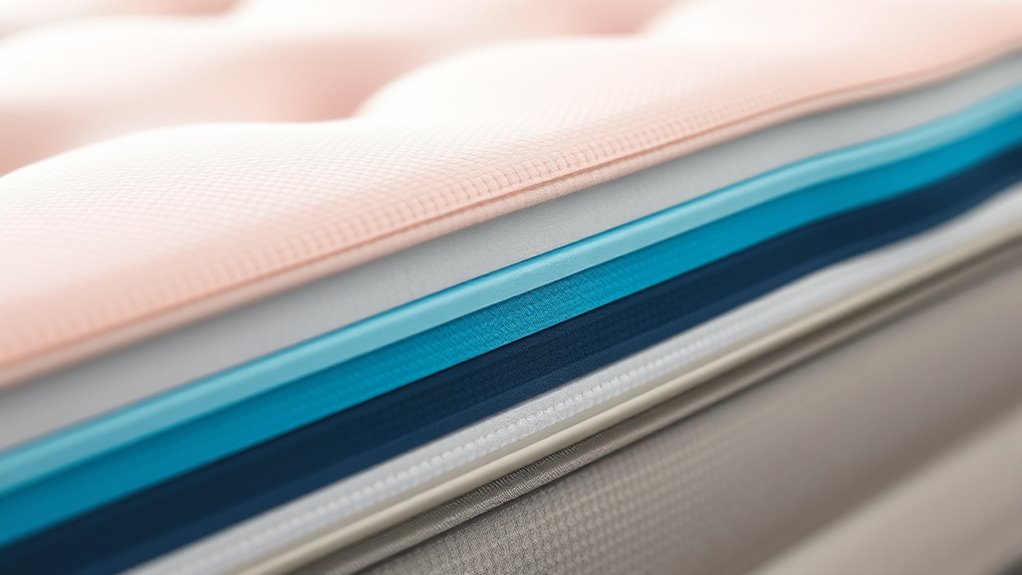
Ever wondered how to choose the right mattress firmness for your sleep needs? It’s a vital decision that directly impacts your bed comfort and, ultimately, your sleep quality. Understanding mattress firmness scales can help you make an informed choice, ensuring you get the restful nights you deserve. These scales typically range from soft to extra firm, and knowing what each level offers helps you identify what’s best for your body and preferences.
When you start exploring firmness options, you’ll notice that most mattresses are rated on a scale from 1 to 10. A rating of 1 or 2 usually indicates a very soft mattress, which contours deeply to your body, providing excellent pressure relief. If you prefer sinking in and feeling hugged by your bed, a softer mattress might be perfect. However, if you have joint issues or prefer more support, a firmer mattress might be better suited to your needs. The middle range, around 5 or 6, often offers a balanced mix of softness and support, appealing to those who want a versatile feel that doesn’t compromise on either front.
The firmness scale isn’t just about comfort; it’s about enhancing your sleep quality. If your mattress is too soft, it might cause your hips and shoulders to sink excessively, leading to misalignment and discomfort during the night. Conversely, a mattress that’s too firm can create pressure points and restrict blood flow, resulting in tossing and turning. By understanding where you fall on the firmness scale, you can select a mattress that promotes proper spinal alignment, reduces pressure on sensitive areas, and encourages deeper, more restorative sleep.
It’s also essential to consider your sleeping position when evaluating firmness. Side sleepers often benefit from softer mattresses because they need more cushioning for their shoulders and hips. Back sleepers typically prefer medium firmness, which supports the natural curve of the spine. Stomach sleepers might lean toward firmer options to prevent their hips from sinking too much, which can cause strain. Your body weight also influences your choice; lighter individuals often find softer mattresses more comfortable, while heavier sleepers usually require firmer support to prevent excessive sinkage.
Additionally, regularly reviewing and adjusting your sleep setup can lead to better sleep quality over time. This aligns with the principle of tracking your sleep habits and making necessary changes to improve comfort and support. Ultimately, understanding the mattress firmness scale helps you tune into what your body needs for ideal bed comfort and sleep quality. It’s about finding that sweet spot where support and softness meet, allowing you to wake up refreshed and pain-free. By paying attention to these ratings, you can make smarter decisions, avoid discomfort, and enjoy nights of truly restorative sleep.
mattress firmness scale guide
As an affiliate, we earn on qualifying purchases.
As an affiliate, we earn on qualifying purchases.
Frequently Asked Questions
How Do Mattress Firmness Levels Differ Across Brands?
You’ll notice that mattress firmness levels vary across brands because each company maintains brand consistency in their firmness descriptions. Some brands may label a medium as firm, while others might consider it soft or plush. Your preferences matter, so it’s essential to test different options and read reviews, as terminology can differ. This helps guarantee you pick a mattress that matches your comfort needs, no matter the brand.
Can Firmness Adjust Over Time With Use?
Yes, firmness can adjust over time with use, especially if your mattress has adjustment possibilities like layers or customizable features. However, you should be aware of durability concerns, as frequent changes or prolonged use may cause the mattress to lose its initial support and firmness. To maintain comfort, consider rotating or flipping your mattress regularly and follow manufacturer guidelines to help preserve its firmness and extend its lifespan.
Which Firmness Is Best for Side Sleepers?
As a side sleeper, a medium to soft mattress works best because it offers better pillow compatibility and helps align your spine comfortably. Look for a mattress that supports temperature regulation, so you stay cool all night. This combination reduces pressure points and keeps your shoulders and hips supported, ensuring restful sleep. Choosing the right firmness allows your body to relax fully, making your sleep more restorative and comfortable.
Do Firmness Scales Consider Sleeping Positions?
Yes, firmness scales do consider sleeping positions. They help you find a mattress that minimizes pressure points and enhances temperature regulation based on your preferred sleep stance. For side sleepers, softer mattresses reduce shoulder and hip pressure, while firmer options support proper spinal alignment. By understanding these scales, you can select a mattress that balances comfort and support, ensuring a cooler, pressure-free night regardless of your sleeping position.
Are There Eco-Friendly Options at Different Firmness Levels?
Yes, you can find eco-friendly options at different firmness levels. Many mattresses made from sustainable materials like organic cotton, natural latex, and recycled steel offer various firmness options. Brands committed to eco-conscious manufacturing prioritize reducing environmental impact, so you get a comfortable, durable mattress that aligns with your values. Whether you prefer softer or firmer, there’s an eco-friendly choice that meets your sleep needs without compromising sustainability.

Novilla Queen Size Mattress, 12 Inch Gel Memory Foam Mattress for Cool Night & Pressure Relief, Medium Plush Feel with Motion Isolating, Bliss
General Note: Please allow 24 – 72 hours for your Mattress to regain its full shape. Any memory…
As an affiliate, we earn on qualifying purchases.
As an affiliate, we earn on qualifying purchases.
Conclusion
Now that you understand the mattress firmness scales, choosing the right one becomes easier. Think of it like picking between a cozy hug and a firm handshake — both offer comfort, but your preference makes all the difference. Whether you like sinking in or feeling supported, knowing these scales helps you find your perfect match. So, don’t settle for less; embrace your sleep style and wake up refreshed, just like a good conversation leaves you feeling energized.
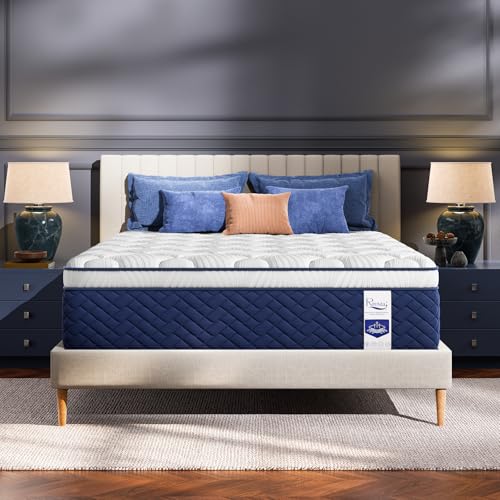
RRESTA Firm Queen Mattress 14 Inch – Hotel Collection Hybrid Mattress with 7-Zone Support for Spinal Alignment & Back Pain Relief, 395-Night Trial, CertiPUR-US & Fiberglass-Free
【Firm Support for Optimal Spinal Alignment】 – This firm hybrid mattress is a precision-engineered 7-layer sleep system capable…
As an affiliate, we earn on qualifying purchases.
As an affiliate, we earn on qualifying purchases.

BedStory Extra Firm Queen Mattress 14 inch – Pain-Relieving Hybrid Mattress for Extra Lumbar & Hip Support – No Sagging Bed in a Box – 365-Night Trial – No Odor, Fiberglass-Free, CertiPUR-US Certified
PAIN RELIEF & MOTION ISOLATION – By integrating firm traditional spring and high-density foam elements, Bedstory 14 inch…
As an affiliate, we earn on qualifying purchases.
As an affiliate, we earn on qualifying purchases.