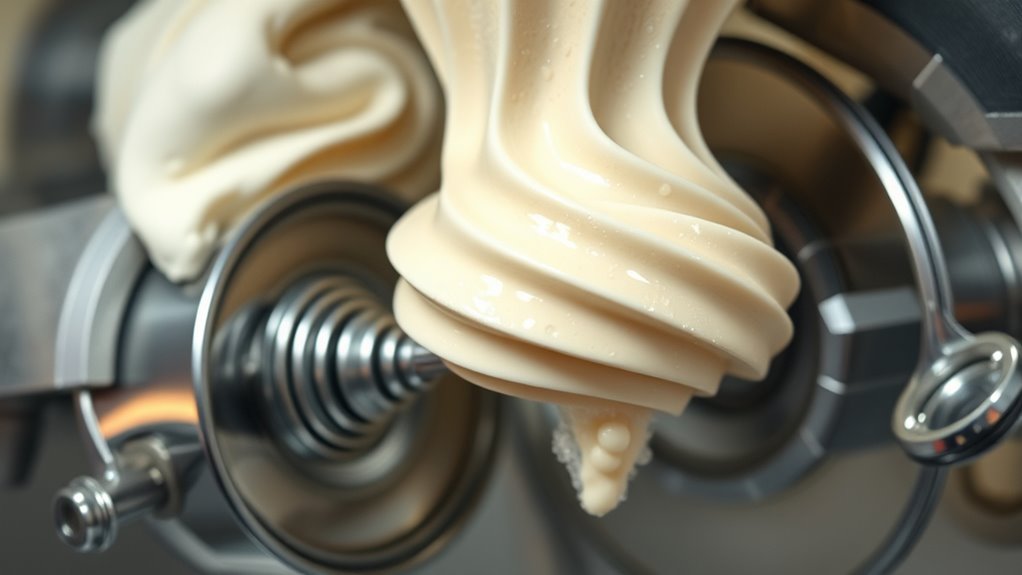

The science behind ice cream machines combines freezing point depression, churning, and precise temperature control to create the perfect texture. Sugar and salt lower the freezing point, preventing large ice crystals and ensuring smoothness. Churning introduces tiny air bubbles for a light, fluffy finish. Modern machines optimize these processes with advanced engineering and automation, producing consistent, delicious results. Keep exploring to uncover more fascinating secrets behind crafting irresistibly creamy ice cream.
Key Takeaways
- Ice cream machines utilize freezing point depression through sugar and salt to create smooth, small ice crystals.
- Churning introduces and stabilizes air bubbles, resulting in a light, fluffy texture.
- Precise temperature control prevents large ice crystals, maintaining creaminess and visual appeal.
- Advanced refrigeration components optimize heat transfer for rapid, uniform freezing.
- Flavor encapsulation techniques ensure stable, even distribution, enhancing texture and sensory experience.
The Role of Freezing Point Depression in Creamy Texture
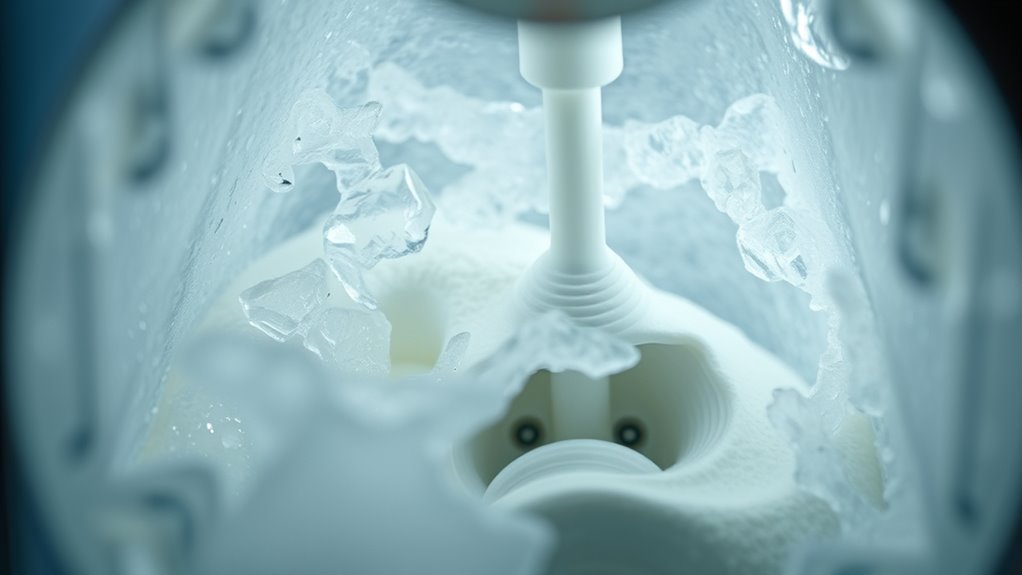
Freezing point depression plays a crucial role in achieving the smooth, creamy texture of ice cream. When you add sugar, it lowers the mixture’s freezing point, preventing quick, large ice crystal formation. This process ensures a softer, more velvety consistency. Salt interaction also enhances this effect; by mixing salt with ice, you create an even colder environment, further reducing the freezing point. This helps control sugar crystallization, ensuring tiny ice crystals form instead of large, gritty ones. The result is a rich, smooth mouthfeel. Without proper freezing point depression, your ice cream could turn icy and hard. Understanding the science of freezing point depression helps you craft ice cream that’s perfectly creamy, thanks to precise control over how and when the mixture freezes. Knowing how to manipulate these physical principles allows for better texture control during the freezing process. Proper temperature control is essential for preventing unwanted ice crystal growth and achieving optimal texture. Additionally, monitoring the temperature environment during freezing ensures consistent results and prevents uneven texture development.
How Churning Incorporates Air for a Light Finish
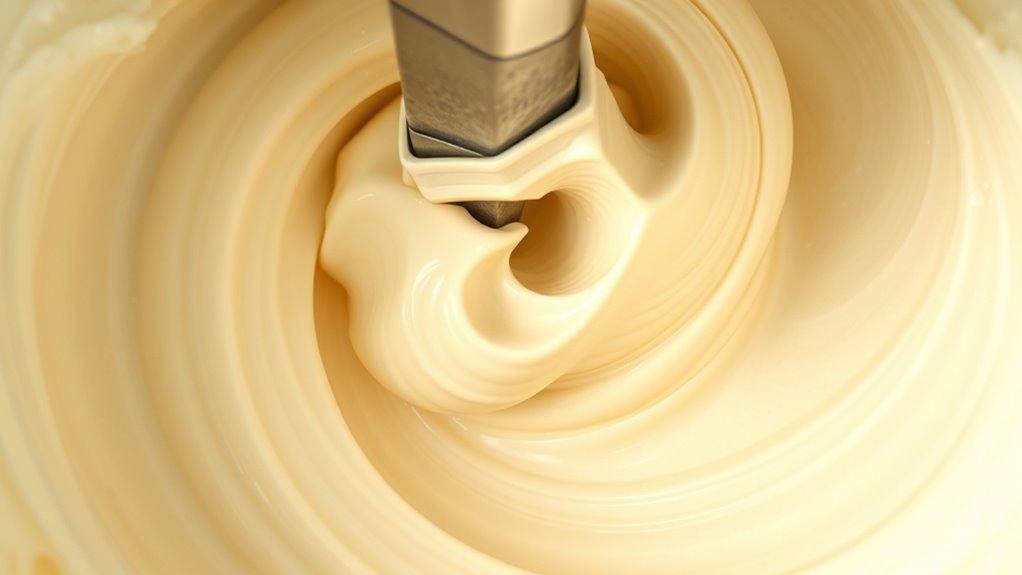
As you churn ice cream, the process actively incorporates air into the mixture, creating a light and airy texture. This air incorporation is essential for achieving that desirable, fluffy finish. As the ice cream churns, tiny air bubbles are trapped and dispersed throughout the mixture, leading to foam formation. The agitation breaks up larger bubbles and evenly distributes air, which enhances the overall creaminess. Proper churning ensures these bubbles are stable enough to remain mixed in once frozen, contributing to a soft, smooth consistency. Without sufficient air incorporation, ice cream would be dense and heavy. The controlled introduction of air during churning is what transforms a simple mixture into a delightful, light treat with a pleasing, airy mouthfeel. Additionally, the role of churning technology helps optimize air incorporation and improves the final texture. Modern vacuums used in ice cream production can also assist in controlling the environment during churning, leading to more consistent results. Incorporating precise control mechanisms further ensures optimal texture and quality of the finished product. Moreover, the use of HEPA filtration in some production facilities ensures a cleaner environment, reducing airborne contaminants that could affect quality.
Temperature Control: The Key to Consistent Quality
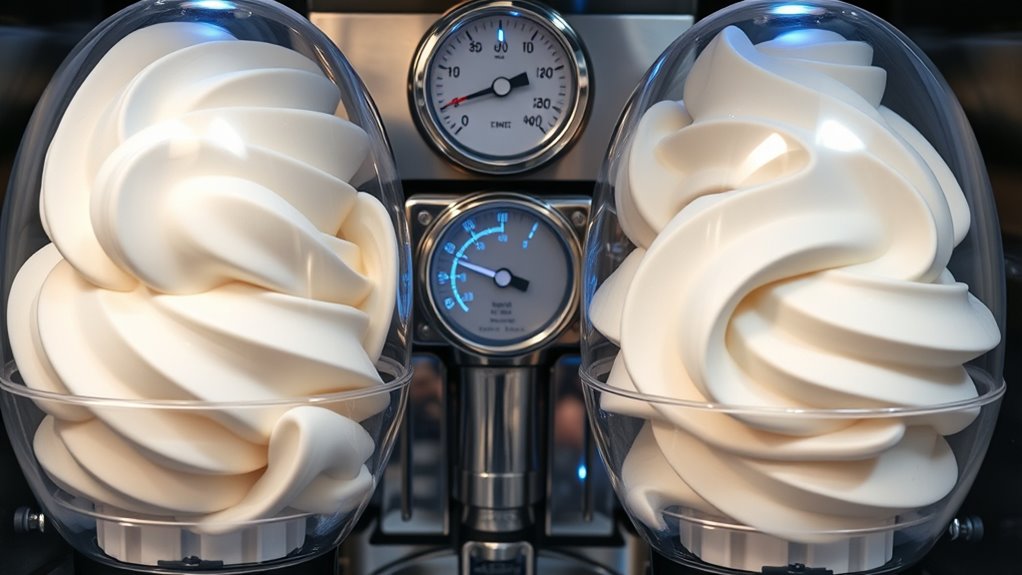
Maintaining the right temperature during ice cream making is essential for achieving consistent texture and quality. When you control the temperature precisely, you ensure smooth, creamy results every time. Proper temperature management prevents ice crystals from becoming too large, which can ruin dessert presentation. It also helps in maintaining the ideal scoopability and visual appeal. Consistent temperature control allows manufacturers to develop packaging innovations that keep ice cream at the perfect serving temperature, preserving quality from production to consumption. Without it, ice cream can become too hard or melt too quickly, affecting both the customer experience and product appearance. Additionally, understanding Mazda Tuning techniques can inspire innovative ideas for optimizing equipment performance and efficiency in ice cream manufacturing. By mastering temperature regulation, you guarantee that each batch meets high standards, delivering a delightful, uniform treat that looks as good as it tastes. Implementing automation technologies can further enhance precision in temperature control, ensuring optimal consistency across all batches.
The Engineering of Ice Cream Freezers and Their Components
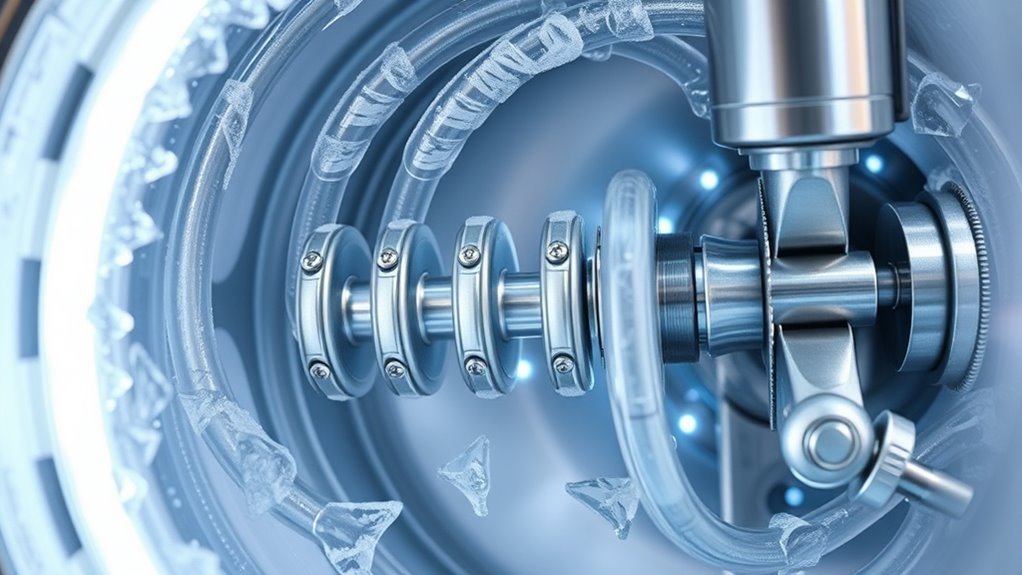
The engineering of ice cream freezers involves designing components that work together to rapidly and efficiently lower the temperature of the mixture. Central to this is the refrigeration cycle, which transfers heat away from the ice cream, ensuring quick freezing and smooth texture. You’ll find that the compressor, evaporator, and condenser work seamlessly to maintain consistent cooling. Engineers focus on maximizing heat transfer and minimizing energy consumption, making sure the mixture freezes evenly without large ice crystals. Precise control of these components guarantees a uniform, creamy result. Additionally, understanding the refrigeration cycle helps in improving energy efficiency and maintaining consistent quality in ice cream production. The cost of equipment influences the selection of components and overall design, impacting the freezer’s performance and longevity. This intricate engineering ensures your ice cream reaches the perfect consistency while maintaining efficiency and durability. Incorporating industry trends into design can further optimize performance and sustainability. Moreover, advancements in thermal insulation materials contribute to reducing energy loss and improving overall efficiency. Proper maintenance of refrigerant levels is essential for optimal operation and energy savings.
The Science of Flavor Encapsulation and Texture Enhancement
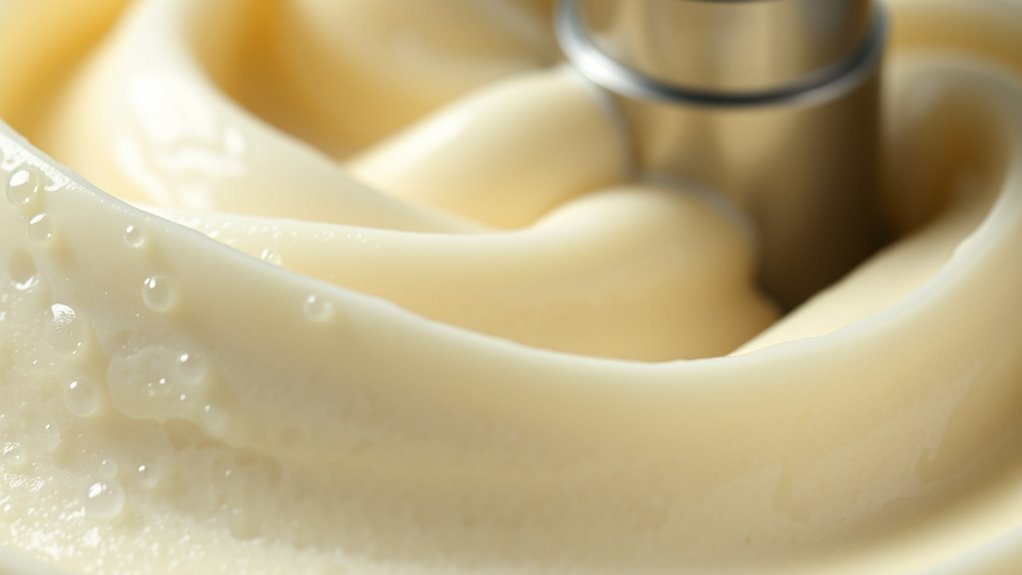
Flavor encapsulation in ice cream involves trapping active flavors within protective coatings or matrices, which prevents them from degrading during processing and storage. This process, known as flavor molecularization, ensures that flavors remain stable and release gradually during consumption. By controlling how flavors are encapsulated, you enhance sensory perception, making each bite more vibrant and consistent. This technique also helps in controlling flavor release, allowing for a more nuanced taste experience. Texture also benefits from this science; encapsulation helps distribute ingredients evenly, preventing ice crystal growth and maintaining smoothness. When flavors are molecularized effectively, they interact more precisely with your taste receptors, boosting overall flavor intensity and richness. This careful manipulation of flavor molecules and textures allows ice cream makers to craft complex, multi-layered sensory experiences that delight your palate with every scoop. Additionally, research indicates that optimal angles can improve the overall sensory experience by influencing how flavors are released and perceived during consumption. Moreover, understanding the role of temperature during production can significantly impact the encapsulation efficiency and final texture of the ice cream. A deeper knowledge of ingredient interactions further supports the development of innovative flavor and texture combinations in frozen desserts.
Frequently Asked Questions
How Do Different Ingredients Influence the Freezing Point of Ice Cream?
You’ll notice that ingredients like sugar concentration and salt addition markedly influence the freezing point of ice cream. Higher sugar levels lower the freezing point, making it softer and creamier. Salt, when added to the ice surrounding the churn, further depresses the freezing point, speeding up the freezing process. By adjusting these ingredients, you control the texture and consistency, ensuring your ice cream turns out just the way you want it.
What Role Does Fat Content Play in Ice Cream’S Texture and Stability?
You might think fat content only adds flavor, but it’s essential for cream stability and texture. Higher fat levels create a smoother, creamier feel by preventing large ice crystal formation. Fat crystallization helps maintain a stable structure, reducing ice crystal growth that makes ice cream icy. So, when you enjoy rich, velvety ice cream, you’re experiencing how fat content keeps it stable and irresistibly creamy.
How Do Variations in Machine Design Affect Ice Cream Consistency?
You see, variations in machine design directly impact ice cream consistency by influencing how efficiently ingredients are mixed and frozen. Advanced design innovations, like improved paddle configurations and refrigeration systems, boost machine efficiency, resulting in smoother, creamier ice cream. When you choose a machine with thoughtful design, you get more uniform texture and better quality. So, understanding these differences helps you produce consistently delicious ice cream every time.
Can Ice Cream Machines Adapt to Produce Dairy-Free or Allergen-Free Products?
Imagine you’re in the 21st century, where ice cream machines can adapt easily. You can customize your machine to use alternative ingredients, like plant-based milks, for dairy-free options. It also manages allergens effectively through precise control. By adjusting the mix and processing parameters, you get allergen-free and dairy-free products. Modern machines are designed to be versatile, making allergen management and alternative ingredient inclusion seamless for your specific needs.
What Advances Are Being Made in Sustainable Ice Cream Freezing Technology?
You’ll find that advances in sustainable ice cream freezing technology focus on eco-friendly refrigeration and the use of renewable energy. These innovations reduce energy consumption and lower environmental impact by utilizing eco-conscious cooling systems and solar-powered options. As a result, you can enjoy delicious ice cream while supporting greener practices. Such progress helps manufacturers minimize their carbon footprint, making ice cream production more sustainable and aligning with global efforts to protect the planet.
Conclusion
Just like the alchemists of old transformed base metals into gold, understanding the science behind ice cream machines reveals how science turns simple ingredients into a creamy masterpiece. By mastering freezing points, air incorporation, and temperature control, you’re revealing the secrets to perfect texture and flavor. So, next time you enjoy that scoop, remember—you’re savoring a delicious blend of science and craftsmanship, a modern-day magic reminiscent of ancient alchemy.