
Your HVAC filter choice depends on your needs; fiberglass filters are affordable and trap larger particles but need changing every 30 days. Pleated filters last 2-3 months and are better against pollen and pet dander, while electrostatic filters are reusable but require proper cleaning. HEPA filters offer high efficiency but can be costly and may restrict airflow. Knowing the right replacement schedule for your filter helps keep air clean and your system running smoothly—more details await if you explore further.
Key Takeaways
- Different filter types include fiberglass, pleated, electrostatic, and HEPA, each with varying filtration efficiencies and system compatibility.
- Fiberglass filters require replacement every 30 days, while pleated filters last 60-90 days; electrostatic filters are reusable with proper cleaning.
- HEPA filters depend on system compatibility and may need regular inspection; replacement frequency varies based on usage.
- Higher-grade filters like HEPA and pleated improve indoor air quality but may involve higher costs and airflow considerations.
- Regularly inspecting and replacing filters is essential for maintaining optimal indoor air quality and HVAC system efficiency.
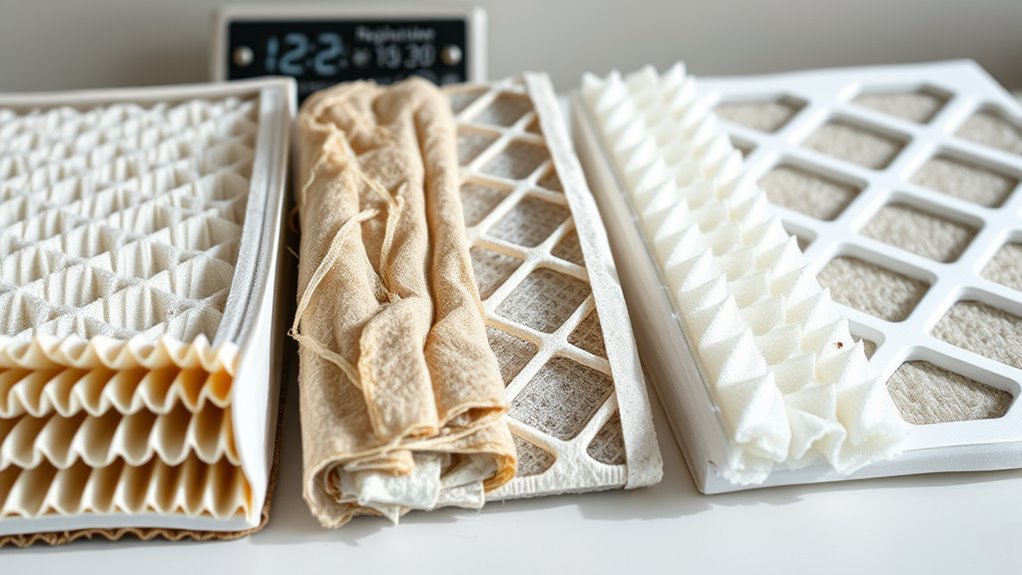
Have you ever wondered how your home stays clean and healthy? The answer often lies in the quality and maintenance of your HVAC filters. Regular air filter maintenance is essential to guarantee your system runs efficiently and your indoor air remains fresh and safe. One of the key aspects to consider is understanding the different filter materials and how they compare, which can help you choose the best option for your needs.
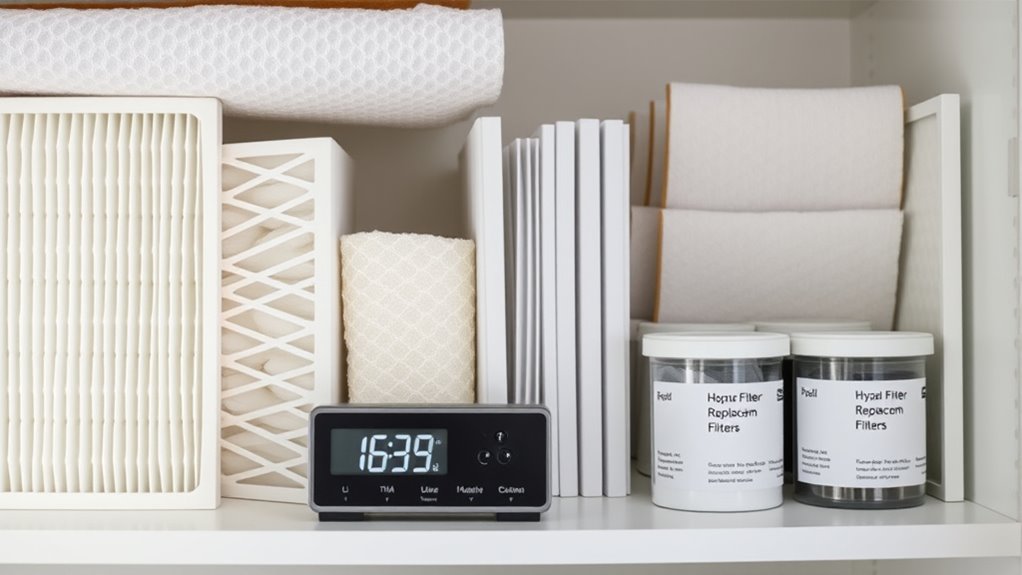
When you’re selecting an HVAC filter, it’s important to consider the filter material, as it directly affects filtration efficiency and lifespan. Fiberglass filters are among the most common and affordable options. They typically have a lower MERV rating, meaning they capture larger particles like dust and debris but aren’t as effective against smaller allergens or bacteria. These filters require frequent replacement—usually every 30 days—to maintain ideal air quality and system performance. On the other hand, pleated filters, often made from polyester or cotton paper, have a larger surface area due to their design, allowing them to trap finer particles such as pollen, pet dander, and mold spores more effectively. They tend to have higher MERV ratings and last longer, usually around 60 to 90 days, but still need regular checks and replacements for peak performance.
You might also encounter electrostatic filters, which use static electricity to attract and trap airborne particles. These filters are reusable and can be washed, making them a more environmentally friendly choice. However, their effectiveness depends on proper maintenance and cleaning. HEPA filters are another high-performance option, capable of capturing up to 99.97% of tiny particles, including bacteria and viruses, but they require specialized HVAC systems and are typically used in medical or laboratory settings. While they offer superior air cleaning, HEPA filters tend to be more costly and may reduce airflow if not designed for residential use.
Maintaining your HVAC filter isn’t just about replacing it on time; it’s about choosing the right type and material suited to your environment. For households with allergy sufferers or pets, upgrading to a higher-grade filter can drastically improve air quality. For homes with minimal air quality concerns, a basic fiberglass filter might suffice, but even then, regular inspection and replacement are crucial. Additionally, selecting vacuum cleaners that are effective at removing pet hair and dander can further improve indoor air quality. Ultimately, understanding the differences between filter materials and their maintenance requirements helps you make smarter choices, ensuring your HVAC system operates efficiently and your indoor environment stays clean and healthy. Regularly checking and replacing your filters based on their material and your household needs keeps your home comfortable and safe, giving you peace of mind.
Frequently Asked Questions
How Do I Know When My Filter Needs Replacing?
You’ll know your filter needs replacing when you notice reduced airflow, increased dust, or allergy symptoms. Typically, filters last 1-3 months, depending on usage and filter type. Replacement indicators include visible dirt or debris on the filter surface or if it appears clogged. Regularly checking your filter’s lifespan helps maintain indoor air quality and system efficiency, ensuring you replace it promptly when these signs appear.
Are There Eco-Friendly HVAC Filter Options Available?
Yes, eco-friendly HVAC filter options are available. You can choose biodegradable filters made from eco-friendly materials like plant-based fibers, which reduce environmental impact. These filters effectively trap dust and allergens while being biodegradable, so they break down naturally after disposal. Switching to these filters helps you maintain indoor air quality while supporting sustainability. Regularly check and replace them to guarantee peak performance and minimize your ecological footprint.
What Are the Signs of a Clogged or Dirty Filter?
Think of your HVAC filter like a sponge that gets clogged over time. When it’s dirty, you’ll notice airflow restriction, making your system work harder. You might also experience allergy symptoms like sneezing or congestion more often. If your vents blow weaker or your home feels dustier, it’s a sign to check and replace the filter. Regular maintenance keeps air clean and your system running smoothly.
Can I Clean and Reuse Certain Types of Filters?
Yes, you can clean and reuse certain filters, like reusable filters made from washable materials. To do this, follow the manufacturer’s cleaning methods, usually involving gentle washing with water and mild detergent. Make sure the filter is completely dry before reinstalling it to prevent mold. Regular cleaning extends filter life and maintains indoor air quality, saving you money and reducing waste.
How Do Different Filter Ratings Impact Indoor Air Quality?
Different filter ratings directly impact your indoor air quality by enhancing air purification and filter efficiency. Higher-rated filters, like MERV 13 or above, trap smaller particles such as allergens, bacteria, and viruses, improving air cleanliness. Lower-rated filters may let more pollutants pass through, reducing air quality. Choosing the right filter rating helps you breathe easier, especially if you have allergies or respiratory issues, ensuring a healthier indoor environment.
Conclusion
Choosing the right HVAC filter, understanding its types, and sticking to a replacement schedule help keep your air clean, your system efficient, and your home comfortable. Regularly inspecting, replacing, and maintaining your filters guarantees fresh air flows freely, allergens stay out, and energy costs stay low. So, take action today—check, change, and care for your filters—because a well-maintained HVAC system means healthier air, better comfort, and peace of mind for you and your family.