
To keep your furnace running smoothly, regularly change the filter each month during peak seasons, and make certain your thermostat is accurately calibrated. Keep the area clear of debris and inspect for signs of damage or leaks. Schedule an annual professional tune-up to check components, clean parts, and inspect ductwork. Proper maintenance boosts efficiency, extends lifespan, and prevents costly issues. Continuing to learn about these fundamental steps will help you maintain a warm, trouble-free home all winter long.
Key Takeaways
- Regularly replace or clean the furnace filter to ensure proper airflow and efficiency.
- Calibrate your thermostat annually for accurate temperature control and energy savings.
- Keep the furnace area free of debris and inspect for damage or leaks regularly.
- Schedule professional furnace tune-ups annually for comprehensive system maintenance.
- Follow best practices to maintain indoor air quality, extend system lifespan, and prevent breakdowns.
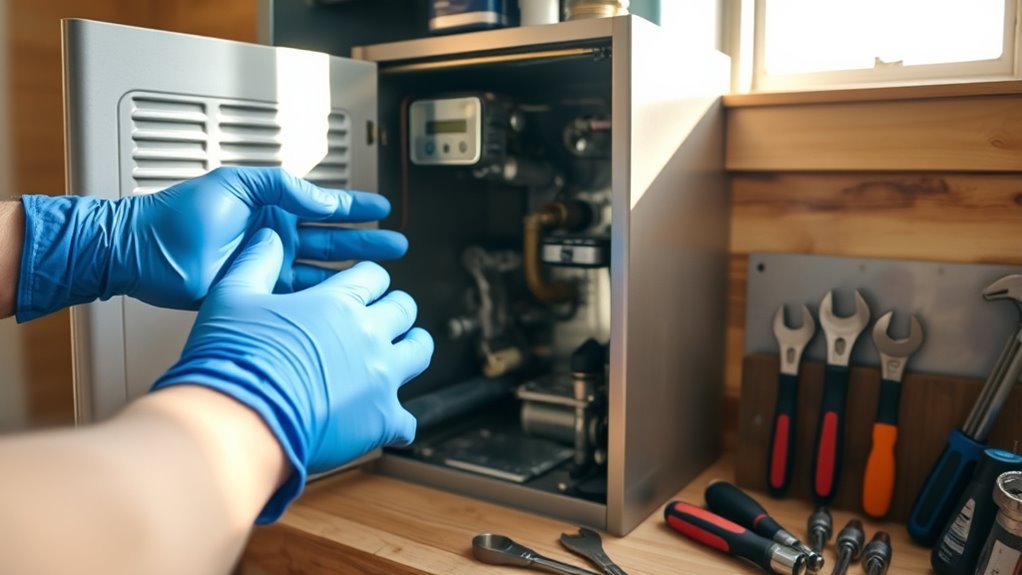
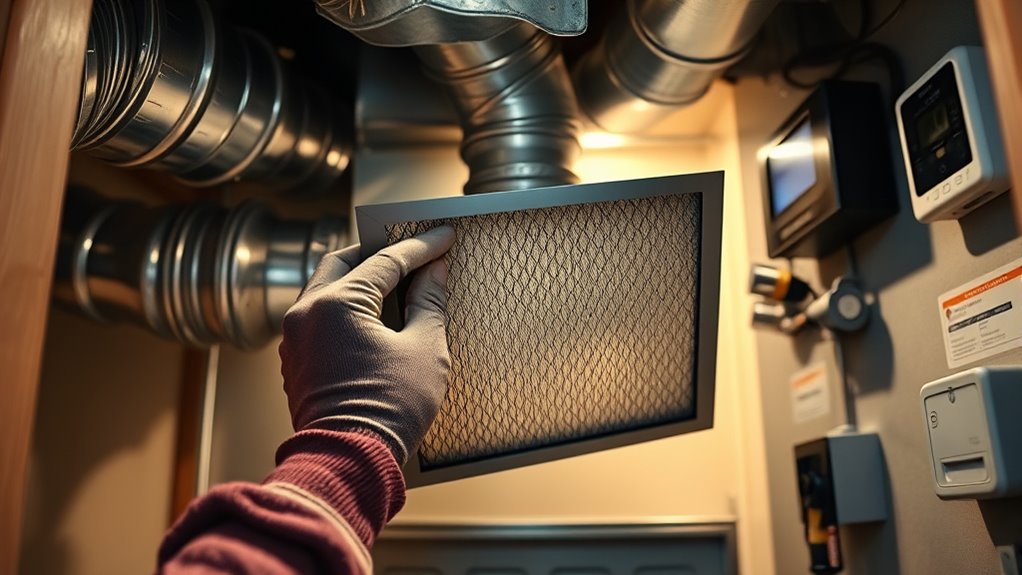
Regular furnace maintenance is essential to keep your heating system running efficiently and prevent costly breakdowns during winter. One of the simplest yet most effective ways to do this is by regularly replacing your furnace filter. A clean filter improves airflow, guarantees your system doesn’t work harder than necessary, and maintains indoor air quality. You should check your furnace filter at least once a month during peak heating season and replace it if it appears dirty or clogged. Neglecting this task can lead to reduced system efficiency, higher energy bills, and increased wear and tear on your furnace. Remember, a fresh filter not only helps your furnace operate smoothly but also extends its lifespan.
Another vital aspect of furnace maintenance is thermostat calibration. Your thermostat acts as the control center for your heating system, telling it when to turn on and off. Over time, thermostats can drift out of calibration, causing your furnace to cycle improperly—either running longer than necessary or turning on too late. To prevent this, periodically check that your thermostat displays the correct temperature and that it matches an independent thermometer. If you notice discrepancies, recalibrate your thermostat following the manufacturer’s instructions, or consider upgrading to a digital or smart thermostat for more precise control. Proper calibration ensures your home stays comfortably warm without wasting energy, which can save you money on heating bills. Additionally, understanding furnace efficiency can help you choose the right maintenance practices to optimize your system’s performance.
In addition to filter replacement and thermostat calibration, it’s wise to keep the furnace area clear of debris and check for any signs of damage or leaks. Regularly inspecting your system helps identify issues early, before they escalate into costly repairs. Also, consider scheduling a professional furnace tune-up annually. A technician can thoroughly clean components, check the ignition system, inspect ductwork, and ensure that all parts are functioning correctly. This extensive maintenance not only boosts efficiency but also provides peace of mind during the coldest months.

Honeywell Home RTH7600D 7-Day Programmable Touchscreen Thermostat, White
Large touchscreen display makes it easy to set your preferred temperature or set a weekly schedule for automated...
As an affiliate, we earn on qualifying purchases.
Frequently Asked Questions
How Often Should I Replace My Furnace Filters?
You should replace your air filter every 1 to 3 months, depending on your air filter type and household needs. If you have high-efficiency filters or pets, check more frequently. The filter replacement schedule varies by filter type, with pleated filters lasting longer than fiberglass ones. Regularly inspect your filter; if it’s dirty or clogged, replace it sooner to guarantee your furnace runs efficiently and maintains good indoor air quality.
Can I Perform Furnace Maintenance Myself Safely?
Yes, you can perform furnace maintenance safely if you follow DIY safety guidelines and have the right tool requirements. Make sure to turn off the power before starting, wear gloves and eye protection, and work in a well-ventilated area. Use basic tools like screwdrivers, a vacuum, and a brush. If you’re unsure or uncomfortable, it’s best to call a professional to avoid any risks.
What Signs Indicate My Furnace Needs Professional Servicing?
You should call a professional if your furnace makes unusual noises, like banging or squealing, or if you notice issues with the pilot light, such as it frequently flickering or going out. These signs indicate potential problems that require expert attention. Ignoring them could lead to inefficient operation or safety hazards. Regular inspections by a technician guarantee your furnace runs smoothly and prevents costly repairs down the line.
How Can I Improve My Furnace’s Energy Efficiency?
Think of your furnace as a finely tuned orchestra—every element needs to work harmoniously. To boost energy efficiency, consider energy-saving upgrades like sealing ducts and installing a high-efficiency filter. Additionally, optimize your thermostat by setting it lower when you’re asleep or away, and use a programmable thermostat to maintain consistent temperatures. These steps help reduce energy waste, lower bills, and keep your home comfortable all season long.
Is It Necessary to Schedule Annual Furnace Inspections?
Yes, scheduling annual furnace inspections is necessary to keep your system running efficiently. During the inspection, professionals check thermostat calibration to ensure your furnace responds accurately. They also inspect duct sealing to prevent energy loss and improve airflow. Regular inspections help identify potential issues early, saving you money on repairs and energy bills, while keeping your home comfortable year-round. Don’t skip this annual maintenance to maximize your furnace’s performance.
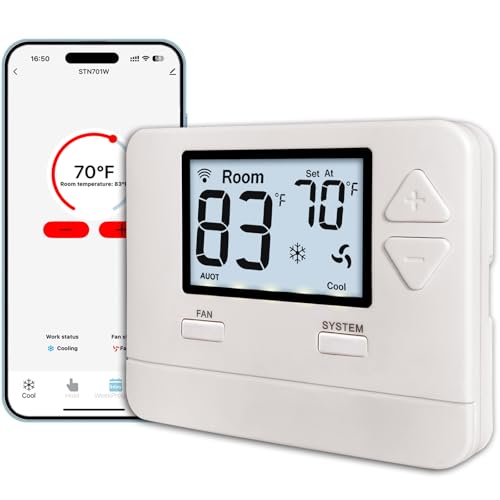
Heagstat WiFi Thermostat for Home, Single-Stage 1 Heat 1 Cool Only, APP Remote Control, 7-Day/0-Day Programmable, C-Wire Required
✅ 2.4GHz WiFi Remote Control – Exclusive compatibility with 2.4GHz home WiFi networks (5GHz band not supported). Seamlessly...
As an affiliate, we earn on qualifying purchases.
Conclusion
By performing simple furnace maintenance, you’re not just saving money—you’re debunking the myth that only professionals can keep your system running smoothly. Regular checks and quick fixes can extend your furnace’s life and ensure warm, cozy winters. Think of it like giving your home a little TLC; it’s surprisingly satisfying and truly effective. So, trust your instincts, stay proactive, and enjoy the comfort knowing you’ve got the basics covered.

Sensi Lite Smart Thermostat, Programmable, WiFi, Easy DIY, Works With Alexa, ENERGY STAR Certified, ST25, Most Systems C-Wire Not Required, C-Wire needed with Heat/Cool Only & Heat Pump System – Black
EASY DIY INSTALLATION: Do it yourself fast with a built-in level and simple step-by-step instructions. Works with the...
As an affiliate, we earn on qualifying purchases.

Nest T4000ES E Hubless Smart Thermostat
Programmable smart thermostat that learns the temperatures you like and programs itself to help you save energy and...
As an affiliate, we earn on qualifying purchases.