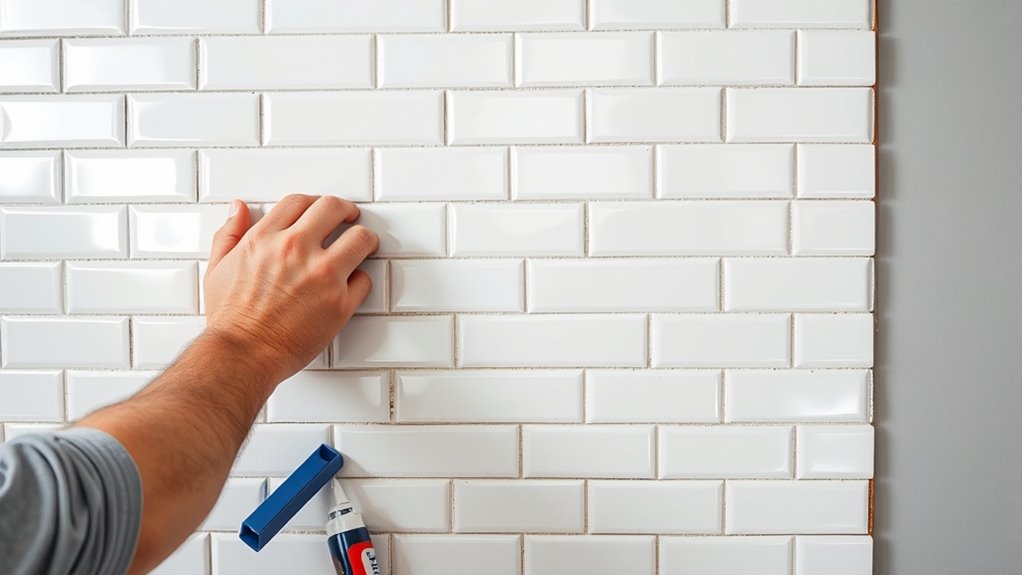

Installing a backsplash involves choosing a tile pattern, selecting grout colors, preparing your wall surface, installing the tiles with proper spacers and alignment, and finishing with grouting and sealing. Start by measuring carefully and buying extra tiles. Use level and spacers for straight, even lines. After placing the tiles, spread grout evenly and allow it to cure before sealing. If you follow these steps, you’ll create a beautiful, durable backsplash—keep going to discover more helpful tips.
Key Takeaways
- Choose tile patterns like subway, herringbone, or mosaic to define the backsplash’s style and complexity.
- Select grout colors that either contrast or match tiles to enhance pattern visibility and overall design.
- Prepare by measuring wall space, buying extra tiles, and gathering essential tools for accurate installation.
- Install tiles using spacers, a level, and consistent alignment, ensuring even grout lines and pattern accuracy.
- Complete with proper grouting, curing, and sealing to protect the backsplash and maintain its appearance.
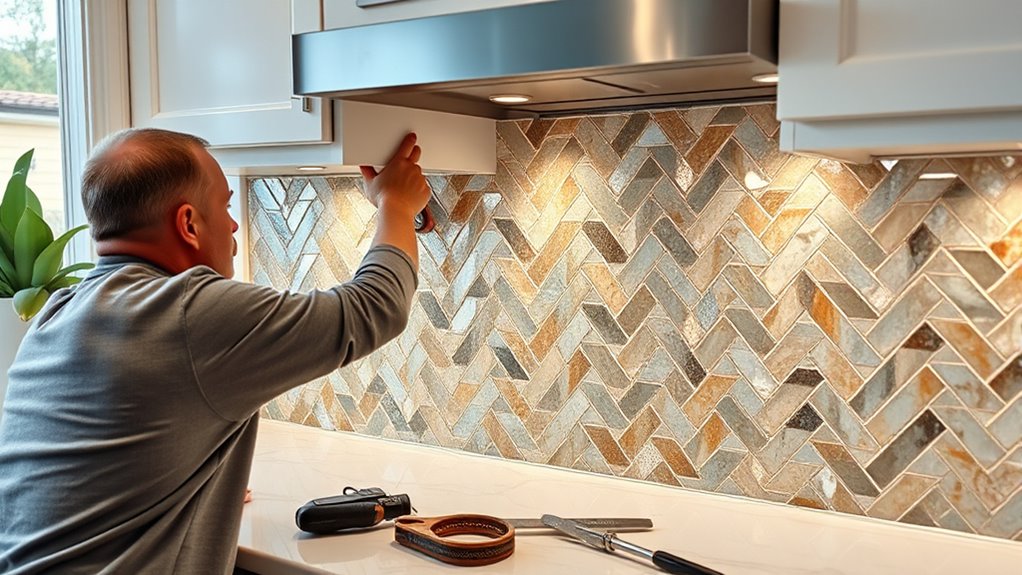
Are you ready to transform your kitchen with a stylish backsplash? Installing a backsplash is an excellent way to elevate your space, adding both personality and practicality. The first step is choosing the right tile pattern, which can dramatically influence the overall look. Whether you prefer classic subway tiles laid in a straight grid, intricate herringbone designs, or a more playful mosaic, your choice sets the tone for your kitchen’s aesthetic. Keep in mind that tile patterns aren’t just about looks; they also impact installation difficulty and the way the light plays across the surface. Once you’ve settled on a pattern, you’ll want to consider grout colors carefully. Grout acts as the adhesive between tiles, but it also defines the design. A contrasting grout color can make your pattern pop, highlighting the layout and adding visual interest. Conversely, choosing a grout that closely matches your tiles creates a seamless, unified appearance, making the backsplash look more streamlined and spacious.
Before you start, measure your wall space precisely to determine how much tile you’ll need. It’s wise to buy a little extra to account for cuts, breakages, or future repairs. Prepare your tools and materials—tile cutter, spacers, trowel, level, and sponge—so you’re ready to work efficiently. When applying your tiles, start from the center or a straight edge to ensure your pattern remains symmetrical and straight. Use spacers to maintain consistent grout lines, which is essential for a professional look. As you install each tile, double-check alignment with a level to prevent uneven rows. When it’s time to grout, mix your chosen grout color according to the manufacturer’s instructions, then spread it across the tiles using a rubber float. Be sure to press the grout into every joint, removing excess with a damp sponge before it dries. This step is vital for durability and a clean finish. Allow the grout to cure fully before sealing or cleaning the surface, which will help prevent staining and make maintenance easier. Additionally, understanding the importance of color accuracy in the appearance of your tiles can help you choose shades that complement your overall kitchen design.
Frequently Asked Questions
What Are the Best Materials for a DIY Backsplash?
For a DIY backsplash, you should consider ceramic or glass tiles—they’re easy to cut and install, making your project manageable. These materials come in various tile patterns and colors, allowing you to coordinate with your kitchen decor effortlessly. You can choose simple subway tiles for a classic look or experiment with mosaics for unique patterns. Make certain you select durable, water-resistant materials to keep your backsplash looking great over time.
How Long Does a Typical Backsplash Installation Take?
A typical backsplash installation takes about one to three days, depending on your project’s size and complexity. You should consider the installation timeline during planning, making certain you have all necessary tools and materials ready. Planning considerations include surface preparation, tile layout, and drying times for adhesives and grout. By staying organized and allowing adequate time, you can ensure a smooth, successful backsplash installation without unnecessary delays.
Can I Install a Backsplash Over Existing Tiles?
Yes, you can install a backsplash over existing tiles if they’re in good condition. First, clean the surface thoroughly, removing grease and grime. Then, prepare the surface by sanding or applying a bonding primer to guarantee proper adhesion. Avoid tile removal unless tiles are loose or damaged, as this simplifies surface preparation and saves time. Proper prep helps the new backsplash adhere firmly and look fantastic.
What Tools Are Essential for Backsplash Installation?
You need essential tools like a notched trowel for applying adhesive, a level to ensure straight tile patterns, tile spacers for even gaps, and a wet saw or tile cutter for precise cuts. Don’t forget waterproofing techniques such as applying a sealant or membrane before tiling to prevent water damage. These tools and techniques make your backsplash installation smooth, guaranteeing a professional finish that lasts.
How Do I Maintain and Clean My New Backsplash?
To keep your new backsplash looking great, regularly clean it with a gentle cleaning solution and a soft cloth or sponge. Avoid abrasive scrubbers that can damage the tile or grout. For stubborn stains, use a mixture of warm water and mild soap. Remember to wipe down the tile grout to prevent mold and dirt buildup. Proper maintenance extends the life of your backsplash and keeps it shining.
Conclusion
So, there you have it—your foolproof guide to backsplash installation. Just follow these steps, and you’ll be a DIY hero in no time. Or, you know, you could always call a pro and avoid the minor disasters, grout stains, and endless tiling debates. But where’s the fun in that? Remember, the true art isn’t just in installing a backsplash; it’s in pretending you’re on a home improvement TV show, one tile at a time.