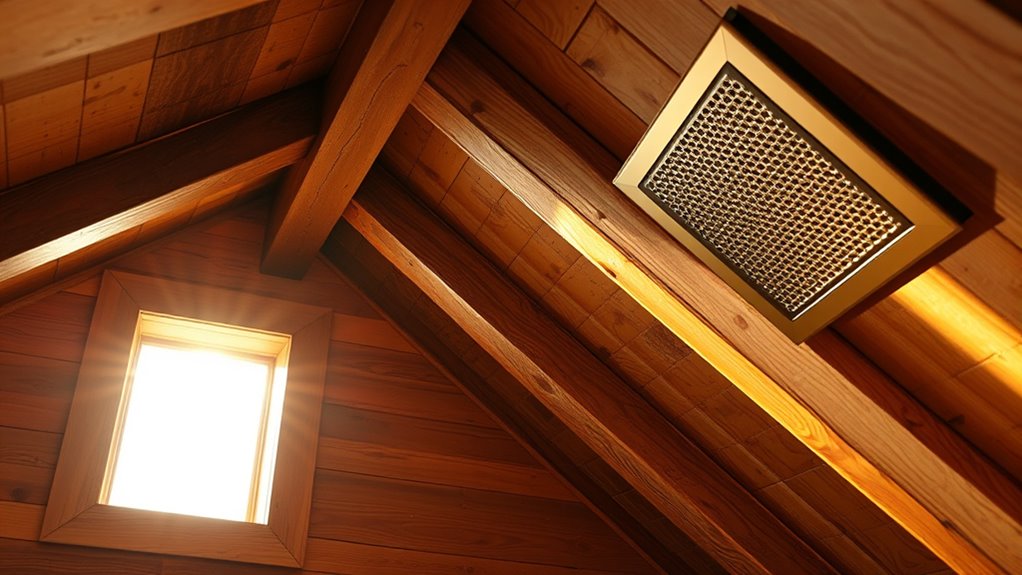

Attic ventilation is essential for your home’s health and efficiency. It helps regulate temperature, preventing heat buildup in summer and moisture accumulation in winter. Proper airflow involves soffit vents to draw in cool air and ridge vents for warm air to escape. Regular maintenance ensures vents stay clear and work properly. If you want to keep your attic dry and cool, understanding how to optimize ventilation can make all the difference—stick around to learn more.
Key Takeaways
- Proper attic ventilation balances airflow using ridge vents for exhaust and soffit vents for intake.
- Effective ventilation prevents heat buildup in summer and moisture accumulation in winter.
- Regular maintenance ensures vents are unobstructed, promoting continuous airflow and preventing blockages.
- Signs of poor ventilation include excess heat, mold, ice dams, or damaged vents requiring professional assessment.
- Proper installation and upkeep extend roof and insulation lifespan, enhancing home energy efficiency and structural integrity.
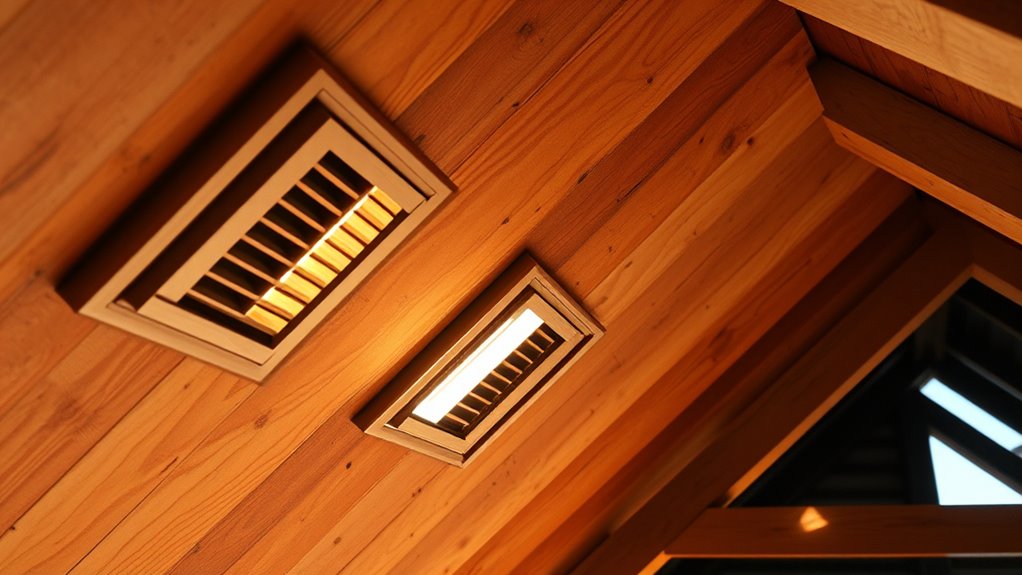
Have you ever wondered how proper attic ventilation can protect your home? It’s a pivotal step that often gets overlooked but can make a big difference in maintaining your house’s health and efficiency. Good ventilation helps regulate temperature, prevents moisture buildup, and extends the lifespan of your roof. To achieve this, understanding how ridge vents and soffit vents work together is essential. These components form a balanced system that promotes continuous airflow, which is the foundation of effective attic ventilation.
Proper attic ventilation safeguards your home’s health and efficiency through balanced airflow.
Ridge vents run along the peak of your roof, providing an opening at the highest point. When paired with soffit vents located under the eaves, they create a natural flow of air. Warm air rises naturally and escapes through the ridge vent, while cooler, fresher air enters through the soffit vents. This continuous movement prevents heat from building up during summer months and keeps moisture from accumulating in the winter, reducing the risk of mold, rot, and ice dams. Without proper airflow, your attic can become a hot, damp space that damages your insulation and roofing materials over time.
You should guarantee your ridge vents are unobstructed and in good condition. If they’re blocked by debris, snow, or dirt, the system won’t work efficiently. Similarly, soffit vents need to be clear of insulation or debris that can restrict airflow. Proper installation of soffit vents is essential; they should be evenly spaced and sized to match the size of your ridge vent. When these vents are working in harmony, they create a passive ventilation system that requires no electricity, saving you energy and money.
Installing or maintaining ridge vents and soffit vents isn’t a DIY job for everyone, but knowing the basics helps you identify issues and communicate effectively with professionals. Regular inspections can reveal blockages or damage early, preventing costly repairs down the line. If you notice signs of poor ventilation—such as excessive heat in the attic, ice dam formation, or mold growth—it’s time to check these vents. Proper attic ventilation isn’t just about preventing damage; it also makes your home more energy-efficient, reducing cooling costs in summer and heating bills in winter.
In short, your attic’s health depends on the seamless operation of ridge vents and soffit vents. When working correctly, they create a natural, effective airflow that safeguards your home from moisture, heat buildup, and structural damage. Maintaining this system is simple but essential—regular checks, clearing obstructions, and professional upgrades when necessary will keep your attic ventilated and your house protected for years to come. Additionally, home security systems can offer peace of mind by alerting you to potential issues like intruders or environmental hazards that could affect your home’s integrity.
Frequently Asked Questions
How Do I Know if My Attic Ventilation Is Insufficient?
You can tell your attic ventilation is insufficient if you notice excessive heat buildup or moisture, which can cause insulation to degrade or promote mold growth. Check for signs of roof leaks or ice dams in winter, as poor ventilation worsens these issues. Consider insulation upgrades and roof leak detection to improve airflow. Proper ventilation helps regulate temperature and moisture, protecting your home and extending the life of your roof.
Can Attic Ventilation Reduce Energy Bills Significantly?
Like a revitalizing gust, proper attic ventilation can notably cut your energy bills. Yes, it can lead to notable energy savings by reducing heat buildup in summer and moisture in winter. Different ventilation types, such as soffit and ridge vents, work together to improve airflow. When your attic stays cooler and drier, your air conditioning and heating systems don’t have to work as hard, saving you money.
What Are the Signs of Poor Attic Ventilation?
You’ll notice signs of poor attic ventilation if you see excessive heat buildup, which can cause your attic insulation to deteriorate prematurely. Moisture or mold growth, ice dams in winter, and persistent musty odors also indicate ventilation issues. Check your ventilation types—such as soffit, ridge vents, or exhaust fans—to make sure they’re working properly. Proper ventilation helps maintain balanced temperatures and protects your attic insulation from damage.
How Often Should Attic Vents Be Cleaned or Inspected?
You should inspect and clean your attic vents at least once a year, ideally in spring or fall. Regular checks ensure all ventilation types—such as soffit, ridge, or gable vents—are clear of debris, dust, and pests. Proper maintenance helps prevent moisture buildup, protects your attic insulation, and keeps airflow ideal. By staying proactive, you ensure your attic remains well-ventilated, energy-efficient, and free from potential damage.
Are There Seasonal Considerations for Attic Ventilation?
Yes, you should consider seasonal temperature and moisture fluctuations when managing attic ventilation. In winter, guarantee vents prevent moisture buildup and ice dams, while in summer, improve airflow to reduce heat. Properly adjusting ventilation based on seasons helps prevent mold, wood rot, and energy loss. Regular inspections before and after extreme weather seasons ensure vents function effectively year-round, keeping your attic dry and well-ventilated.
Conclusion
Remember, proper attic ventilation isn’t just about avoiding mold or ice dams—it also helps your home breathe and saves you money on energy bills. Some might think it’s complicated or costly to install, but it’s a simple upgrade that pays off in the long run. Don’t skip it thinking it’s unnecessary; with the right setup, you’ll enjoy a healthier, more efficient home year-round. Trust me, your house will thank you for it!