To effectively zone an open-plan space, use furniture placement, rugs, and lighting to define individual areas without walls. Arrange sofas, tables, and chairs to create cozy living, dining, and work zones, while ensuring flow and accessibility. Incorporate layered lighting and visual cues to highlight each section and set the right mood. If you keep exploring, you’ll discover ways to make your space both functional and stylish with seamless progressions between areas.
Key Takeaways
- Divide the space into functional zones using visual boundaries like rugs, furniture arrangement, or color variations.
- Arrange furniture to define each zone clearly, supporting activities like lounging, dining, or working.
- Use layered lighting—pendant lights, lamps, and task lighting—to differentiate zones and create ambiance.
- Maintain clear pathways to ensure smooth flow and accessibility between zones.
- Support transitions with subtle design elements, such as contrasting rugs or different wall colors, for visual separation.

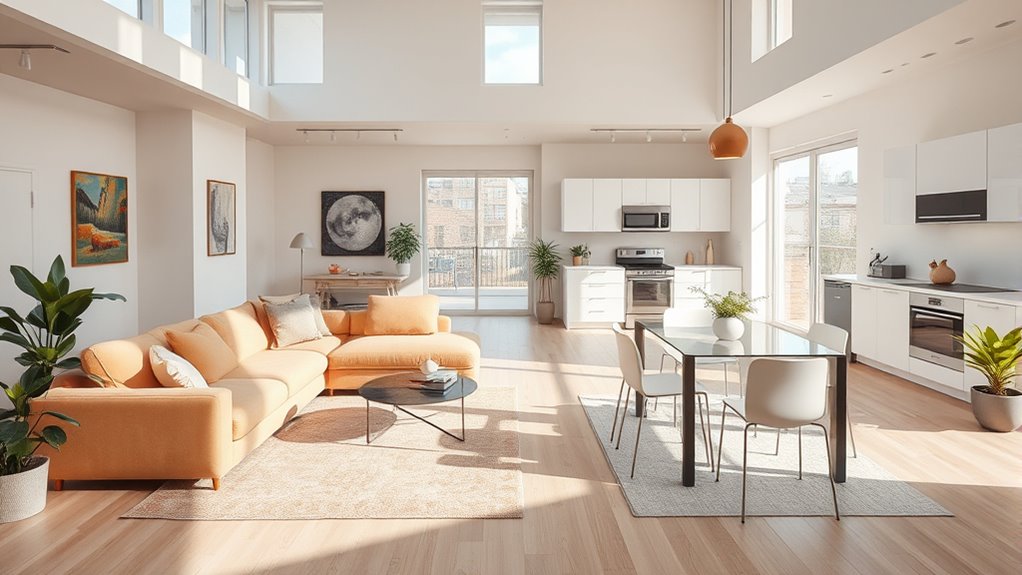
Have you ever wondered how to make an open-plan space feel organized and functional? The key lies in smart zoning, which involves dividing the area into distinct zones that serve different purposes while maintaining a cohesive look. To do this effectively, you need to pay close attention to furniture arrangement and lighting design. These elements work together to create visual boundaries and define each zone without the need for walls or partitions. Incorporating visual boundaries can further enhance the separation of spaces while keeping the overall flow open and inviting. Start with furniture arrangement. Think about how you want each zone to function and select pieces that support those activities. For example, place a sofa and armchairs to create a cozy living area, and position a dining table and chairs nearby for meals. Use rugs to anchor each zone, giving them a sense of separation even within the open space. Keep pathways clear so movement flows naturally from one zone to another, avoiding clutter that can make the area feel chaotic. When arranging furniture, consider sightlines and accessibility; you want each zone to be inviting but not overcrowded. By strategically positioning pieces, you create a visual cue that defines each space, making it easier to switch from work to relaxation or dining. Lighting design is equally essential in zoning your open-plan area. Use layered lighting to differentiate zones and set the mood. For instance, install pendant lights or a chandelier above the dining table to highlight that specific zone, making it feel separate from the lounge. In the living area, opt for table lamps, floor lamps, or wall sconces that provide softer, ambient light. Task lighting can be added to workspaces or reading corners to guarantee functionality. Dimmable lights are a smart choice because they allow you to adjust brightness according to the activity or time of day. By intentionally placing different lighting sources and styles in each zone, you not only enhance the functionality but also create visual interest and depth within the space. Combining thoughtful furniture arrangement with intentional lighting design transforms a seemingly endless open area into a series of purposeful zones. When done correctly, these elements help you navigate your space effortlessly, making it feel organized, inviting, and tailored to your lifestyle. Remember, the goal is to create a harmonious flow where each zone is clearly defined yet seamlessly connected to the next. This way, your open-plan space becomes more than just a large room—it becomes a functional, stylish environment that adapts to your needs.
Frequently Asked Questions
How Can I Maximize Natural Light in Open-Plan Zoning?
To maximize natural light in open-plan zoning, you should strategically place windows to allow sunlight to flow throughout the space. Use architectural dividers that are transparent or open to maintain light continuity while defining areas. Position windows across from each other or near reflective surfaces to bounce light around. Keep window treatments light and unobstructed, ensuring maximum daylight penetration and creating a bright, inviting environment.
What Are Cost-Effective Zoning Solutions for Small Budgets?
If you’re looking to create distinct areas without spending much, consider lightweight partition walls—they’re budget-friendly and easy to install. Incorporate versatile furniture like open shelving or folding screens to subtly define spaces while maintaining flexibility. These solutions are cost-effective, require minimal renovation, and let you adapt your layout as needed, all while keeping your open-plan space functional and inviting without breaking the bank.
How Do I Maintain Privacy Without Sacrificing Openness?
You can maintain privacy without sacrificing openness by using privacy screens and flexible partitions. These solutions allow you to create designated areas for privacy while keeping the overall space feeling open. Position privacy screens strategically to block sightlines and reduce noise, and opt for movable partitions that can be easily adjusted or removed when needed. This approach offers versatility, cost-efficiency, and a sense of openness within your open-plan environment.
Which Zoning Methods Are Best for Soundproofing?
To effectively soundproof your open-plan space, use acoustic zoning with soundproof barriers like thick curtains, glass partitions, or wall panels. These barriers help contain noise and create distinct zones. Incorporate soft furnishings, rugs, and acoustic panels to absorb sound. Combining these soundproof barriers with acoustic zoning techniques guarantees you maintain openness while reducing noise transfer, creating a comfortable, functional environment.
How Can Zoning Adapt to Future Space Needs?
You can adapt zoning to future space needs by incorporating flexible furniture and versatile zoning types. As your needs evolve, move and reconfigure furniture to redefine zones, creating adaptable spaces for work, relaxation, or socializing. Use modular partitions or movable walls that allow quick changes. This dynamic approach guarantees your open-plan space remains functional and responsive, ready to meet whatever future demands come your way, seamlessly blending flexibility with practicality.
Conclusion
Think of your open-plan space like a bustling city, where each zone is a neighborhood with its own character. When you effectively zone, you’re guiding the flow, much like city planners creating pathways for traffic. I once saw a loft transformed by simple rugs and furniture placement—suddenly, it felt like distinct districts. By thoughtfully zoning your space, you craft an environment that’s both functional and inviting, turning chaos into a harmonious, well-organized community.