Using the Rule of Thirds in shelf styling helps you create balanced, eye-catching displays by placing focal points at grid intersections. It guides you to arrange objects of varying sizes, colors, and textures thoughtfully, ensuring your shelves feel harmonious and interesting. By focusing on strategic placement, you can turn ordinary shelves into statement pieces that reflect your style effortlessly. Keep exploring, and you’ll discover how to optimize your shelf arrangements even further.
Key Takeaways
- Divide shelves into thirds both horizontally and vertically to create balanced, harmonious arrangements.
- Place focal objects at grid intersections to naturally draw attention.
- Balance visual weight by varying size, color, and texture of items across the shelf.
- Use varying object heights and depths for added depth and visual interest.
- Incorporate smaller, subdued pieces to stabilize focal points and prevent clutter.
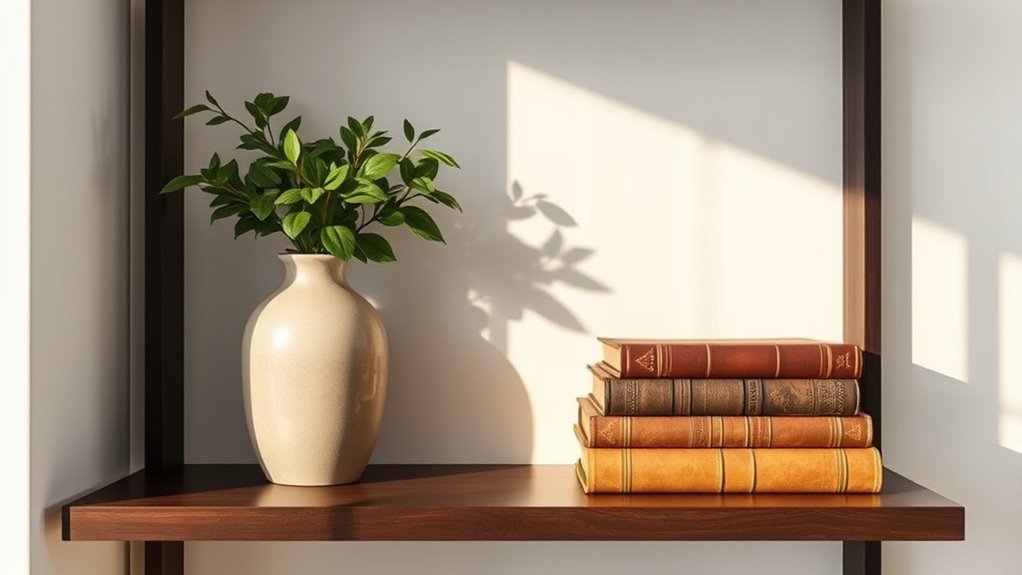
Have you ever wondered how some shelves instantly elevate a room’s style? It’s all about how you arrange your items, and one effective method is the Rule of Thirds. This principle guides you in balancing visual weight across your shelf, which is essential for creating a harmonious display. When you apply this rule, you avoid clutter and chaos, instead producing a composition that feels intentional and pleasing to the eye. Think of your shelf as a canvas; by dividing it into thirds both horizontally and vertically, you can place your objects thoughtfully to achieve a balanced look. This approach helps you distribute visual weight evenly, so no one side feels too heavy or too sparse. Additionally, understanding visual harmony can help you refine your arrangements further for a more polished appearance.
Creating focal points is another key element of shelf styling with the Rule of Thirds. Instead of filling every available space, you choose a few standout pieces that draw attention. For example, a large vase or an eye-catching sculpture can serve as the visual anchor, and you position it roughly at one of the intersections of the grid. This naturally guides the viewer’s eye and gives your shelf a sense of purpose. To complement the focal point, you can add smaller items nearby that balance the composition without overwhelming it. This creates a dynamic yet cohesive visual story, making your display more engaging and less cluttered.
Balancing visual weight isn’t just about the size of objects; it’s also about their color, texture, and placement. Bright colors or shiny surfaces tend to attract more attention, so you might want to place these items strategically to avoid overwhelming the display. Conversely, more subdued pieces can fill in gaps, helping to create a sense of stability. When you arrange items according to the Rule of Thirds, you also consider height and depth. Varying the levels of objects—placing some taller and others shorter—adds visual interest and prevents the display from feeling flat or static. This careful balancing act ensures your shelf looks thoughtfully curated rather than haphazard.
In essence, mastering the Rule of Thirds in shelf styling transforms an ordinary space into something visually compelling. You become more intentional with each placement, which enhances the overall aesthetic of your room. Whether you’re showcasing books, artwork, or decorative accents, applying this principle helps you create focal points that draw the eye naturally. By balancing visual weight throughout, your shelves become more than functional storage—they become a statement of style. When you approach your shelf arrangement with these ideas in mind, you’ll find that your space feels both harmonious and lively, reflecting your personal taste with elegance and ease.

Der Rose Fake Plants 4 Packs Artificial Plants Small Faux Plants Black Bathroom Accessories for Halloween Bathroom Home Kitchen Coffee Table Office Desk Decor Indoor
Package Contents: Package contains four faux plants. Each desk plant is 7.18'' high and 4.7'' wide
As an affiliate, we earn on qualifying purchases.
As an affiliate, we earn on qualifying purchases.
Frequently Asked Questions
How Does Lighting Affect Shelf Styling With the Rule of Thirds?
Lighting effects considerably impact shelf styling with the rule of thirds by creating shadow play and highlighting focal points. You can use strategic lighting to draw attention to specific objects, making your arrangement more dynamic. Proper lighting adds depth and dimension, emphasizing the balance and asymmetry that the rule of thirds encourages. By adjusting the light, you make your shelf look more inviting and visually interesting, enhancing overall aesthetic appeal.
Can the Rule of Thirds Be Applied to Small or Crowded Shelves?
Think of small or crowded shelves as a busy city street—chaotic yet full of potential. You can apply the rule of thirds here by carefully arranging items to create balance without adding visual clutter. Use space optimization techniques, like grouping similar objects or leaving breathing room, to turn chaos into harmony. This approach guides the eye smoothly across your shelves, making even the tiniest space feel intentional and beautifully curated.
What Are Common Mistakes When Using the Rule of Thirds in Shelf Styling?
You might make the mistake of misaligned elements, which can disrupt the visual balance. Overcrowded shelves are another common issue, making it hard to achieve the rule of thirds effectively. To avoid these mistakes, guarantee your items are well spaced and aligned properly, creating clear focal points. Keep the layout simple and intentional, so each piece stands out without cluttering the overall aesthetic.
How Do Color Schemes Influence the Rule of Thirds on Shelves?
Color schemes greatly influence the rule of thirds on your shelves by creating color harmony and enhancing visual balance. When you choose colors that complement each other, you guide the eye naturally across the shelves, emphasizing focal points and preventing clutter. You can achieve this by pairing warm with cool tones, using consistent hues, or repeating colors strategically. This approach keeps your display cohesive, engaging, and visually appealing, making your shelves stand out effortlessly.
Is the Rule of Thirds Suitable for All Types of Shelving (E.G., Open vs. Closed)?
The rule of thirds works well for open shelving, where you can showcase decorative accessories and material textures creatively. It helps create balance and visual interest. For closed shelving, you might find it less suitable, as the focus shifts to hidden storage. Adjust your approach accordingly, highlighting key items and ensuring the overall aesthetic complements your space, whether open or closed.

suruim Colorful Abstract Women Figurines Sculptures Home Decor for Shelves Yoga Pose Art Statue Modern Home Decoration Living Room Zen Decor Tables Ornaments (Stretch)
【Unique and Expressive Design】The suruim Abstract Art Woman Sculpture Figurines feature a decorative appearance that combines simplicity and…
As an affiliate, we earn on qualifying purchases.
As an affiliate, we earn on qualifying purchases.
Conclusion
Now that you know the rule of thirds, aren’t you excited to transform your shelves into eye-catching displays? With a little balance and strategic placement, your shelves will feel more curated and inviting. Imagine your favorite books, plants, and decor perfectly arranged, creating visual harmony that draws eyes and sparks conversations. So, why settle for cluttered shelves when you can craft a stunning, balanced showcase that truly reflects your style?

Ikee Design 3 Pcs Set House-Shaped Shelf Wooden Shadow Cubby Box Display Shelf Organizer Storage Display Shadow Box for Mini Figures,15 Compartments, Brown Color
PREMIUM WOOD SHADOW BOX: This 3-piece display shelf set is perfect for displaying collectibles and accessories in homes…
As an affiliate, we earn on qualifying purchases.
As an affiliate, we earn on qualifying purchases.

Cork & Mill Marble and Wood Knot Decor – Decorative Object for Shelves, Bookcase, Console, Mantel or Side Table – Entryway Decor Item – Coffee Table Centerpiece for Living Room – Handcrafted Accent
High End Materials: Crafted from solid white marble and acacia wood, this piece offers a luxurious look and…
As an affiliate, we earn on qualifying purchases.
As an affiliate, we earn on qualifying purchases.