
Mid-century modern design highlights clean lines, organic shapes, and functional furniture made from natural materials like wood, leather, and metal. It emphasizes simplicity, timeless appeal, and a mix of form and practicality. Think sleek, low-profile sofas, tapered wooden legs, and bold accent colors that add vibrancy to neutral backgrounds. This style creates uncluttered, inviting spaces with balanced color schemes and geometric shapes. To explore how to bring this vibe into your space, there’s more to discover.
Key Takeaways
- Mid-century modern design features clean lines, organic shapes, and minimal ornamentation for a sleek, timeless look.
- It emphasizes natural materials like wood, leather, and metal to add warmth and texture.
- Color palettes combine neutral backgrounds with bold accent colors such as orange, teal, and yellow.
- Furniture includes iconic pieces with tapered legs and geometric shapes, balancing practicality and style.
- The overall aesthetic promotes a cohesive, uncluttered space that is both functional and visually appealing.

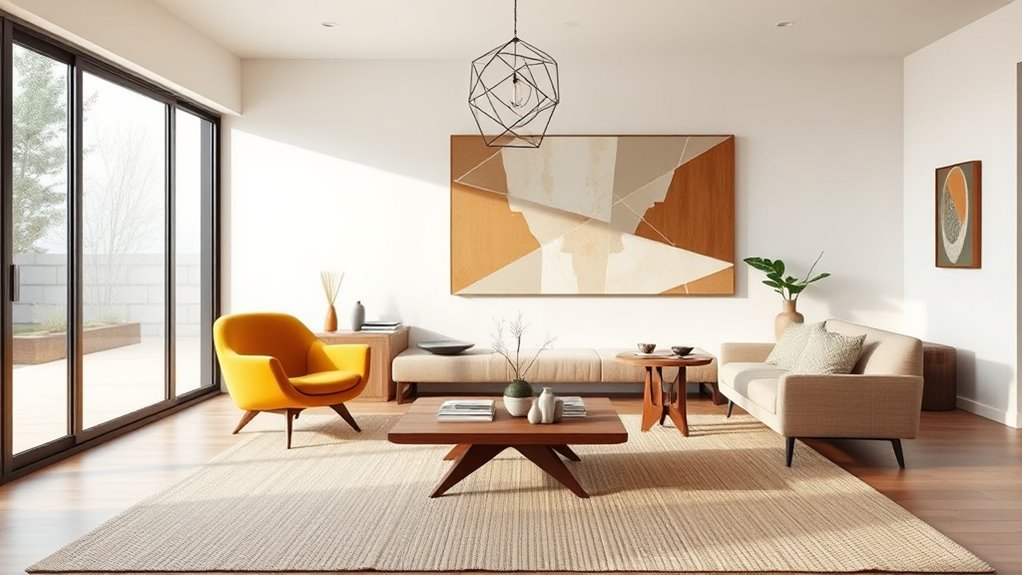
Are you curious about the essentials of Mid-Century Modern design? If so, you’re stepping into a style that’s all about simplicity, functionality, and a touch of retro charm. One of the first things you’ll notice is the variety of furniture styles that define this aesthetic. Mid-Century Modern furniture favors clean lines, organic shapes, and minimal ornamentation. Think of sleek, low-profile sofas with tapered wooden legs, side tables with gentle curves, and iconic pieces like the Eames lounge chair. These furniture styles emphasize practicality without sacrificing style, making your space feel open and inviting. The focus is on pieces that are both functional and visually appealing, often crafted from natural materials like wood, leather, and metal, which add warmth and texture to your rooms.
Color palettes in Mid-Century Modern design also play a paramount role in creating its signature look. The typical palette leans toward neutral shades—think soft whites, beiges, and grays—that serve as a calm backdrop. From there, bold accent colors are introduced to add vibrancy and personality. Bright oranges, teal, mustard yellow, and olive green are common choices that bring energy without overwhelming the space. These colors often appear in accent pillows, artwork, or even on furniture pieces, providing pops of color that stand out against the more subdued neutrals. The idea is to strike a balance between understated elegance and lively accents, making your space feel modern yet warm.
You’ll find that Mid-Century Modern design often combines these furniture styles and color palettes to craft a cohesive look. The furniture’s sleek silhouettes complement the bold, yet carefully chosen, color accents. The overall effect is a space that feels uncluttered and effortless, yet thoughtfully curated. When you’re selecting furniture, focus on pieces that have a timeless appeal—those with tapered legs, smooth surfaces, and geometric shapes—and pair them with a color scheme that feels lively but balanced. This approach makes your home not only stylish but also functional and comfortable. Incorporating versatile decor elements can also help seamlessly blend these design principles into any space, creating a balanced environment that is both aesthetically pleasing and practical. Whether you’re decorating a new space or updating an existing one, understanding these core elements will help you create a Mid-Century Modern environment that’s both authentic and inviting.
Frequently Asked Questions
What Are the Signature Materials Used in Mid-Century Modern Furniture?
You’ll notice that signature materials in mid-century modern furniture include Danish teak, known for its warm tone and durability, and molded fiberglass, which adds sleek, innovative curves. These materials help create furniture with clean lines and functional appeal. You might also see other materials like metal and leather, but Danish teak and molded fiberglass remain iconic for their distinct textures and timeless style, making your space feel both stylish and inviting.
How Did Mid-Century Modern Design Influence Contemporary Interiors?
You probably think you’re being original, but modern interiors are just mid-century modern with a fresh coat of paint. You implement sleek furniture layouts and clever lighting techniques inspired by the masters, making your space feel effortlessly stylish. The influence is everywhere—clean lines, functional design, and open spaces. So, next time you admire a trendy room, thank mid-century modern design for setting the stage for your Instagram-worthy aesthetic.
Are There Specific Color Palettes Associated With Mid-Century Modern Style?
You’ll notice that mid-century modern style features a distinct color palette, often combining bold, vibrant hues like orange, teal, and mustard with neutral shades such as white, gray, and brown. These design themes emphasize simplicity and functionality while using these colors to create lively, balanced spaces. The palette supports clean lines and geometric patterns, making your interiors feel fresh, timeless, and visually appealing.
How Can I Identify Authentic Mid-Century Modern Pieces?
You can spot authentic mid-century modern pieces by examining their vintage authenticity and design evolution. Look for clean lines, organic shapes, and functional forms that reflect the era’s innovation. Check for signs of age like wear or original labels, and research the designer’s hallmark styles. Authentic pieces often show craftsmanship and a timeless appeal, embodying the design evolution that defines mid-century modern furniture.
What Are Common Misconceptions About Mid-Century Modern Design?
Did you know that 60% of people mistake vintage revival pieces for authentic mid-century modern design? One common misconception is that all sleek, minimalist furniture is mid-century modern, but many pieces are just inspired by it. You might also think that mid-century modern design is only from the 1950s and 60s, yet it spans a broader timeframe. Avoid design misinterpretations by learning the key features and historical context of authentic pieces.
Conclusion
Now that you’ve uncovered the essentials of mid-century modern design, you’re armed with the knowledge to transform any space into a stunning masterpiece. With just a few timeless pieces, you could turn your home into an iconic masterpiece that’s more mesmerizing than the most celebrated art gallery. Embrace these basics, and watch your space become a dazzling reflection of style and simplicity. Your home is about to become the envy of everyone who walks through your door!