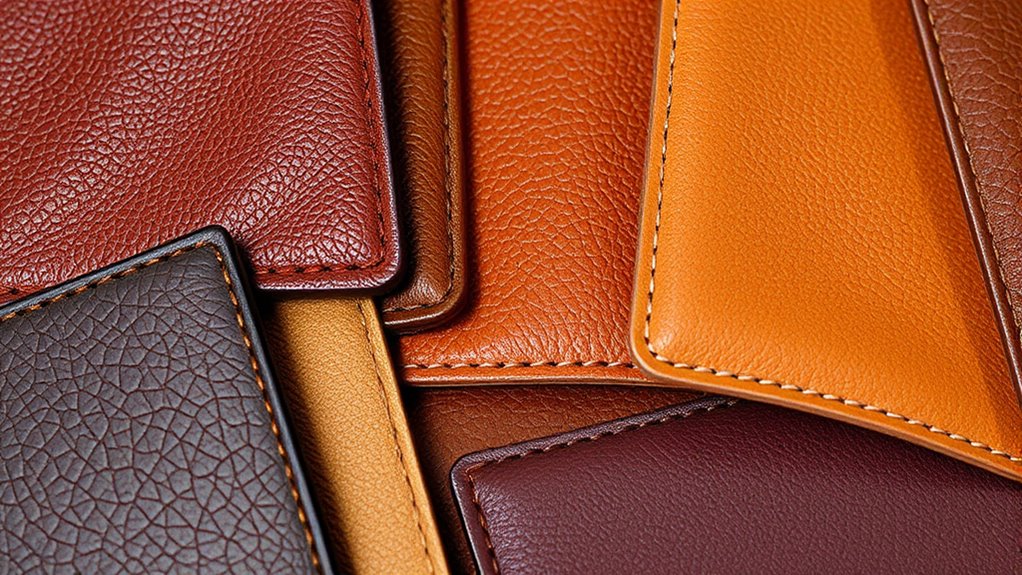

Leather grades show you the quality, durability, and look of the material. Full-grain leather, which keeps the natural surface, is the highest quality and ages beautifully. Top-grain has imperfections removed for a smooth finish, while genuine leather comes from layers beneath the surface and is less durable. Bonded leather, made from scraps, is the least durable. Your choice depends on how long you want the item to last and how it should look over time—learn more to make the best decision.
Key Takeaways
- Leather grades are determined by the quality of the hide and the tanning process, affecting durability and appearance.
- Full-grain leather retains the entire natural surface, showcasing original grain and developing character over time.
- Top-grain leather is slightly processed to remove imperfections, offering a uniform look with good durability.
- Genuine leather is made from layers beneath the top layer, often more processed and less natural in appearance.
- Bonded leather is created from shredded scraps bonded with adhesives, making it less durable and less likely to age well.
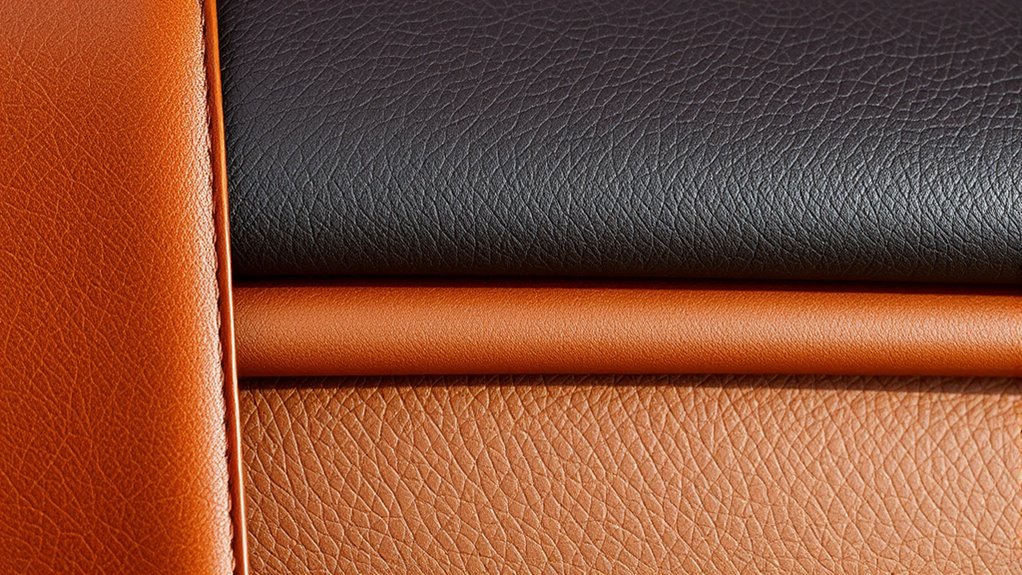
Have you ever wondered how different types of leather vary in quality? The answer largely depends on the tanning processes used and the leather grading standards that determine its overall quality. Tanning processes, such as vegetable tanning and chrome tanning, profoundly influence the durability, appearance, and feel of the leather. Vegetable tanning, which uses natural tannins from plant sources, results in a firm, stiff leather that ages beautifully, often used for high-end products. Chrome tanning, on the other hand, employs chemicals like chromium salts, producing softer, more flexible leather that’s quicker to process and more resistant to elements. These processes not only impact the leather’s characteristics but also play a role in its grading, as the quality of raw materials and the methods used to treat them are key factors in determining overall grade.
Leather grading standards serve as a systematic way to classify the quality of leather based on various criteria, including grain quality, finish, and defects. The highest grades, such as full-grain leather, retain the entire natural surface of the hide, showcasing the original grain and natural markings. This type of leather is valued for its strength, breathability, and aging properties. Next is top-grain leather, which involves removing the top layer of the hide to eliminate imperfections, then finishing it to resemble full-grain leather. While slightly less durable, top-grain offers a more uniform appearance. Genuine leather, often considered a lower grade, comes from layers beneath the top grain, and usually has a more processed, less natural look. It’s more affordable but tends to be less durable and may show signs of wear more quickly.
Lower grades like bonded leather are made from leftover scraps that are shredded, bonded with adhesives, and then finished to resemble more premium leathers. These are usually less durable and don’t develop a patina over time. When you’re choosing leather products, understanding these grading standards helps you make informed decisions based on your needs and budget. The grading isn’t just about appearance; it’s about longevity, comfort, and how the leather will age. High-quality leathers, like full-grain and top-grain, tend to last longer and develop character over time, making them ideal for investment pieces. Cheaper grades may be suitable for short-term use or fashion items where durability isn’t a primary concern.

Valencia Artisan Full Leather Sofa 88” – Pure Full Italian Nappa Leather Couch, Solid Wood Accent, Ultimate Comfort, Cognac Tan
Luxurious Materials: The Artisan couch from Valencia is fully upholstered in Italian Nappa Leather that is Italian tanned…
As an affiliate, we earn on qualifying purchases.
As an affiliate, we earn on qualifying purchases.
Frequently Asked Questions
How Does Leather Grade Affect Durability Over Time?
Your leather grade directly impacts its durability over time. Higher-grade leather offers better wear resistance, meaning it withstands daily use and the aging process more effectively. Lower grades may show signs of wear, cracking, or fading faster, reducing their lifespan. By choosing a higher-grade leather, you guarantee your item remains attractive and functional longer, as it’s better equipped to handle the stresses of regular use and aging.
Are Higher-Grade Leathers More Environmentally Friendly?
Sure, higher-grade leathers aren’t exactly eco-warriors. They often involve more resource-intensive tanning processes, making them less environmentally friendly than vegan alternatives or recycled leather. If you want to save the planet and still sport a fancy hide, consider vegan options or leather recycling. These choices cut down on animal cruelty and reduce waste, proving that sometimes, going green means ditching the traditional and embracing the innovative.
Can Lower-Grade Leather Still Be High Quality?
Yes, lower-grade leather can still be high quality, especially if you pay attention to the leather surface texture and dyeing process. A smooth, consistent surface and even dye application can make lower-grade leather durable and visually appealing. Quality isn’t just about grade; it depends on how well the leather is processed and finished. So, with proper attention, lower-grade leather can meet your standards for beauty and durability.
How Do Leather Grades Influence Pricing?
The price of luxury leather can skyrocket faster than a rocket, thanks to leather grades. Higher grades, like full-grain or top-grain, command premium prices because they guarantee durability and beauty. Lower grades, while more affordable, still offer good quality but influence cost considerations. Your choice depends on your budget and desired longevity. Leather grades directly impact pricing, so understanding this helps you make smarter, value-driven decisions when investing in leather products.
Is Leather Grading Standardized Across Manufacturers?
Leather grading isn’t completely standardized across manufacturers because leather sourcing and manufacturing standards vary widely. You might find different grades assigned to similar quality leather, depending on the brand or country of origin. It’s important to look beyond the grade and consider the source, craftsmanship, and quality controls. By doing so, you guarantee you’re choosing leather that meets your expectations, regardless of the grading system used.

Top Grain Leather Wallet for Men | RFID Blocking | Extra Capacity Bifold Wallet with 2 ID Windows | Ultra Strong Stitching | Slim Billfold with 8 Card Slots | Gift for Him
✅ SECURE RFID BLOCKING – Every card slot in our mens leather wallet is equipped with RFID blocking…
As an affiliate, we earn on qualifying purchases.
As an affiliate, we earn on qualifying purchases.
Conclusion
Now that you know about leather grades, you might think it’s too complicated to choose the right one. But don’t worry—understanding the differences helps you pick quality leather that fits your needs and budget. Whether you want something durable or luxurious, knowing the grades makes shopping easier. So, next time you’re buying leather, trust your new knowledge to make confident, informed decisions—because with the right grade, your leather will last and impress.
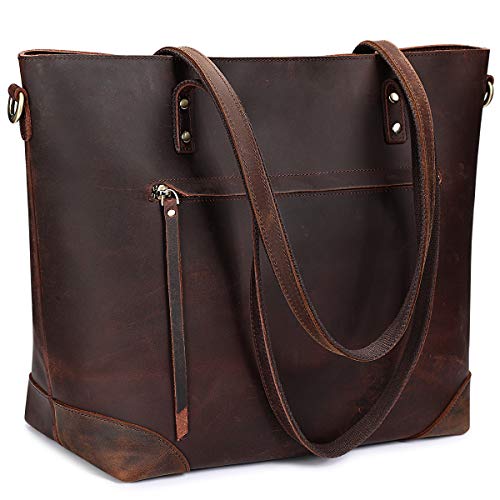
S-ZONE Vintage Genuine Leather Shoulder Bag Work Totes for Women Purse Handbag with Back Zipper Pocket Large
Roomy Capacity: External dimension is about 17.72inch(Max Length)/ 12.8inch(Bottom Length) x 6.31inch(W)x 12.6inch(H), Weight: 2.43LB, fits up to…
As an affiliate, we earn on qualifying purchases.
As an affiliate, we earn on qualifying purchases.
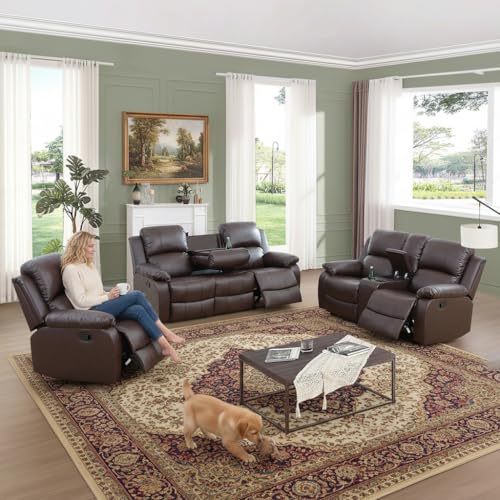
Seruancielo Bonded Leather Living Room Furniture, 3 Pieces Recliner Sofa Set with Cup Holders&Storage Console, Manual Reclining Leather Couches for Living Room (Brown, Sofa+Loveseat+Chair)
Bonded Leather Upholstery: Crafted with high-quality bonded leather, this reclining sofa set exudes sophistication and elegance. The material…
As an affiliate, we earn on qualifying purchases.
As an affiliate, we earn on qualifying purchases.