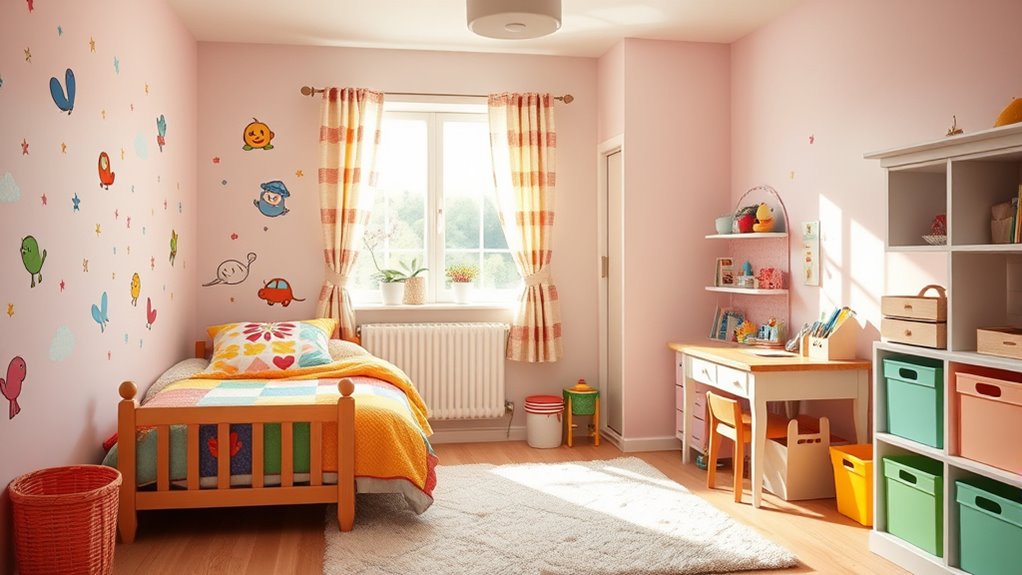

When designing a kids’ room, focus on fun themes that reflect their interests, using bright colors and creative decor to energize the space. Balance playfulness with practicality by choosing multi-purpose furniture and smart storage solutions like bins and shelves that keep things organized. Maximize space with vertical storage and accessible furniture, making it easy for your child to help tidy up. Keep the environment safe, durable, and inspiring—if you continue exploring, you’ll discover how to create an ideal, organized space for your child.
Key Takeaways
- Choose playful themes and vibrant colors to create an energetic, inspiring environment.
- Incorporate multi-purpose furniture and accessories that combine fun with practicality.
- Use smart storage solutions like bins, shelves, and labels to keep the space organized.
- Maximize space with vertical storage and accessible furniture for easy use.
- Design a safe, durable, and clutter-free environment that encourages creativity and relaxation.
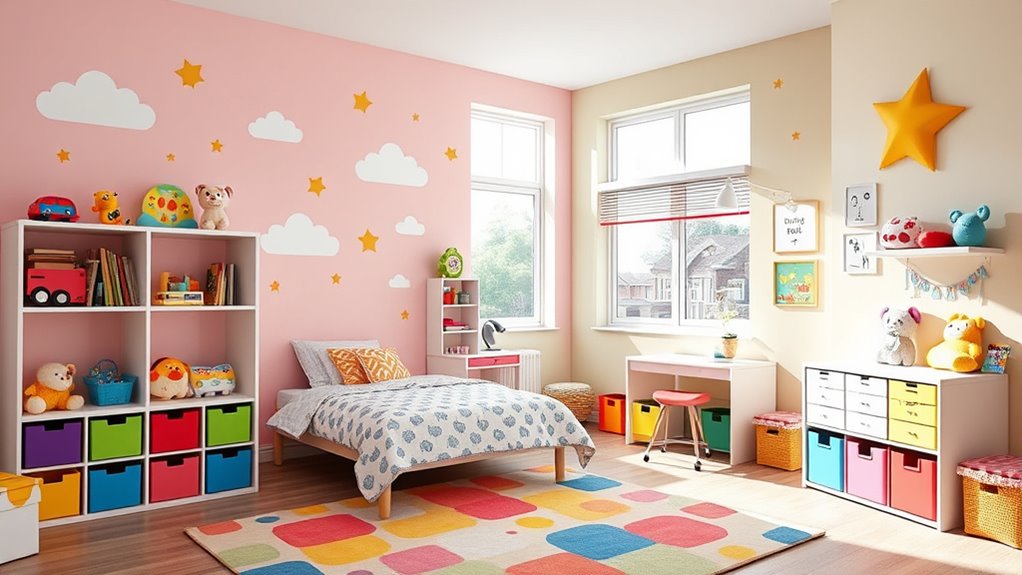
Have you ever wondered how to create a kids’ room that’s both fun and functional? The key lies in balancing playful design with practical organization. When choosing playroom themes, think about what excites your child—whether it’s their favorite colors, characters, or hobbies. Bright, vibrant hues can energize the space, while themed decor like space, jungle, or fairy-tale motifs add personality. Just remember, the theme should inspire creativity without overwhelming the room. Once you settle on a theme, it becomes easier to pick coordinating furniture, accessories, and wall art that tie everything together seamlessly.
Creating a fun, functional kids’ room involves playful design and smart organization that sparks your child’s imagination.
A pivotal aspect of designing a kids’ room is implementing smart storage solutions. Kids tend to accumulate toys, books, and clothes quickly, so it’s important to have designated spots for everything. Instead of cluttered piles or scattered belongings, opt for versatile storage options like open shelves, bins, and cubbies. Low-level storage units make it easy for children to access their toys and help foster independence. Incorporate multi-purpose furniture, such as beds with built-in drawers or desks with integrated storage, to maximize space. Using clear containers allows your child to see what’s inside, making cleanup easier and teaching organization skills early on.
When selecting storage solutions, consider your room layout and your child’s habits. If space is limited, vertical storage can free up floor area and add visual interest. Wall-mounted shelves or hanging organizers are excellent choices for maximizing space without sacrificing accessibility. Labeling bins or drawers can also help your child learn to put things away correctly, reinforcing good habits. Remember, a clutter-free room not only looks better but also provides a more relaxing environment for your child to play, learn, and rest. Additionally, choosing waterproof or durable storage options can ensure longevity and safety in a busy kids’ space.
Incorporating playful yet functional storage solutions doesn’t mean sacrificing style. Opt for colorful bins that match the room’s theme or choose furniture with playful shapes and designs. These elements can make organization fun and encourage your child to participate in keeping their space tidy. Ultimately, combining engaging playroom themes with clever storage solutions results in a space that nurtures your child’s imagination while remaining orderly and manageable. With thoughtful planning and a focus on practicality, you’ll create a kids’ room that’s a perfect blend of fun and function, making it a space your child will love for years to come.
Frequently Asked Questions
How Can I Incorporate My Child’s Interests Into the Room Design?
You can incorporate your child’s interests into the room by choosing themed accessories that reflect their passions, like sports, animals, or space. Add personalized artwork, such as custom prints or hand-drawn posters, to make the space unique. Involving your child in selecting these items makes the design feel special and tailored. This approach creates a fun, engaging environment that celebrates their individuality and keeps their interests front and center.
What Are the Best Safety Features for a Kids’ Room?
You should prioritize safety by installing outlet covers and securing furniture to walls, ensuring your child’s playroom organization is clutter-free to prevent falls. Use wall decal ideas that are non-toxic and easily removable to add fun without hazards. Keep small items out of reach and choose soft, rounded-edged furniture. Regularly check for wear and tear, making sure your child’s space remains safe and inviting for play and learning.
How Do I Choose Age-Appropriate Furniture?
Choosing age-appropriate furniture is like planting a sturdy tree that grows with your child. Start with nursery furniture for infants, focusing on safety and comfort. As they grow, opt for growth adjustable beds that adapt to their changing needs. Keep their size and abilities in mind, selecting furniture that’s safe, easy to use, and suits their developmental stage. This guarantees a space that’s both functional and nurturing for your little one.
What Are Budget-Friendly Decorating Tips for Kids’ Rooms?
To keep decorating your kids’ room budget-friendly, try DIY projects like painting personalized wall art ideas or creating your own decor. Use inexpensive essentials like removable wallpaper, colorful textiles, and versatile furniture that grows with your child. Repurpose items you already own, and add fun touches with handmade crafts. These simple, creative ideas make the space lively and personalized without breaking the bank.
How Can I Maximize Space in a Small Kids’ Room?
Did you know that well-designed small spaces can feel 20% larger? To maximize space, choose smart storage solutions like under-bed drawers or wall-mounted shelves. Use light, neutral color schemes to create an open feel. Keep clutter hidden and prioritize multi-functional furniture, like a bed with built-in drawers. These tips help you make the most of limited space, creating a comfortable, organized room your kid will love.
Conclusion
Remember, designing your child’s room is like planting a seed—you nurture it with love, creativity, and care. Every color, toy, and piece of furniture is a branch growing towards their dreams. As each element finds its place, it becomes a sanctuary where imagination blooms and confidence takes root. Keep this space flexible and full of wonder, and watch your child’s world blossom brighter each day, rooted in comfort and boundless possibility.