To create smooth color progressions between open rooms, focus on choosing harmonious shades that gradually shift in tone or hue, using palettes with similar or complementary colors. Incorporate lighting techniques like warm or cool tones, and select materials with matte or textured finishes to help soften boundaries. Thoughtful planning of these elements turns simple color changes into a cohesive flow. Keep exploring how lighting and materials can enhance your space for a truly seamless look.
Key Takeaways
- Use gradual shifts in hue, tone, or saturation to create seamless visual flow between open rooms.
- Incorporate lighting techniques like warm or cool tones to soften or emphasize color transitions.
- Select consistent or complementary materials to reflect or absorb light uniformly across connected spaces.
- Plan color palettes with variations of the same hue or analogous colors for smooth, natural transitions.
- Apply textured or matte finishes to diffuse light and soften sharp color boundaries between open areas.
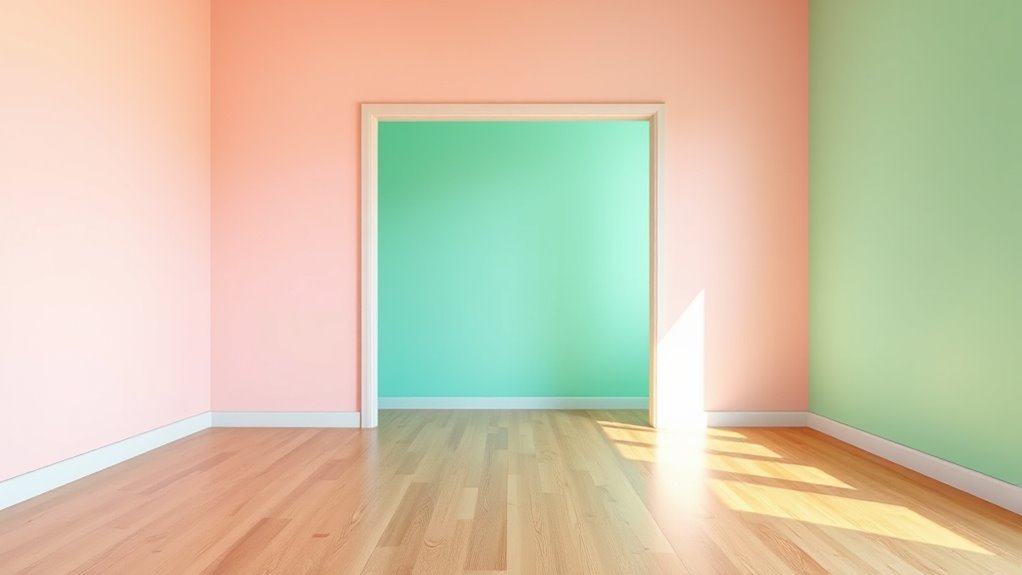
Color shifts refer to the smooth changes between different hues that create visually appealing effects in art, design, and nature. When you’re working on connecting open rooms, mastering these transitions can make your space feel more cohesive and inviting. Achieving seamless color transitions isn’t just about picking the right shades; it’s also about how you use lighting techniques and material choices to enhance the flow between spaces.
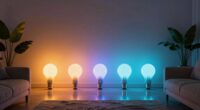
Lighting plays a pivotal role in emphasizing or softening color transitions. By carefully selecting lighting techniques, you can manipulate how colors appear from one room to the next. For example, warm lighting can make colors feel more inviting and cozy, blending yellows and oranges smoothly into adjacent spaces. Conversely, cooler lighting can create a calming effect, helping blues and greens transition effortlessly. Dimmable lighting options give you control over brightness, allowing you to fine-tune how colors shift as you move through the open layout. This subtle modulation prevents abrupt changes and maintains a harmonious visual flow.
Careful lighting choices soften color shifts, creating a harmonious flow between open spaces.
Material choices also considerably influence how colors transition between rooms. Consider using consistent or complementary materials that reflect or absorb light similarly, creating a unified look. For instance, matte finishes tend to diffuse light evenly, helping colors blend softly without harsh contrasts. Glossy surfaces can reflect light and highlight color differences, so use them strategically in areas where you want a more dramatic transition. Textured materials—like woven fabrics or textured wall treatments—can also soften sharp color boundaries by adding visual interest and depth, making the shift feel more natural. Additionally, understanding how lighting techniques impact color perception can help you craft a more cohesive space.
When planning for open spaces, you might opt for a gradual change in color intensity or tone across different areas. This can be achieved by selecting a palette with variations of the same hue or complementary colors that naturally flow into each other. Using similar material choices across these spaces reinforces the connection, making the transition feel intentional rather than abrupt. For example, a soft beige in the living area can subtly shift into a warm taupe in the dining space if both areas employ similar textures and lighting.
Ultimately, creating smooth color transitions between open rooms involves a thoughtful combination of lighting techniques and material choices. You want to craft a visual journey that guides the eye effortlessly from one space to another. When done well, these transitions enhance the overall harmony of your home, making it feel expansive, cohesive, and thoughtfully designed. Every detail, from the way you light your rooms to the materials you select, works together to turn simple color shifts into a sophisticated design feature.
Frequently Asked Questions
How Do Color Transitions Affect Room Mood?
Color shifts considerably influence your room’s mood by leveraging color psychology and contrast. Smooth transitions create a calming, cohesive environment, while bold contrasts energize or add visual interest. When you use complementary or analogous shades, you evoke specific emotions—like tranquility or excitement. Thoughtful color contrast guides your mood and perception as you move through open spaces, making your home feel intentionally designed and emotionally balanced.
What Colors Work Best for Open Space Flow?
You want a space that feels like one seamless, flowing masterpiece—so go for neutral shades like soft beige, warm taupe, or gentle grays. These colors harness the power of color psychology to create calm and balance, ensuring visual harmony across open areas. Bright, contrasting colors might break the flow, but subtle shifts keep your space unified, making every room feel connected and effortlessly inviting.
How Can I Create Seamless Color Transitions?
To create seamless color progressions, start by using the color wheel to choose hues that are adjacent or harmonize well, ensuring smooth flow. You can also incorporate color harmony principles, such as analogous or monochromatic schemes, to blend shades effortlessly. Gradually shift from one color to the next across spaces, using subtle variations or gradients, which helps your open rooms feel connected without abrupt contrasts.
Are Certain Color Combinations More Calming?
Yes, certain color combinations can be more calming. Think of color psychology as a gentle lullaby for your mind. Soft blues, greens, and neutrals create a sense of harmony that soothes your nerves. When choosing colors, aim for color harmony — a balanced blend that feels natural and peaceful. These choices help transform your space into a sanctuary, making every moment feel like a calming embrace.
How Do Lighting Choices Influence Color Transitions?
Lighting choices play a pivotal role in influencing color shifts through lighting techniques that enhance or soften colors. You should consider color psychology when selecting lighting, as warm lights create cozy, inviting transitions, while cool lights evoke calmness. Using dimmers or layered lighting helps you control intensity, ensuring smooth visual flow between spaces. Thoughtful lighting choices can make your open rooms feel cohesive, harmonious, and visually appealing.
Conclusion
Just as a river carves its path through varied landscapes, your journey through open rooms weaves a tapestry of shifting hues. Each color shift acts as a gentle current guiding you onward, revealing new depths and perspectives. Embrace these changes as a dance of light and shadow, where every step reveals a richer story. Ultimately, your space becomes a living canvas, inviting you to explore the fluid artistry of color’s endless voyage.