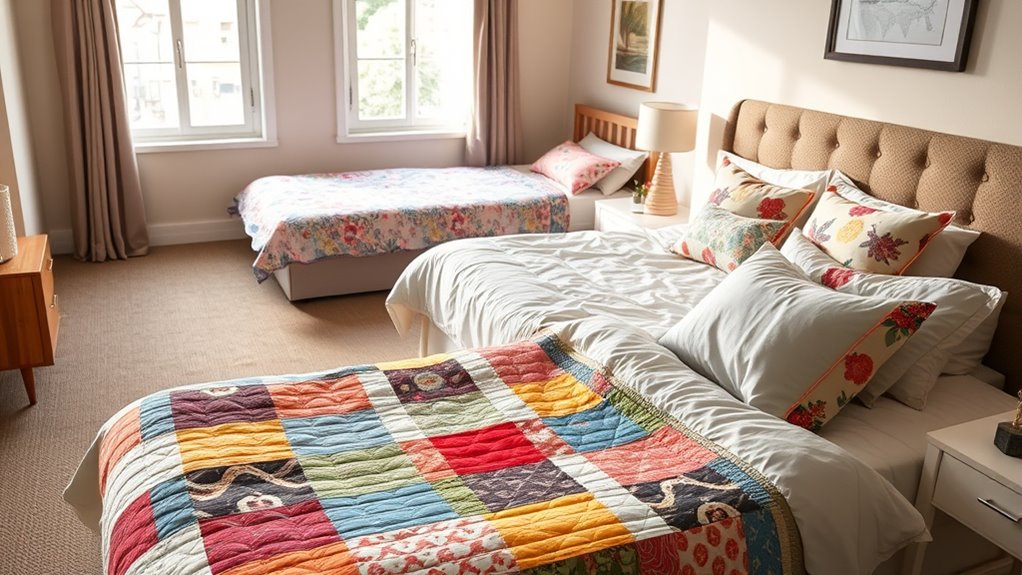

Bed sizes around the world differ based on regional standards, space availability, and cultural preferences. In the US, for example, king beds measure 76 by 80 inches, while European double beds are around 55 by 79 inches. UK sizes are similar to Europe’s, and Asian beds tend to be smaller due to space constraints, though larger sizes are available in cities. Understanding these differences helps you choose the perfect luxury bedding—discover more to create your ideal sleep environment.
Key Takeaways
- Bed sizes vary globally, with the US, Europe, UK, and Asia each having distinct standard dimensions.
- Luxury bedding focuses on materials, comfort, and sizes tailored to regional bed standards.
- In the US, king beds are typically 76×80 inches, while European doubles are about 55×79 inches.
- UK beds are similar in size to European standards, with double beds around 53×75 inches.
- Regional differences influence bedding choices, ensuring proper fit and enhanced sleep quality worldwide.

Ever wondered how bed sizes differ across countries? It’s a fascinating subject, especially when you consider how different cultures approach comfort and design. Whether you’re traveling or shopping for new bedding, understanding these variations can help you make better choices, especially if you’re investing in luxury bedding. When selecting bedding materials, keep in mind that the size of your bed will influence the quality and comfort you experience. High-end bedding, made from premium materials like Egyptian cotton, silk, or linen, can transform your sleep, but it’s essential to pick the right size to match your mattress.
Choosing the right bed size enhances comfort and complements luxury bedding materials.
In the United States, bed sizes are quite standardized. A typical king-size bed measures 76 inches wide by 80 inches long, offering ample space for couples or those who prefer extra room. California king beds are slightly longer at 72 inches wide and 84 inches long, perfect for taller individuals. If you’re shopping for luxury bedding in the U.S., you’ll find a broad selection of bedding materials designed to complement these sizes, from plush duvet covers to silky sheets. The focus is often on creating a cozy, indulgent sleep environment that maximizes the comfort of your chosen bedding materials.
Across the Atlantic, in Europe, bed sizes tend to vary more by country, but many align with the metric system. For example, a standard double bed measures 140 centimeters wide by 200 centimeters long, roughly 55 by 79 inches. Larger options like king-size beds are available, typically around 160 centimeters wide by 200 centimeters long, which is about 63 by 79 inches. European luxury bedding often emphasizes high-quality bedding materials that emphasize comfort and breathability, such as linen or fine cotton. The focus is on creating a sleep space that balances elegance with functionality, letting the premium bedding materials shine through.
In the UK, bed sizes are similar to European standards but with some regional differences. A standard double bed is about 135 centimeters wide and 190 centimeters long, roughly 53 by 75 inches. For luxury bedding enthusiasts, many UK brands offer tailored bedding materials that enhance the experience of these beds, such as luxury duvet inserts and high-thread-count sheets.
In Asia, particularly in Japan and China, bed sizes tend to be smaller, reflecting living space constraints. A typical Japanese futon is compact, but Western-style beds like the queen or king are available in larger cities. When choosing bedding materials for these beds, you might opt for lightweight, breathable fabrics suited for warmer climates, ensuring comfort without sacrificing style or luxury. Additionally, understanding bed size standards in various regions can help you select the right bedding and accessories for a seamless fit.
No matter where you are, understanding local bed sizes helps you select the perfect luxury bedding and bedding materials for a restful, indulgent sleep experience.
Frequently Asked Questions
How Do Bed Sizes Vary in Different Cultures Globally?
You’ll notice that bed sizes vary widely across cultures due to different cultural bedding traditions and regional sleep habits. In some countries, small beds like twin or single are common, reflecting compact living spaces. Others prefer larger options like king or queen beds for comfort and family sleeping habits. These differences shape the way people choose bedding, influenced by local customs, climate, and lifestyle, making each region’s sleep setup unique.
Are There Standard Bed Sizes for Hotels Worldwide?
You’ll find that hotel bed standards generally follow standard bed dimensions, but they can vary slightly by country. Most hotels use queen and king sizes as their standard, with dimensions like 60×80 inches for queen and 76×80 inches for king in the US. In Europe, you’ll see slightly different sizes, but hotel chains often maintain consistent standards to guarantee guest comfort across locations.
What Are the Common Sizes of Camping or Outdoor Beds?
Think of outdoor sleeping arrangements as your portable bedding oasis—compact, lightweight, and ready for adventure. Common camping bed sizes include twin, cot, and air mattress dimensions, typically around 75×30 inches for cots or 75×39 inches for twin air mattresses. These sizes are designed to fit easily into tents or back of your vehicle, making outdoor sleep setups simple and comfortable wherever you go.
How Do Mattress Thicknesses Differ Across Countries?
You’ll find mattress thicknesses vary across countries due to different standards and regulations. For instance, the US typically has thicker mattresses, around 10-14 inches, aligned with regional bedding regulations prioritizing comfort. In Europe, standards often favor thinner mattresses, around 8-12 inches, to suit regional preferences. These differences reflect local bedding regulations and cultural preferences, so it’s essential to check regional standards before purchasing for best comfort and compliance.
Are There Regional Preferences for Bed Frame Styles?
Imagine a country where beds are as ornate as royal thrones, and another where minimalism reigns supreme—your regional design preferences shape your bed frame style. Cultural preferences influence whether you favor sleek, modern frames or elaborate, antique designs. Regional design often reflects local traditions, climate, and lifestyle. So, yes, your location dictates a lot about your bed frame choices, making each region’s style uniquely charming and unmistakably theirs.
Conclusion
By exploring the subtle nuances of bed sizes around the world, you gain a deeper appreciation for cultural preferences and comfort standards. Recognizing these gentle distinctions allows you to navigate international travel and design with grace and ease. Embracing these variations enriches your understanding of global lifestyles, reminding you that sometimes, differences are simply the universe’s way of offering a touch of elegance and individuality in our everyday lives.