TL;DR
Open a free Amazon Business account
Business pricing, bulk buying and tax-exempt orders.
Create a free accountAs an affiliate, we earn on qualifying purchases.
Mount Etna is emerging as a key player in Italy’s wine industry, attracting international attention for its unique terroir. Experts see its influence expanding, though official data remains limited. The trend signals a potential shift in Italy’s wine landscape.
Mount Etna, Europe’s most active volcano, is increasingly being recognized as a major contributor to Italy’s wine industry, with a surge in international interest and expanding vineyard areas on its slopes. This trend highlights the volcanic terroir’s unique influence on wine quality and character, positioning Etna as a key name in global wine markets.
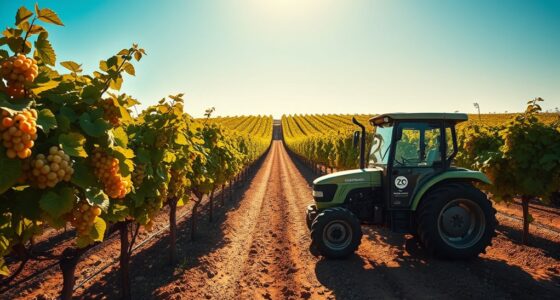
Over the past few years, vineyards on Mount Etna have experienced a notable increase in both quality and quantity, attracting attention from wine producers and critics worldwide. While official production figures are still limited, industry sources indicate that Etna’s wine exports have grown significantly, with some estimates suggesting a doubling of volume over the last three years. For more on Italian wines, see the best Italian wine subscriptions. The unique volcanic soil, combined with high-altitude vineyards and a diverse microclimate, contributes to the distinctive profile of Etna wines, which are increasingly being praised for their complexity and aging potential.
Several prominent wineries on Etna have expanded their vineyard holdings and invested in modern winemaking technology, aiming to capitalize on the growing demand. Experts such as Dr. Lucia Romano, a viticulture researcher at the University of Palermo, note that “the volcanic terrain of Mount Etna offers unparalleled conditions for cultivating high-quality grapes, which is reflected in the rising international reputation of Etna wines.” However, official industry data from the Italian government remains sparse, and some analysts caution that the full scale of growth is still evolving and difficult to quantify.
Implications of Mount Etna’s Growing Wine Reputation
The increasing recognition of Mount Etna as a premier wine region could reshape Italy’s wine export landscape, diversifying beyond traditional areas like Tuscany and Piedmont. For global wine markets, Etna’s rise offers a new source of distinctive, terroir-driven wines that appeal to connoisseurs seeking unique expressions of volcanic soil. Domestically, this trend may also influence regional economies, encouraging further investment and tourism in eastern Sicily. However, the rapid growth raises questions about sustainability, environmental impact, and the need for standardized regulations to maintain quality and protect the region’s reputation.
As an affiliate, we earn on qualifying purchases.
Mount Etna’s Historic Role in Sicilian Agriculture
Mount Etna has long been a vital part of Sicilian agriculture, primarily known for its fertile volcanic soils supporting diverse crops. Historically, the region’s wine production was modest, overshadowed by more established Italian wine regions. In recent decades, however, winemakers have increasingly harnessed the volcanic terroir’s potential, leading to a renaissance in Etna wines. This shift coincides with a broader international interest in volcanic wines, driven by trends favoring terroir authenticity and natural winemaking. While the exact scale of recent growth remains unconfirmed by official sources, industry insiders note a sharp uptick in vineyard plantings and exports since the early 2020s.
Unconfirmed Aspects of Etna’s Wine Growth
While trends suggest rapid growth in vineyard areas and export volumes, official data from Italian authorities remains limited. It is not yet clear whether this growth will be sustainable long-term or if it is driven primarily by recent market enthusiasm. Additionally, the full environmental impact of expanding vineyards on Etna’s fragile ecosystem is still under assessment, and regulatory frameworks are evolving to address quality control and land use concerns. The precise scale of future production increases remains uncertain, as does the potential for Etna wines to secure a sustained international reputation.
Next Steps for Mount Etna’s Wine Industry
Industry observers expect more detailed official statistics on vineyard expansion and export figures in the coming months, which will clarify the scale of growth. Winemakers and regional authorities are also anticipated to implement stricter quality standards and sustainable practices to preserve the terroir’s integrity. International wine competitions and trade shows in late 2026 and 2027 are likely to showcase Etna wines more prominently, further boosting global recognition. Monitoring these developments will be key to understanding whether Mount Etna can sustain its emerging reputation as a major player in Italian and global wine markets.
Key Questions
Why is Mount Etna becoming important in the wine world?
Its volcanic soil, high-altitude vineyards, and unique microclimate produce distinctive wines that are gaining international praise, leading to increased production and exports.
Are there any environmental concerns with expanding vineyards on Etna?
Yes, environmental impact assessments are ongoing, and there are concerns about ecosystem sustainability as vineyard areas expand rapidly.
How much has Etna’s wine production grown recently?
Exact figures are limited, but industry sources suggest a significant increase, with exports potentially doubling over the past three years.
Will Etna wines be recognized internationally in the future?
Many experts believe so, especially if quality standards are maintained and international markets continue to show interest.
What does this mean for Sicilian tourism?
The rise of Etna’s wine industry could boost wine tourism, attracting visitors to vineyards and wineries on the volcano’s slopes.
Source: rss
Flea & tick season Picks
flea and tick prevention
As an affiliate, we earn on qualifying purchases.